Monument Geyser Basin

Steep climb to a stark, steaming basin with river views
Monument Geyser Basin, Yellowstone National Park
InsideYellowstone National Park

Overview

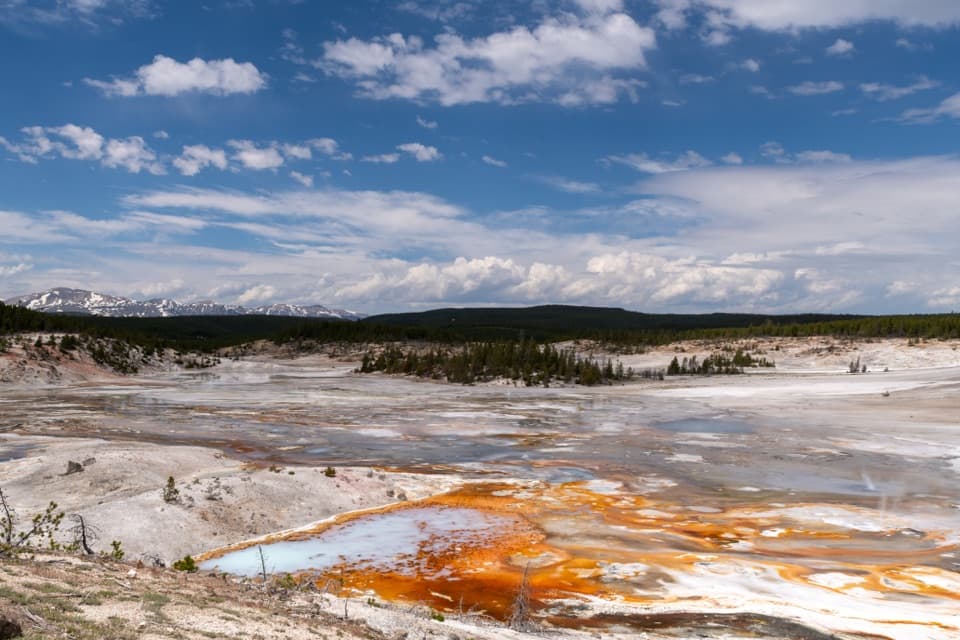
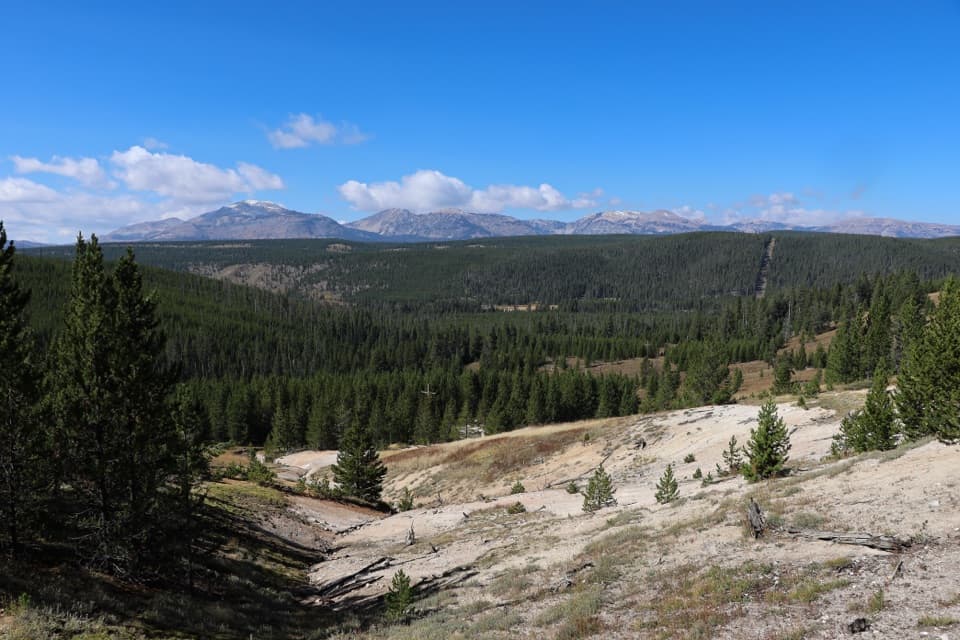
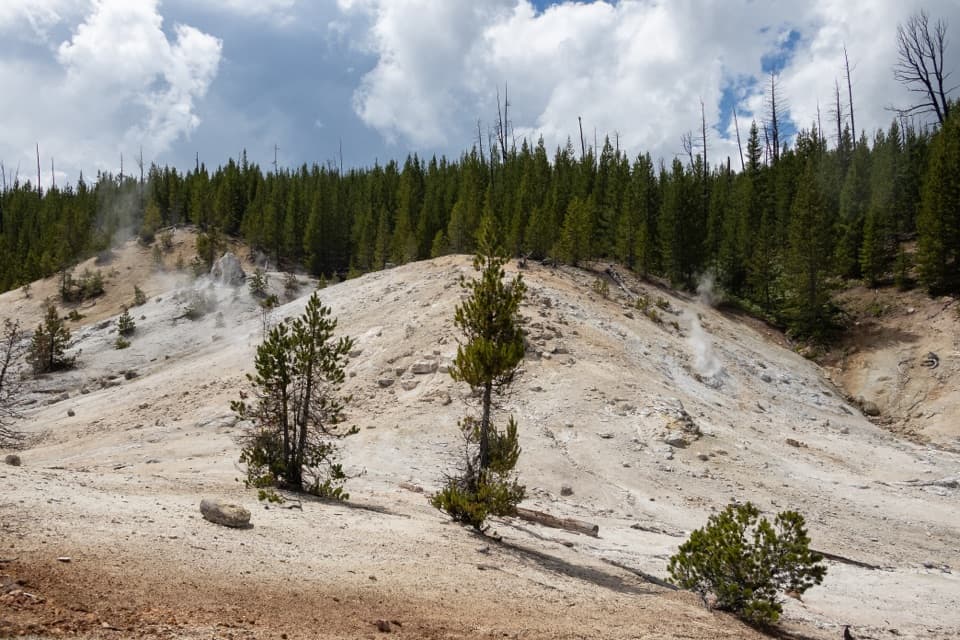
Perched above the Gibbon River between Norris and Madison, Monument Geyser Basin is a small, stark thermal area you reach via a quick but punchy climb from a roadside pullout. With no boardwalks and minimal signage, it feels wild and rarely crowded—more like stepping into an elemental laboratory than a postcard.

What You'll See

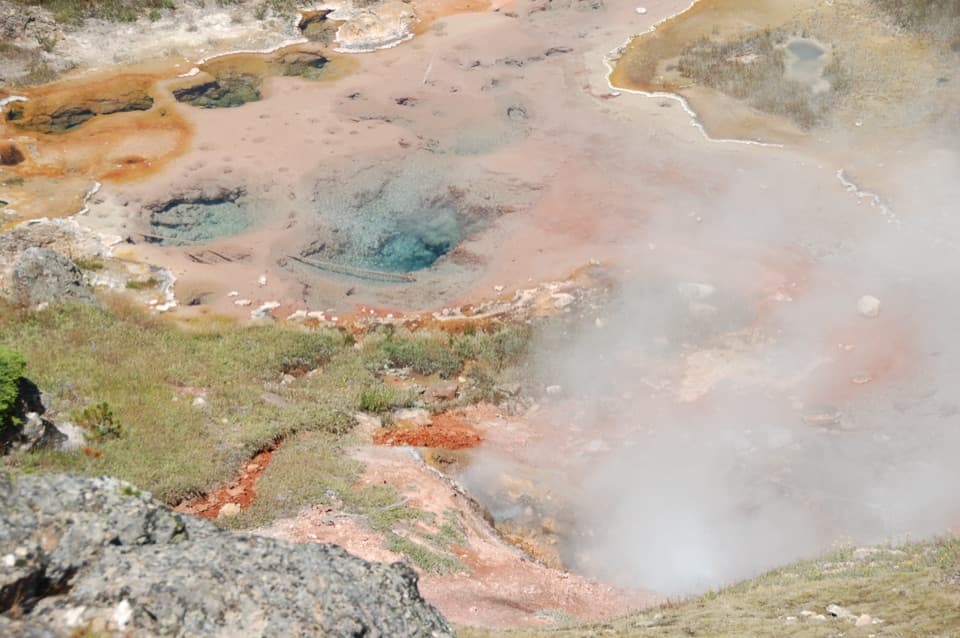
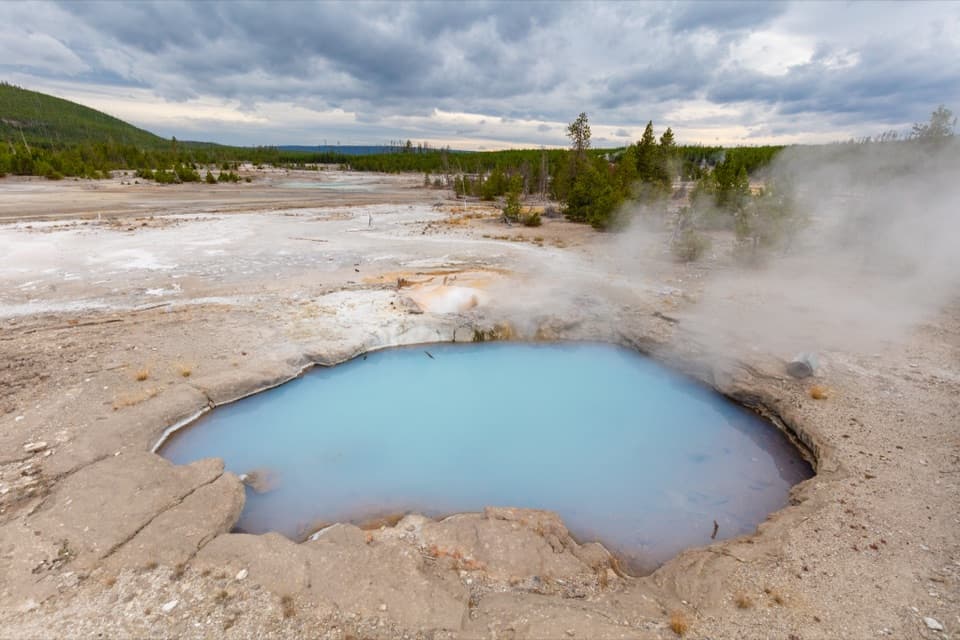
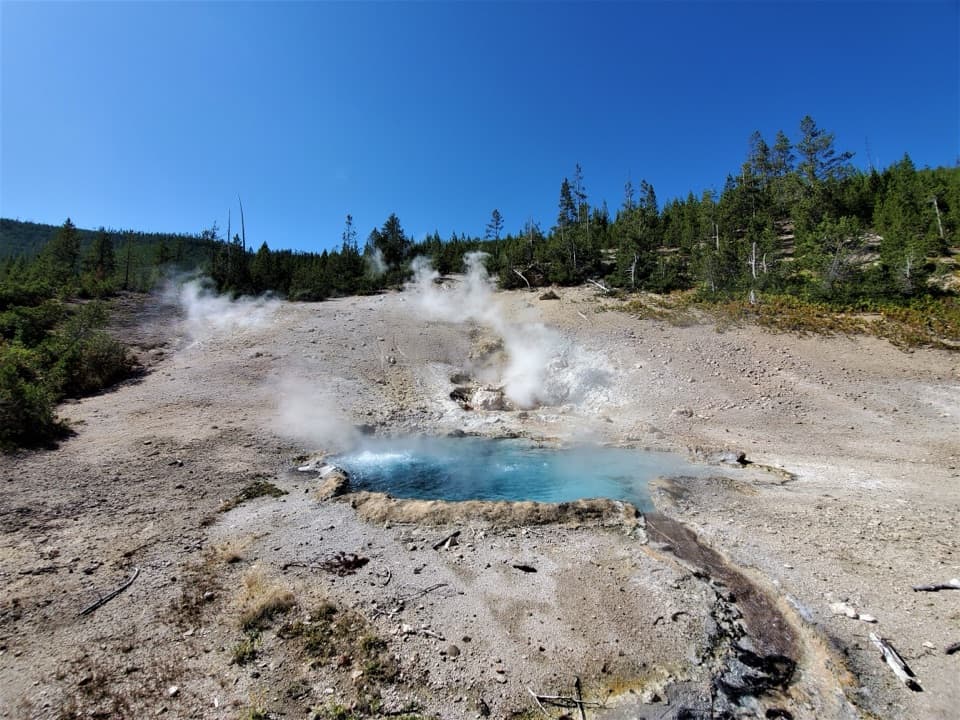
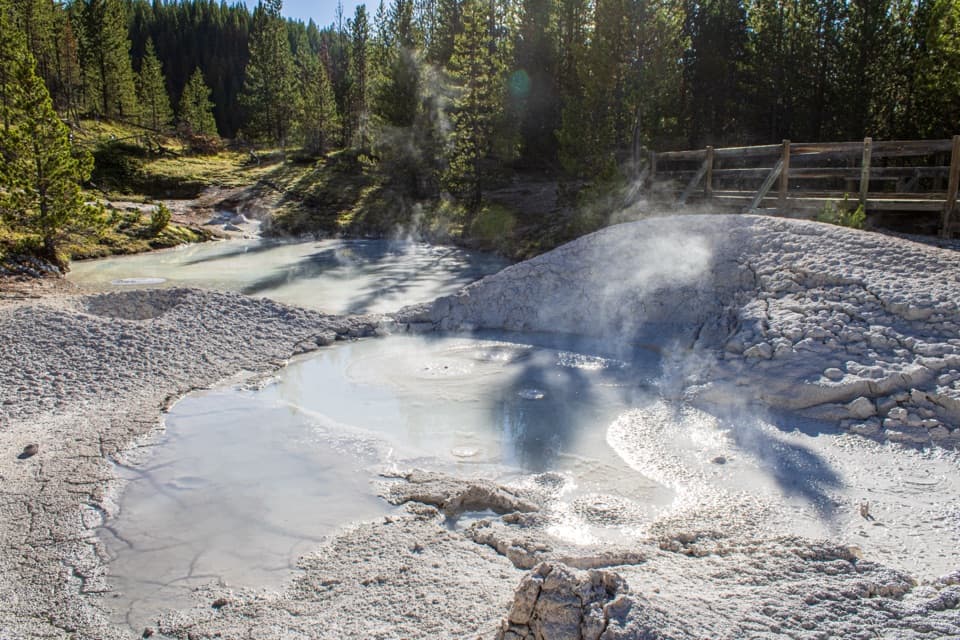
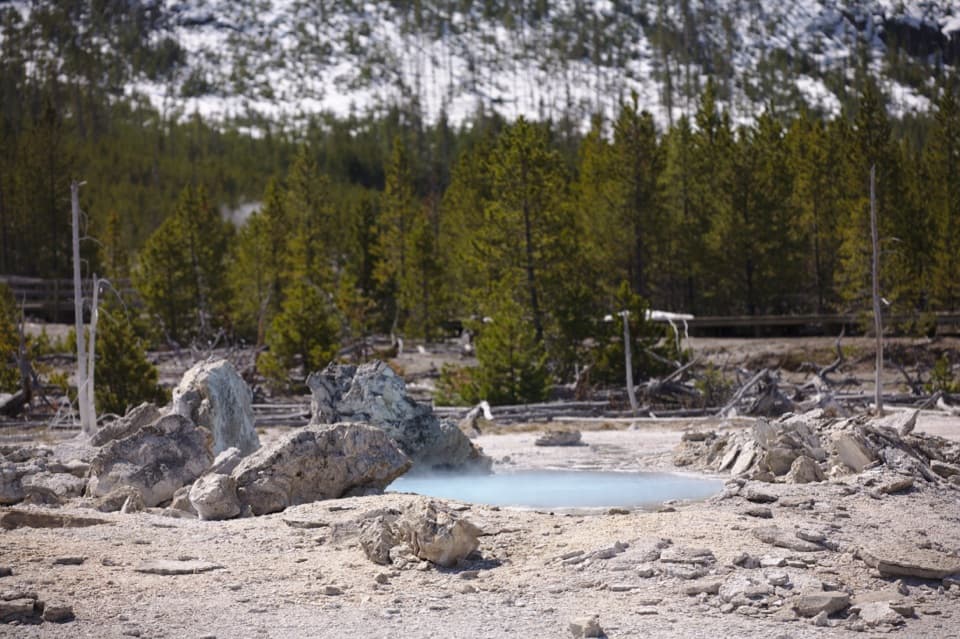
Expect a gray sinter flat dotted with steam vents, mud pots, frying-pan pools, and a few chimney-like mineral spires—the namesake “monuments.” Activity is often subtle (think steam and simmering, not big eruptions), but the combo of raw hydrothermal textures and sweeping views down to the Gibbon River makes the setting compelling.

The Hike

The out-and-back is about 2.5 miles with roughly 679 feet of elevation gain, typically taking 1.5–2 hours. It’s a sustained climb from the river, with some loose gravel that’s trickier on the way down. Poles help, and you’ll want water and sun protection.

Geology Highlights

This is a vapor-dominated, acid-sulfate system. Steam and gases (including hydrogen sulfide and carbon dioxide) condense near the surface to form acidic waters (pH roughly 1.1–2.5), feeding features that often run 160–196 °F. The distinctive silica spires likely formed along faults and fissures, and the basin ties into a deeper hydrothermal system connected to nearby Beryl Spring. It sits outside the caldera margin atop Lava Creek Tuff—classic Yellowstone geology on full display.

Practicalities

  • Parking is just a small roadside pullout; it can fill fast midday.
  • No restrooms, water, or trash cans here—come prepared and pack everything out.
  • There’s a footbridge over the Gibbon River and then a steady climb; dogs are not allowed.

Safety

There are no boardwalks—stay on the established path and give all vents a wide berth. The crust can be thin and unstable. Carry bear spray, and expect wind exposure on the ridge.

Is It For You?

Go if you want solitude, a short but steep workout, and a raw thermal landscape most visitors skip. If you’re chasing colorful pools and predictable eruptions, your time is better spent in the major basins.

Best Time to Visit

July through September offers the most reliable access. For parking and cooler uphill temps, aim for early morning or late afternoon. After recent moisture, you may notice more visible steaming and flow.

Pros

  • Quiet, seldom-visited thermal area with big Gibbon River views
  • Unique silica monument spires and a raw, un-boardwalked feel

Cons

  • Short but steep climb (~2.5 miles round-trip, ~679 ft gain)
  • Very limited parking and no services at the trailhead

Tips

  • Arrive early or late to snag a spot in the tiny pullout.
  • Bring water and sun protection; it’s exposed and the climb is sustained.
  • Trekking poles help with the steep, loose descent.
  • Stay on durable ground and keep distance from vents and thin crust.
  • Carry bear spray; dogs are not allowed on this trail.
The Parkwolf tour guide sitting on a phone mounted in a car

Parkwolf Tour Guide

Like a tour guide in your car.

Save the places you found around Yellowstone, then let Parkwolf guide the drive between them.Download Parkwolf on the App Store