Mueller Hut

Front-row glacier vistas from a classic alpine hut above the village
Mueller Hut, Aoraki / Mount Cook National Park
InsideAoraki / Mount Cook National Park

Overview

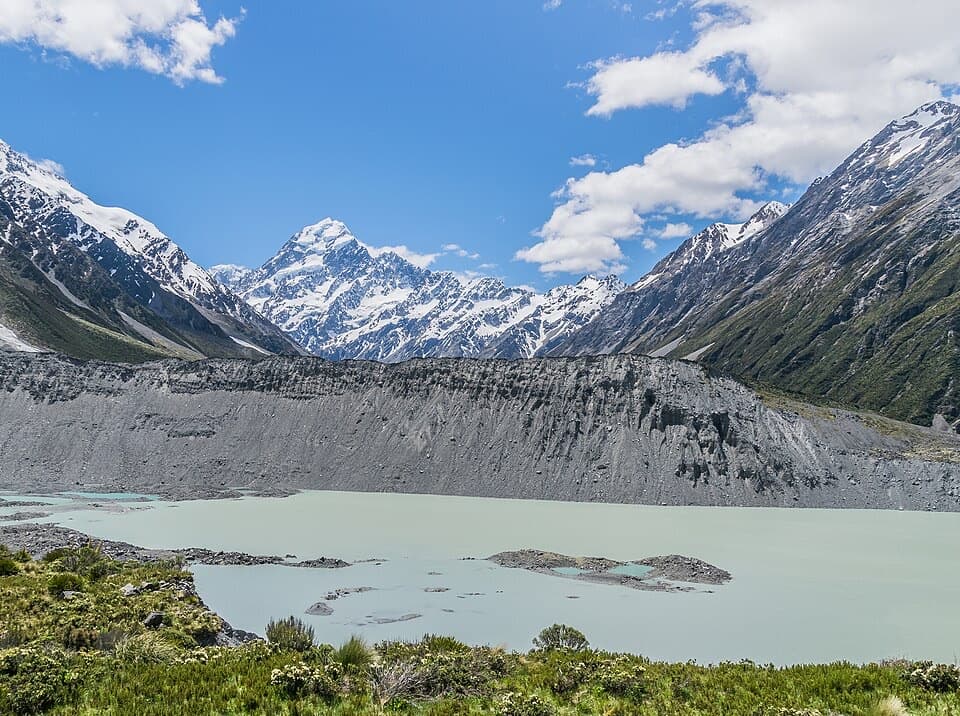
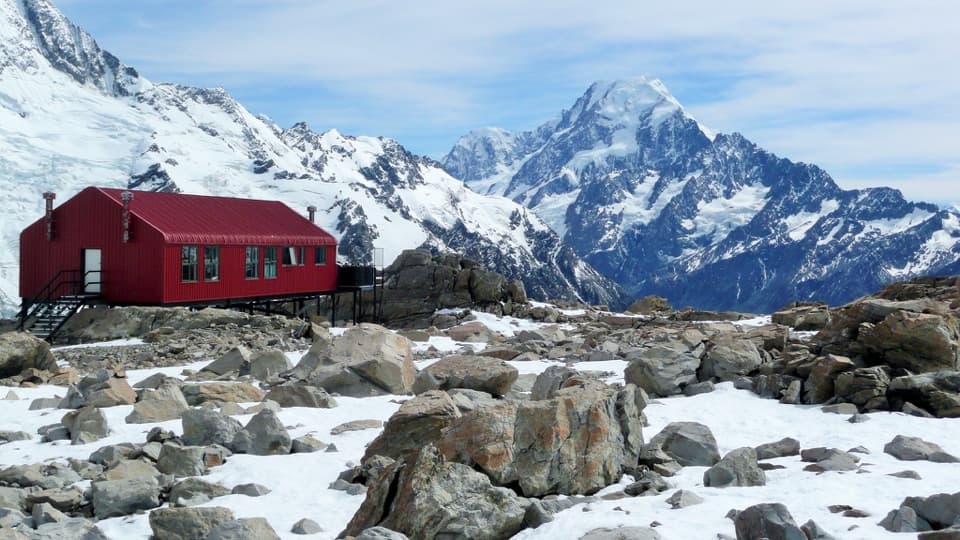
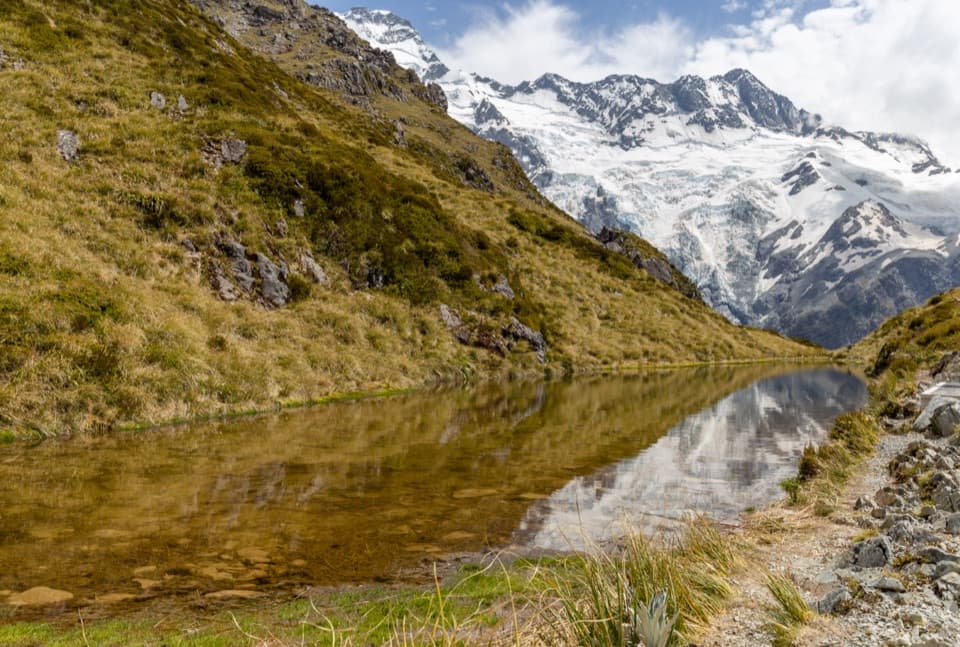
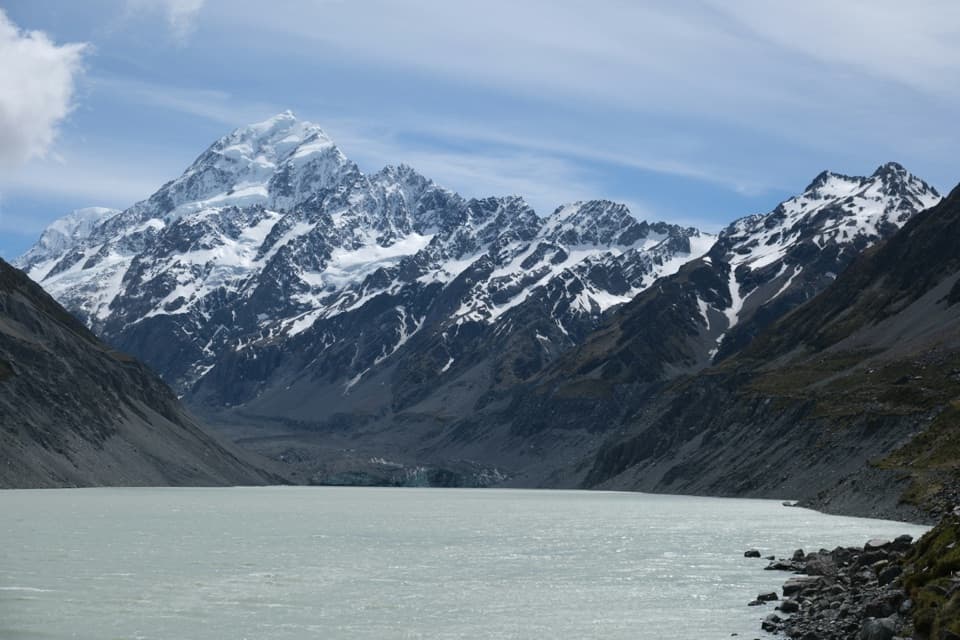
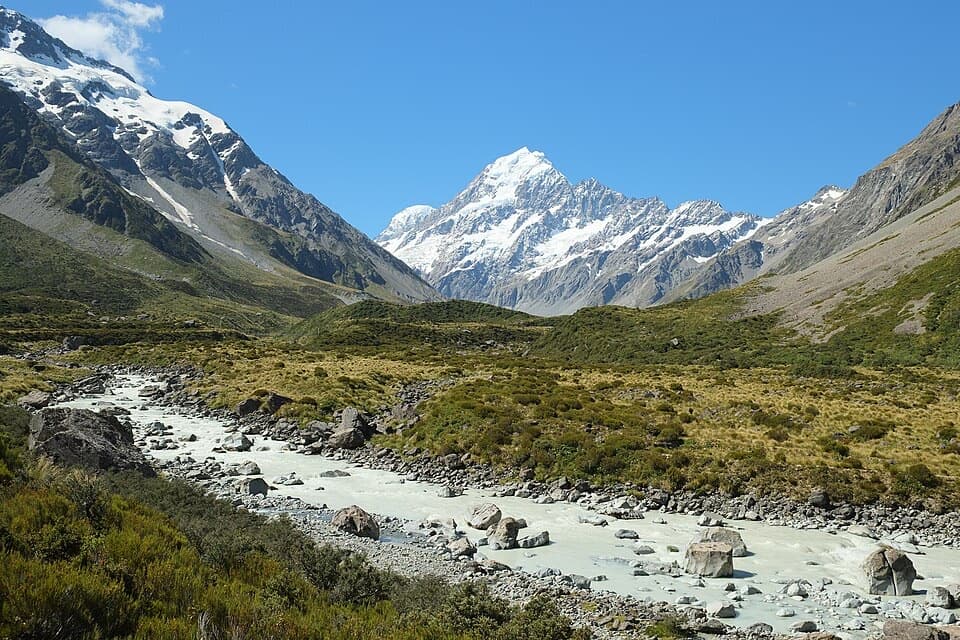
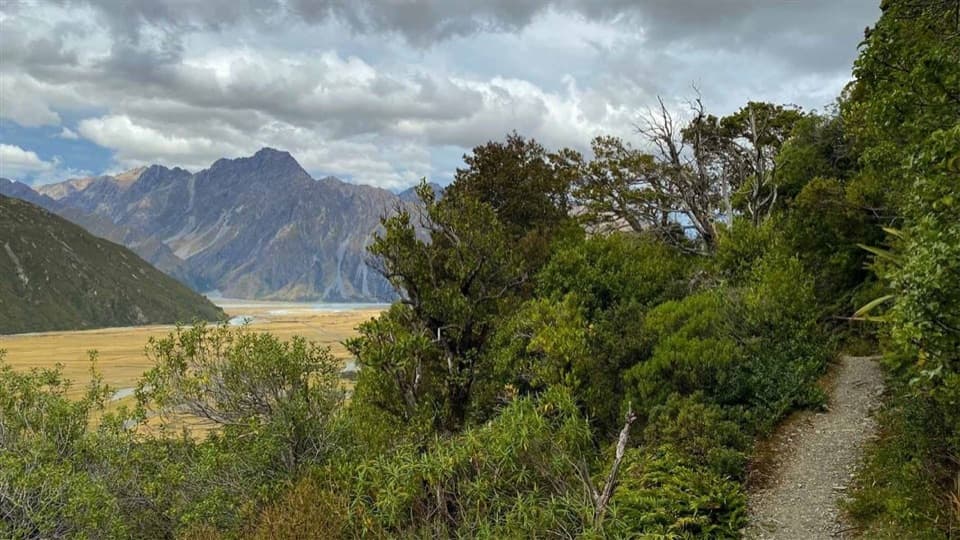
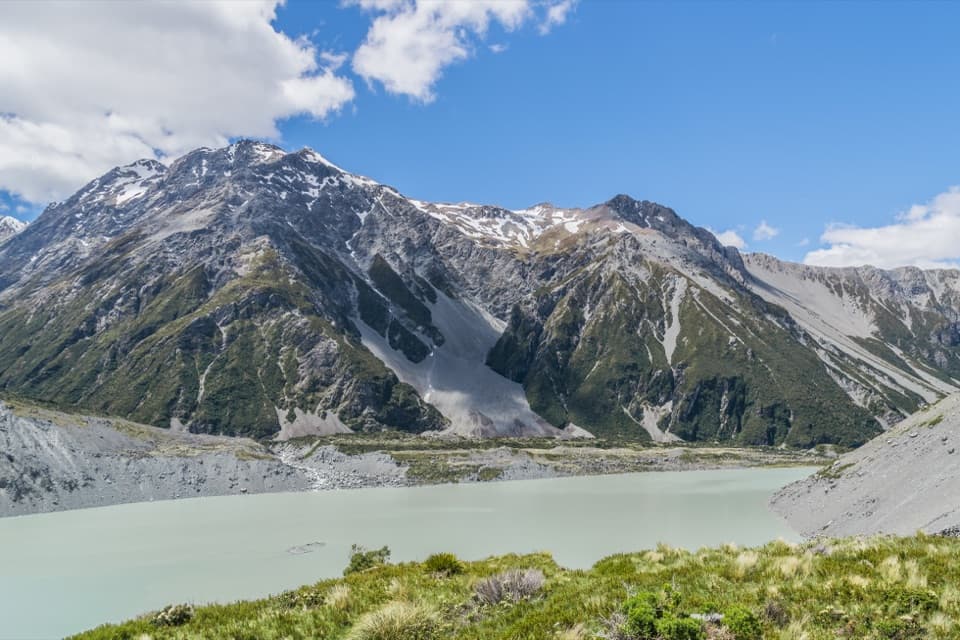
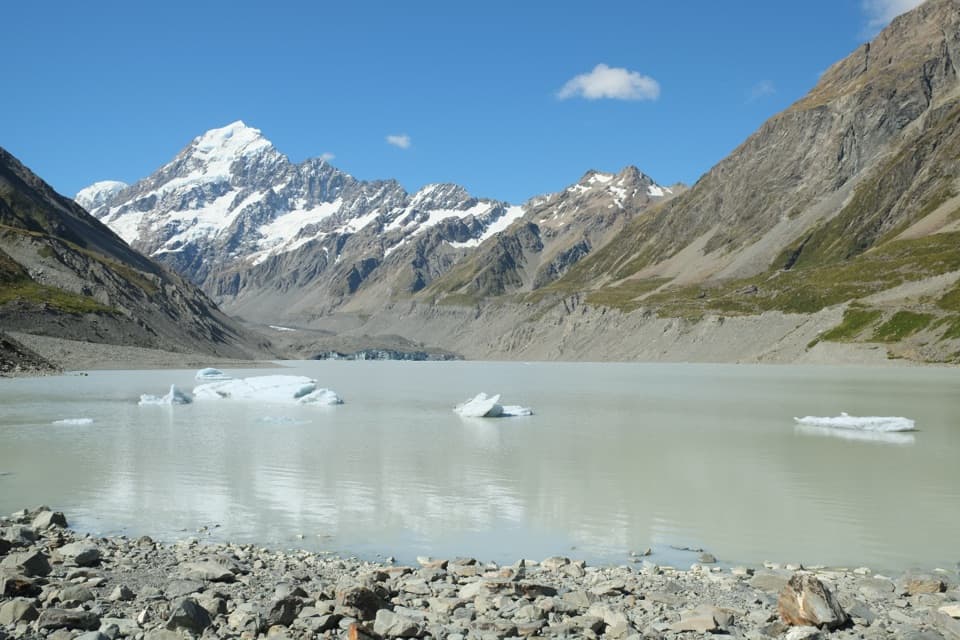
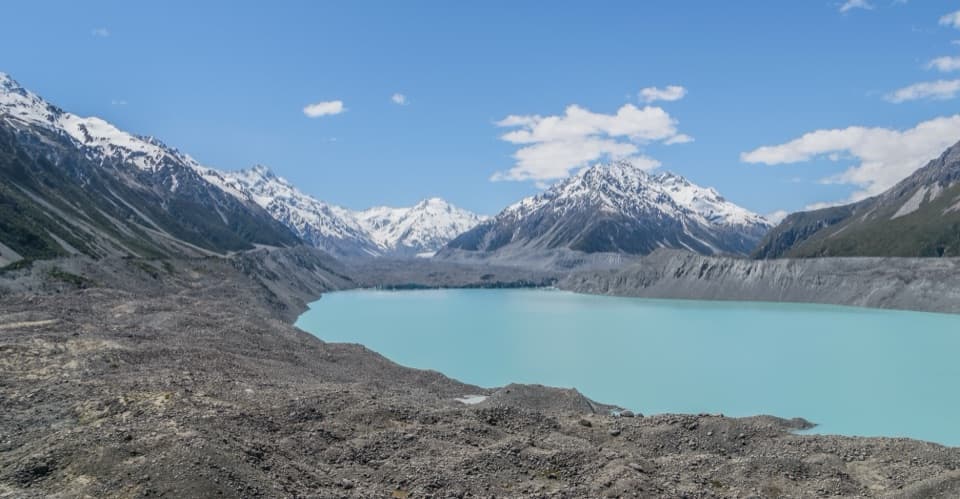
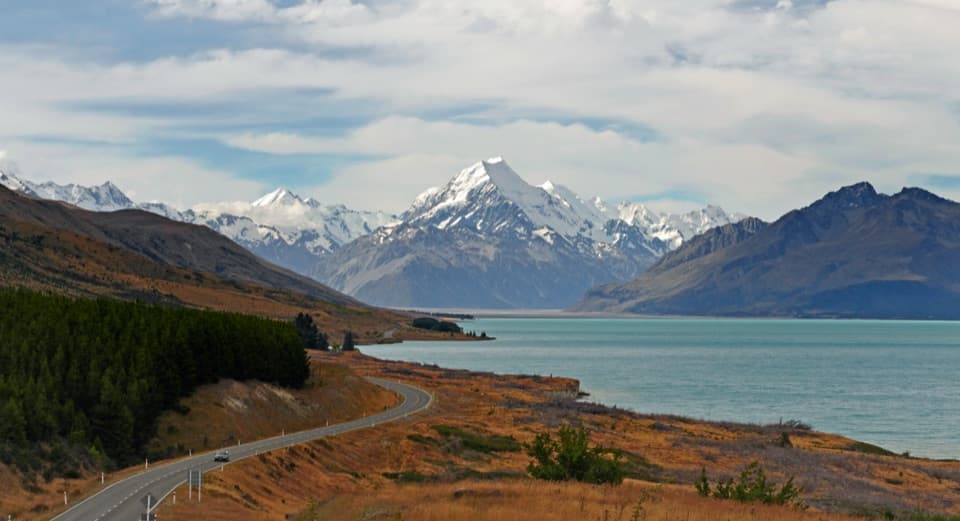
Perched high above the valley, Mueller Hut is a 28‑bunk alpine shelter with front‑row views of Mount Sefton’s hanging glaciers, Aoraki/Mount Cook, and the Mueller Glacier. It’s a classic overnight for strong trampers, and an unforgettable day trip for those willing to grind—big elevation, bigger payoff. The current hut (the fifth on this site) opened in 2003, near Mt Ollivier.

The Hike In Brief

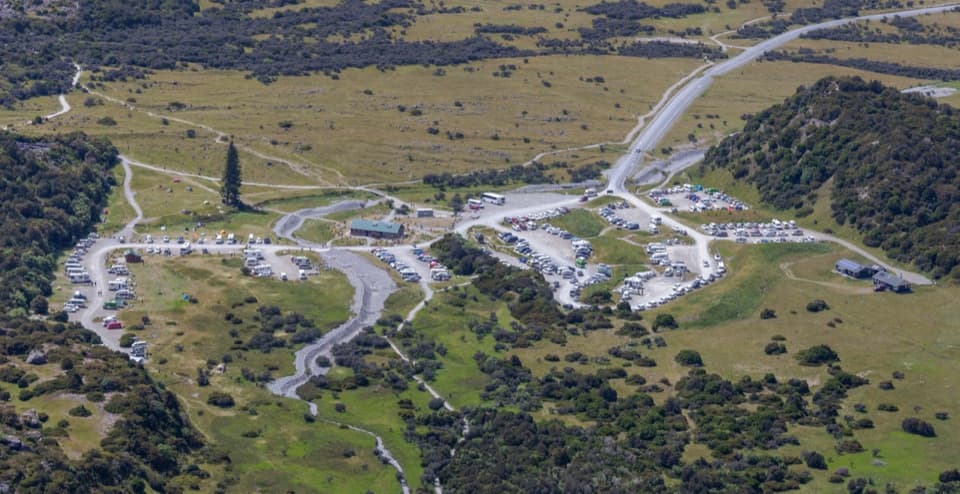
  • Start: White Horse Hill Campground.
  • Distance/Gain: ~5.2 km one way with ~1,000 m of climbing.
  • Time: Typically 4–5 hours up and ~3 hours down.
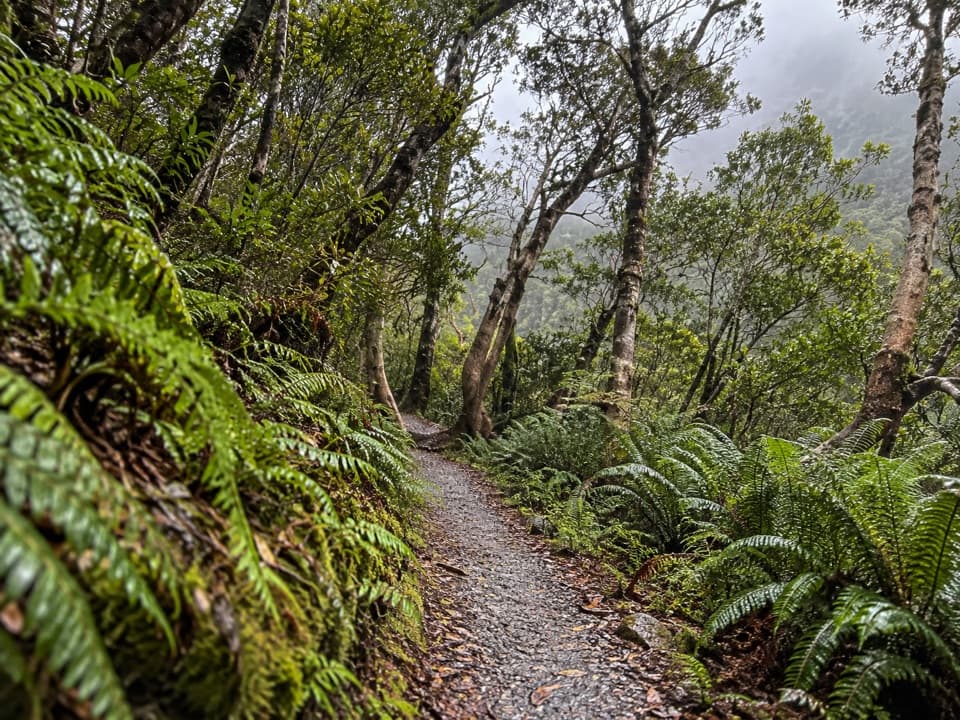
  • Route: Climb the steep stairs to Sealy Tarns (~2 hours, about 2,200 steps). From there, follow orange markers across tussock and a boulderfield to a short, loose 50 m scree/snow slope that gains the skyline ridge; then about 20 minutes along the ridge to the hut. Expect sections with no formed track and hands-on movement over rocks.

Seasons, Difficulty, and Hazards

  • Summer (Dec–Feb): Suits trampers with moderate experience, though it’s still an alpine route; late summer often has little snow.
  • Spring/Autumn (Sep–Nov, Mar–May): Winter conditions can linger—check conditions before you go.
  • Winter (Jun–Aug): Mountaineering skills required (ice axe, crampons, avalanche gear, and confident route-finding).
  • Avalanche: Danger is common from April to mid‑November, and avalanches can happen year‑round—check advisories and go equipped when appropriate.
  • Pro tip for descent: Ice on the lower ridge often softens after the sun hits it—timing matters.

Hut Life and Facilities

Inside you’ll find platform bunks with mattresses in separate rooms, solar lighting, and gas cookers. Water comes from rain/snow tanks and must be treated or boiled. Toilets are long‑drop style and separate from the hut; in winter they may be buried—be prepared to use a disposable toilet kit and pack out waste if directed. There are no showers or drying rooms, and you must carry all food. A daily DOC radio check‑in and weather update happens around 4:45 pm.

Nature Highlights

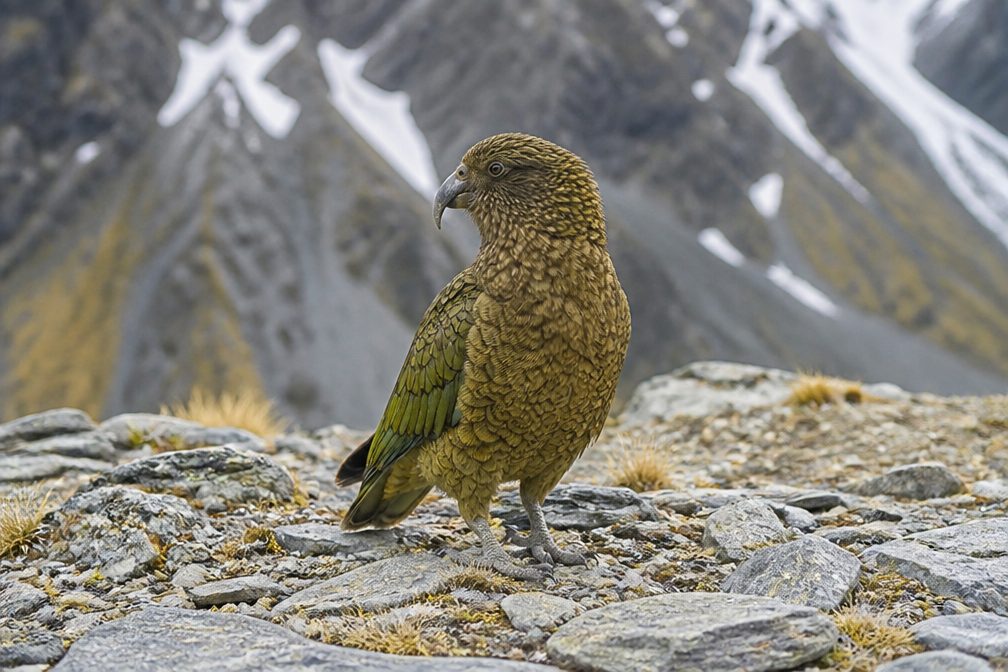
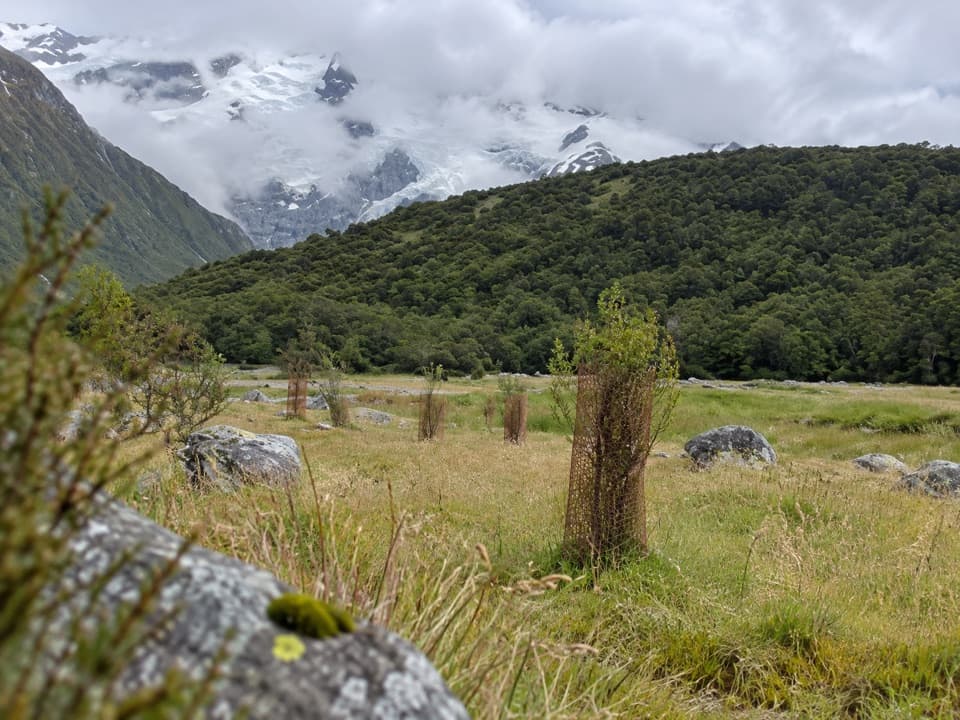
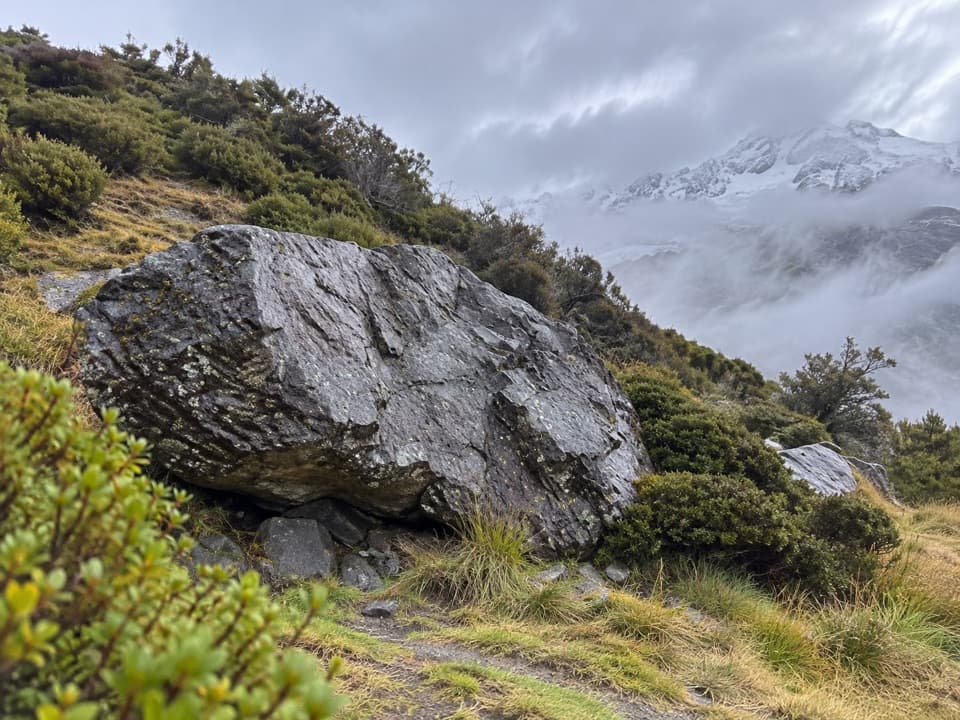
Expect textbook glacial scenery—U‑shaped valleys, ice cliffs, and active hanging glaciers. In season you might spot kea or rock wren around the rocky slopes, and on warm days the black mountain ringlet butterfly. Alpine flora can put on a show too: Mount Cook lily (late November), gentians (from January), and edelweiss in rocky outcrops.

Best Time to Visit

For most people, summer offers the most straightforward travel and the best shot at dry rock and clear markers. Shoulder seasons can be magnificent but variable—check with the visitor centre before committing. Photographers love sunrise and sunset from the ridge near the hut, and on still nights the stargazing is superb; you may even hear rumbling avalanches across on Mt Sefton.

Planning Essentials

  • Bookings required 11 November–30 April; outside that window it’s first‑come, first‑served, but you still need to register intentions and pay fees at the visitor centre.
  • Fees per night: Adult $55; NZ Alpine Club member $40; Child (5–17) $28; Infants free; backcountry passes aren’t valid; a $10 service fee applies for phone or in‑person bookings.
  • Bring full alpine kit: warm/waterproof layers, map/compass or GPS, head torch, first aid, extra food, and an emergency beacon; in winter add ice axe, crampons, and avalanche rescue gear. There’s no gear rental in the village.
  • No unauthorized drones; pack out all rubbish and store food so it doesn’t attract wildlife.

Side Trip: Mt Ollivier

From the hut, a roughly 30‑minute rocky scramble leads to Mt Ollivier—short, steep, and a superb vantage point. Do not venture beyond without appropriate skills and conditions.

Pros

  • Panoramic glacier-and-peak views from a high alpine perch
  • Serviced hut with gas cookers, solar lighting, and bunks

Cons

  • Steep, challenging alpine route with scree and boulder scrambling
  • Basic facilities only: untreated tank water and long-drop toilets

Tips

  • Start early and treat Sealy Tarns as a weather and energy checkpoint.
  • Carry 2–3 liters and a water filter or tablets; hut tank water isn’t treated.
  • If the ridge is icy, wait for sun-softening before descending.
  • Book ahead for 11 Nov–30 Apr and register intentions in the off-season.
  • Bring a disposable toilet kit in winter in case the hut toilets are buried.
The Parkwolf tour guide sitting on a phone mounted in a car

Parkwolf Tour Guide

Like a tour guide in your car.

Save the places you found around Aoraki / Mount Cook, then let Parkwolf guide the drive between them.Download Parkwolf on the App Store