Parking
Use the Hoh Rain Forest Visitor Center parking area. Cross the parking-area crosswalk to the information boards; the trail starts there.

Olympic National Park, WA
A short Hoh loop for nurse logs and river views.
Overview
Map & elevation
Plan your hike

The highest, rockiest slopes around here are a summer buffet for grizzly bears.
Olympic Tour Guide
Parkwolf is a GPS audio tour guide for Olympic National Park. As you drive, it chimes in with what’s ahead: hidden gems, upcoming stops, history, geology, and wildlife, right through your car’s speakers.
See the Olympic audio tourRecorded for this trailhead
Hoh Rain Forest: Under the Moss“Up ahead is the Hoh Rain Forest visitor area, where I'd give most of your time to the trees. The Hall of Mosses loop takes you beneath huge conifers and bigleaf maples hung with moss.”
Plays as you drive up to this trailhead in the Parkwolf Olympic Tour Guide.
More stories near here in the app
“Fantastic app with many points of information… It’s great to just turn on while you’re driving and it gives you an audio tour of the national Park. We love it!!!!”


Trail guide
The Spruce Nature Trail is an easy 1.25-mile walk from the Hoh Rain Forest parking-area information boards. A short approach joins a 1.14-mile loop through temperate rainforest, and you retrace the approach on the way back. The route follows Taft Creek and reaches the Hoh River, with old-growth giants, moss, and nurse logs along the way. Allow about 45 minutes to an hour; choose it for a compact rainforest walk with both forest and water, not a long backcountry hike.
From the information boards, follow the path about 310 feet to a junction, then turn right for Spruce. There is a short bridge around the 350-foot mark, and the Hoh River Trail branches left. The route has nine steps at about 640 feet, followed by a roughly 750-foot continuous climb. After that, it rolls up and down with gentler stretches before the loop closes. The tread is compacted gravel, but it narrows to two or three feet beyond the opening section. This is an easy hike overall, though it is not a flat, step-free stroll.
Fallen trunks become nurseries here: seedlings take root on the decaying wood. Farther along, some trees stand in rows where their old nurse log has rotted away; those straight lines are called colonnades. Big conifers, mosses, and ferns crowd the forest, in a rainforest that can receive up to 12 feet of rain in a year.
Taft Creek and the Hoh River break up the forest walk. The river's pale blue color comes from fine rock ground by glaciers upstream; the water runs from Mount Olympus toward the Pacific. Visitors often single out the riverside stretch, so leave time to pause there. The visitor center has exhibits but no food or gas, so sort those out before the drive to Hoh. Pets are not allowed on Olympic trails.
Wildlife
 710 sightingsOlympic MarmotMost seen around 11 AMSighting map
 30 sightingsHumpback WhaleMost seen around 6 PMSighting map
 42 sightingsGrey WhaleMost seen around noonSighting map
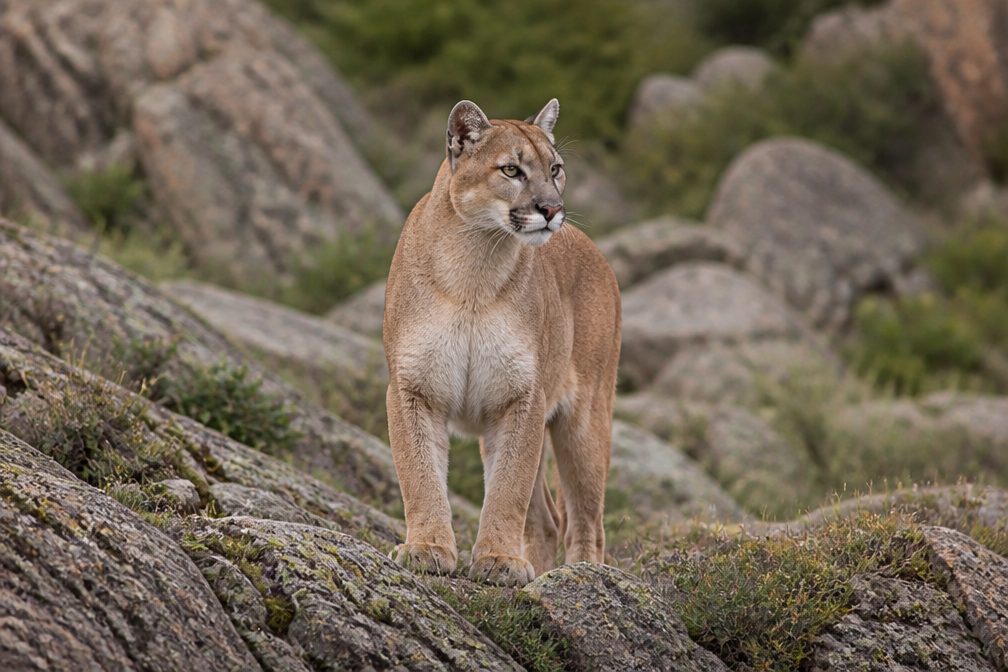 23 sightingsMountain LionMost seen around 8 PMSighting map
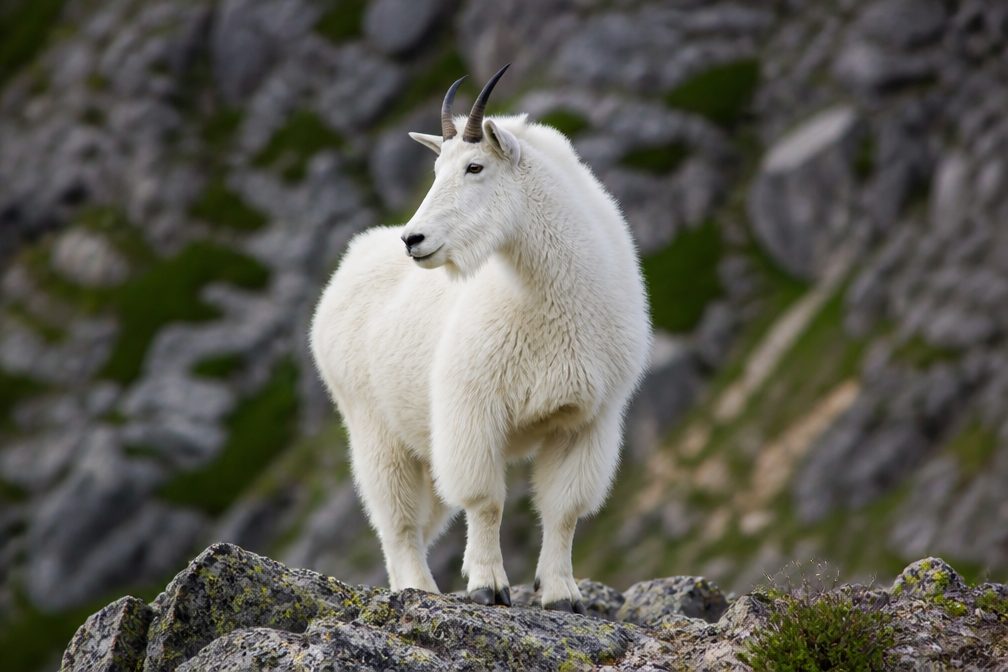 71 sightingsMountain GoatMost seen around 7 AMSighting map
 306 sightingsBald EagleMost seen around 11 AMSighting map
Sighting maps show where each species has been reported across Olympic. Wildlife moves, so no sighting is guaranteed.
Keep exploring
 ChallengingHoh River Trail34.8 mi · 20 hr · At the trailheadRainforest for miles, then a steep climb to Glacier Meadows.
 ChallengingHoh Lake Trail29.4 mi · 15 hr · At the trailheadA rainforest approach leads to a steep, exposed climb and subalpine lake.
 EasyHall of Mosses Trail0.8 mi · 54 min · At the trailheadA moss-draped maple arch and a creek bridge in a short loop.
 EasyMini Rain Forest Trail0.2 mi · 9 min · 0.1 mi awayA quick loop past a bubbling creek, mosses, ferns and bridges.
 EasySouth Fork Hoh River Trail9.2 mi · 4.5 hr · 4.4 mi awayA long rainforest walk to the South Fork’s riverside end
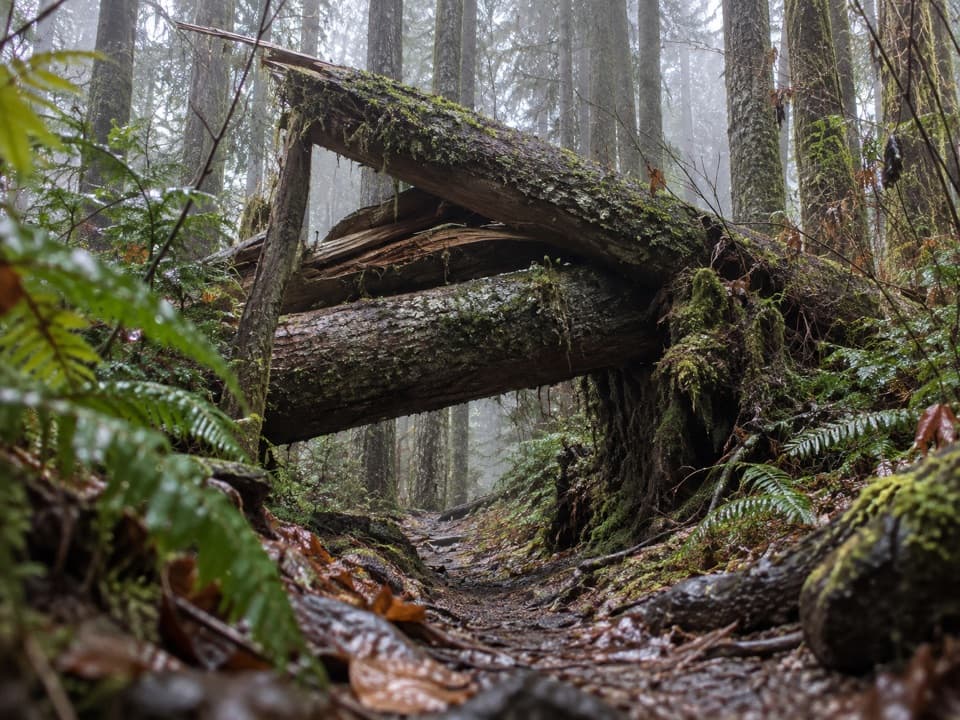 ChallengingSouth Snider-Jackson Trail10 mi · 8 hr · 5.1 mi awayA remote ridge crossing with a hazardous Bogachiel ford.
 ModerateLunch Lake Trail1.2 mi · 1.3 hr · 7.5 mi awayA rough half-mile drop to a lake with designated campsites.
 ChallengingAppleton Pass Trail14.8 mi · 9 hr · 7.9 mi awayA long climb past Sol Duc Falls to a high mountain pass.
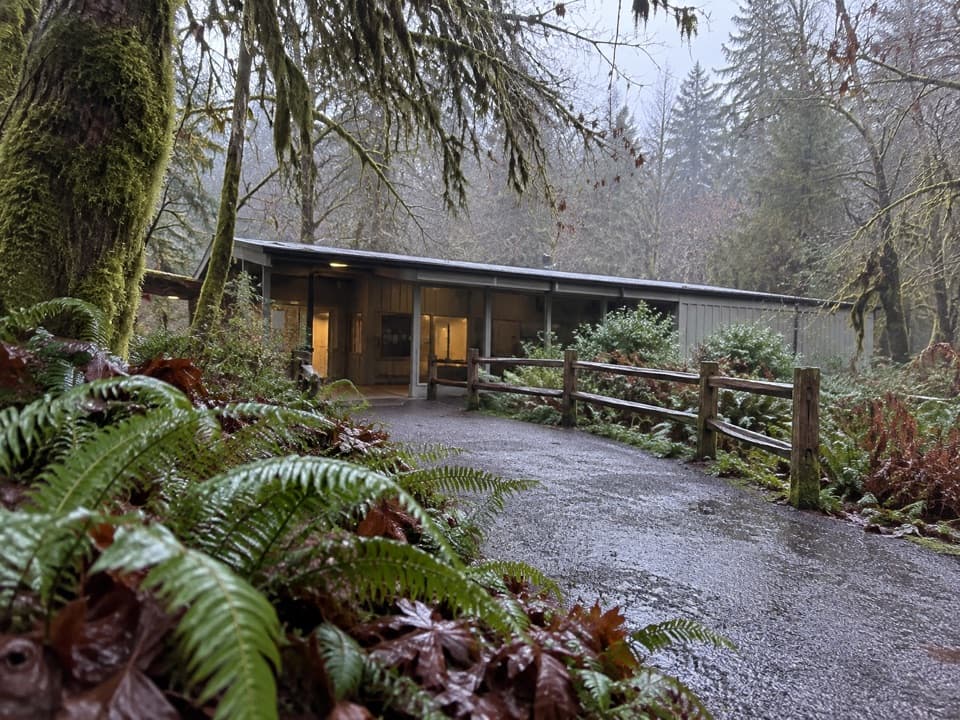 Visitor center · 0.1 mi awayHoh Rain Forest Visitor CenterStart here for ranger help and two mossy forest loops.
 Sight · 0.3 mi awayHoh Rain Forest Entrance SignA quick photo of the Hoh's roadside arrival sign.
 Campground · 0.3 mi awayHoh Rain Forest CampgroundMossy old-growth camping, with a few riverside sites.
 Entrance station · 5 mi awayHoh Entrance StationHandle passes, permits, and questions before the rainforest trails.
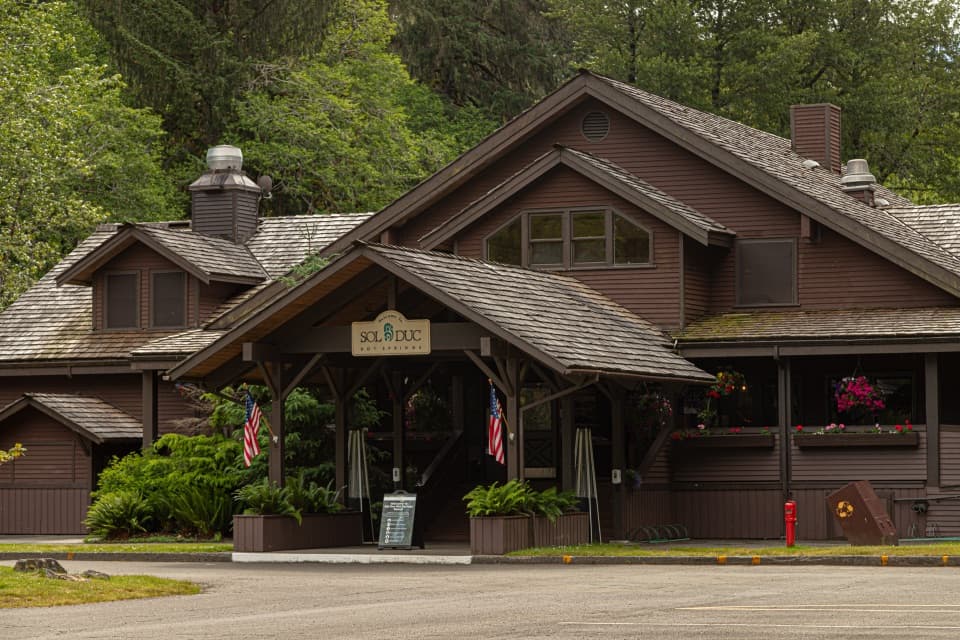 Sight · 8.1 mi awaySol Duc Hot Springs ResortThree mineral pools, plus a cooler dip in the Sol Duc valley.
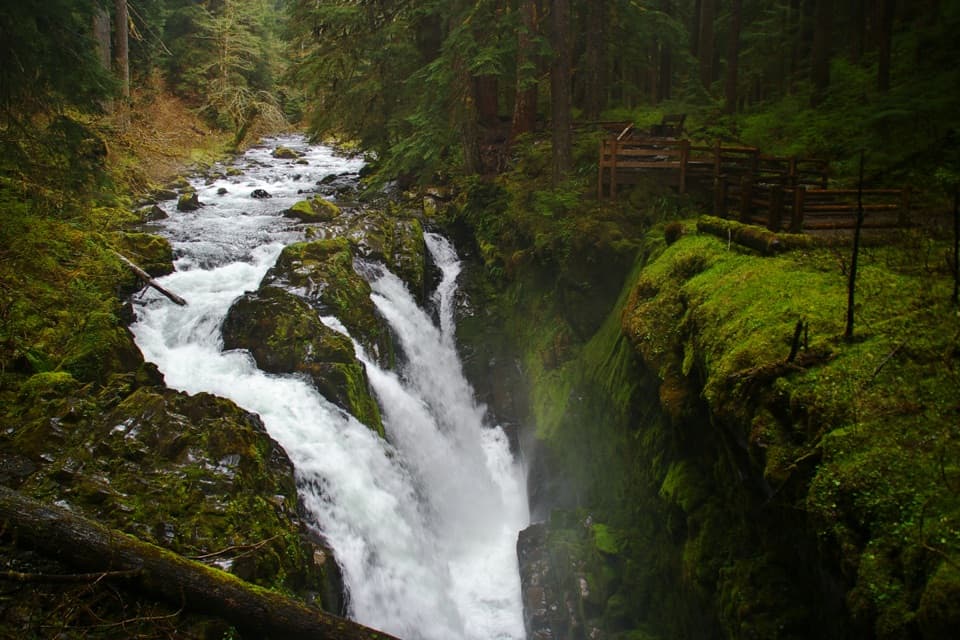
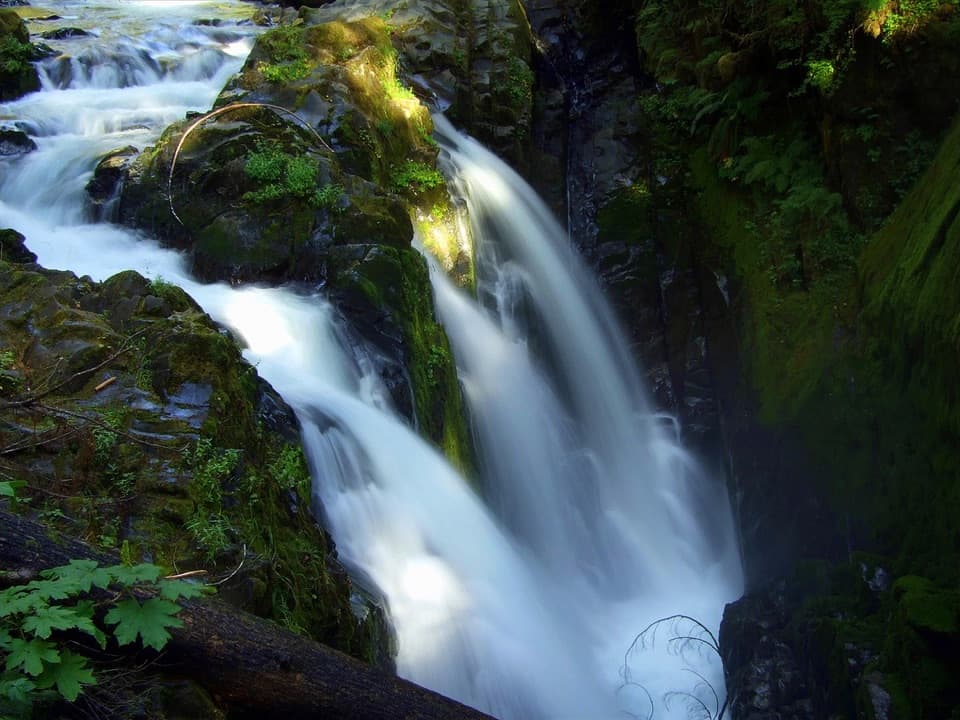 Sight · 8.2 mi awaySol Duc FallsA 48-foot cascade drops through a narrow, rocky canyon.
 Campground · 8.2 mi awaySol Duc Hot Springs RV Park and CampgroundCamp under old-growth trees, with Sol Duc Falls nearby.
Parkwolf’s Olympic ranking

The audio tour guide for the drive, plus offline maps, trails, and wildlife heatmaps for when the signal drops.