Access
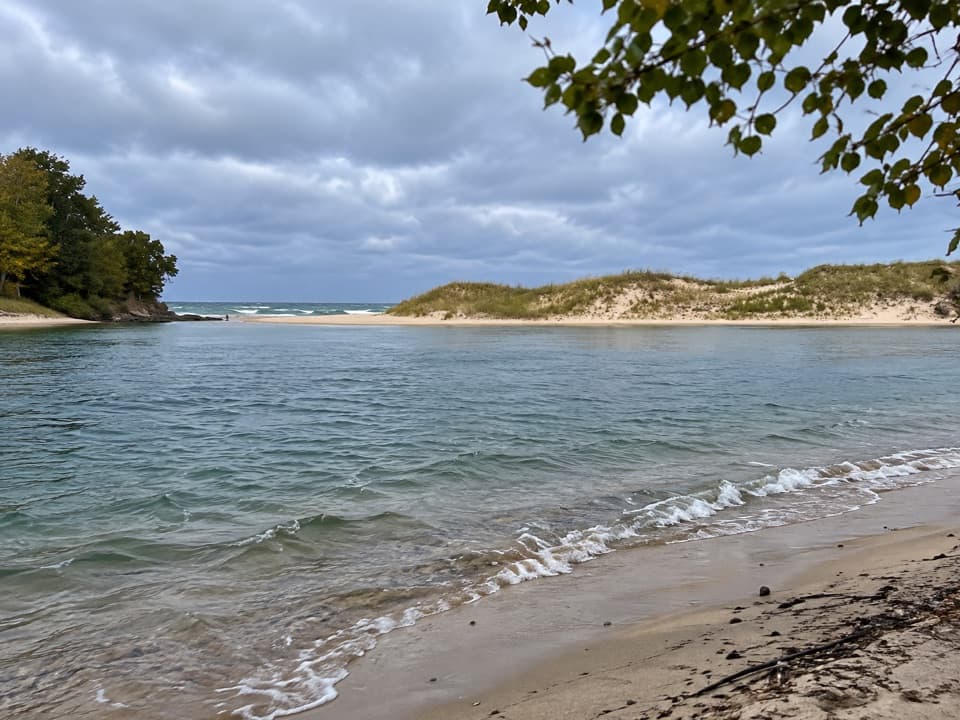
The station house entrance has stairs, and the upstairs wheelhouse isn't wheelchair accessible. The boathouse exhibit and beach boardwalk have accessible surfaces; the park also lists a sand wheelchair for the beach.
#8 of 72 sights in Sleeping Bear Dunes
Sight · Sleeping Bear Dunes National Lakeshore
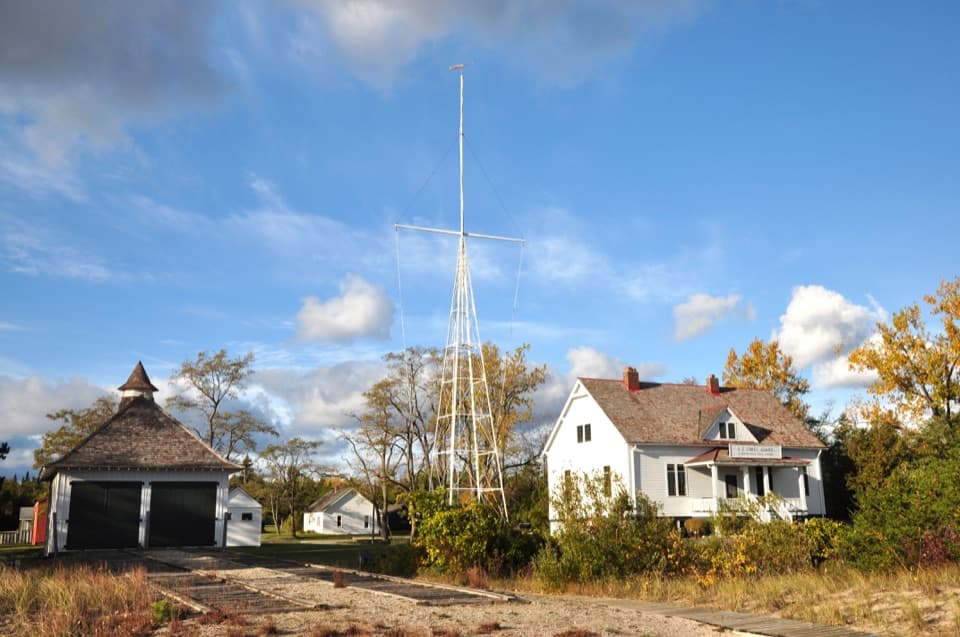
A 1901 lifesaving station, its rescue boats, and the Manitou Passage.
Overview
Ships used Manitou Passage as a shorter route between Chicago and the Straits of Mackinac, but shoals, tight turns, fog, and storms made it hazardous. Two matching life-saving stations were built in 1901, one here and one on South Manitou Island. This station's location was part of the rescue system for a busy stretch of Great Lakes water.
 Parkwolf’s verdictWhy this point mattered
Map
Plan your stop
The highest, rockiest slopes around here are a summer buffet for grizzly bears.
Sleeping Bear Dunes Tour Guide
Parkwolf is a GPS audio tour guide for Sleeping Bear Dunes National Lakeshore. As you drive, it chimes in with what’s ahead: hidden gems, upcoming stops, history, geology, and wildlife, right through your car’s speakers.
Recorded for this place
Sleeping Bear Point Maritime Museum: Rescue from Shore“Up ahead is the Sleeping Bear Point Maritime Museum, a restored lifesaving station built in nineteen oh one. If shipwrecks and rescue stories interest you, give this summer-season museum about an hour.”
Plays as you drive up to Sleeping Bear Point Maritime Museum in the Parkwolf Sleeping Bear Dunes Tour Guide.
More stories near here in the app
“Fantastic app with many points of information… It’s great to just turn on while you’re driving and it gives you an audio tour of the national Park. We love it!!!!”


Guide
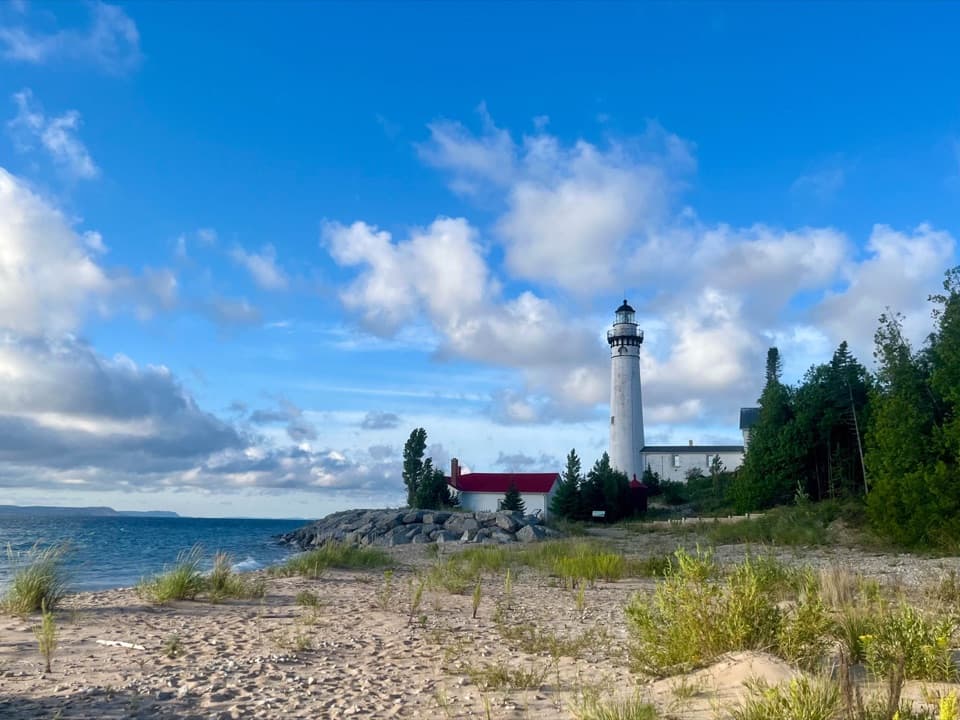
The Sleeping Bear Point Maritime Museum is a restored 1901 U.S. Life-Saving Service station on Lake Michigan, now telling the story of Great Lakes shipping and the crews who answered wreck calls. It's a compact, worthwhile stop if that history interests you. Many visitors allow about an hour for the museum, then add time for the beach.
Use the museum's own parking area. A separate, farther lot along the gravel and sand road serves the Sleeping Bear Point Trail, a different visit. The museum grounds have picnic tables and vault toilets. It operates seasonally, typically from Memorial Day through Labor Day, so check current conditions before making a detour. Dogs aren't allowed on the museum grounds.
Walk through the station house and the neighboring boathouse. The upstairs station room is set up like a steamer wheelhouse, while the boathouse holds two open surfboats and the Lyle gun used in shipwreck rescues. The buildings were restored to their 1931 appearance, except for the boathouse interior and crew bedroom, which show an earlier, early-1900s look.
The second-floor wheelhouse has a panoramic view of the Manitou Passage shipping channel. Stop at the window: the water outside connects the exhibits to the route the station was built to watch. A boardwalk runs from the boathouse down to the beach, so you can finish the visit at the Lake Michigan shore.
On clear days, a surfman watched from the tower. At night or in fog, crews patrolled the beach with warning flares. If a ship was stranded, the Lyle gun could fire a line out to it; rescuers then hauled out the heavier gear and used a breeches buoy to bring people ashore one at a time. The boats and equipment in the boathouse make that dangerous work easier to picture.
The U.S. Life-Saving Service joined the Revenue Cutter Service to form the Coast Guard in 1915. The station closed during World War II, briefly became the lakeshore visitor center in 1971, and reopened as a maritime museum in 1984 after restoration. The point itself has shifted: shoreline slumps in 1914 and 1971 reshaped the coast and threatened the buildings with drifting sand.
Wildlife
 27 sightingsPiping PloverMost seen around 6 PMSighting map
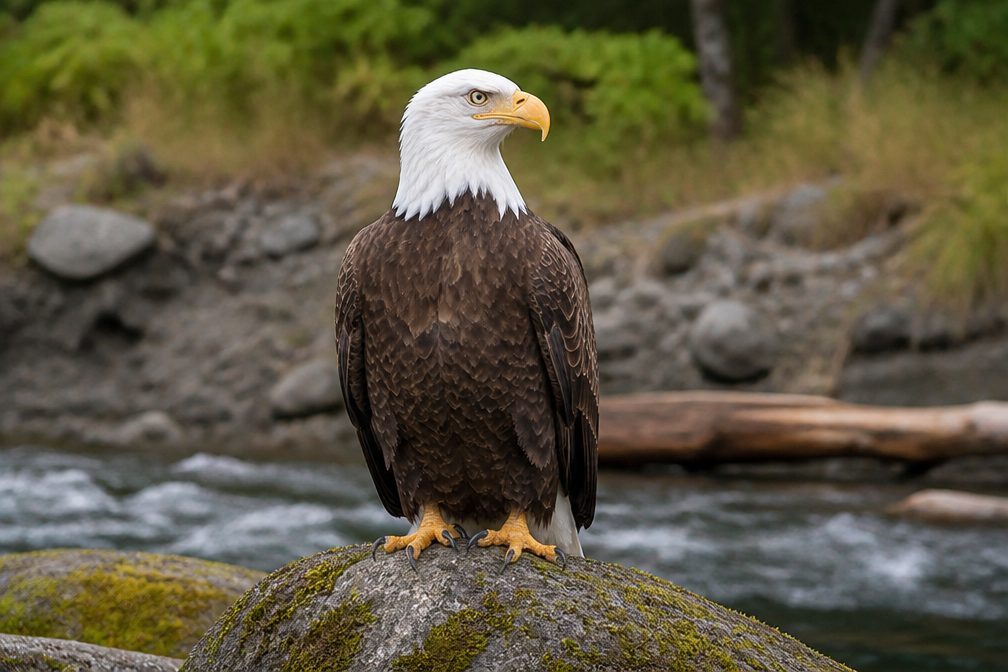 70 sightingsBald EagleMost seen around 10 AMSighting map
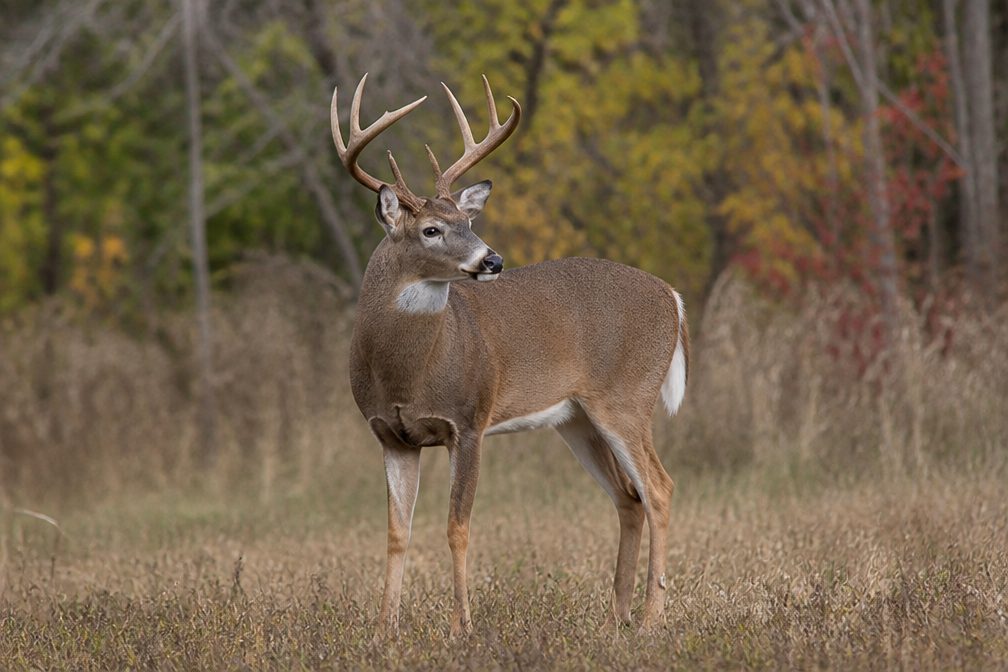 56 sightingsWhite-tailed DeerMost seen around 6 AMSighting map
 68 sightingsSandhill CraneMost seen around 7 AMSighting map
 58 sightingsPorcupineMost seen around 8 PMSighting map
 31 sightingsLoonMost seen around 5 PMSighting map
Sighting maps show where each species has been reported across Sleeping Bear Dunes. Wildlife moves, so no sighting is guaranteed.
Keep exploring
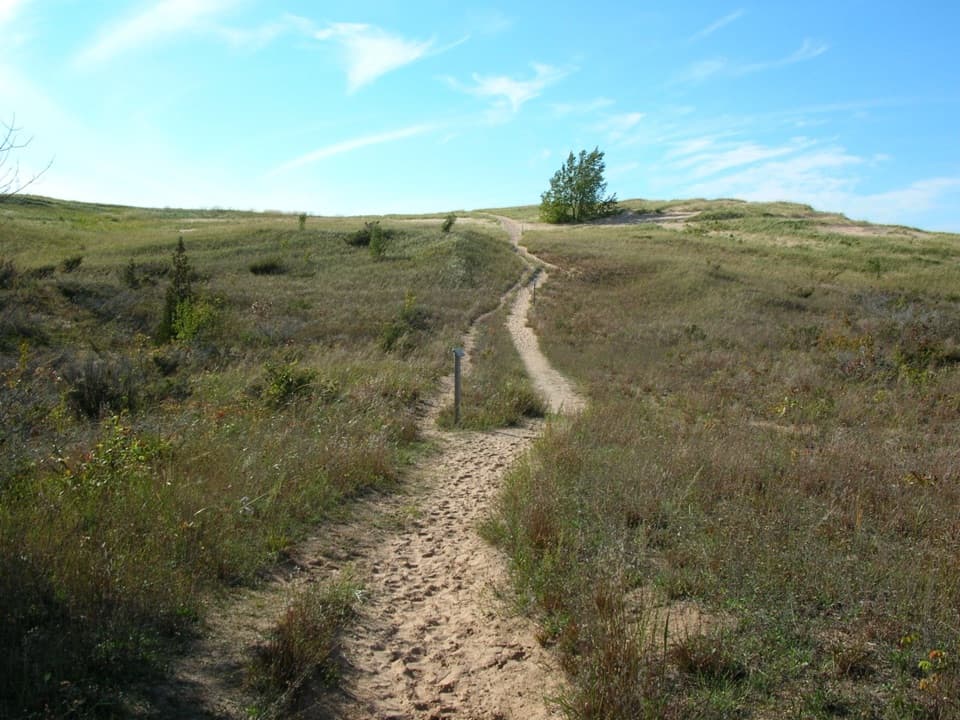 ChallengingSleeping Bear Point Trail2.8 mi · 2 hr · 0.3 mi awayGhost forest, open dunes, and Lake Michigan in one sandy loop.
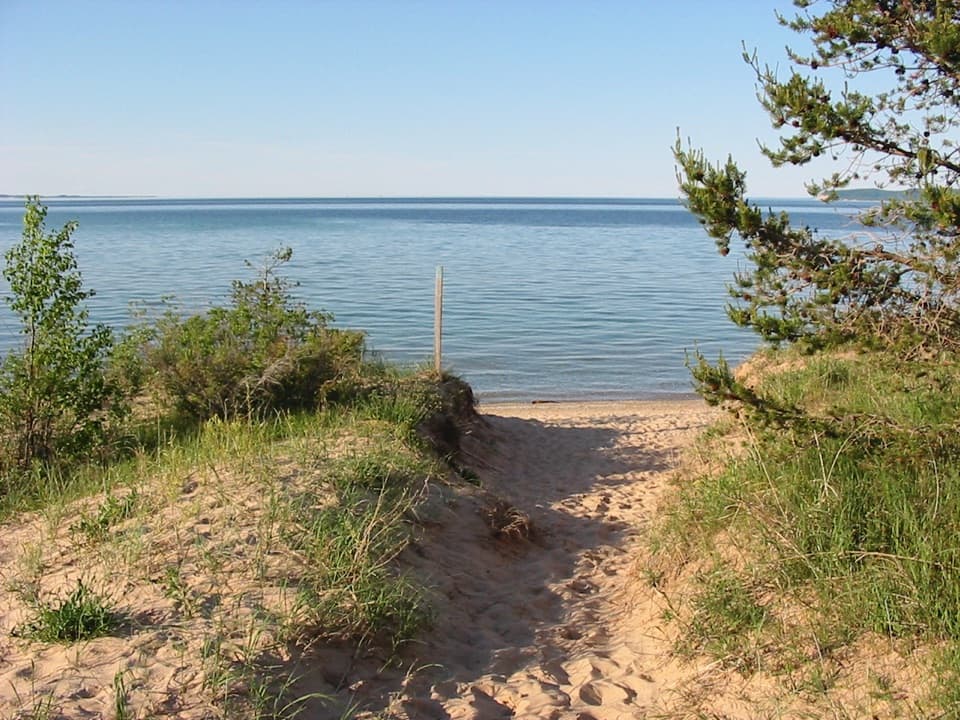 EasySleeping Bear Point Spur Trail0.7 mi · 36 min · 0.3 mi awayA quick sandy walk ends at the Lake Michigan beach.
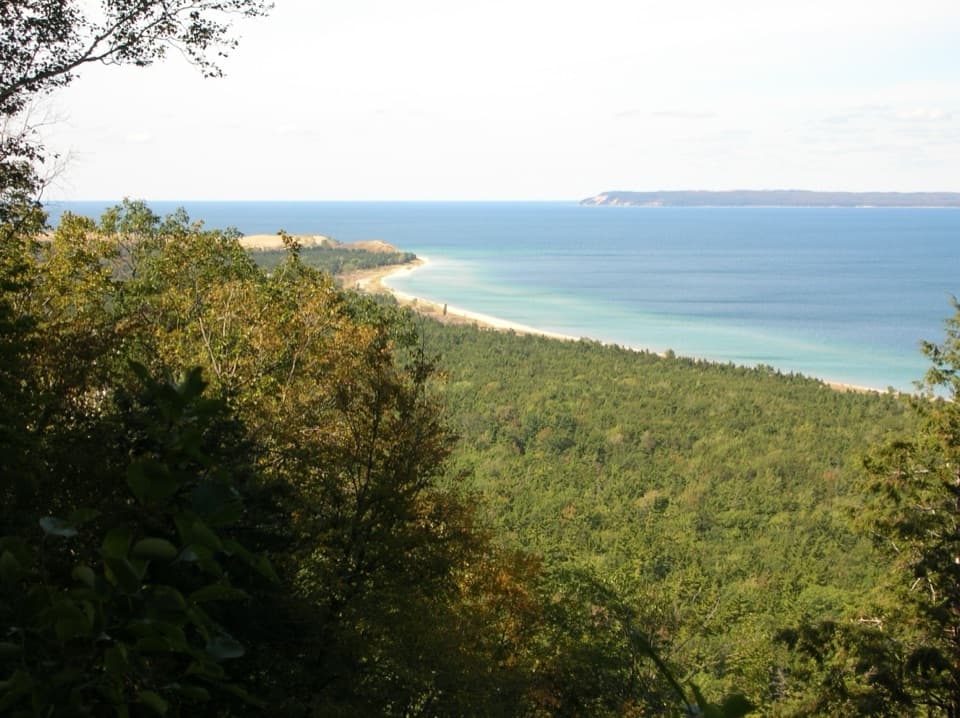 ModerateAlligator Hill Advanced Loop4.6 mi · 2.8 hr · 1.4 mi awayFollow the steep southern loop to Islands Lookout above Lake Michigan.EasyAlligator Hill Easy Loop3 mi · 1.8 hr · 1.4 mi awayA forest climb opens onto Lake Michigan and the islands.ModerateAlligator Hill Intermediate Loop4.7 mi · 2.5 hr · 1.4 mi awayA hilly forest loop to Islands Lookout and Manitou views.
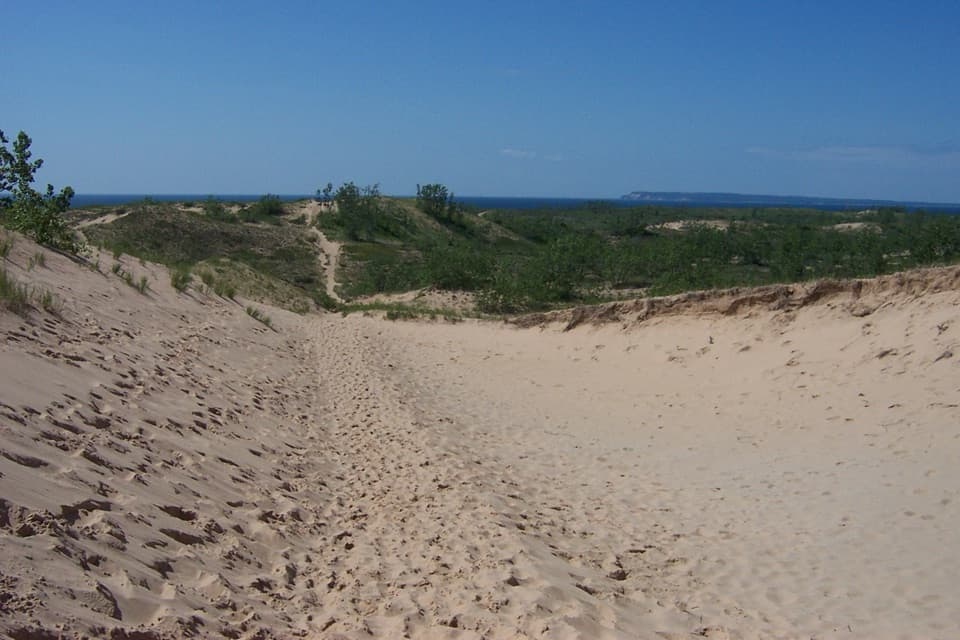 ChallengingDunes Hiking Trail3.5 mi · 3.5 hr · 1.8 mi awayNine sandy hills stand between you and Lake Michigan.
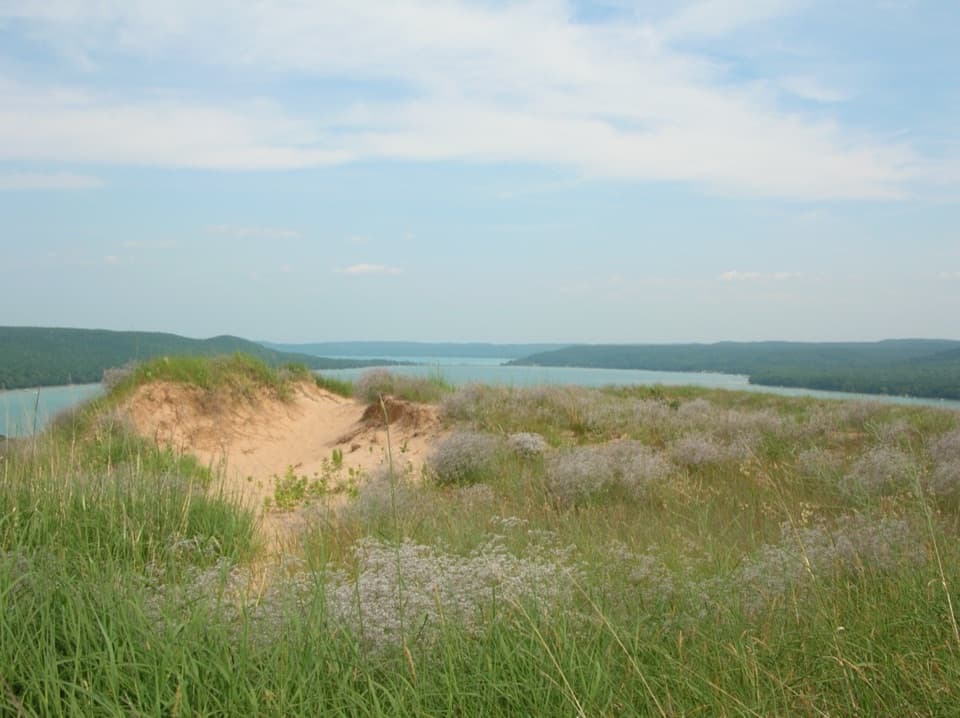 ModerateCottonwood Trail1.5 mi · 1 hr · 2.6 mi awayA marked dune loop reaches a bench above Glen Lake.
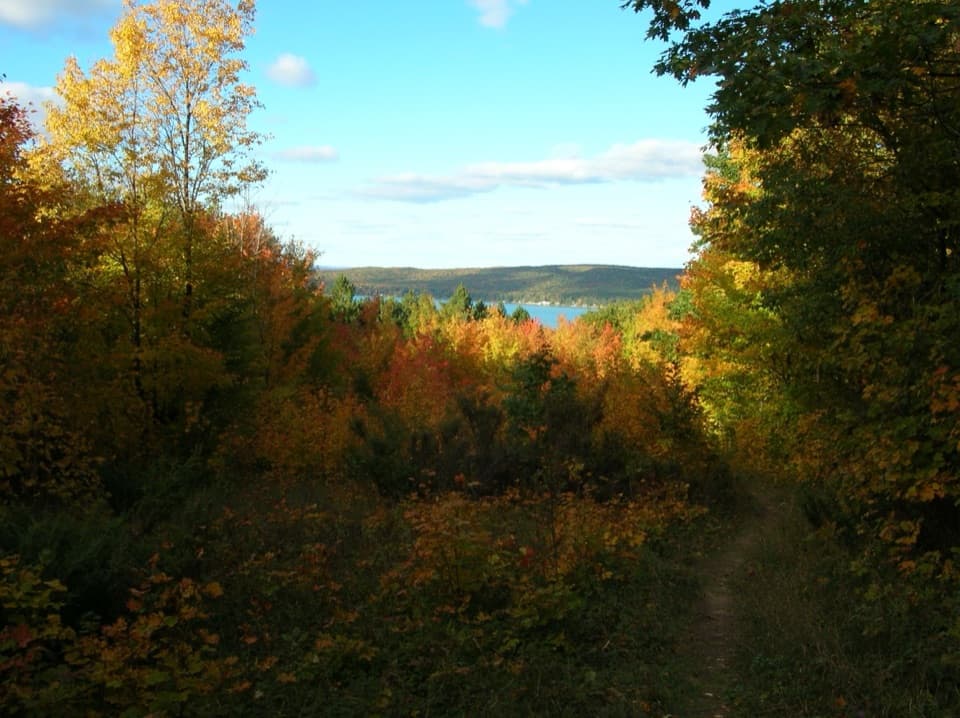 ModerateWindy Moraine Trail1.5 mi · 1 hr · 3.7 mi awayA short hill loop for a Glen Lake glimpse and forest stories.
 Lodging · 0.5 mi awaySleeping Bear InnSleep in Glen Haven's historic inn, with the beach across the road.
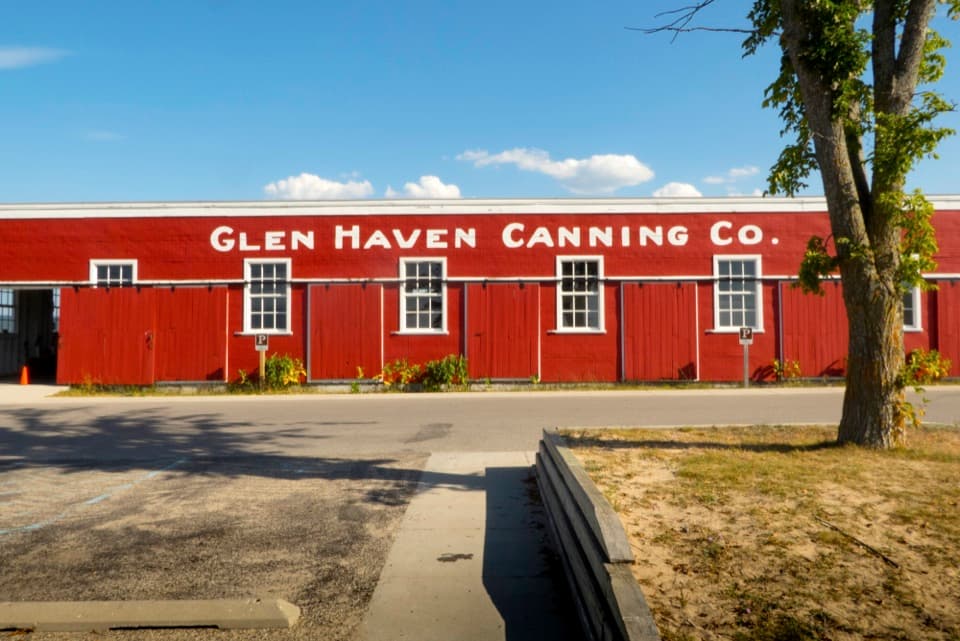 Sight · 0.5 mi awayGlen Haven Cannery and Boat MuseumFruit cannery, Great Lakes boats, and a cordwood town’s story.
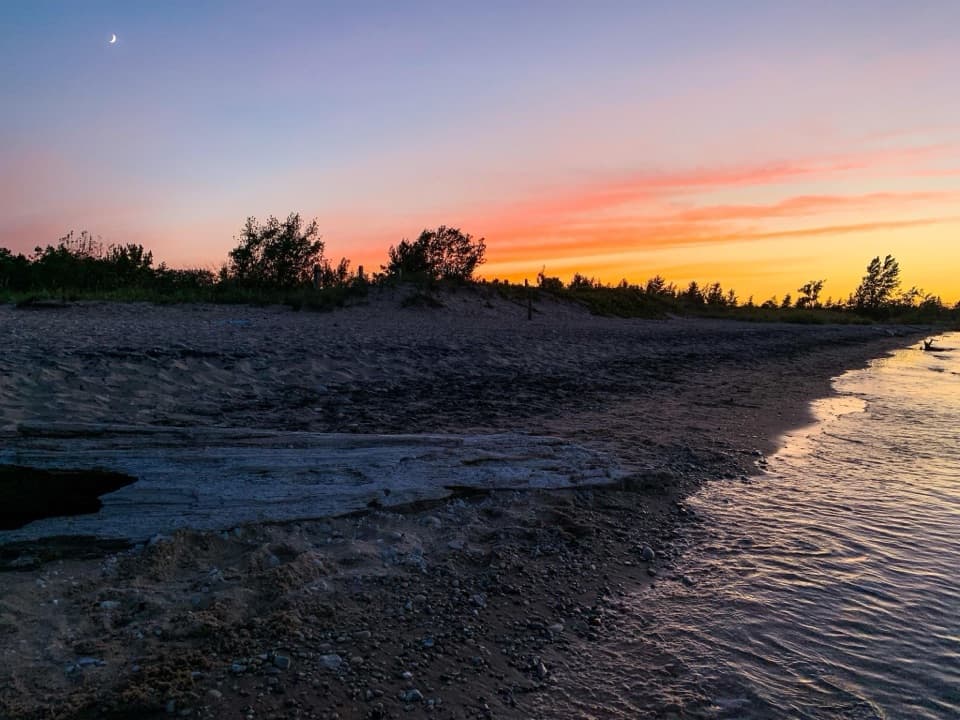 Beach · 0.5 mi awayGlen Haven BeachA pebbly swim stop beside an old shipping port.
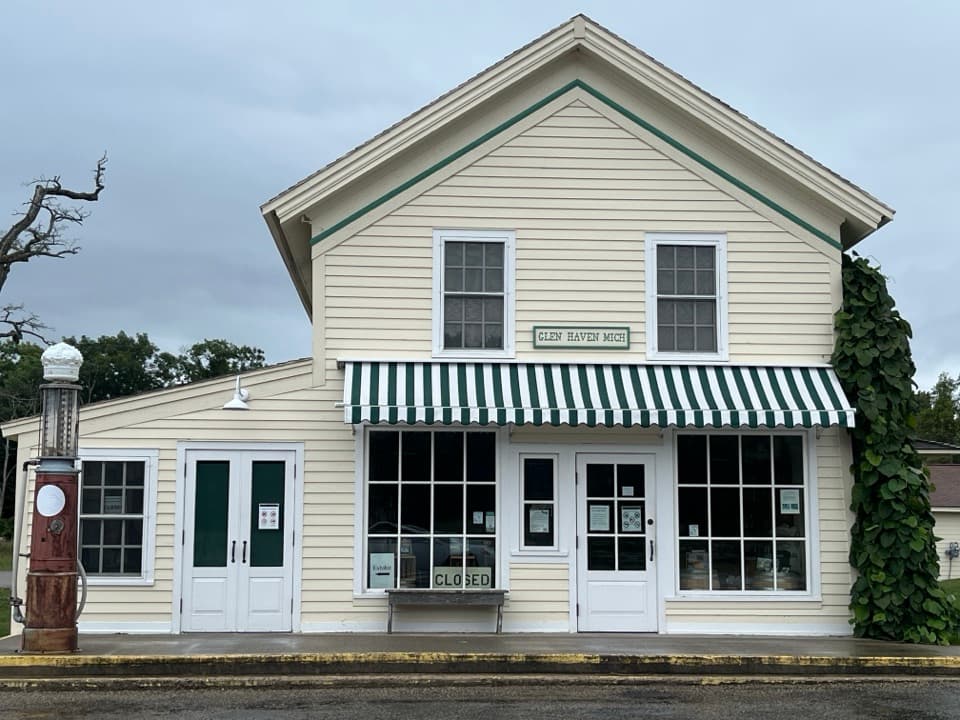 Store · 0.5 mi awayGlen Haven General StoreA small shop with a surprisingly big role in company-town life.
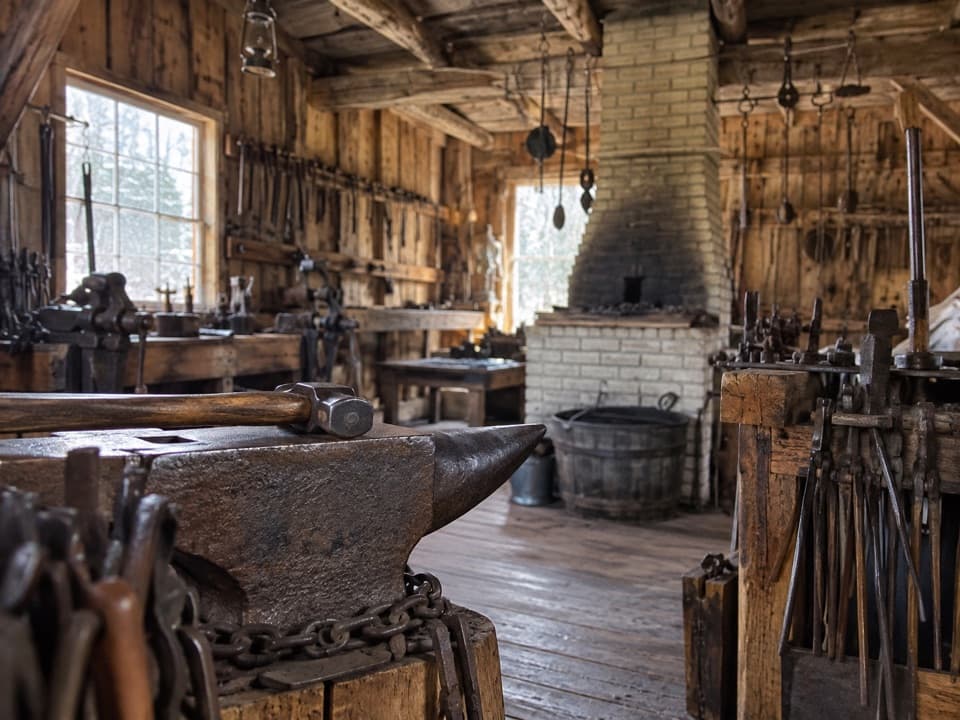 Sight · 0.5 mi awayGlen Haven Blacksmith ShopCatch a live forge demonstration in a shop from the 1860s.
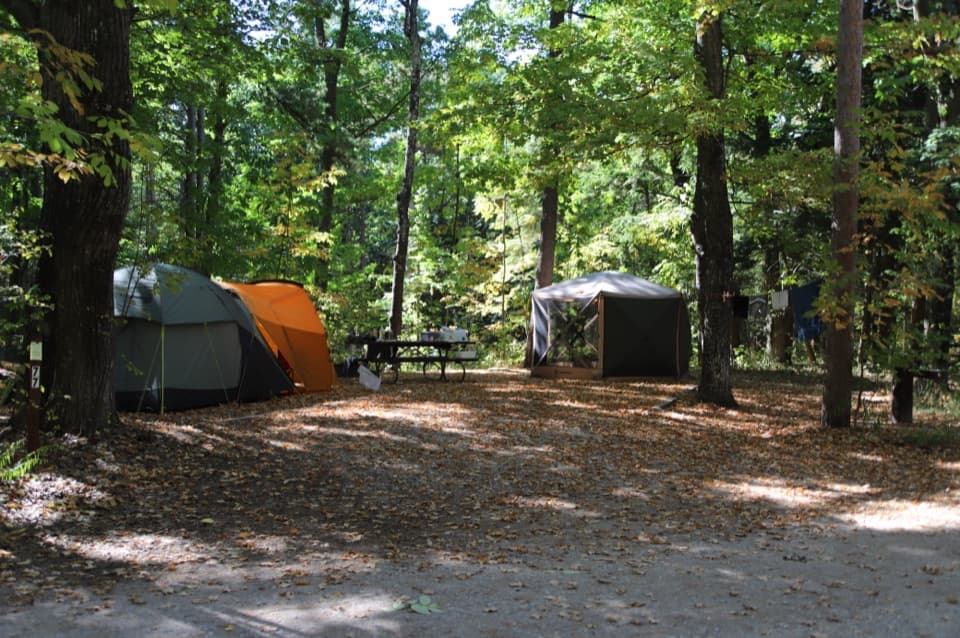 Campground · 1 mi awayD.H. Day CampgroundWooded campsites put the beach walk and Heritage Trail close.
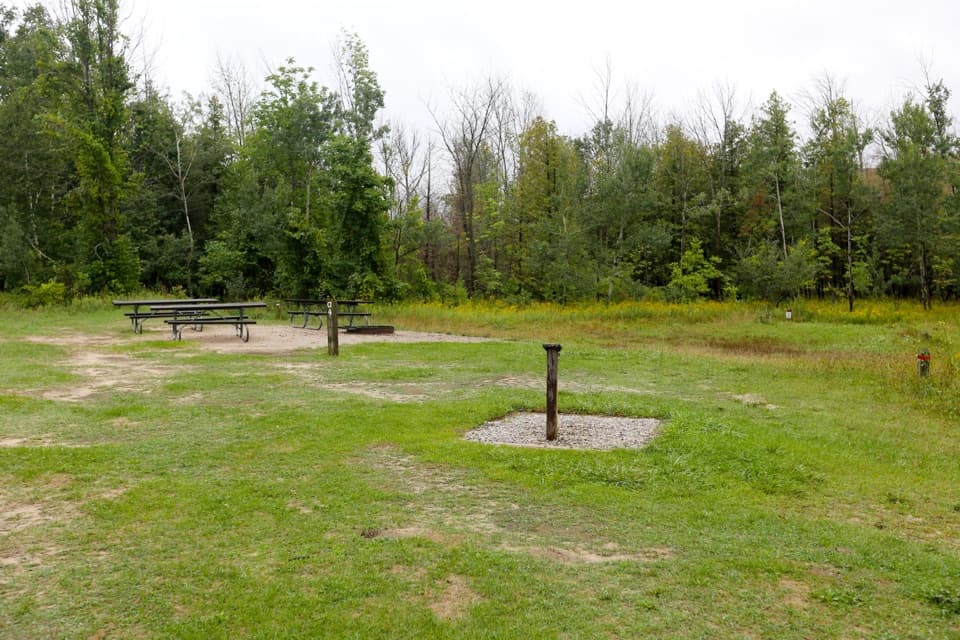 Campground · 1.3 mi awayD. H. Day Group CampgroundFour tent-only group sites near the Dune Climb.
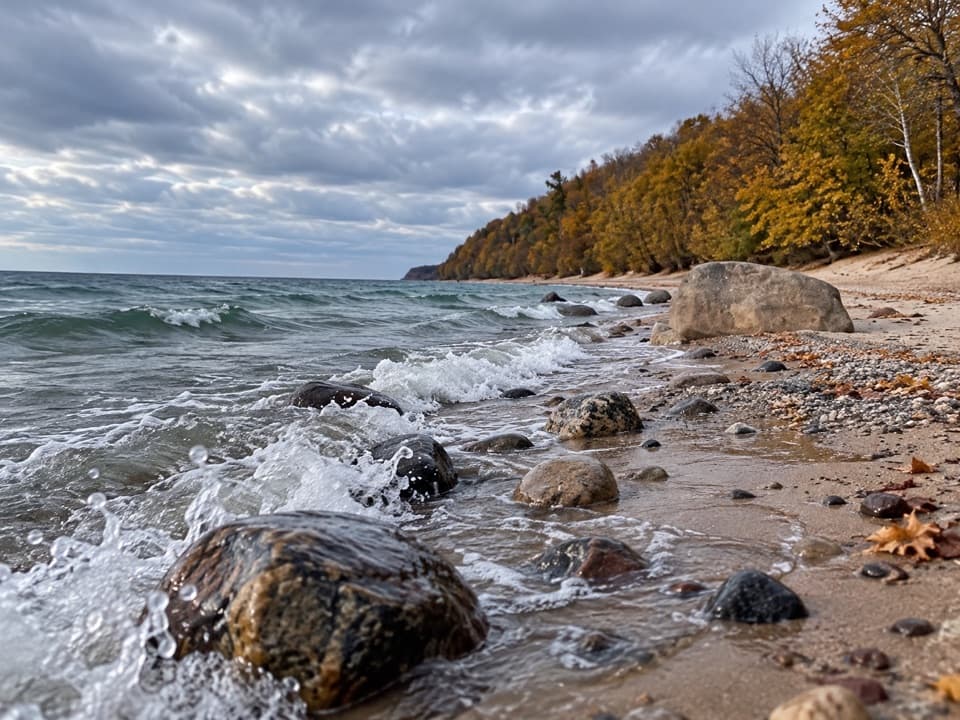 Beach · 1.4 mi awaySunset Shores BeachStony Lake Michigan shore, with one boulder worth framing.
Parkwolf’s Sleeping Bear Dunes ranking
The audio tour guide for the drive, plus offline maps, trails, and wildlife heatmaps for when the signal drops.