Parking
Use the Cottonwood Trailhead lot at Stop #4 on Pierce Stocking Scenic Drive. The paved lot is small and may fill on busy days. There is no water or restroom at Stop #4; nearby Picnic Mountain has both. Vehicle access is seasonal.
#7 of 34 trails in Sleeping Bear Dunes
Sleeping Bear Dunes National Lakeshore, MI
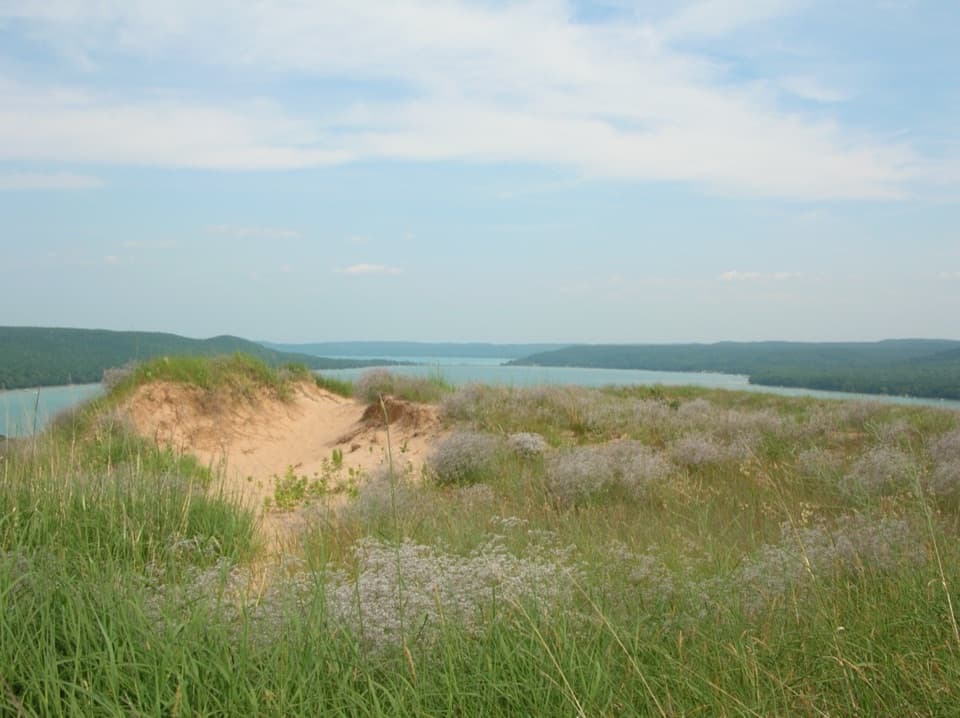
A marked dune loop reaches a bench above Glen Lake.
Overview
Cottonwood is a 1.5-mile loop from Stop #4 on the Pierce Stocking Scenic Drive, winding over perched dunes and back. Allow about an hour. Nine marked interpretive stops make this a good way to get into the dune landscape without taking on a long hike. The tradeoff is the footing: much of the route is loose sand over rolling hills, so the short distance can feel like more work than it looks.
 Parkwolf’s verdictIs this the hike for you?
Map & elevation
Plan your hike
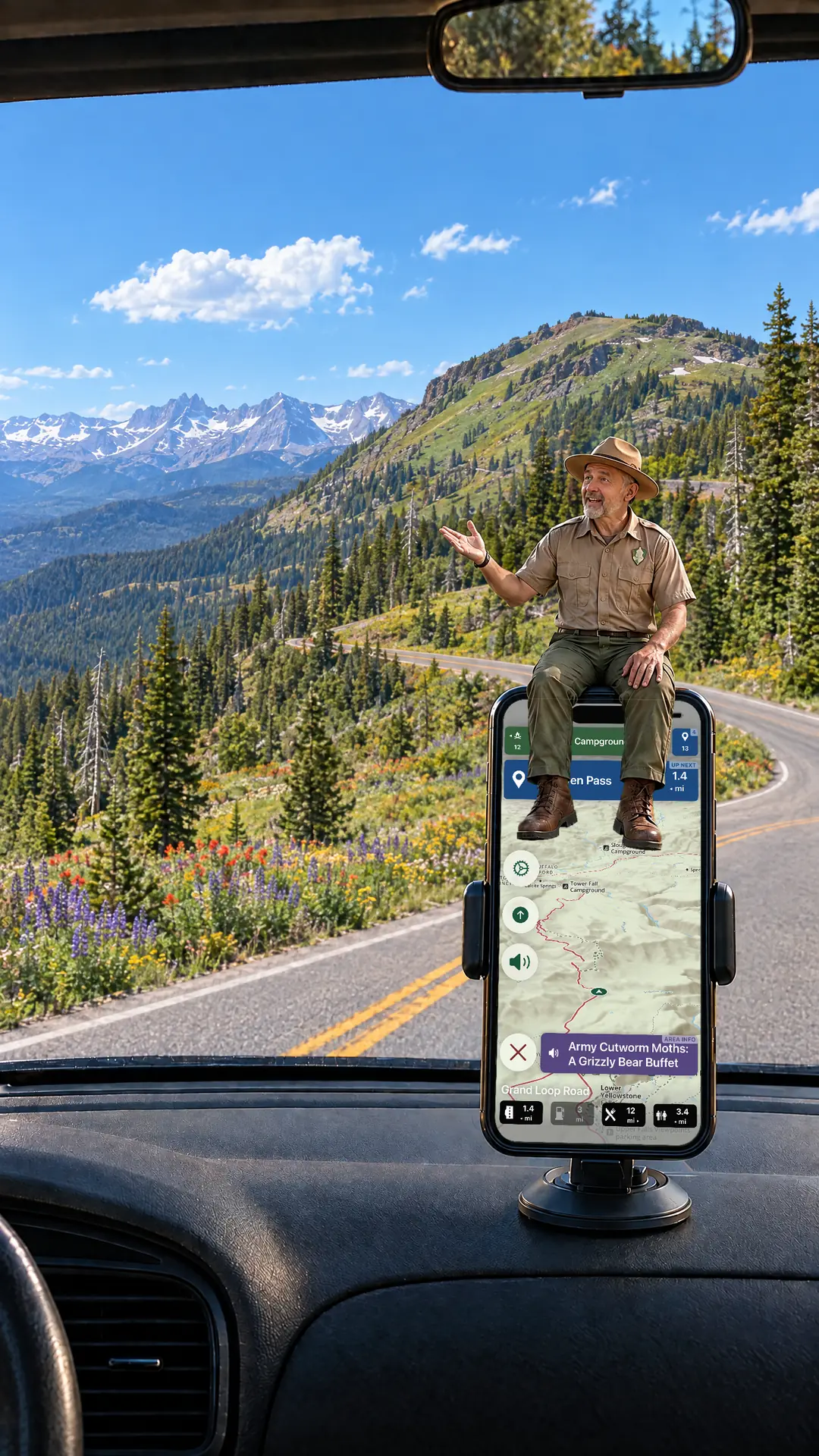
The highest, rockiest slopes around here are a summer buffet for grizzly bears.
Sleeping Bear Dunes Tour Guide
Parkwolf is a GPS audio tour guide for Sleeping Bear Dunes National Lakeshore. As you drive, it chimes in with what’s ahead: hidden gems, upcoming stops, history, geology, and wildlife, right through your car’s speakers.
See the Sleeping Bear Dunes audio tourRecorded for this trailhead
Dune Overlook: The View Without the Sand Walk“You're coming up on the Dune Overlook and Cottonwood Trail stops on Pierce Stocking Scenic Drive.”
Plays as you drive up to this trailhead in the Parkwolf Sleeping Bear Dunes Tour Guide.
More stories near here in the app
“Fantastic app with many points of information… It’s great to just turn on while you’re driving and it gives you an audio tour of the national Park. We love it!!!!”


Trail guide
The trailhead sits at Stop #4 on the seasonal scenic drive. Check the road status before you go; it is not open to vehicles all year. A park pass is required for trail use. The paved lot is small and can fill on busy days. There is no water or restroom at this stop; nearby Picnic Mountain has both as a separate stop. Leashed pets are allowed on Cottonwood, but they are not allowed on the surrounding dunes trails.
Wooden posts with green tops mark the loop. Keep to the marked route: dune plants grow in fragile sand, and trampling them can leave damage that takes years to heal.
Most of the walk crosses open, hilly sand. Cottonwoods shade a few stretches, but shade comes and goes rather than covering the loop. Bring water and sun protection, especially on a warm, bright day. Poison ivy grows along the trail.
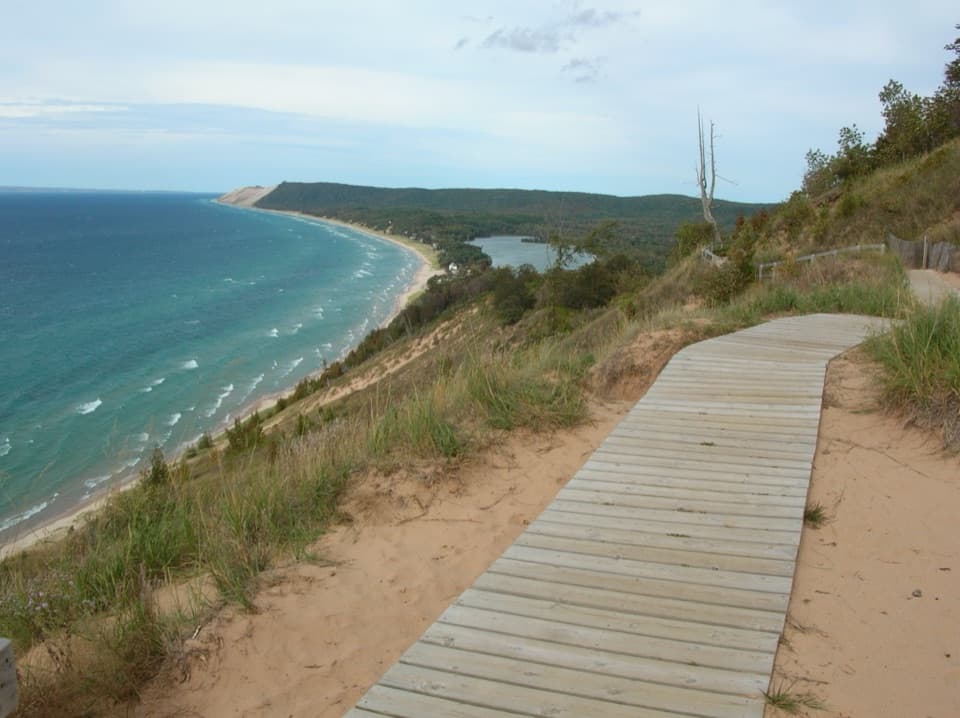
The bench at post #7 is the main pause. From there, look across the dunes toward Glen Lake and the Dune Climb. The white D. H. Day barn is another landmark, and on some stretches Lake Michigan and the Manitou Islands appear beyond the dunes. The bench makes a useful place to frame the foreground dune grass with Glen Lake behind it.
At post #2, the bowl-shaped blowout shows how prevailing southwesterly winds can strip sand from a dune while grasses hold the lee side in place. A little farther on, the path crosses a buried piece of an abandoned loop of the old scenic drive. Gravel can still show through where windblown sand has not covered it.
Post #4 explains a dune-restoration study begun in 1984. The experiments used beachgrass, fertilizer, and snow fencing to catch moving sand. Staying on the marked tread is part of protecting that work and the plants that hold the dunes together.
Beachgrass and sand reed help bind new dunes; cottonwoods on an active dune may be buried by sand or have their roots exposed. Their surface runners can sprout new trees. The dunes receive rain, yet strong sun and wind, quick drainage, and little moisture-holding soil make them drier than the nearby forest.
Look for seasonal changes as you go. Pink beach pea blooms in July and August, wormwood flowers into fall, and bearberry has spring flowers followed by red berries later in the year. In the more sheltered parts of the loop, look for paper birch, juniper, buffaloberry, and sand cherry.
Wildlife
 27 sightingsPiping PloverMost seen around 6 PMSighting map
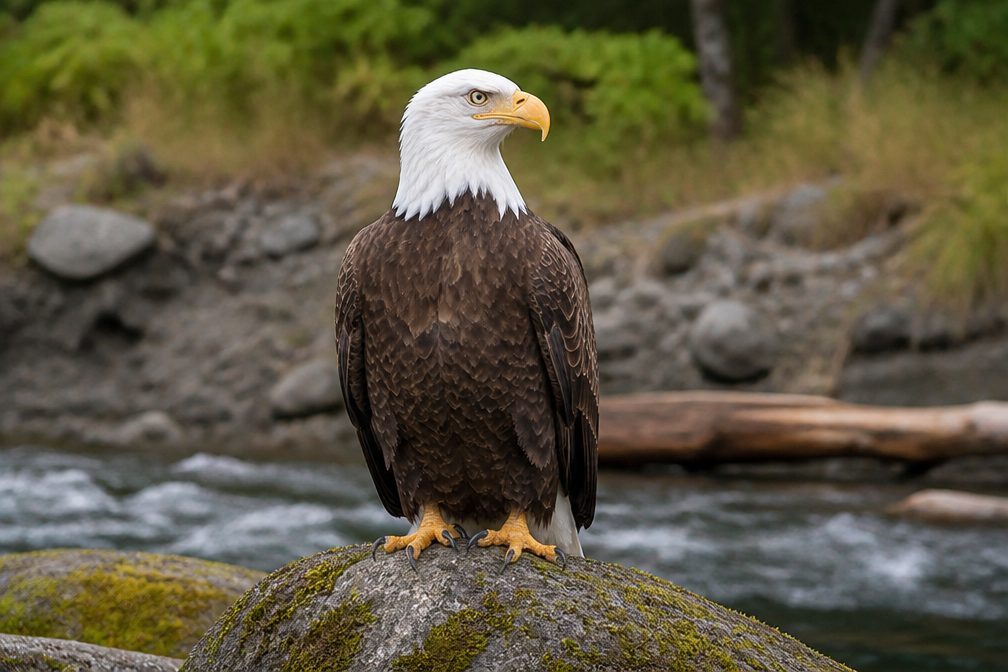 70 sightingsBald EagleMost seen around 10 AMSighting map
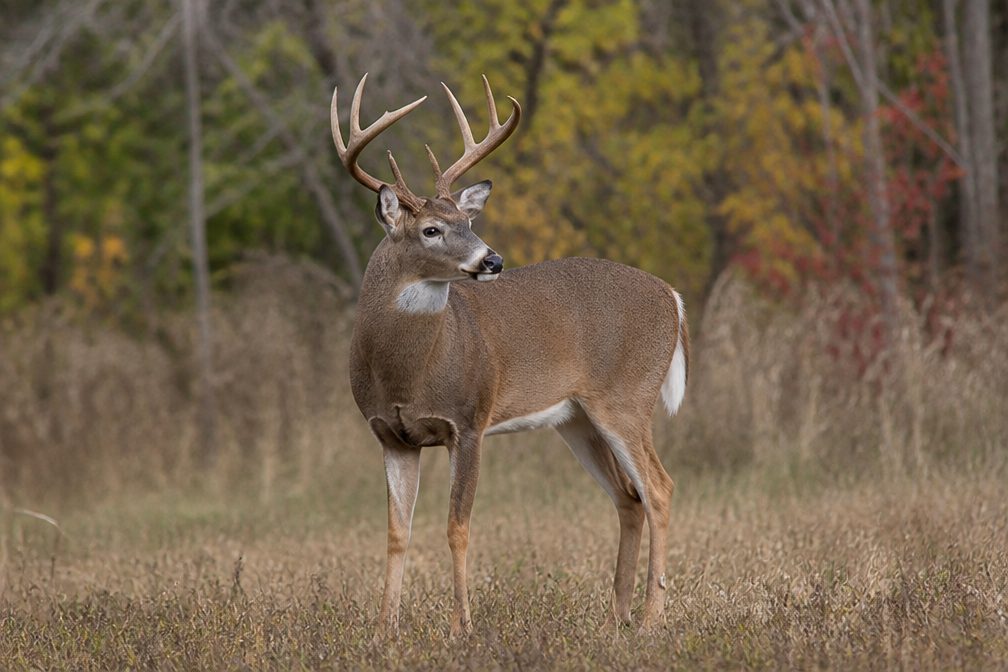 56 sightingsWhite-tailed DeerMost seen around 6 AMSighting map
 68 sightingsSandhill CraneMost seen around 7 AMSighting map
 58 sightingsPorcupineMost seen around 8 PMSighting map
 31 sightingsLoonMost seen around 5 PMSighting map
Sighting maps show where each species has been reported across Sleeping Bear Dunes. Wildlife moves, so no sighting is guaranteed.
Keep exploring
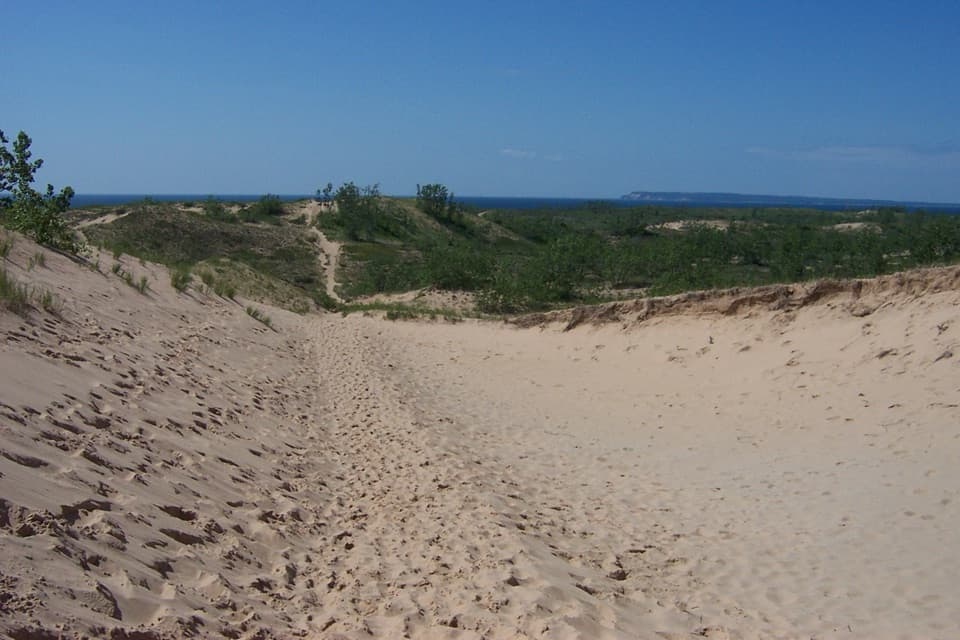 ChallengingDunes Hiking Trail3.5 mi · 3.5 hr · 0.8 mi awayNine sandy hills stand between you and Lake Michigan.
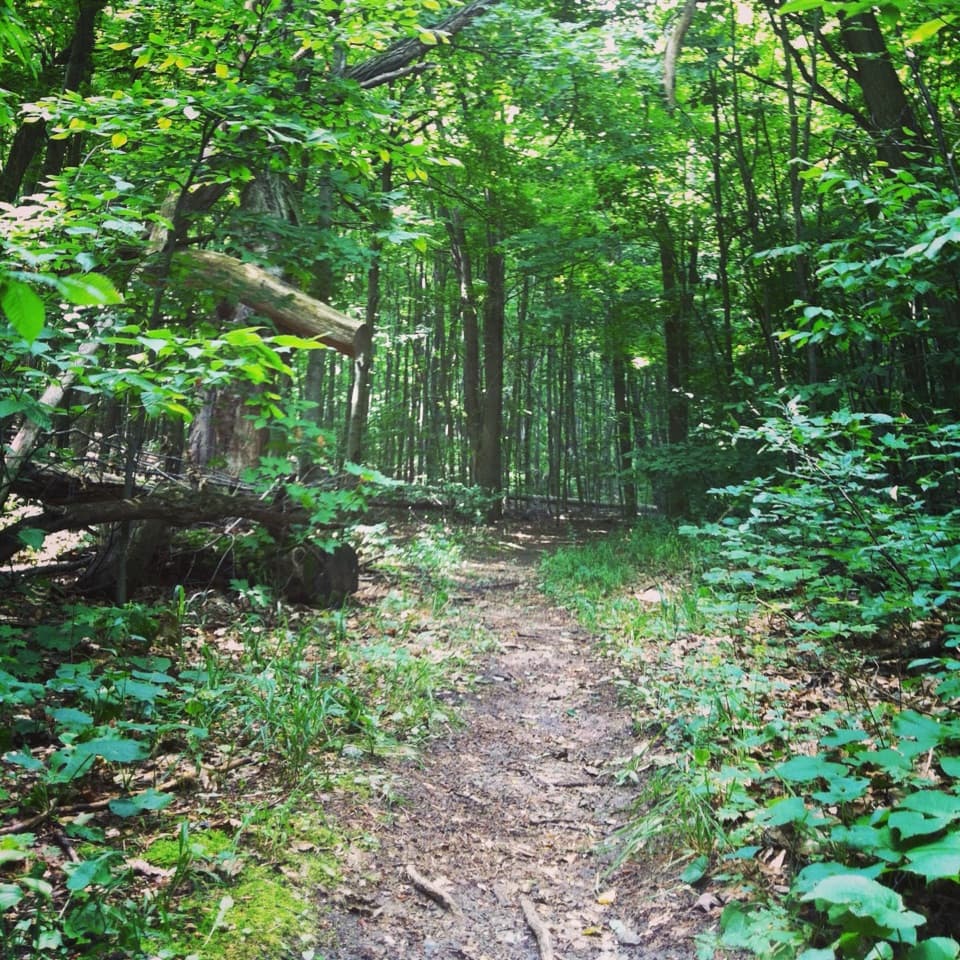 ModerateShauger Hill Trail2.4 mi · 1.3 hr · 1.5 mi awayA shaded woodland loop for wildflowers, without lake views.
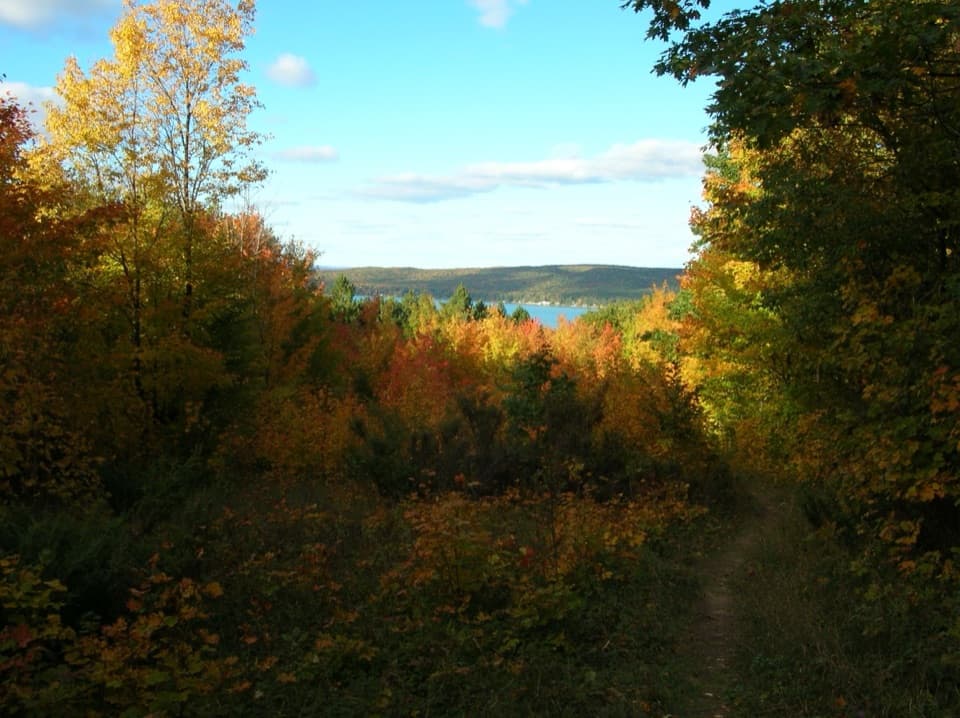 ModerateWindy Moraine Trail1.5 mi · 1 hr · 1.5 mi awayA short hill loop for a Glen Lake glimpse and forest stories.
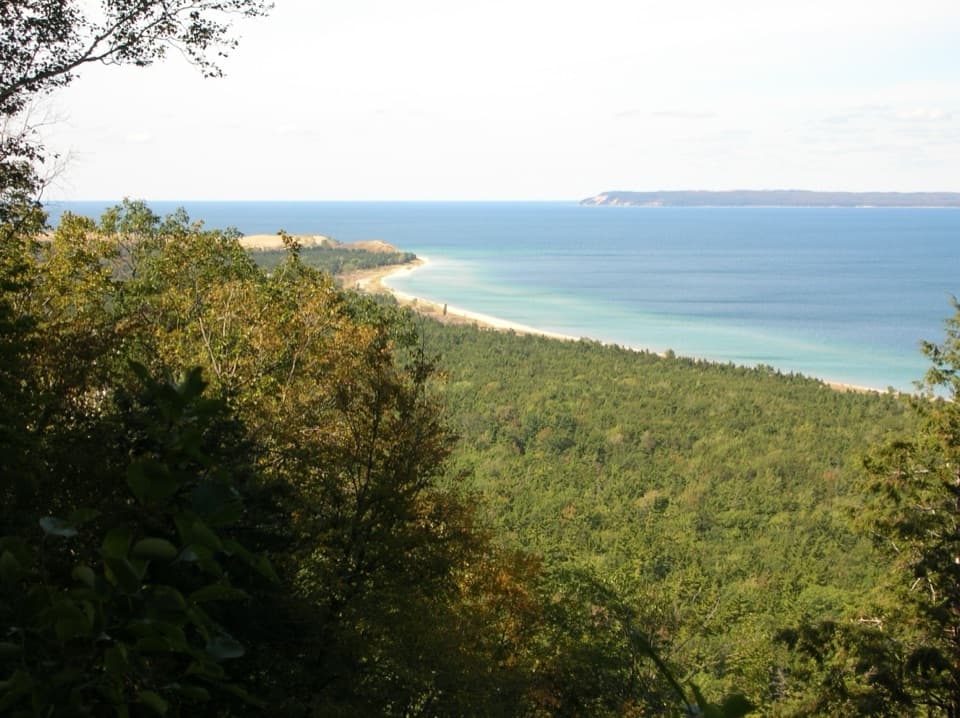 ModerateAlligator Hill Advanced Loop4.6 mi · 2.8 hr · 1.9 mi awayFollow the steep southern loop to Islands Lookout above Lake Michigan.EasyAlligator Hill Easy Loop3 mi · 1.8 hr · 1.9 mi awayA forest climb opens onto Lake Michigan and the islands.ModerateAlligator Hill Intermediate Loop4.7 mi · 2.5 hr · 1.9 mi awayA hilly forest loop to Islands Lookout and Manitou views.
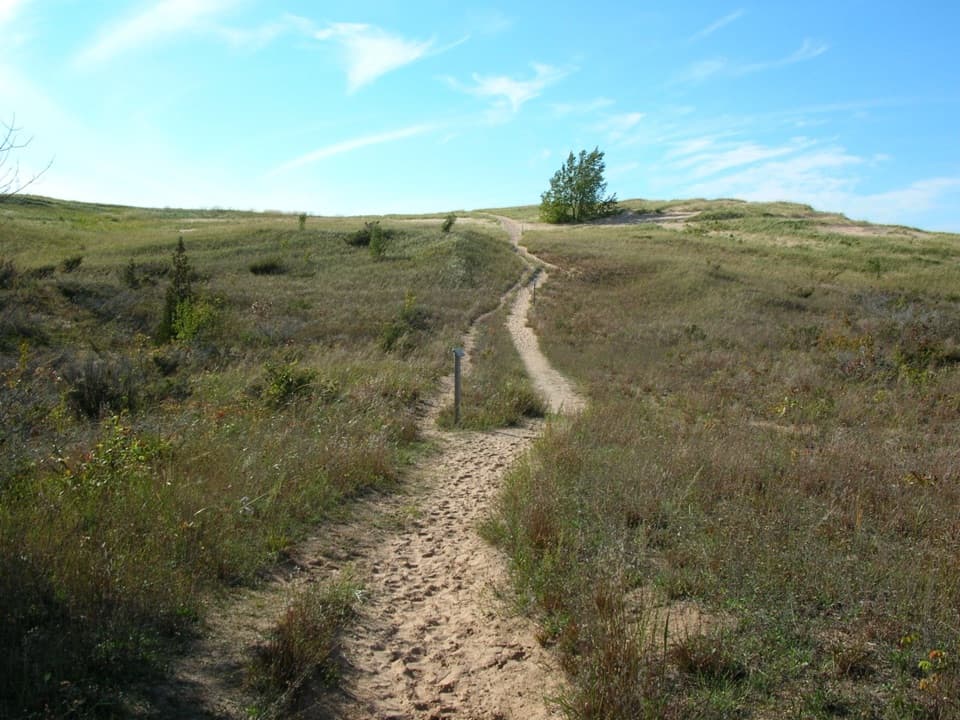 ChallengingSleeping Bear Point Trail2.8 mi · 2 hr · 2.6 mi awayGhost forest, open dunes, and Lake Michigan in one sandy loop.
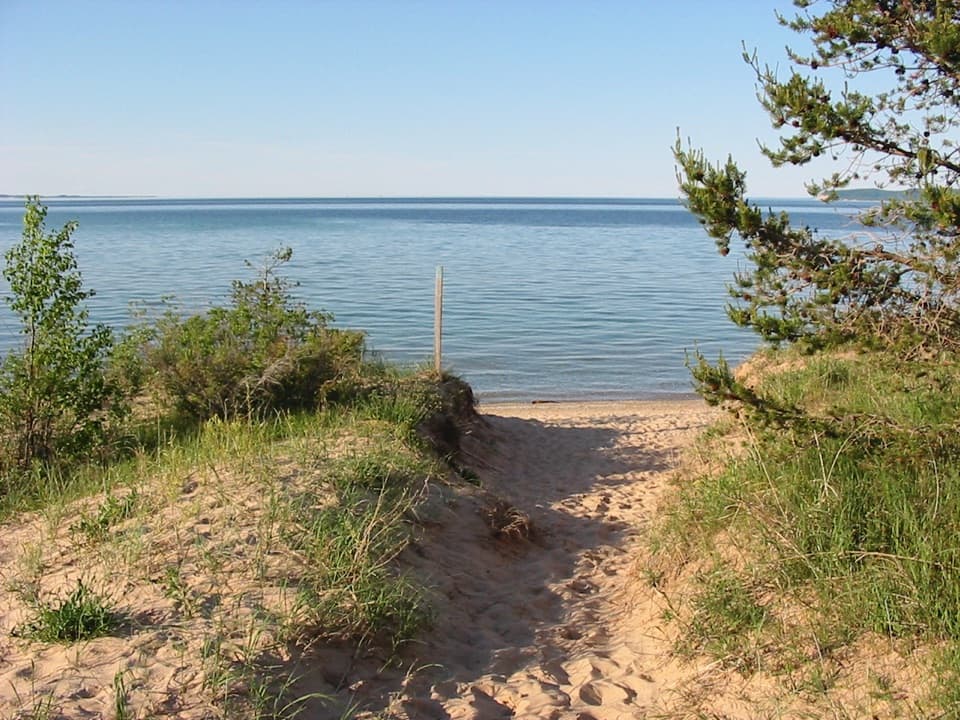 EasySleeping Bear Point Spur Trail0.7 mi · 36 min · 2.6 mi awayA quick sandy walk ends at the Lake Michigan beach.
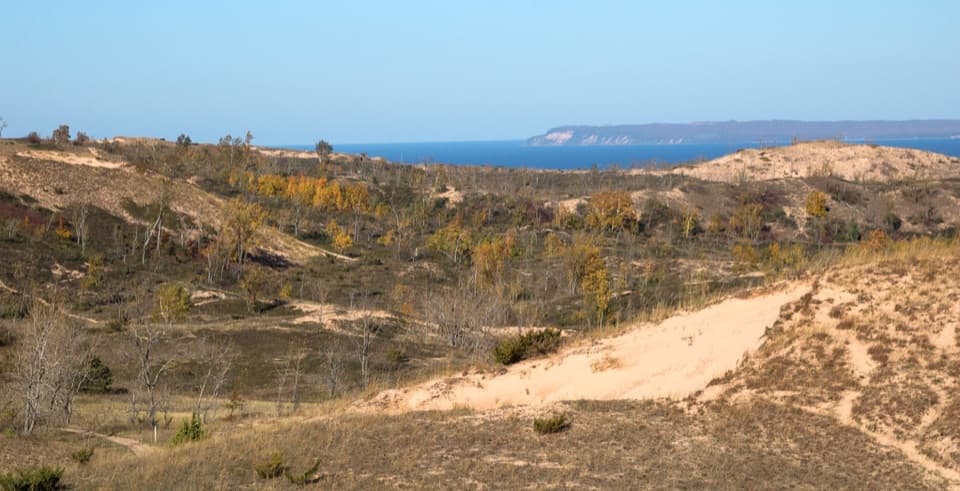 Sight · 0.1 mi awayDune OverlookA ramped deck frames dunes, Glen Lake, Lake Michigan and Manitou Islands
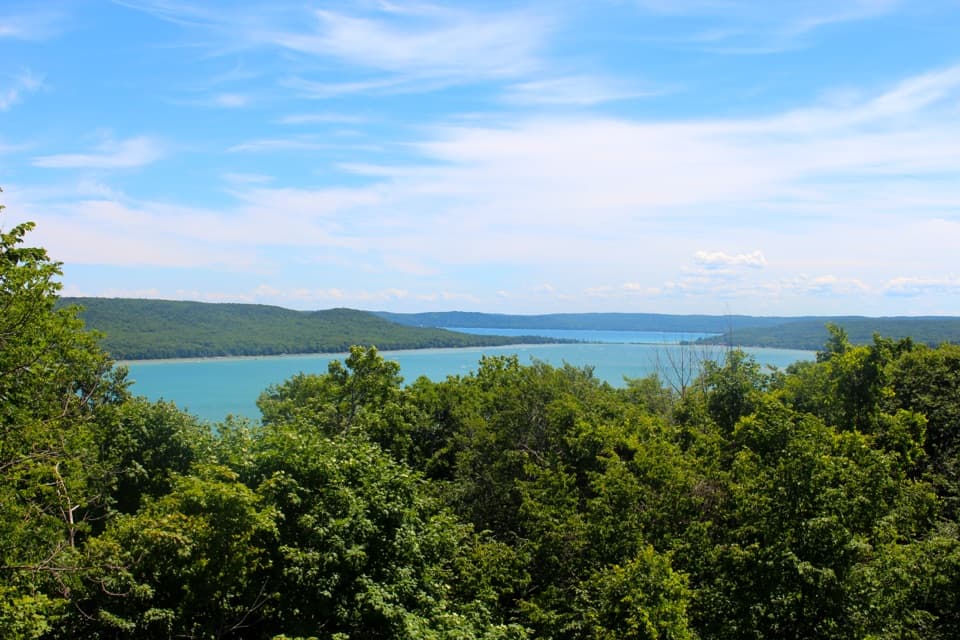 Sight · 0.4 mi awayGlen Lake OverlookTwo connected lakes and an alligator-shaped hill from one pull-off.
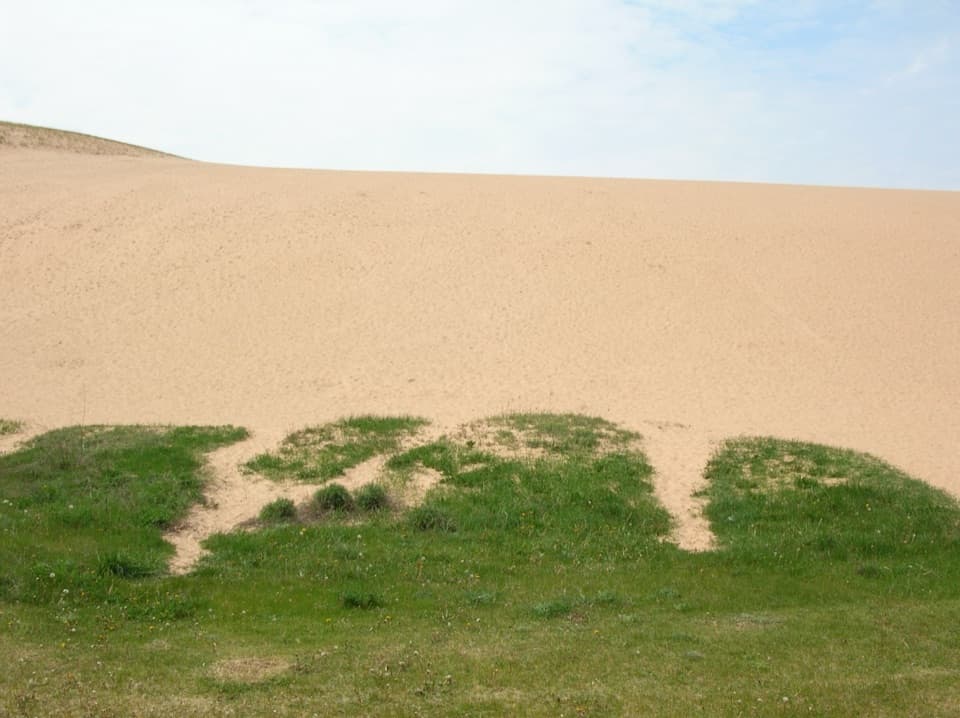 Sight · 0.8 mi awayDune ClimbClimb loose sand for a higher view over Little Glen Lake.
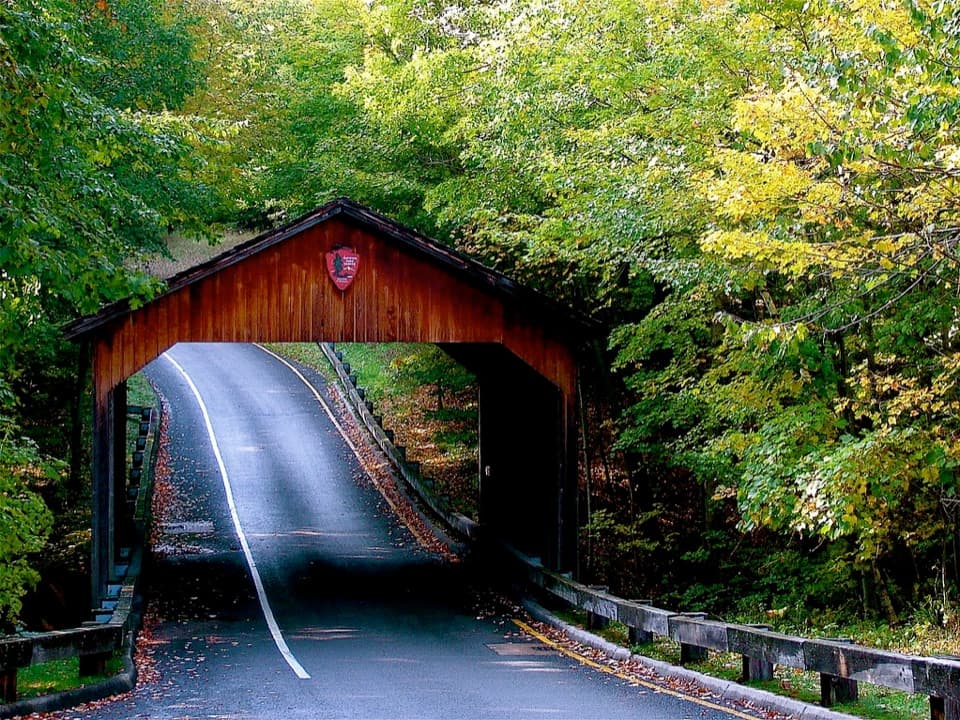 Sight · 0.9 mi awayPierce Stocking Covered BridgeA historic roadside bridge at the scenic drive's first stop.
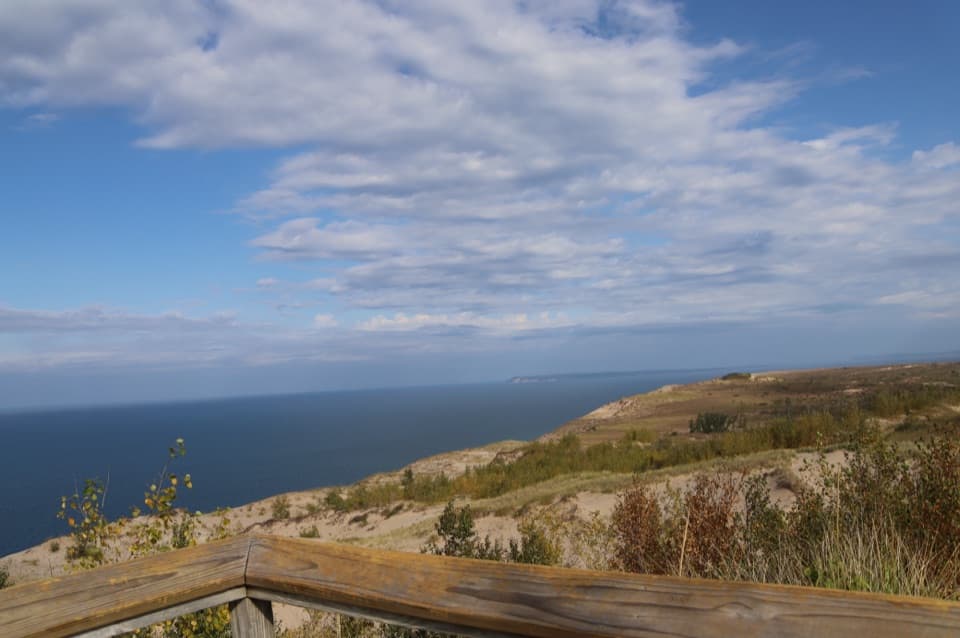 Sight · 1.2 mi awaySleeping Bear Dune OverlookSee the namesake dune a mile away, perched above Lake Michigan.
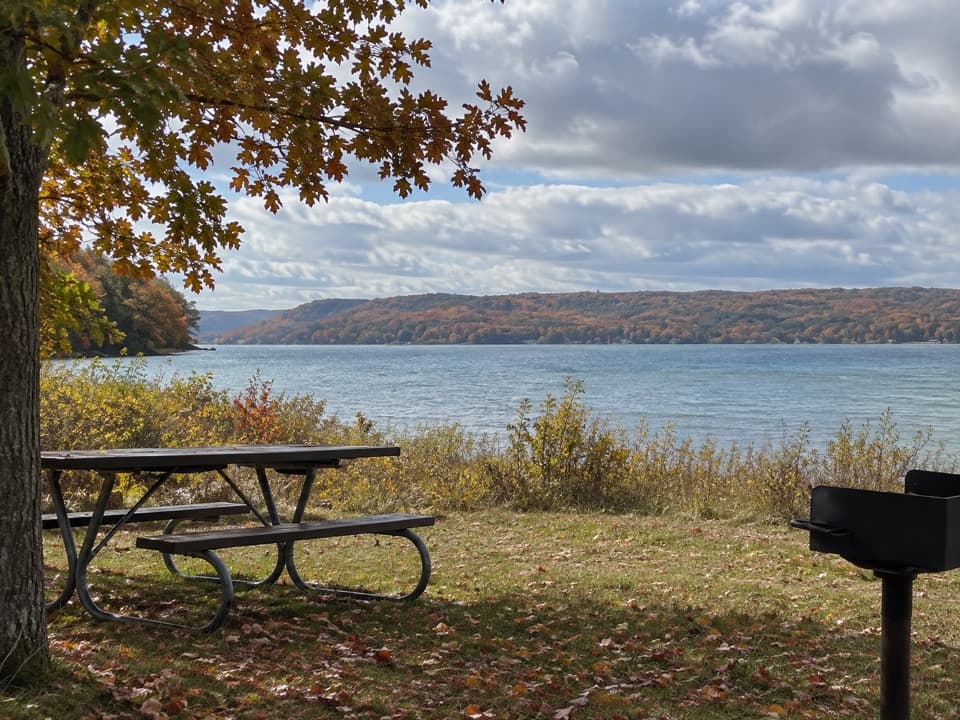 Picnic area · 1.2 mi awayLittle Glen Lake Picnic AreaPicnic by Little Glen Lake, with the Dune Climb across the water.
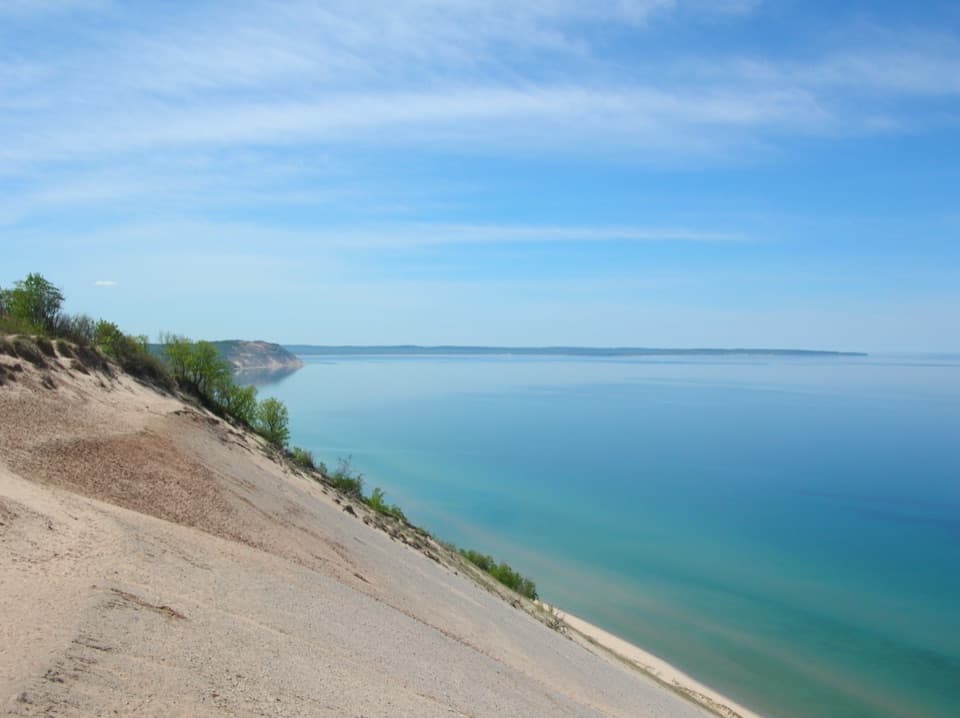 Sight · 1.3 mi awayLake Michigan OverlookLake Michigan opens up from 450 feet above the shore.
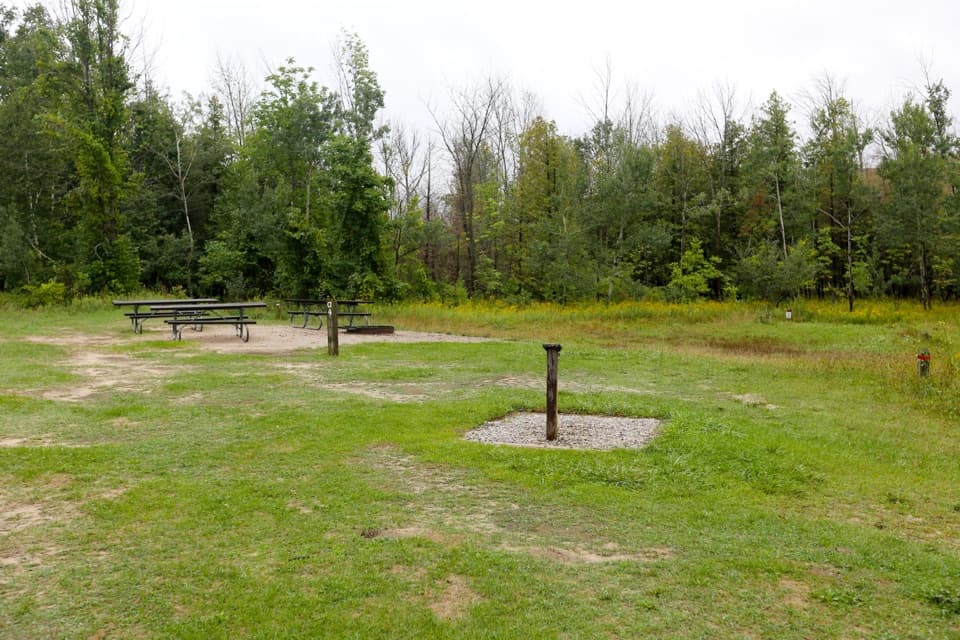 Campground · 1.3 mi awayD. H. Day Group CampgroundFour tent-only group sites near the Dune Climb.
Parkwolf’s Sleeping Bear Dunes ranking
The audio tour guide for the drive, plus offline maps, trails, and wildlife heatmaps for when the signal drops.