1 active Abel Tasman alert
- ClosureRoad resealing closures near Kaiteriteri, 29–30 OctoberExpect rolling closures on roads near Kaiteriteri from 6am to 8pm on Thursday 29 and Friday 30 October while crews reseal the roads.Official details
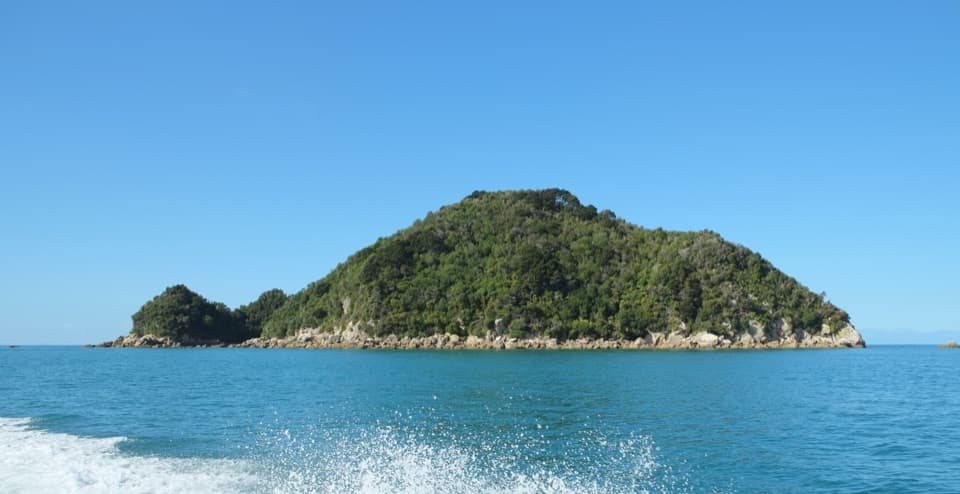
Sight · Abel Tasman National Park
Look for fur seals beside a protected offshore island.
Overview
Map
Plan your stop

The highest, rockiest slopes around here are a summer buffet for grizzly bears.
Abel Tasman Tour Guide
Parkwolf is a GPS audio tour guide for Abel Tasman National Park. As you drive, it chimes in with what’s ahead: hidden gems, upcoming stops, history, geology, and wildlife, right through your car’s speakers.
More stories near here in the app
“Fantastic app with many points of information… It’s great to just turn on while you’re driving and it gives you an audio tour of the national Park. We love it!!!!”


Guide
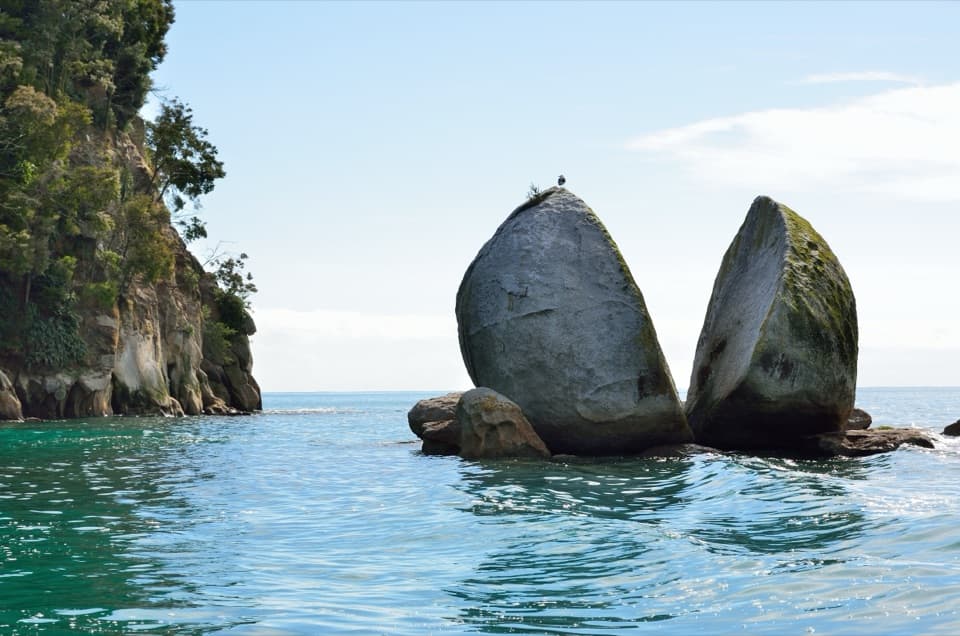
Tonga Island is a small, forested island about 1 km off Onetahuti Beach in Abel Tasman National Park. New Zealand fur seals (kekeno) breed along its rocky shoreline, which makes a boat or kayak pass the main reason to stop. Treat this as a water-viewing stop, not a landing: the island is unsuitable for public access, and DOC identifies it as permit-only.
Keep at least 20 m from seals. October through January is breeding season, when the colony is especially sensitive. Watch the rocks from a boat or kayak without closing in; a sighting is never guaranteed. For a photo, include some of the boulder shoreline rather than cropping tightly around an animal.
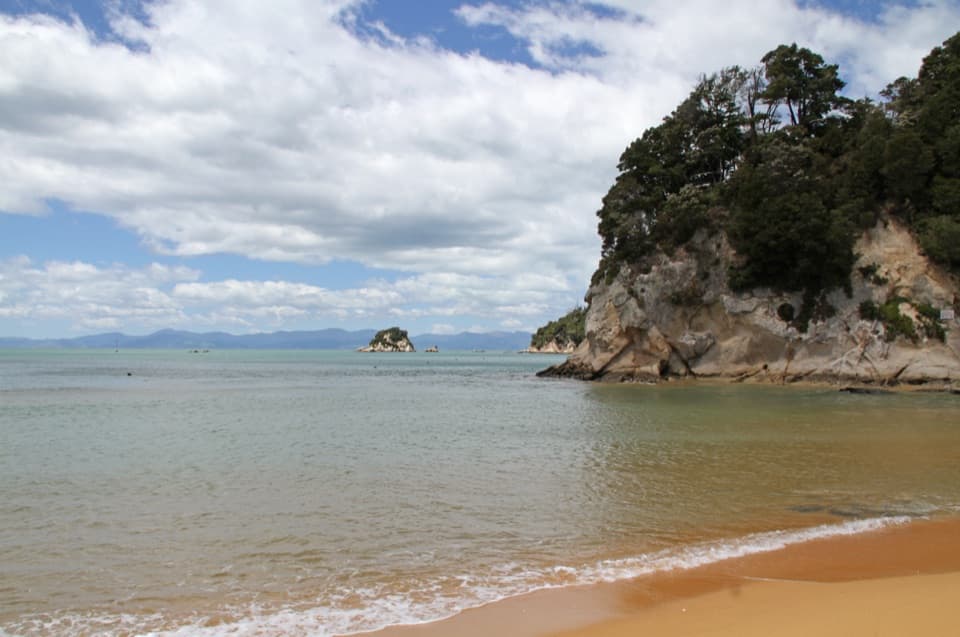
The island is roughly half a kilometre long and wide, with an 83 m high point. From the water it reads as a rounded, bush-covered rise edged by pale rocks. Onetahuti Beach sits on the mainland just across the channel, and the island is also a landmark along this stretch of the Coast Track.
Kekeno are the headline sight, but the reserve's rocky shores and islands also support spotted and pied shags, oystercatchers, herons, terns, shearwaters and gannets. Dolphins are among the marine life found in the reserve; treat them, and any other unexpected visitor, as a bonus rather than part of a guaranteed seal trip.
Tonga Island sits within a 1,835-hectare marine reserve established in November 1993. That figure describes the surrounding protected waters, not the island. Below the surface, granite boulder reefs give way to coarse sand, with fish such as blue cod, moki and triplefins among the life recorded there, alongside reef stars, cup corals and kina.
The Abel Tasman Coast Track descends from Tonga Saddle to Onetahuti Beach; seeing the island from shore is the land-based option, while boat and kayak trips pass its seal habitat. The reserve has no vehicle access, and DOC lists boat ramps at Tōtaranui, Tarakohe, Kaiteriteri and Mārahau for the wider area. For an independent paddle, check the tide and reef conditions: DOC warns of unmarked reefs, tidal changes of up to 5 m around Awaroa Inlet, and stiff summer sea breezes.
Wildlife
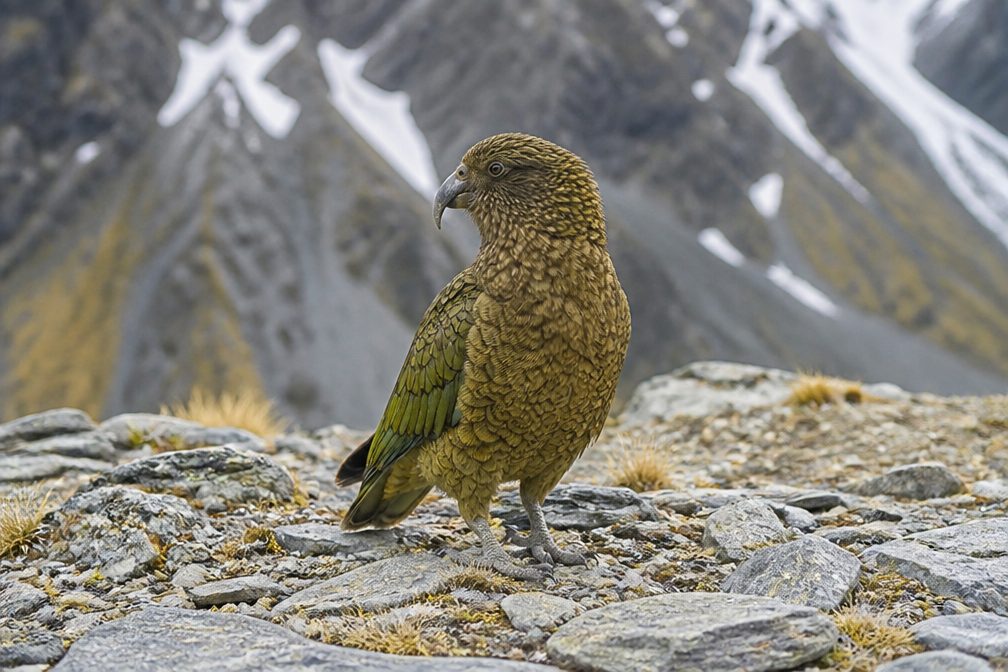 10 sightingsKeaMost seen around 10 AMSighting map
 54 sightingsNew Zealand Fur SealMost seen around 10 AMSighting map
 20 sightingsLittle PenguinMost seen around 9 PMSighting map
 21 sightingsSouth Island KākāMost seen around 5 PMSighting map
 527 sightingsWekaMost seen around 9 AMSighting map
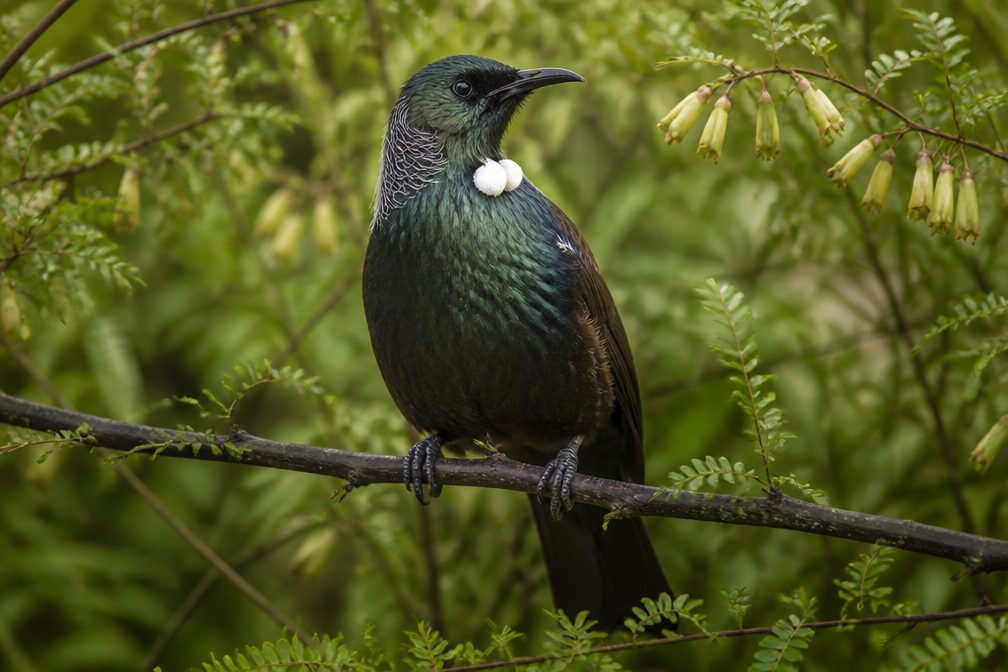 16 sightingsTūīMost seen around 7 AMSighting map
Sighting maps show where each species has been reported across Abel Tasman. Wildlife moves, so no sighting is guaranteed.
Keep exploring
 ModerateOnetahuti Bay to Awaroa Hut7.1 km · 2.5 hr · 1.6 km awayA wetland boardwalk leads to a ridge above Onetahuti Bay.
 ModerateBark Bay to Onetahuti6.1 km · 2 hr · 3.1 km awayA quarry relic, forested ridges, and a long crescent beachModerateBark Bay to Awaroa13.5 km · 4.5 hr · 3.2 km awayA coastal one-way Great Walk through quarry, beach and forest.
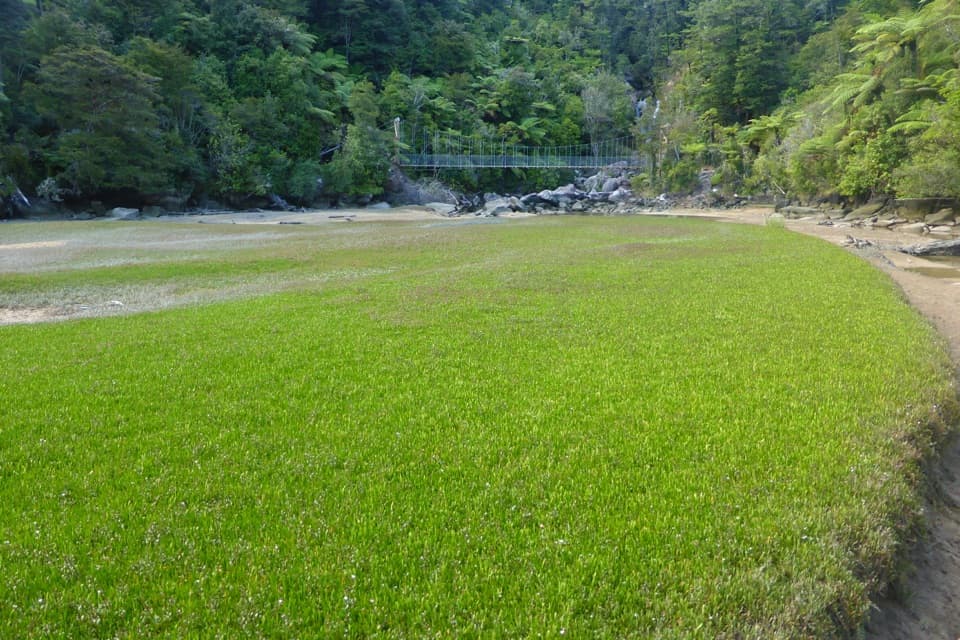 EasyBark Bay Waterfall Trail4 km · 1 hr · 3.5 km awayA short forest walk to a waterfall and a suspension bridge.
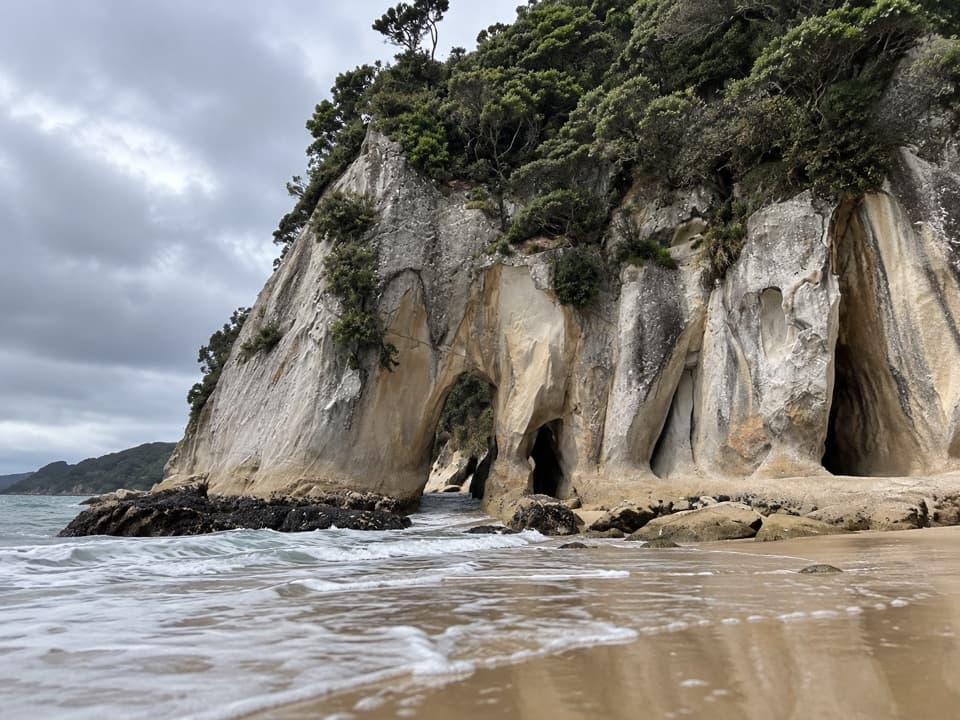 ModerateTonga Arches Walk12.6 km · 5.5 hr · 3.6 km awayA remote Coast Track outing toward low-tide granite arches
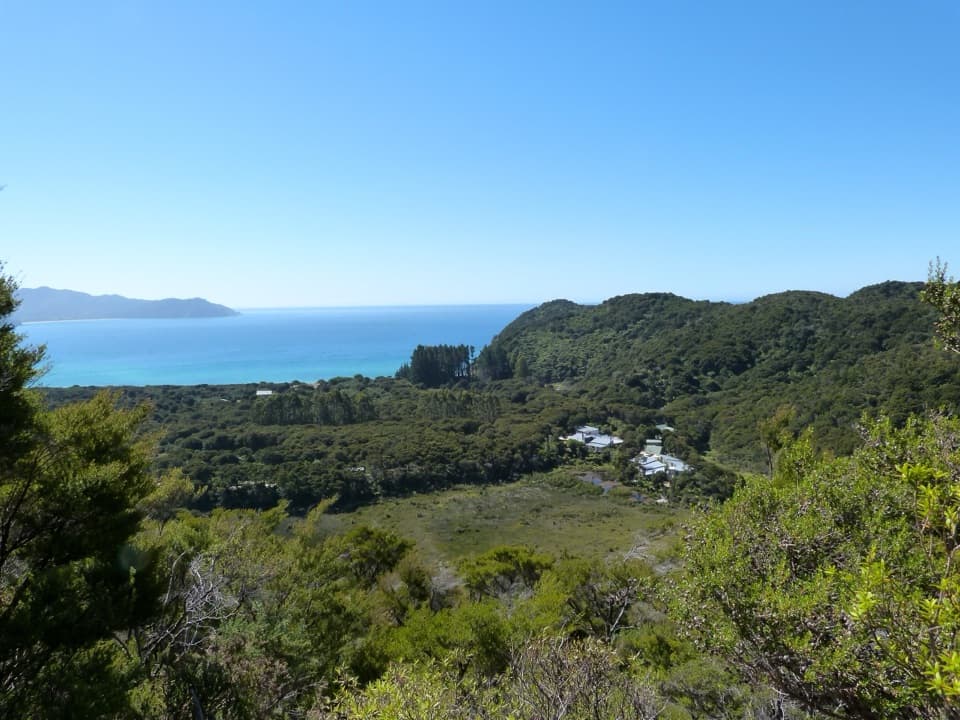 ModerateSky Track1.9 km · 1 hr · 3.7 km awayA short hill climb to a broad Awaroa Bay view.
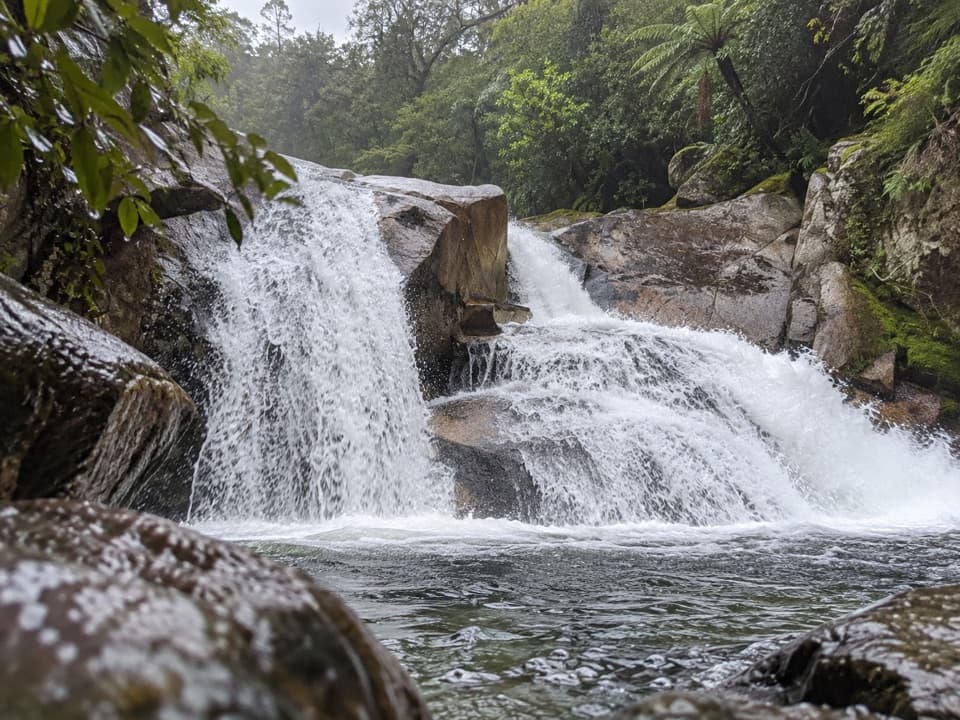 ModerateCascade Falls Track2.6 km · 1 hr · 6.6 km awayA steep forest spur to a waterfall hidden off the Coast Track.
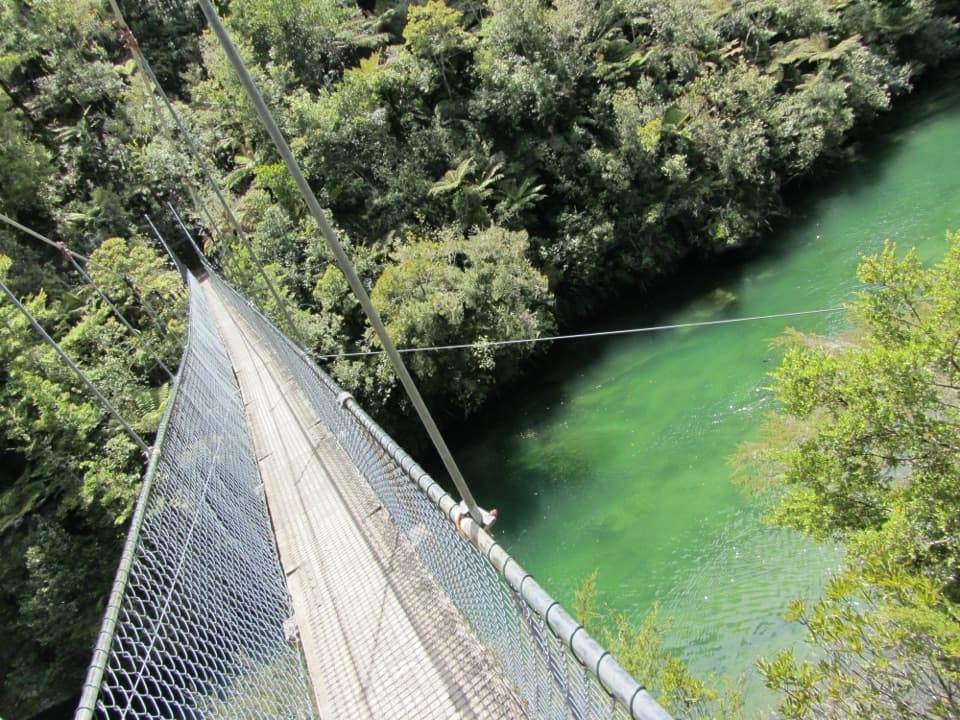 ModerateTorrent Bay to Bark Bay7.8 km · 2.5 hr · 6.6 km awayA ridge, a 47-metre swingbridge and a beach reshaped by tides.
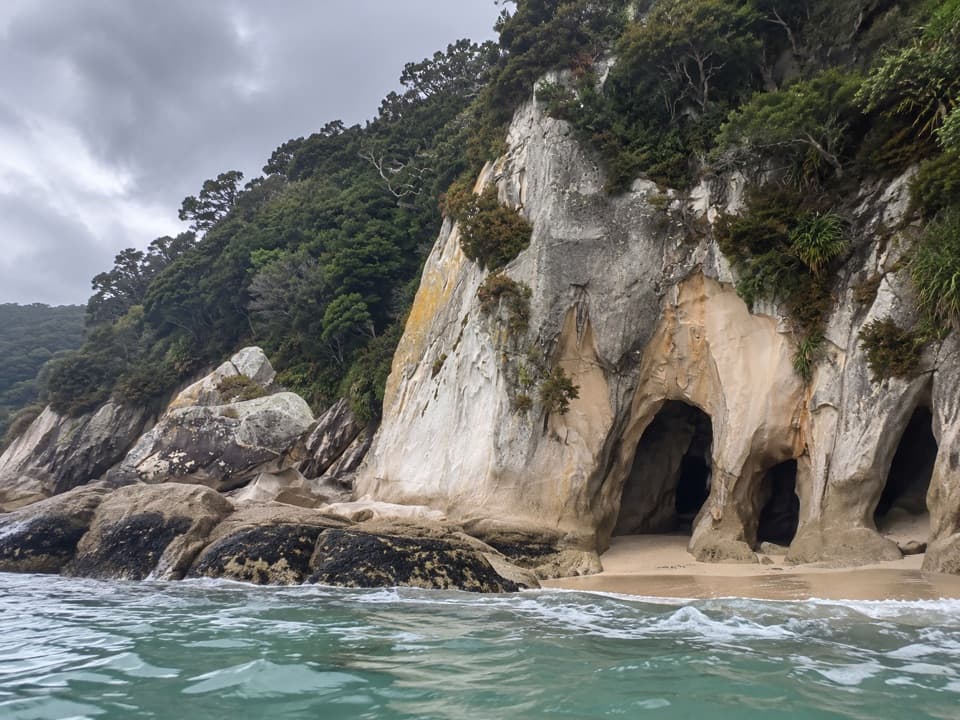 Sight · 1.4 km awayTonga ArchesPaddle through the granite arch when tide and sea allow.Beach · 1.4 km awayOnetahuti BayA long beach with Tonga Island just offshore.
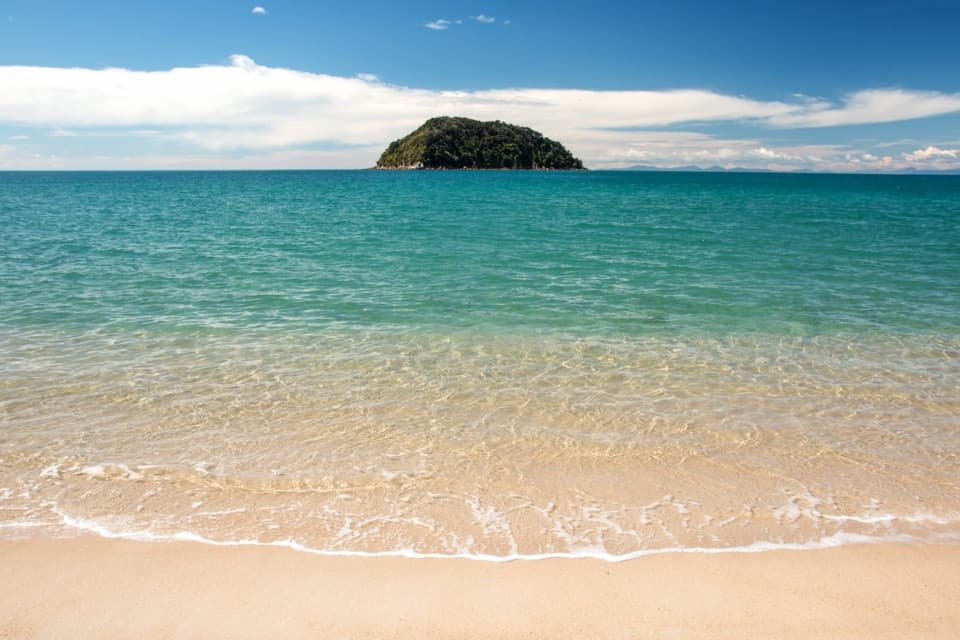 Sight · 1.4 km awayTonga QuarryA beach break with a granite story that reached Wellington.
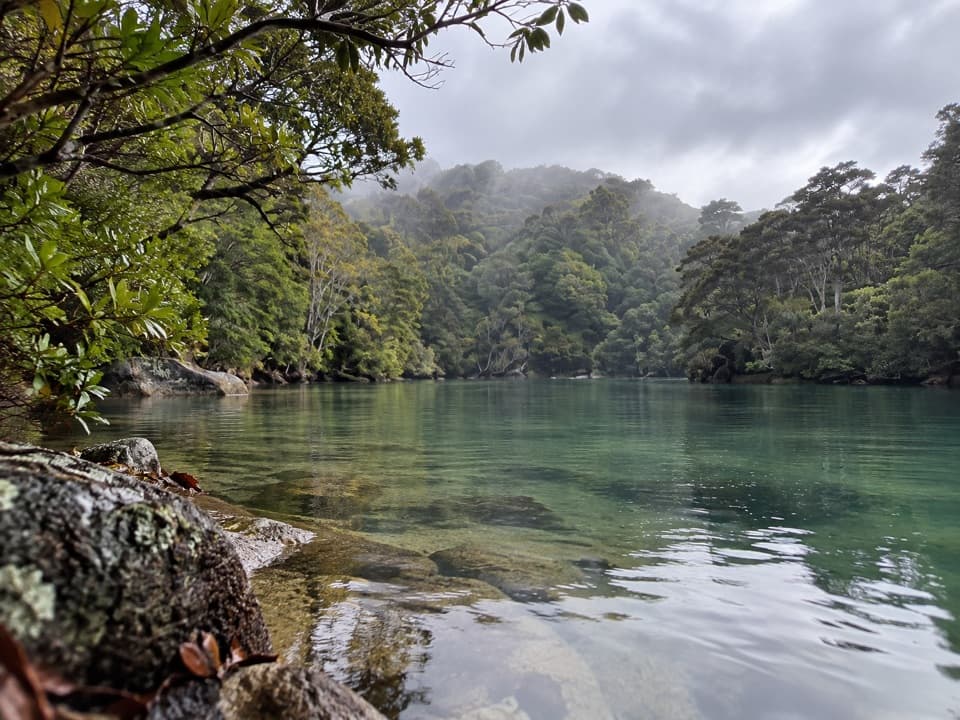 Sight · 2.1 km awayShag HarbourA sheltered inlet with a narrow, tide-sensitive entrance.
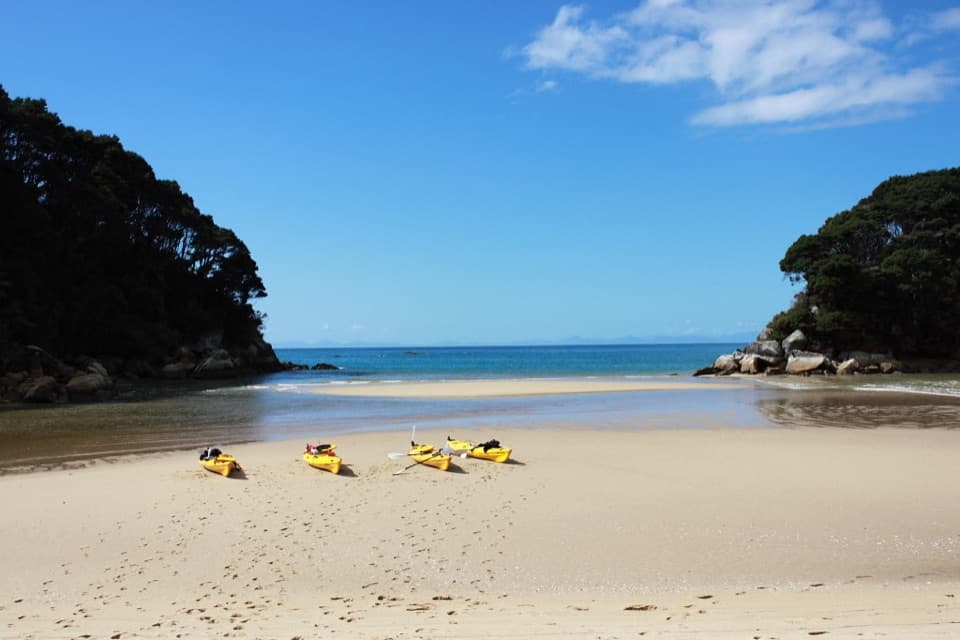 Campground · 2.4 km awayMosquito Bay CampsiteWinter sun, a rocky islet, and a boat-only beach camp.
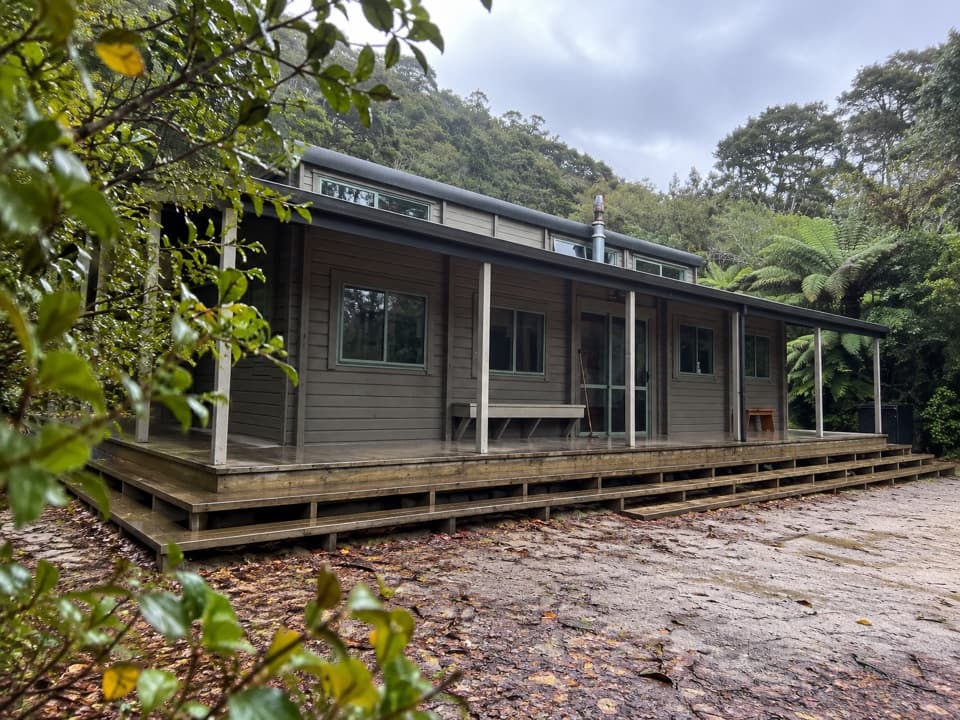 Lodging · 3.2 km awayBark Bay HutA 34-bunk overnight stop near Bark Bay’s beach and estuary.
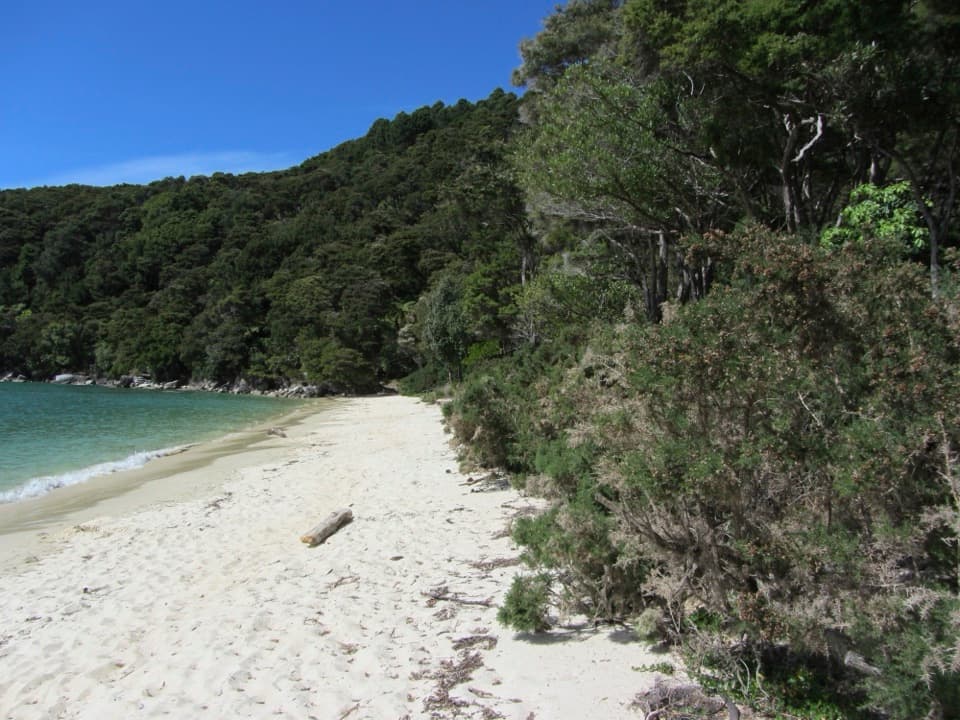 Beach · 3.2 km awayBark BayA golden beach between the open coast and a tidal estuary.
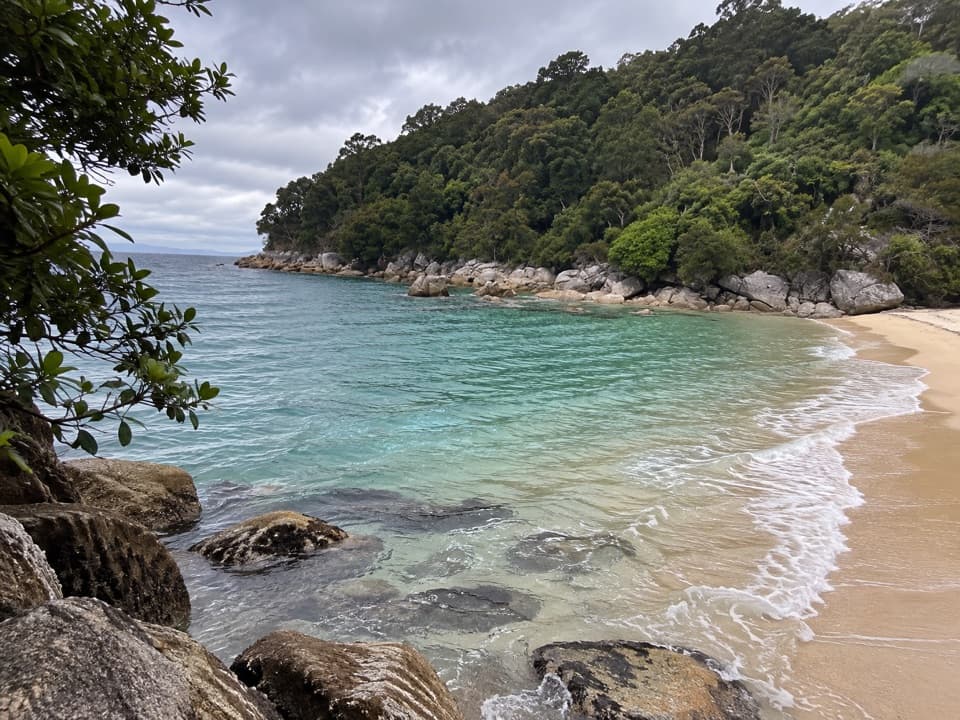 Beach · 3.5 km awayMedlands BeachA small beach break along the Coast Track, with water-taxi access.
Parkwolf’s Abel Tasman ranking

The audio tour guide for the drive, plus offline maps, trails, and wildlife heatmaps for when the signal drops.