Parking
Park in the Harry Hampton Visitor Center lot; begin at the breezeway and follow the Boardwalk toward Weston Lake.
#4 of 9 trails in Congaree
Congaree National Park, SC
Old-growth oaks and flooded guts make this a navigation-first hike.
Overview
Map & elevation
Plan your hike

The highest, rockiest slopes around here are a summer buffet for grizzly bears.
Congaree Tour Guide
Parkwolf is a GPS audio tour guide for Congaree National Park. As you drive, it chimes in with what’s ahead: hidden gems, upcoming stops, history, geology, and wildlife, right through your car’s speakers.
Recorded for this trailhead
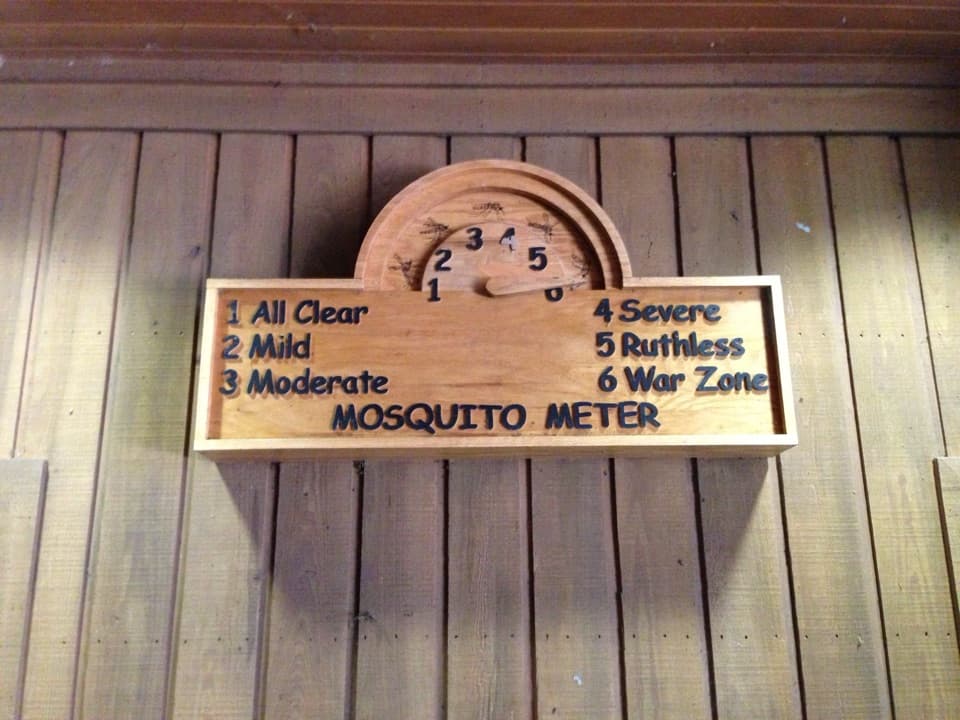
Harry Hampton Visitor Center and Boardwalk“You're approaching the Harry Hampton Visitor Center, where exhibits introduce the forest and the people who lived and worked here. Look for the wooden mosquito meter before heading out.”
Plays as you drive up to this trailhead in the Parkwolf Congaree Tour Guide.
More stories near here in the app
“Fantastic app with many points of information… It’s great to just turn on while you’re driving and it gives you an audio tour of the national Park. We love it!!!!”


Trail guide
Oakridge is a long, mostly flat loop from the Harry Hampton Visitor Center through old-growth forest, low sloughs and small creeks. The park’s current figure is 7.1 miles round trip, including the Boardwalk and Weston Lake connections between the breezeway and Oakridge’s backcountry path. You get a close look at Congaree’s big trees and watery floodplain, but the mileage and uncertain tread make this a full outing, not a casual boardwalk extension.
Allow about four to five hours, with extra time if you stop often or need to retrace a flooded or overgrown stretch. There is little climbing; the park rates Oakridge difficult for its length, conditions and wayfinding. Take a GPS track and an offline map before leaving the visitor area. Small markers on trees carry coordinates at roughly tenth-mile intervals, but floodwater, fallen branches and vegetation can hide the path or markers. If the route disappears under water or debris, turn back rather than guessing across the forest.
Start at the visitor-center breezeway, follow the Boardwalk toward Weston Lake, and take the natural trail to the Oakridge junction near Cedar Creek. The stored circuit follows Oakridge’s curving path away from that junction through the forest toward the Sims connection, then returns by Sims and the lower Boardwalk. Boardwalk is raised; most of Oakridge is a narrow, natural tread with roots and soft, muddy ground after rain or flooding. The surface changes, but there is no sustained climb to prepare for.
The route crosses several small channels on bridges. Hammond Gut and its bridges appear early on Oakridge; farther along, Bridge G spans Boggy Gut and Bridge H crosses Running Gut. Between them, the wayfinding can become especially faint near Deep Jackson Gut and Frenchman’s Pond. These “guts” are small channels that carry floodwater through the forest. The low sloughs are floodplain depressions that hold water, so wet ground is part of the landscape, not a rare surprise. Bridge I crosses Cedar Creek near the Weston Lake connection; pause there for the creek view if conditions allow.
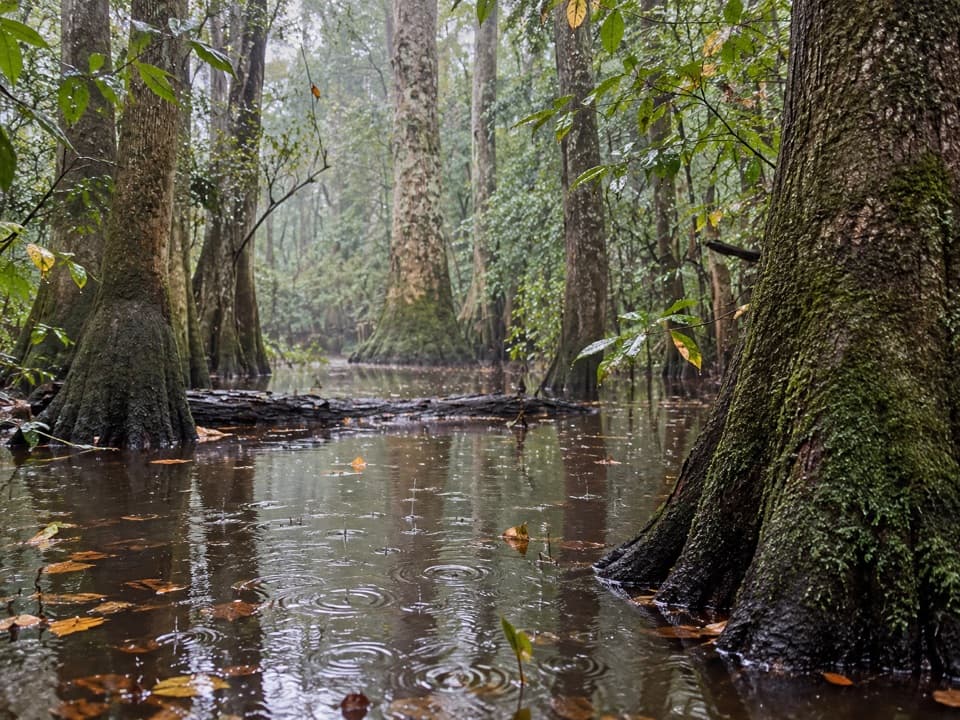
Oakridge follows a subtle ridge through one of the park’s richest old-growth stretches. Large cherrybark and swamp chestnut oaks rise over cypress and tupelo in the low ground, with Spanish moss and switchcane in the understory. Wise Lake and its slough sit near the Oakridge approach. Deer and wild turkeys use this habitat, though sightings are never assured. The changing mix of high ground, dark channels and old trunks is the reason to take this route slowly.
The Visitor Center is the practical start: maps, restrooms and picnic tables are nearby, while no food vendor was identified on the route. Park entry is free. Dogs are allowed on the route, including the boardwalk, on a leash no longer than six feet. Congaree is hot and humid in late spring through early fall, and mosquitoes are common from mid-spring into fall; carry enough water for the full circuit and expect insects in the shaded, wet forest.
Wildlife
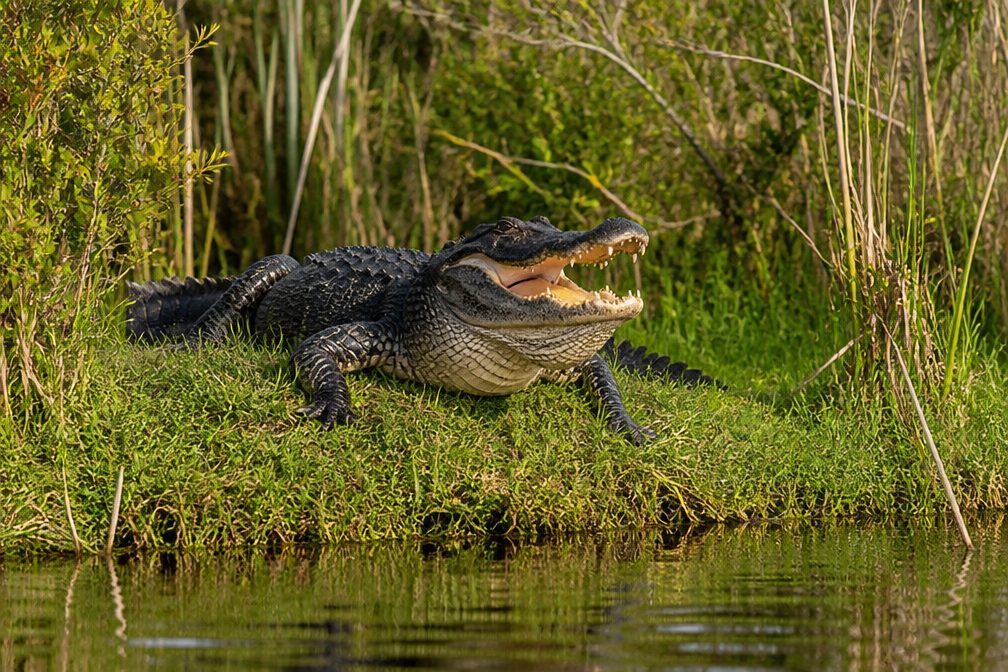 146 sightingsAlligatorMost seen around 6 PMSighting map
 242 sightingsWild BoarMost seen around 6 PMSighting map
 291 sightingsBarred OwlMost seen around 7 PMSighting map
 248 sightingsCottonmouthMost seen around 6 PMSighting map
 13 sightingsWood StorkMost seen around 8 AMSighting map
 61 sightingsGreat Blue HeronMost seen around 7 AMSighting map
Sighting maps show where each species has been reported across Congaree. Wildlife moves, so no sighting is guaranteed.
Keep exploring
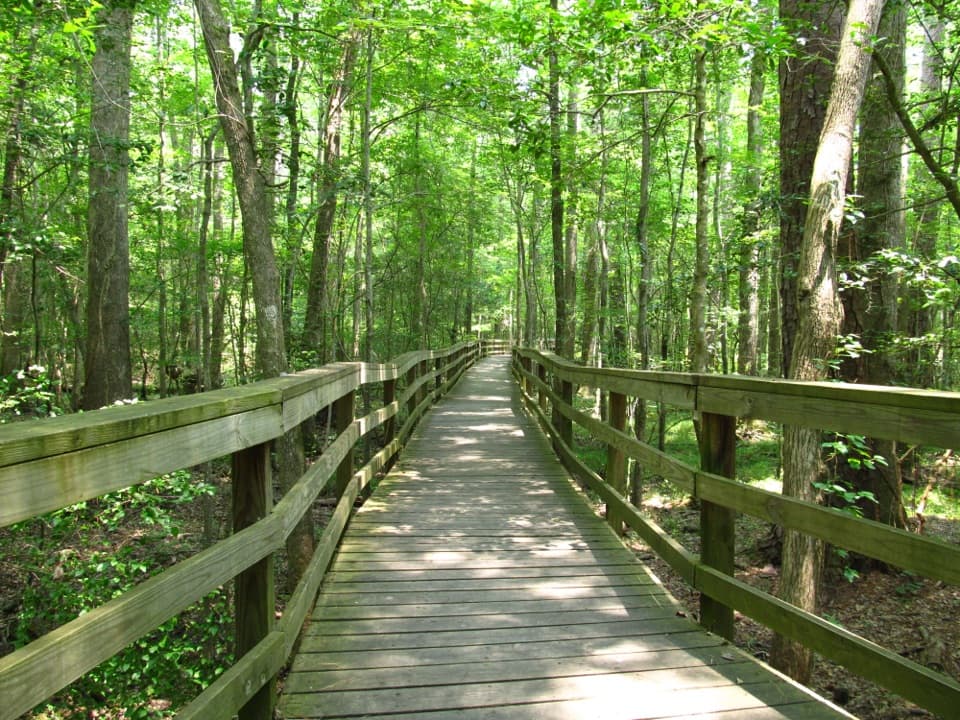 EasyBoardwalk Trail2.6 mi · 1.5 hr · At the trailheadLevel boardwalk, old-growth trees, and a Weston Lake overlook.
 ModerateWeston Lake Trail4.5 mi · 2.5 hr · At the trailheadA 4.5-mile loop through old growth to Weston Lake.
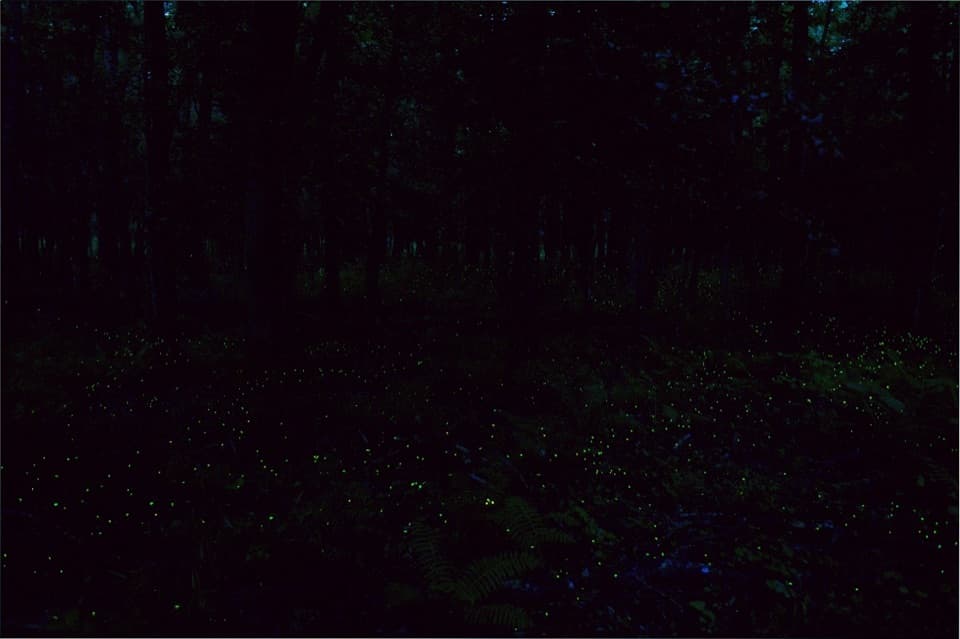 EasyFirefly Trail1.8 mi · 1 hr · At the trailheadAn easy woodland walk to Congaree's spring firefly display.
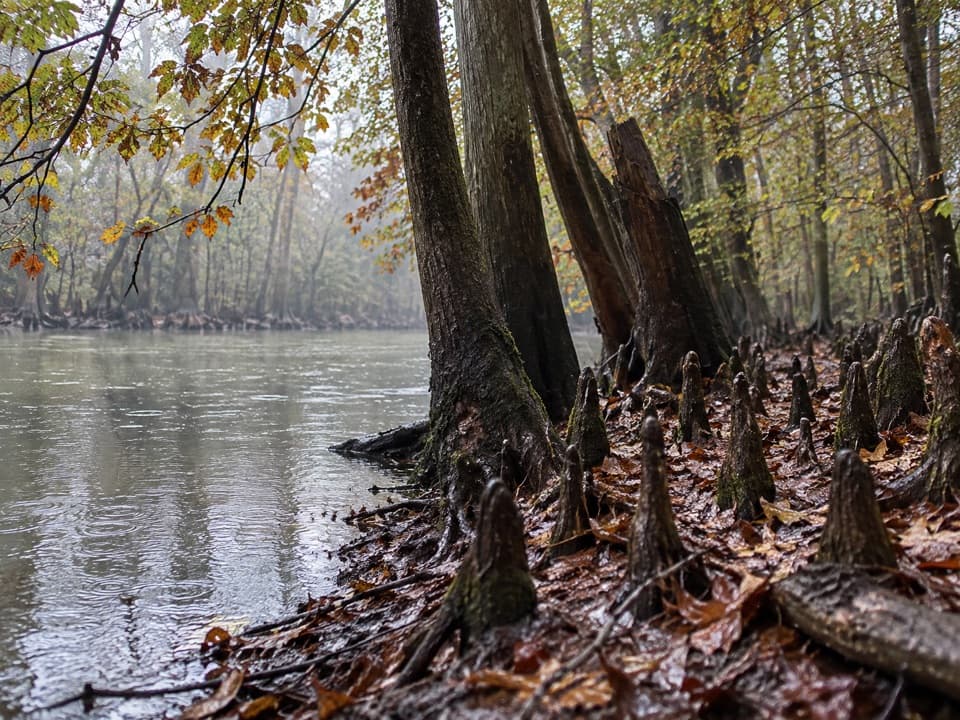 EasySims Trail3.2 mi · 1.5 hr · At the trailheadA level old road to a creek bridge and park history.
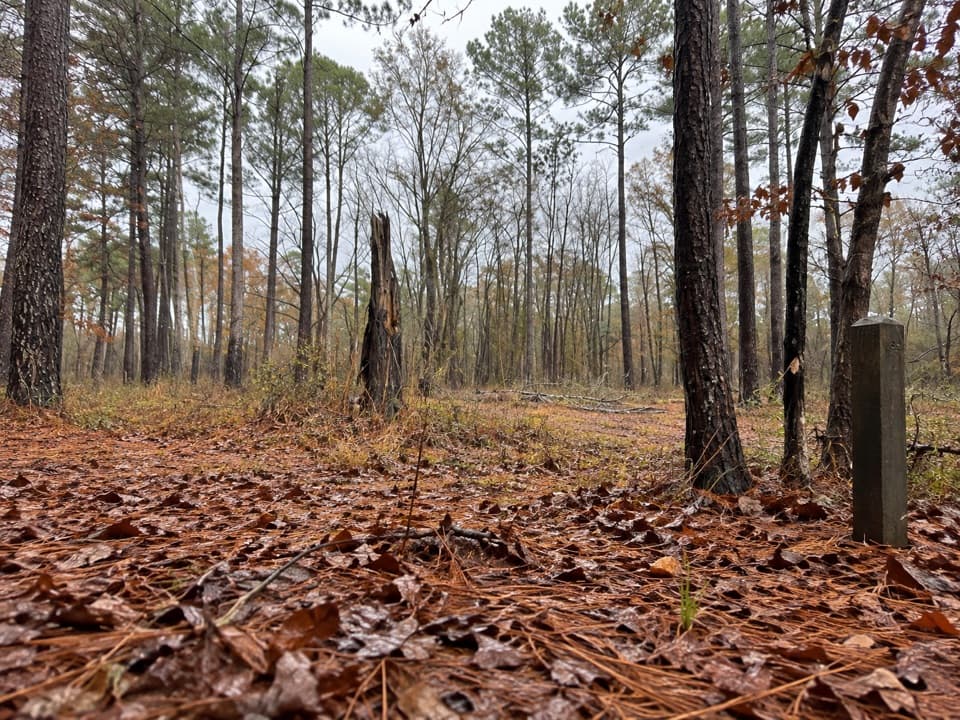 EasyLongleaf Trail0.6 mi · 20 min · 0.5 mi awayA short forest link from Longleaf Campground to the Boardwalk.
 ChallengingKingsnake Trail7.4 mi · 4 hr · 2.2 mi awayA flat, long floodplain walk with sloughs, bridges, and tricky wayfinding.
 EasyBates Ferry Trail2.2 mi · 1.3 hr · 11.2 mi awayA short, flat walk on a historic road to the Congaree River.
 ModerateFork Swamp Trail0.6 mi · 24 min · 11.3 mi awayA short loop to an oxbow and its shaded riverbank.
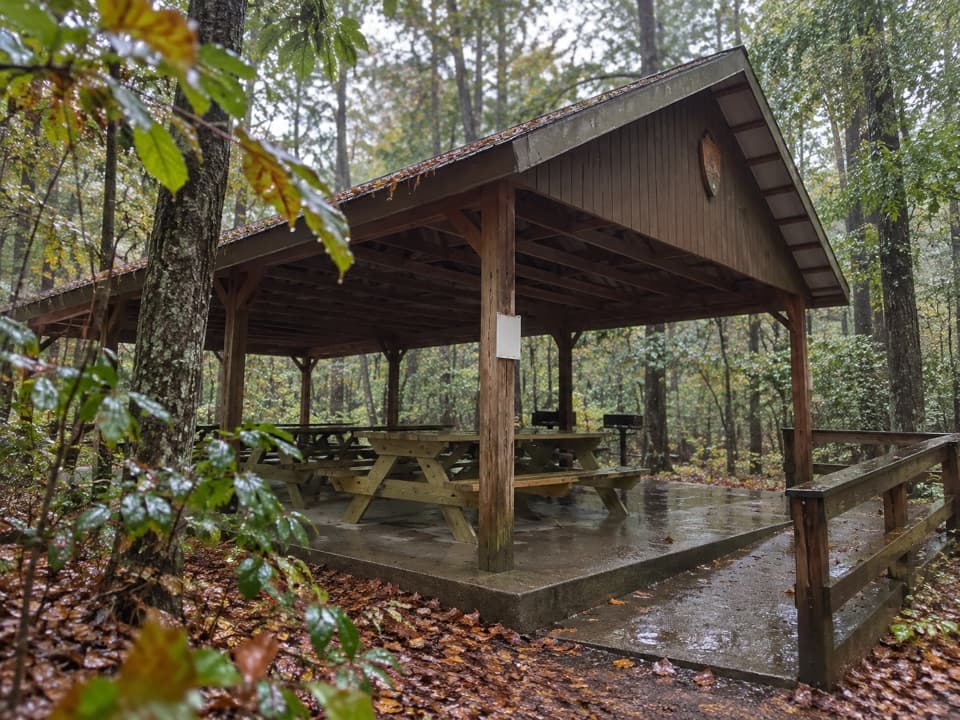 Picnic area · At the trailheadCongaree Picnic ShelterA group picnic pavilion with grills near the Boardwalk Trail.
 Visitor center · At the trailheadHarry Hampton Visitor CenterMaps, exhibits, and a film make this a smart first stop.
 Sight · 0.4 mi awayMoonshine Still (Boardwalk Stop 15)A distant glimpse of an iron still from Prohibition.
 Campground · 0.5 mi awayLongleaf CampgroundWalk-in tent sites put you close to Congaree’s trails.
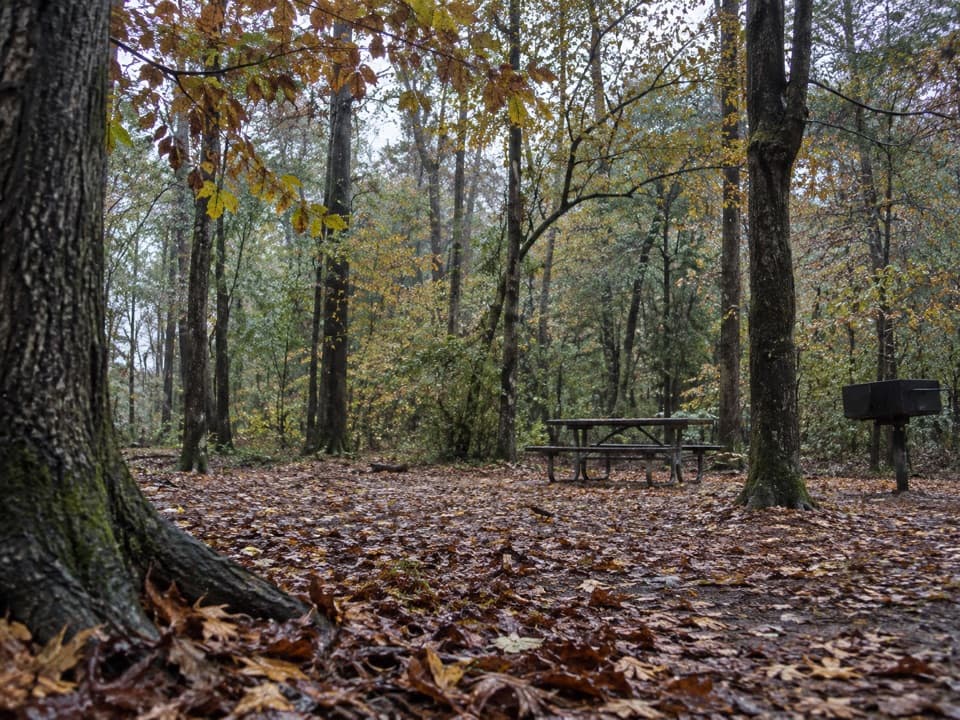 Campground · 0.5 mi awayBluff CampgroundA six-site hike-in camp tucked among Congaree’s upland trees.
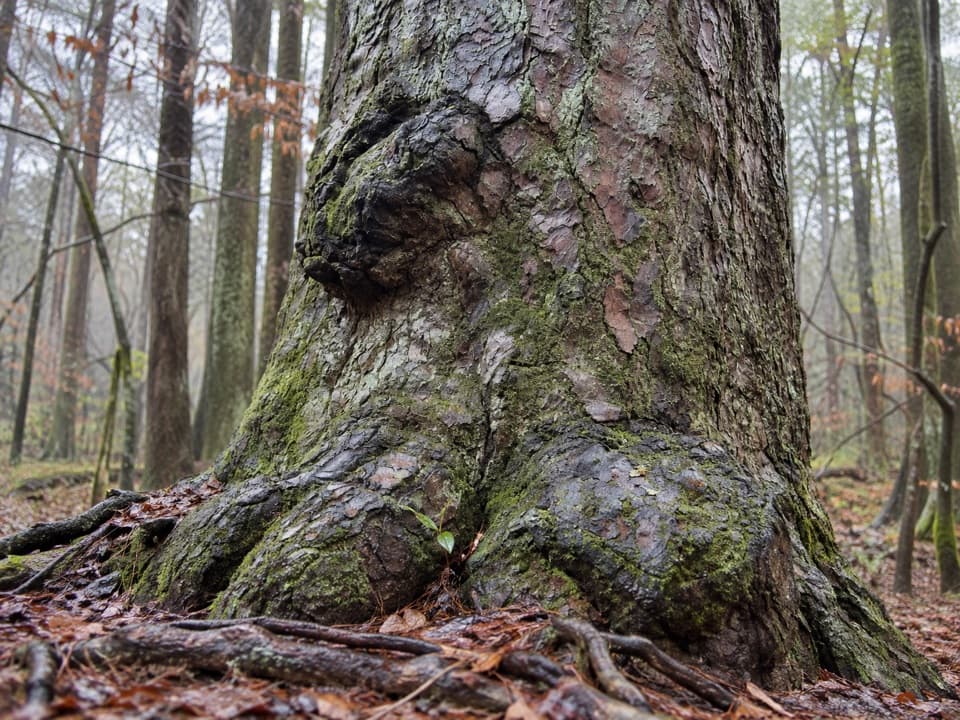 Sight · 0.6 mi awayRichland County PineA former state champion with a 1750s backstory.
 Sight · 0.6 mi awayWeston Lake OverlookLook for turtles beside this 2,000-year-old oxbow lake.
 Sight · 1 mi awayCongaree National Park SignThe entrance marker comes a mile before the visitor center.
Parkwolf’s Congaree ranking

The audio tour guide for the drive, plus offline maps, trails, and wildlife heatmaps for when the signal drops.