Parking
Use the Piegan Pass Trailhead at Siyeh Bend on Going-to-the-Sun Road, about 2.2 miles east of Logan Pass. Auto parking is available at the bend; capacity and amenities were not established.
#16 of 157 trails in Glacier
Glacier National Park, MT
A high saddle, glacier views, and a vanished railway bell.
Overview
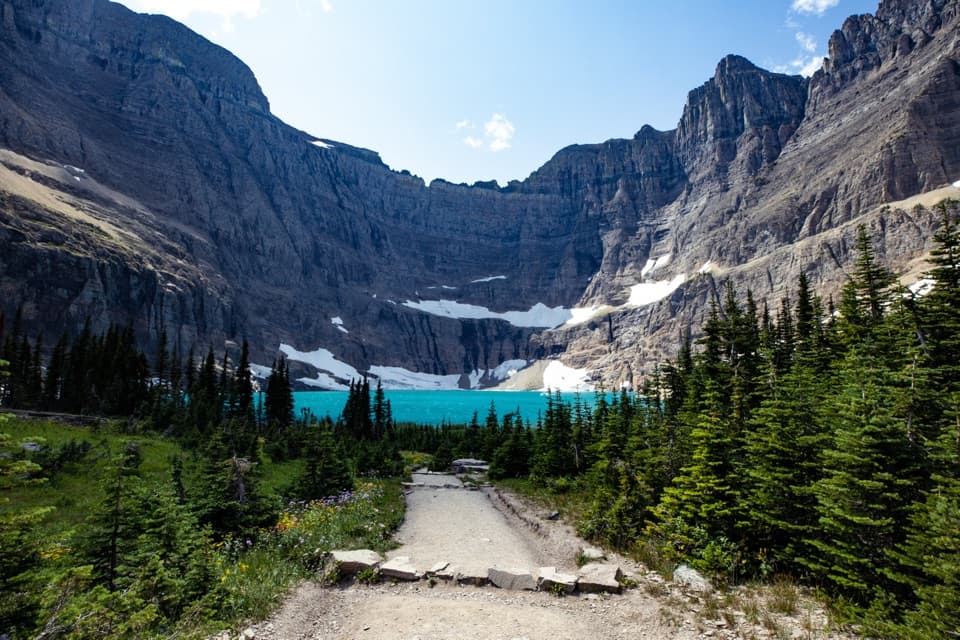
Piegan Pass Trail is a hard, 9-mile out-and-back from Siyeh Bend to a 7,600-foot saddle between Piegan Mountain and Cataract Mountain. The one-way walk to the pass is 4.5 miles, with about 1,895 feet of climbing and 170 feet of descent before you turn around. Allow about six hours, with extra time for the views. The lower route climbs through forest; the upper miles cross rough alpine talus and end among glacier-shaped peaks. This entry follows the Siyeh Bend approach. The separate approach from Many Glacier Hotel parking reaches the same pass but is a different route and is not part of this distance.
 Parkwolf’s verdictIs this the pass hike for you?
Map & elevation
Plan your hike

The highest, rockiest slopes around here are a summer buffet for grizzly bears.
Glacier Tour Guide
Parkwolf is a GPS audio tour guide for Glacier National Park. As you drive, it chimes in with what’s ahead: hidden gems, upcoming stops, history, geology, and wildlife, right through your car’s speakers.
See the Glacier audio tourRecorded for this trailhead
Siyeh Bend and Siyeh Pass“You’re coming up on Siyeh Bend, a starting point for the hike over Siyeh Pass. The ten-mile crossing is a strenuous six-to-eight-hour outing, with a steep, rocky climb and a long descent.”
Plays as you drive up to this trailhead in the Parkwolf Glacier Tour Guide.
More stories near here in the app
“Our first time to glacier and we used the audio portion for Going to the Sun Road. Wonderful information with perfect advice of what to see and do along the road.”


Trail guide
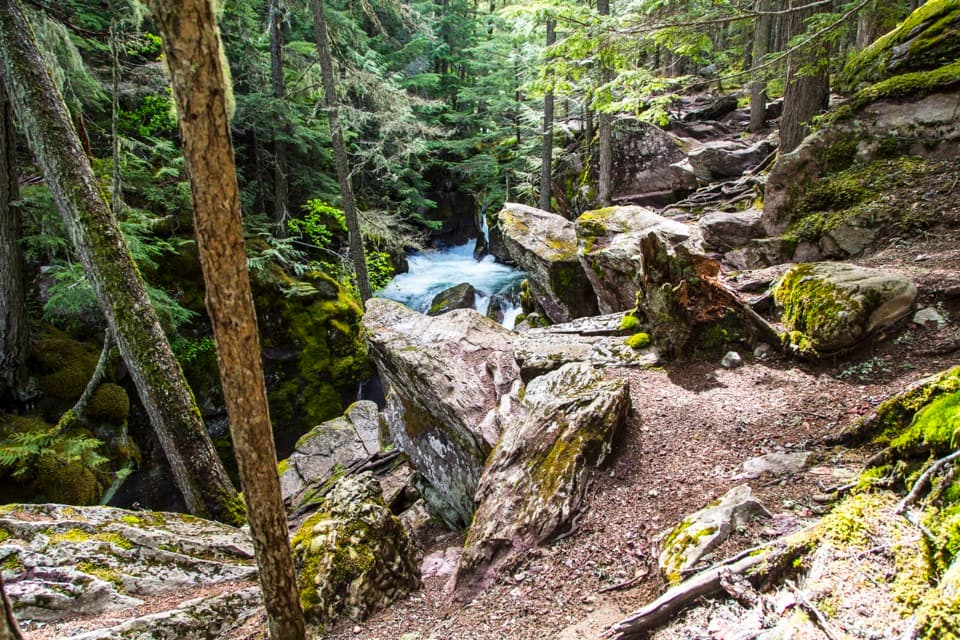
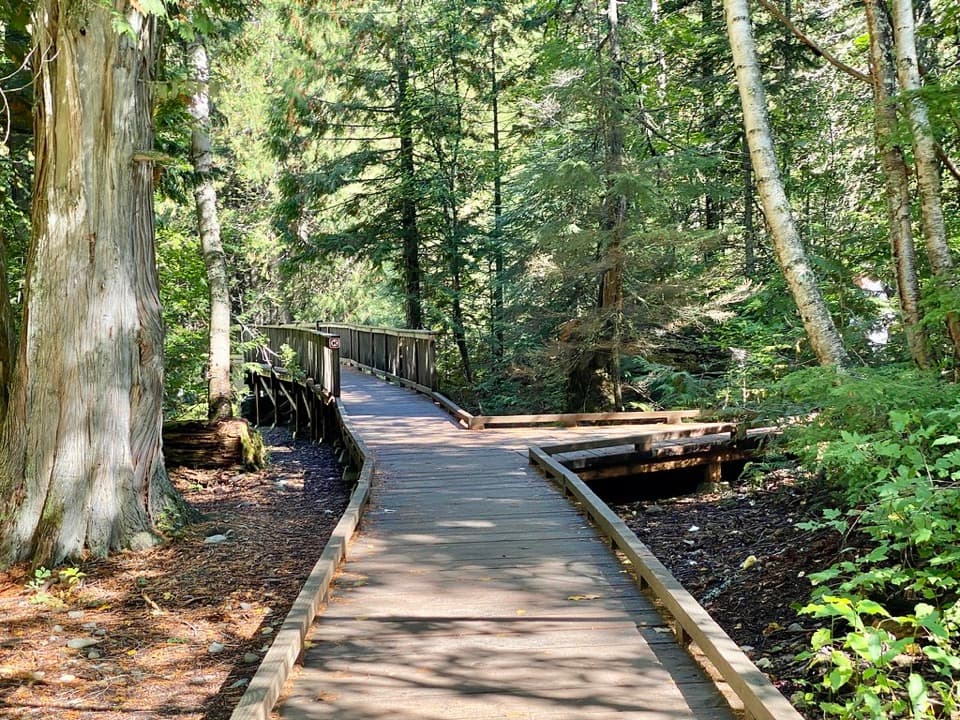
The Piegan Pass trailhead is at Siyeh Bend on Going-to-the-Sun Road, 2.2 miles east of Logan Pass. The path starts near Siyeh Creek, then swings into spruce-fir forest after roughly 200 yards. Expect steady uphill walking through the trees. At about 1.1 miles, take the left branch for Piegan Pass; the right-hand route descends toward Jackson Glacier Overlook. That first junction is easy to miss if you are following a different hike from the same trailhead.
Around 2.7 miles, the forest begins to thin at another fork. Turn left toward Piegan Pass; the right branch leads toward Preston Park and Siyeh Pass. Keep the route choice clear here: those are separate destinations, even though they share the lower approach. From this junction, the path climbs into open country on Mount Siyeh, and the valley starts to open below you.
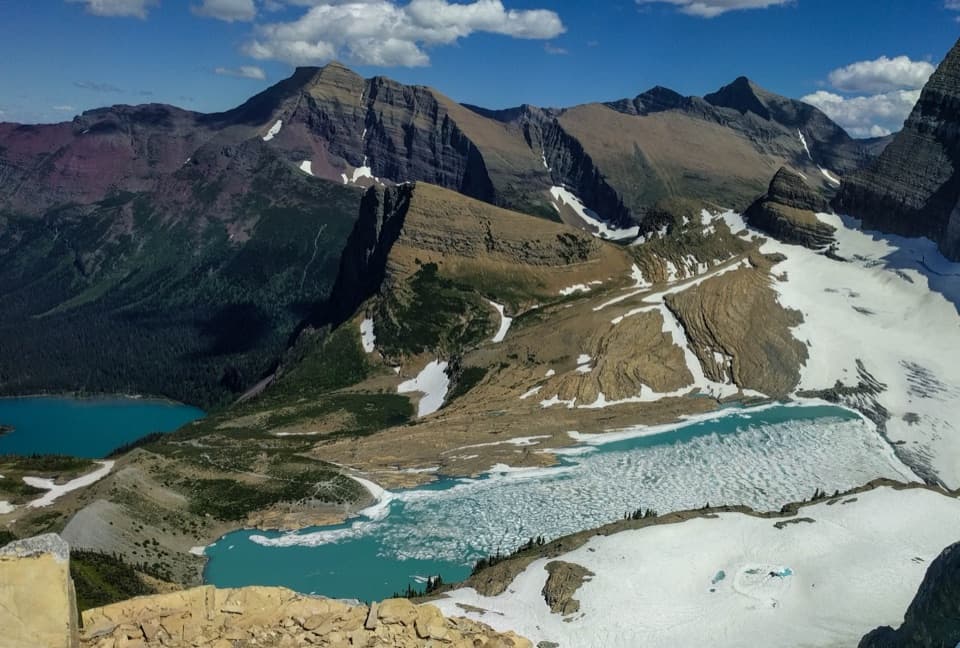
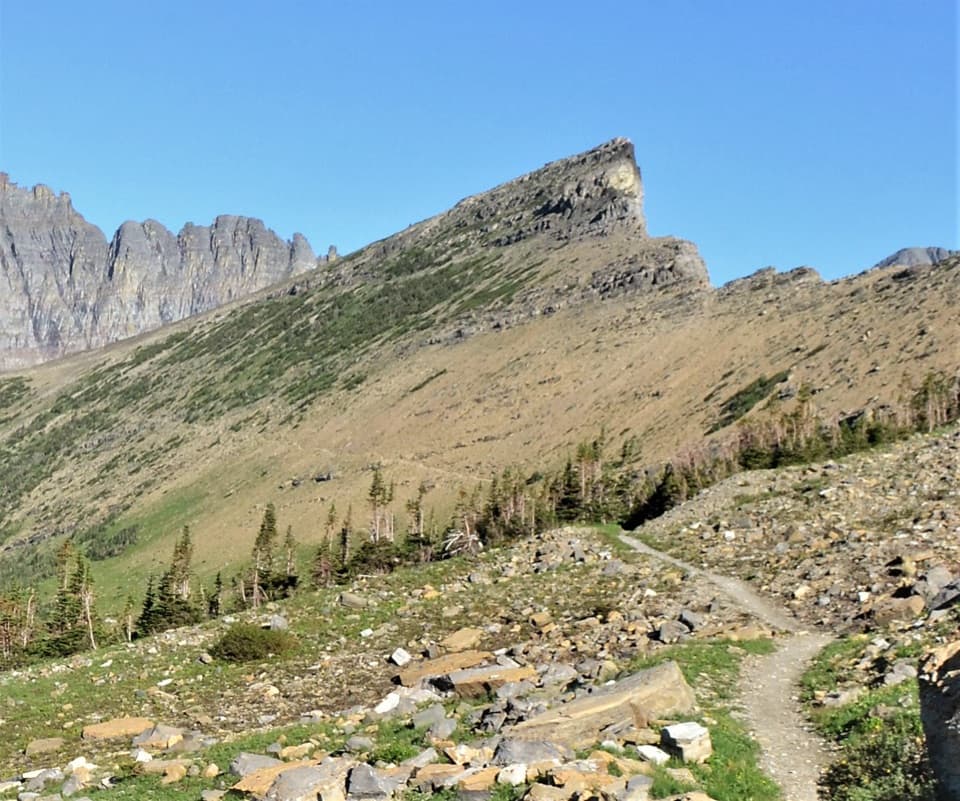
Near mile 3, the trail crosses rocky talus and scree, with less shelter and rougher footing than the forested climb. Views open across the valley toward Jackson and Blackfoot glaciers, and west toward Piegan Glacier below Piegan Mountain. Frame Cataract Mountain with a strip of the trail in the foreground to show how the path cuts across the steep slope; a close crop of the rocks loses the scale of the ridge.
Piegan Pass is the high saddle between Piegan Mountain and Cataract Mountain. From the pass, a short continuation of about 0.1 mile opens a broader view toward the Garden Wall, Angel Wing, Bishops Cap, Mount Gould and Many Glacier Valley; it adds about 0.2 mile to the round trip. On the saddle’s east side, look for the stone platform that once held a locomotive bell. Railway and hotel promoters installed the bell in 1926 as a tourist attraction; it was removed in 1943 for a wartime scrap-metal drive. The stone support is what remains.
James Willard Schultz gave the Piegan name to the nearby mountain, glacier, falls and pass in 1885, referring to the Piegan people of the Blackfeet Nation. The surrounding land carries a much older story: glaciers carved broad valleys, cirques and ridges, while the Lewis Overthrust moved ancient rock over younger layers. The sharp walls around the pass make that geology visible without needing a map.
High snow can linger around the pass into summer, and new snow can return in fall. The upper trail is exposed to thunderstorms, and the loose rock makes a slow, careful pace sensible near the saddle. Check current trail conditions before setting out. Pets are not permitted on Glacier’s trails. Parking is available at Siyeh Bend; the return follows the same route back to the road.
Wildlife
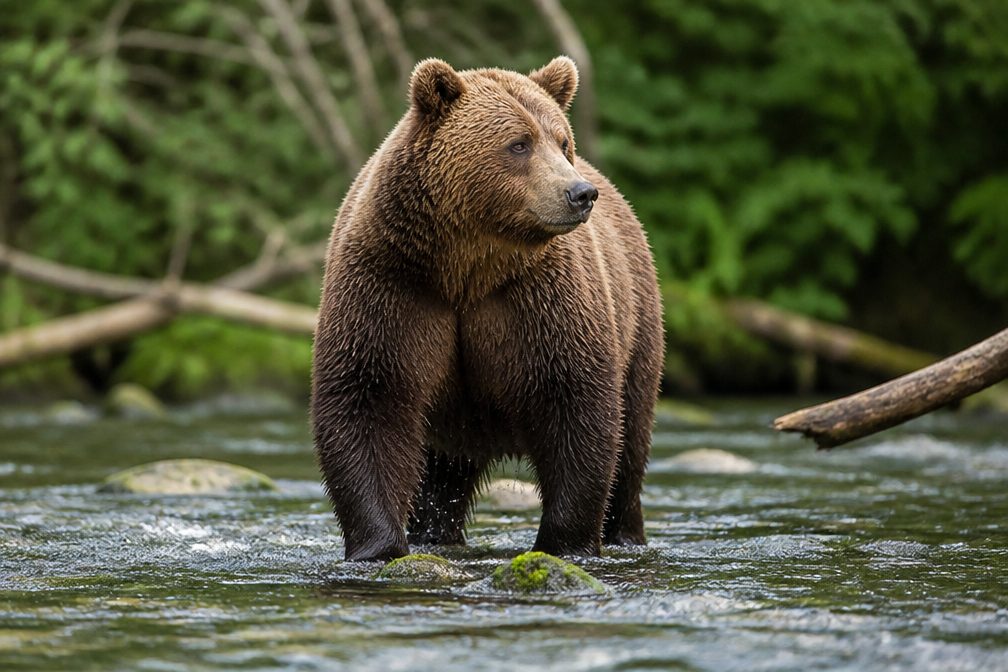 404 sightingsGrizzly BearMost seen around 6 AMSighting map
 11 sightingsWolverineMost seen around 8 PMSighting map
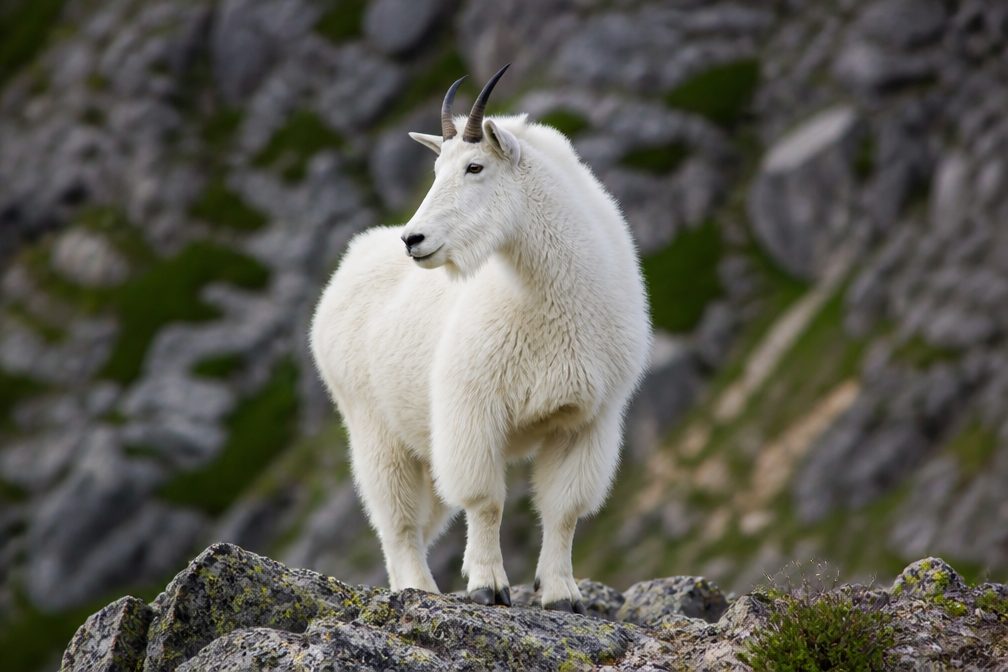 1,173 sightingsMountain GoatMost seen around 6 AMSighting map
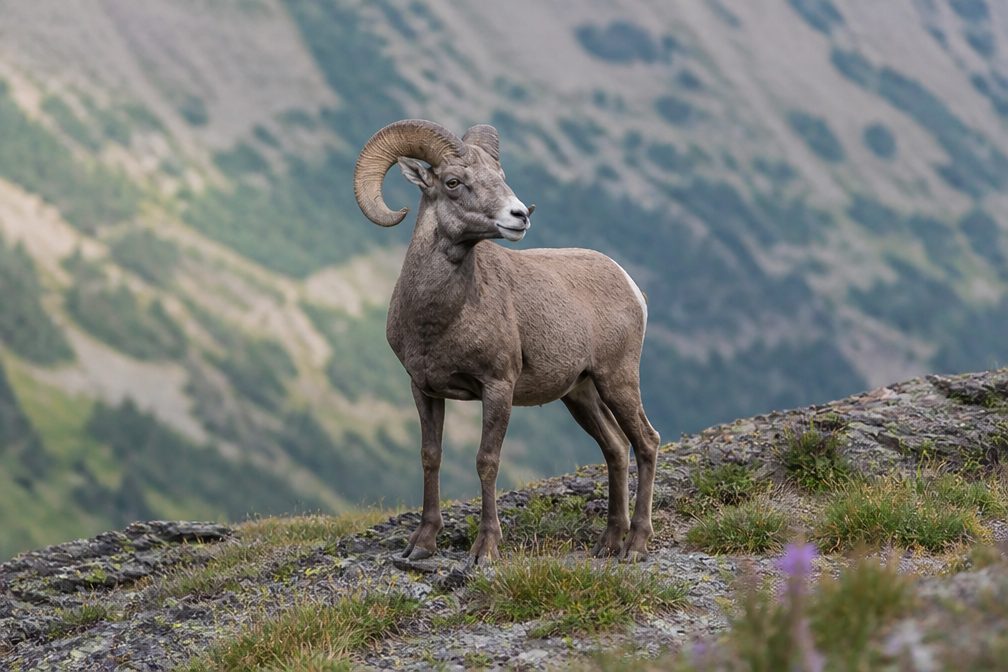 1,000 sightingsBighorn SheepMost seen around 6 AMSighting map
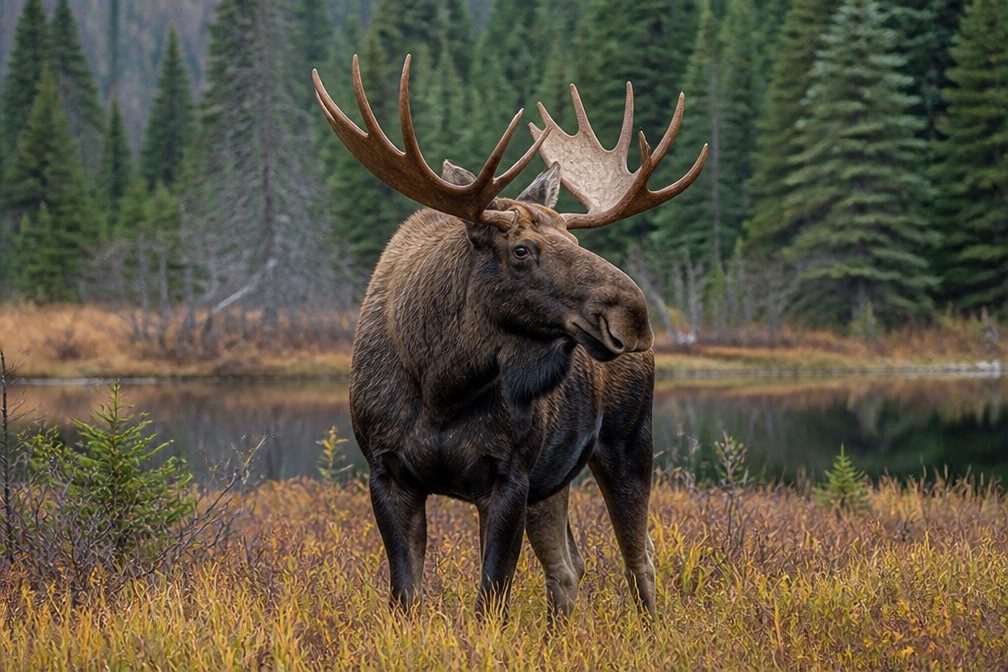 395 sightingsMooseMost seen around 6 AMSighting map
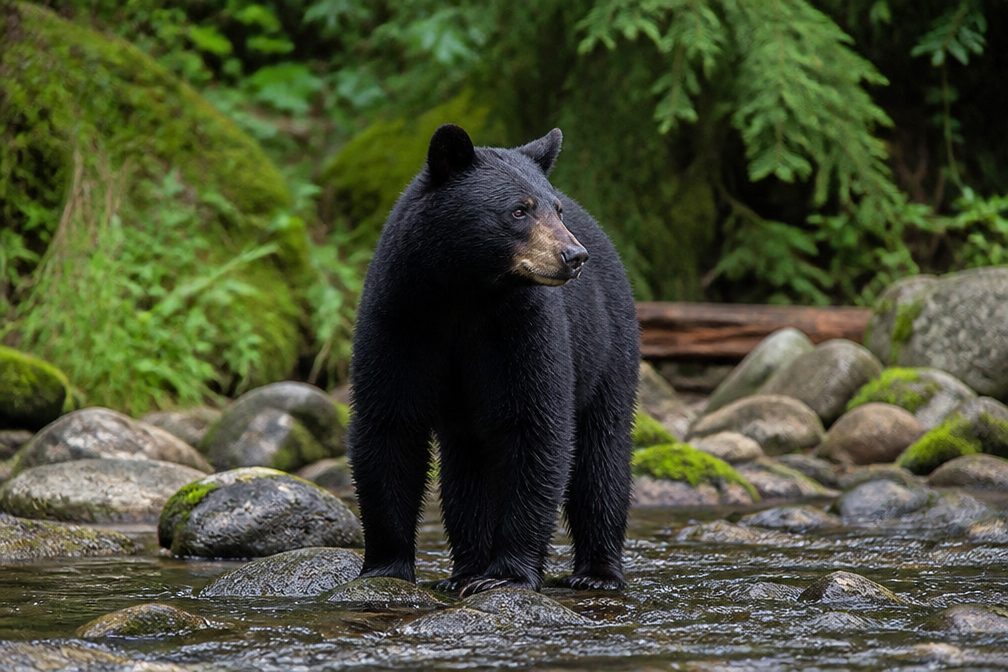 506 sightingsBlack BearMost seen around 8 PMSighting map
Sighting maps show where each species has been reported across Glacier. Wildlife moves, so no sighting is guaranteed.
Keep exploring
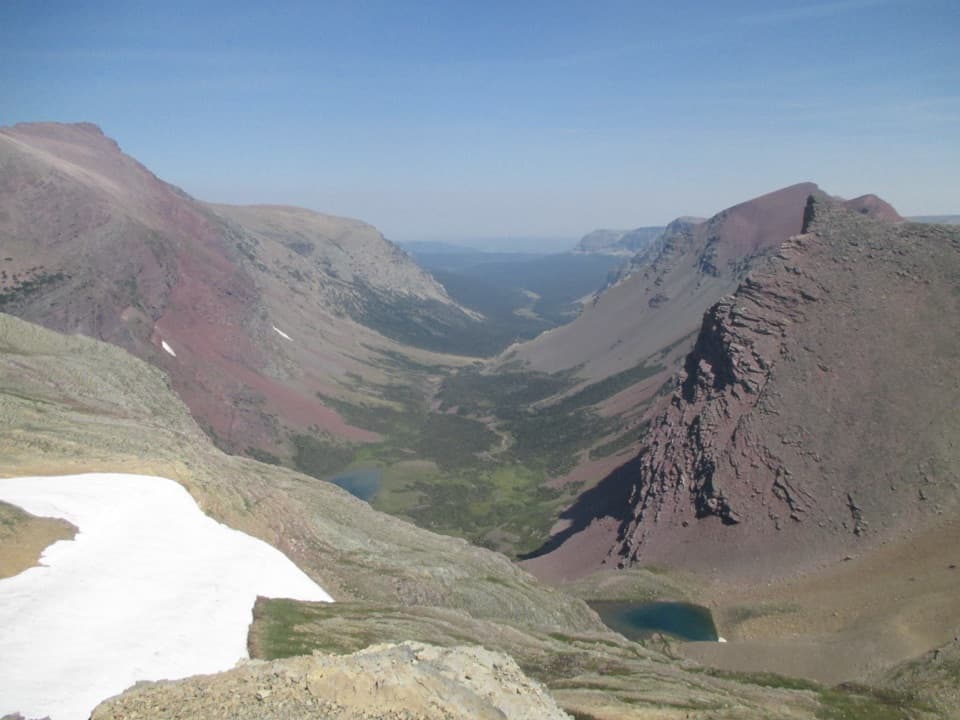 ChallengingSiyeh Pass Trail10 mi · 7 hr · At the trailheadA steep pass crossing rewarded with Sexton Glacier and Baring Creek.
 ChallengingFlorence Falls Trail9.8 mi · 4.5 hr · 1.8 mi awayA long out-and-back to Florence Falls through creek and pond country
 ChallengingGunsight Pass Trail to Lake McDonald Lodge19.5 mi · 14 hr · 1.8 mi awayA demanding east-to-west traverse over two high alpine passes.
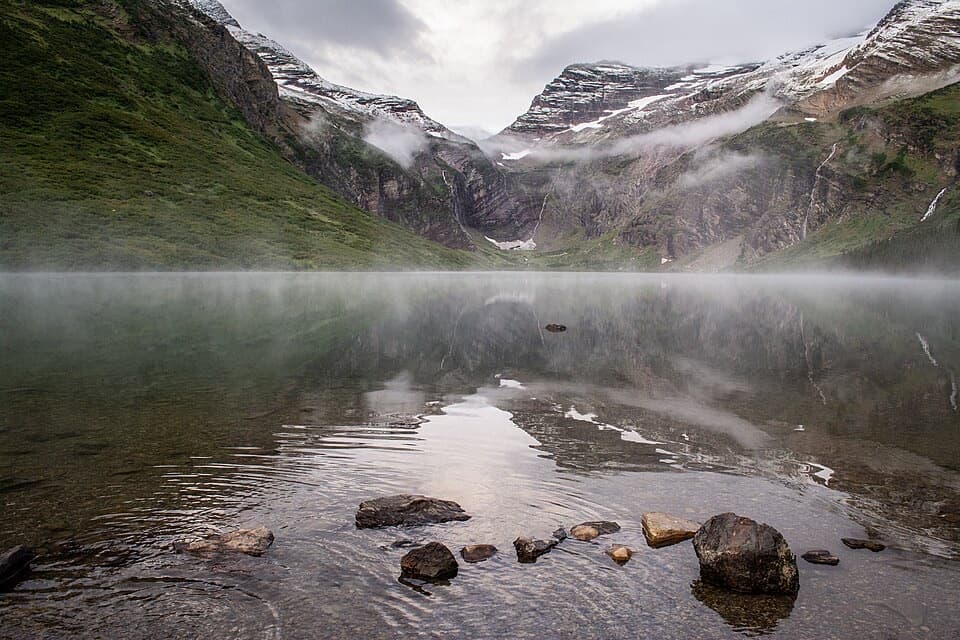 ChallengingGunsight Lake Trail12.9 mi · 8.5 hr · 1.8 mi awayA long valley walk to Gunsight Lake’s rocky shore
 ChallengingHighline Trail to Grinnell Glacier Overlook15.1 mi · 9 hr · 2.3 mi awayA long, exposed traverse earns a knockout view over the glacier basin.
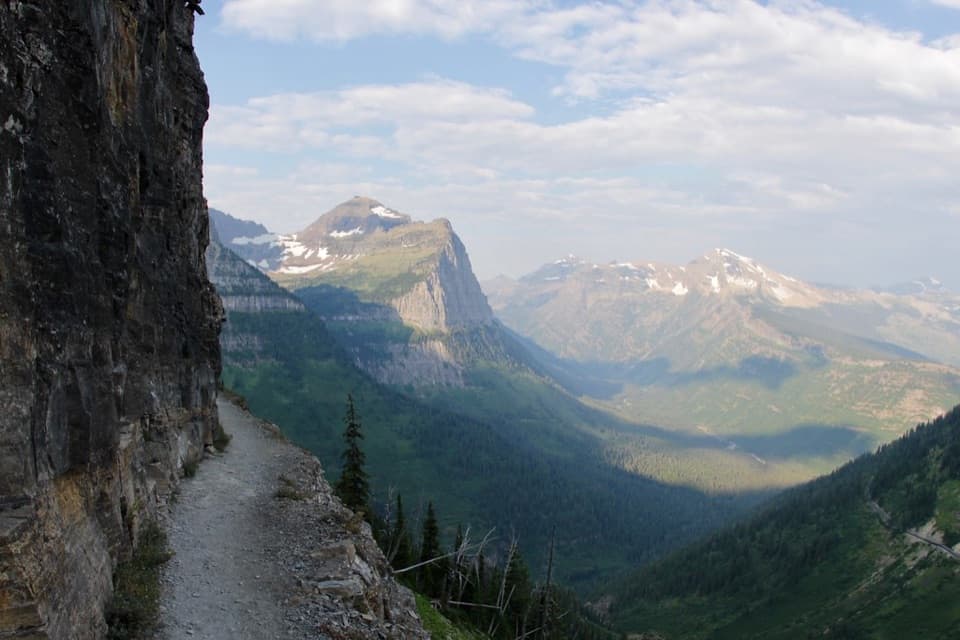 ChallengingHighline Trail11.8 mi · 8 hr · 2.3 mi awayA Garden Wall ledge walk with a long, steep finish.
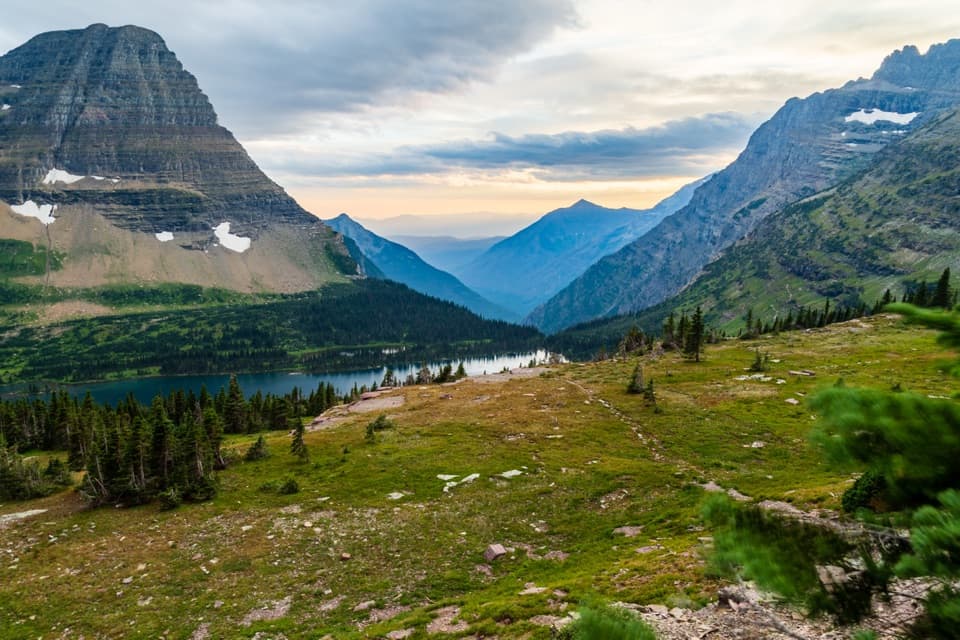 ModerateHidden Lake Overlook Trail2.6 mi · 2.5 hr · 2.3 mi awayBoardwalk and switchbacks open onto a lake beneath Bearhat Mountain.
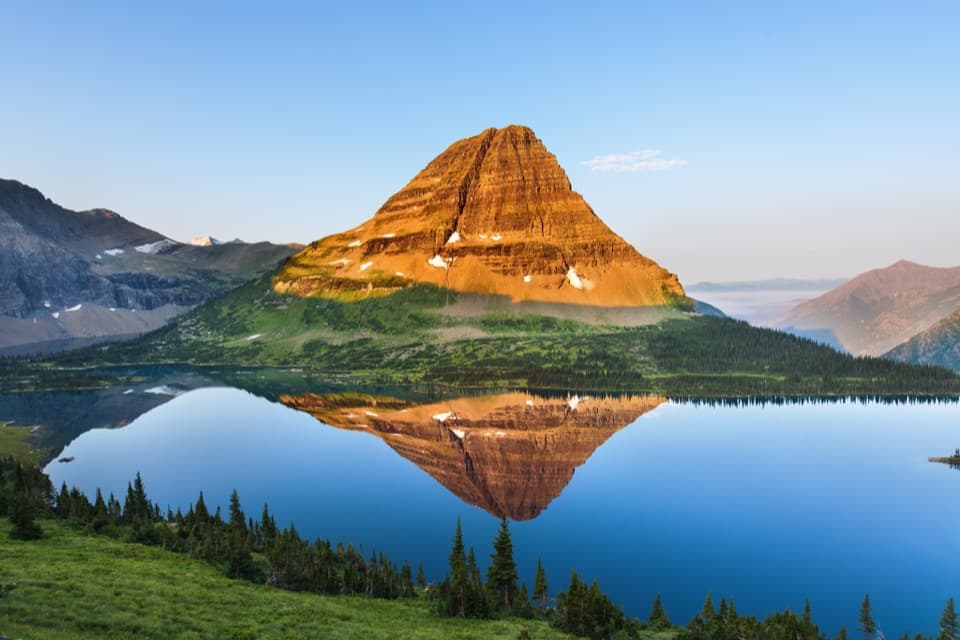 ChallengingHidden Lake Trail5.4 mi · 3.5 hr · 2.3 mi awayGo past the overlook only if you’re ready for a steep return.
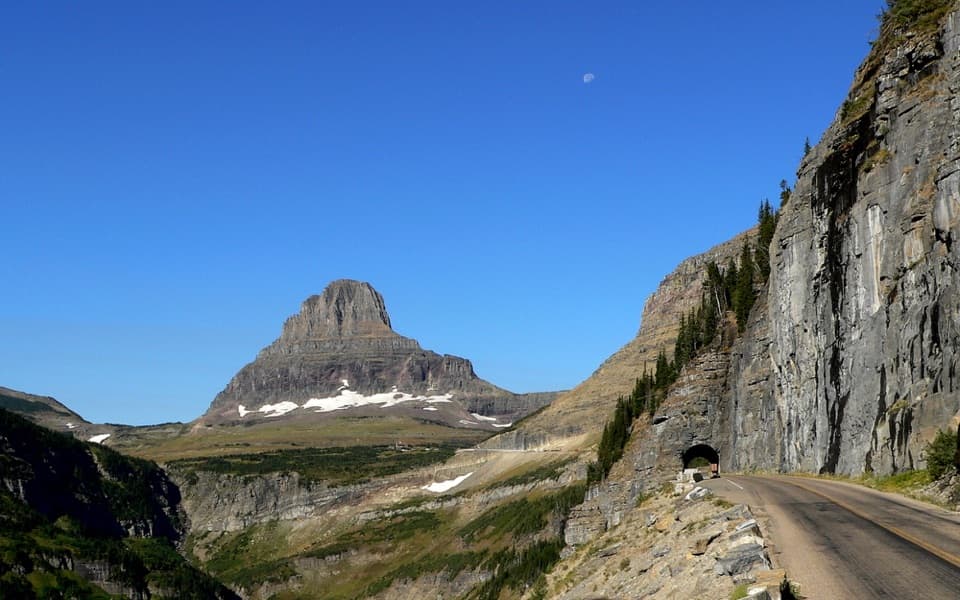 Sight · 1.3 mi awayEast TunnelA 408-foot cut through Piegan Mountain, right on the road.
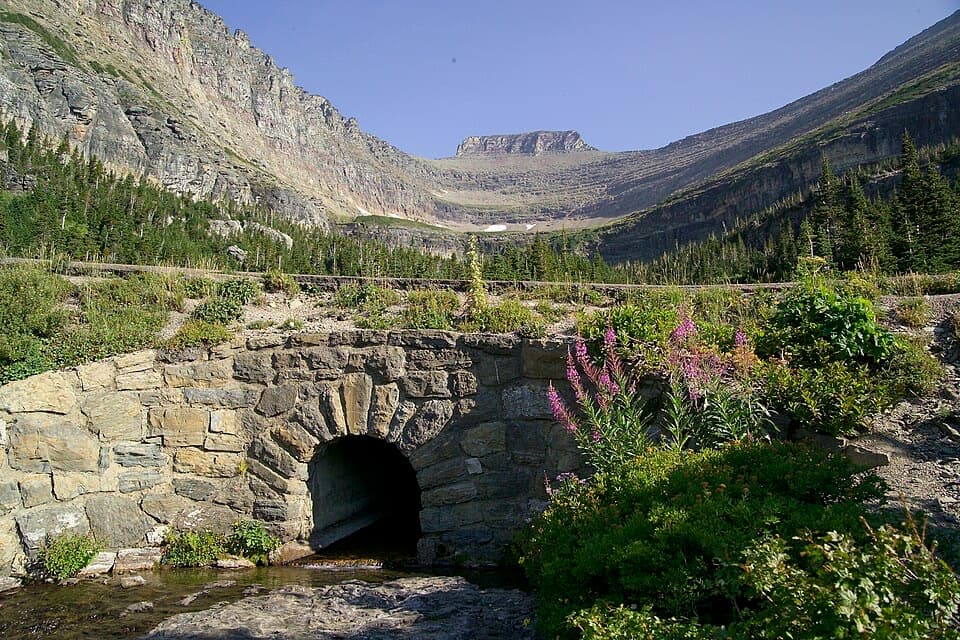 Sight · 1.6 mi awayLunch CreekA rock-step cascade beneath Pollock Mountain, framed by a stone bridge.
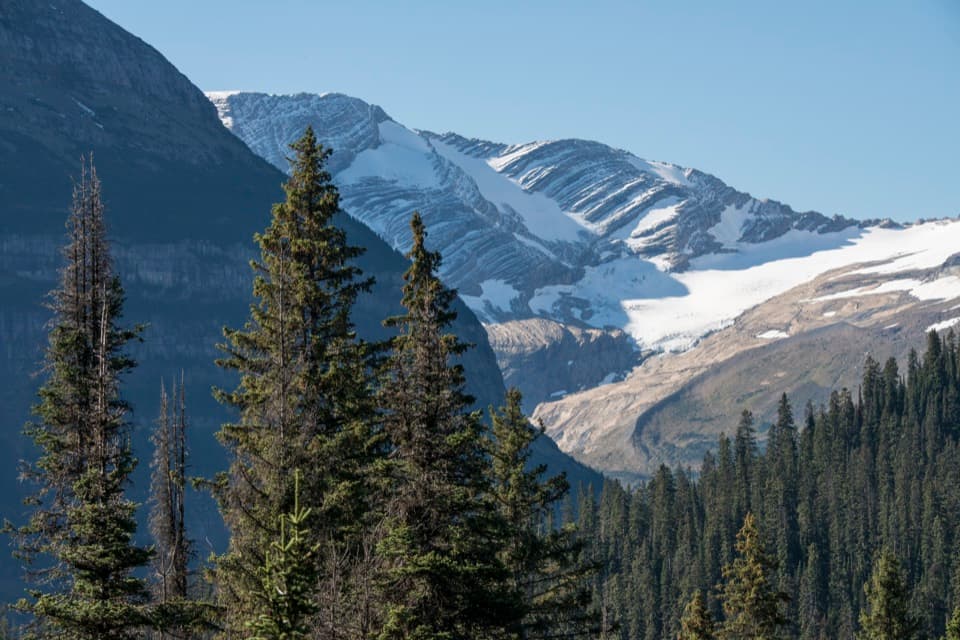 Sight · 1.7 mi awayJackson Glacier OverlookA glacier view worth the quick stop on Going-to-the-Sun Road.
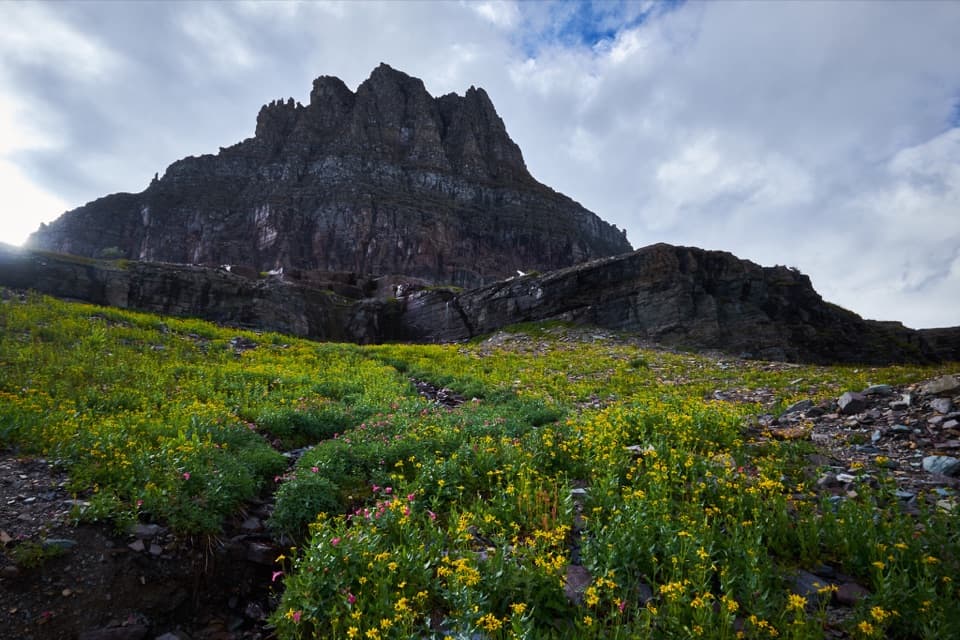 Sight · 2.3 mi awayLogan PassThe high point of the road is also a great trailhead.
 Sight · 2.5 mi awayTriple ArchesThree masonry arches carry Going-to-the-Sun Road across a mountainside.
 Sight · 2.6 mi awayOberlin BendThe last bend before Logan Pass opens onto a sweeping valley view.
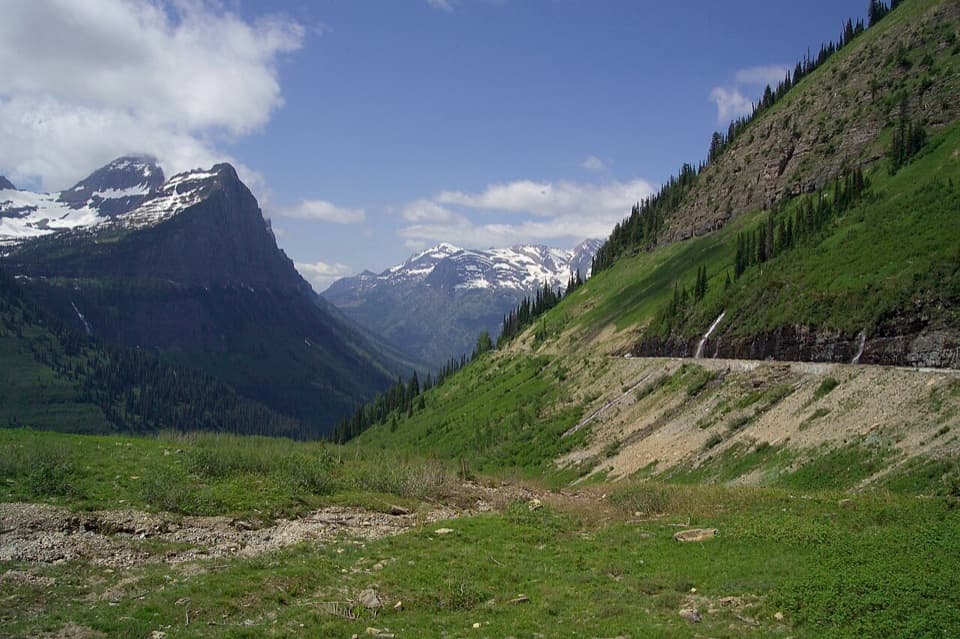 Scenic pullout · 3.1 mi awayBig BendA sweeping bend with Mount Cannon, Oberlin, and Heaven's Peak in view.
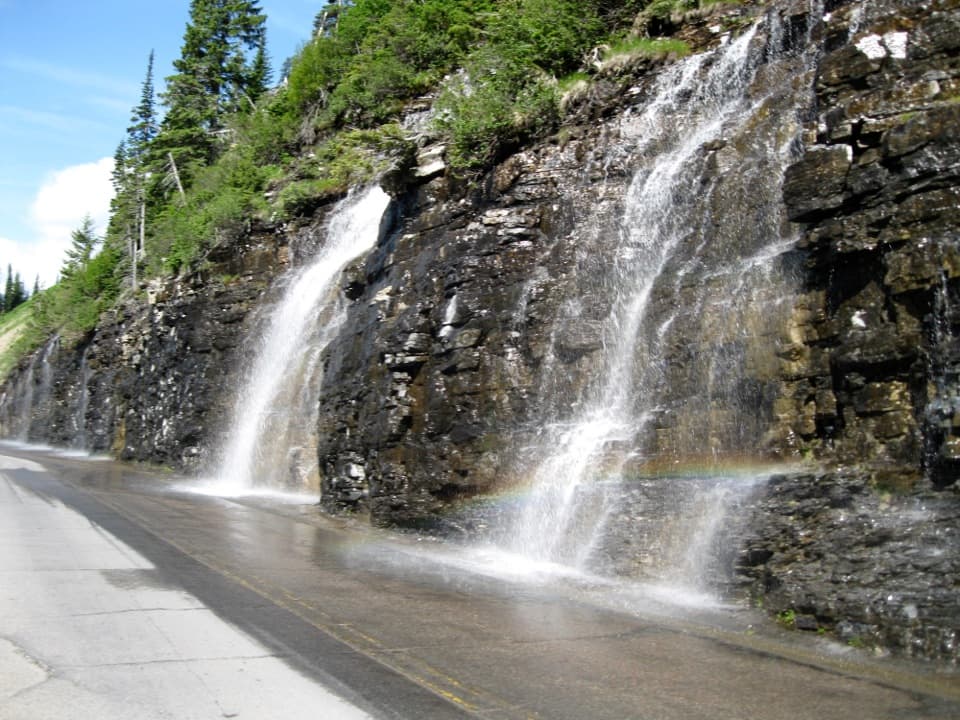 Sight · 3.3 mi awayWeeping WallA snowmelt curtain turns the road into a waterfall pass.
Parkwolf’s Glacier ranking
The audio tour guide for the drive, plus offline maps, trails, and wildlife heatmaps for when the signal drops.