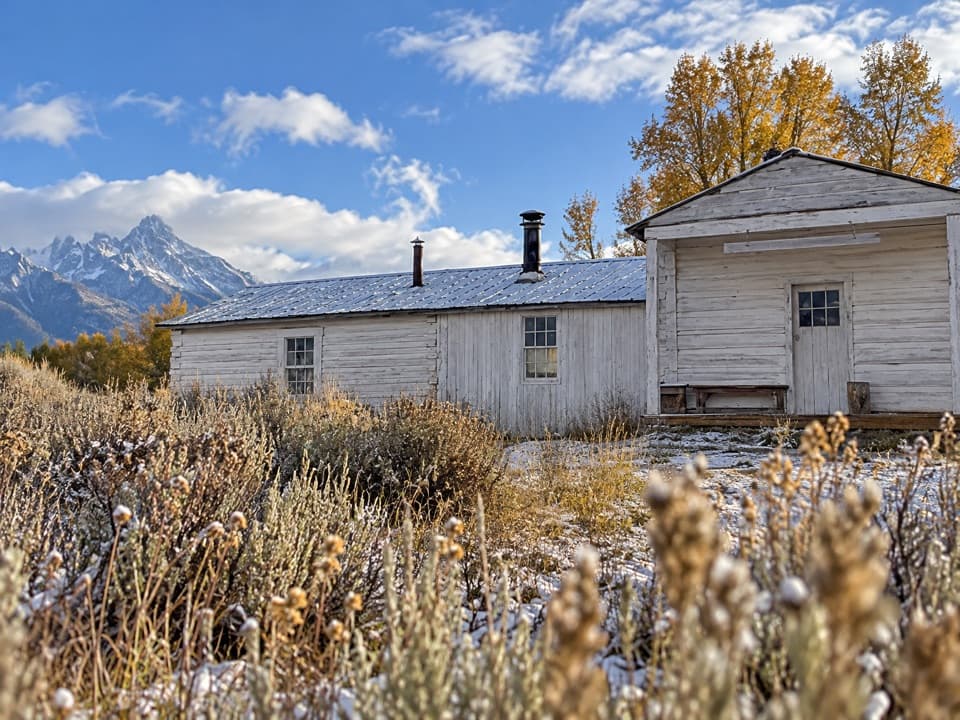
The whitewashed cabin also housed Menor’s general store. A storage shed, smokehouse, Maud Noble’s cabin and a nearby barn with wagons and coaches fill out the historic district. The homestead once covered more ground, with barns, a blacksmith shop, a garden and irrigated hayfields and pastures. A restroom and interpretive exhibits are available in the district.
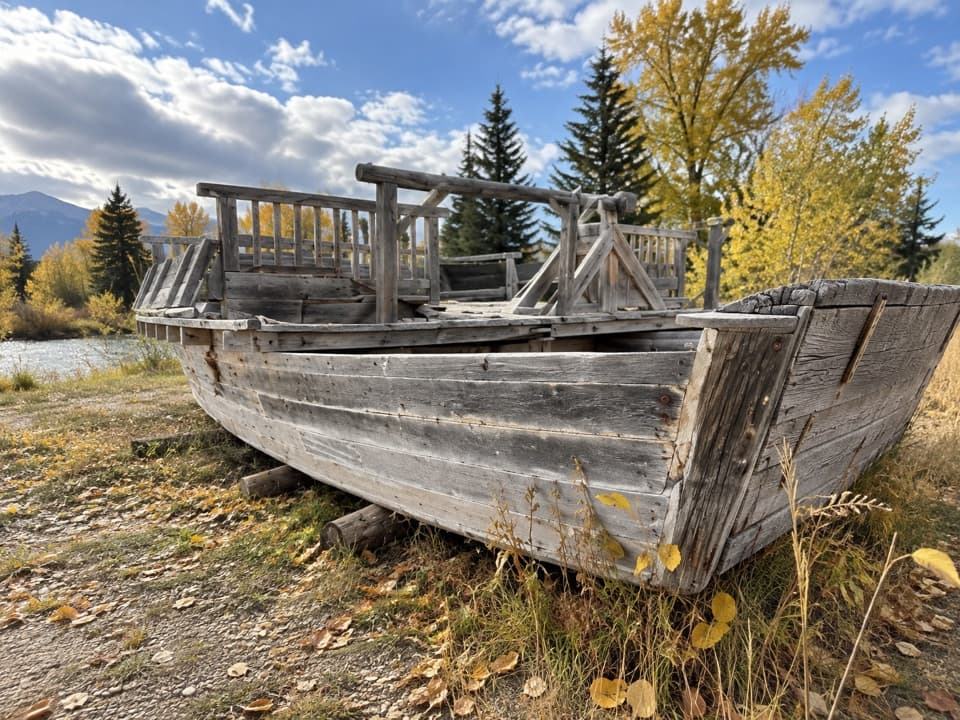
Menor built his cabin in stages: a west wing in 1894, a central kitchen and pantry around 1895, then the larger east wing around 1905 for the store. Settlers and travelers bought staples such as coffee, tea, sugar, flour and canned food there. The store, ferry and blacksmith work brought in cash alongside the farm.