Duck Brook Bridge

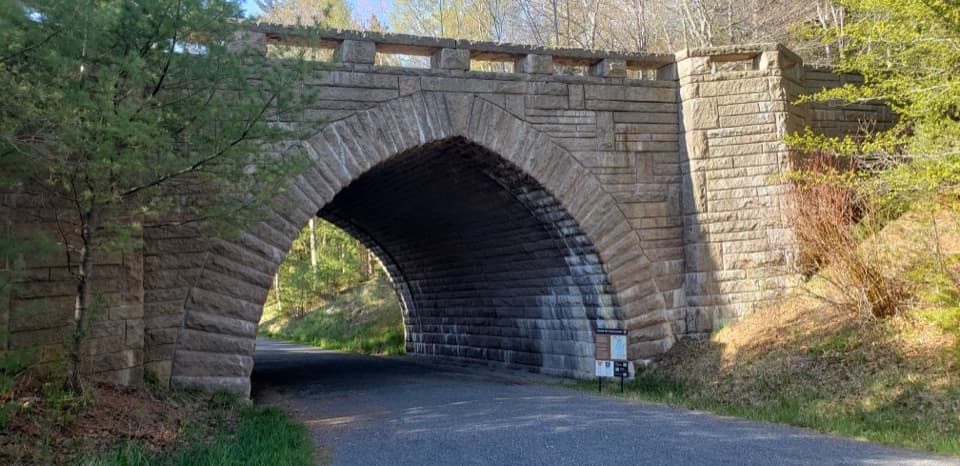
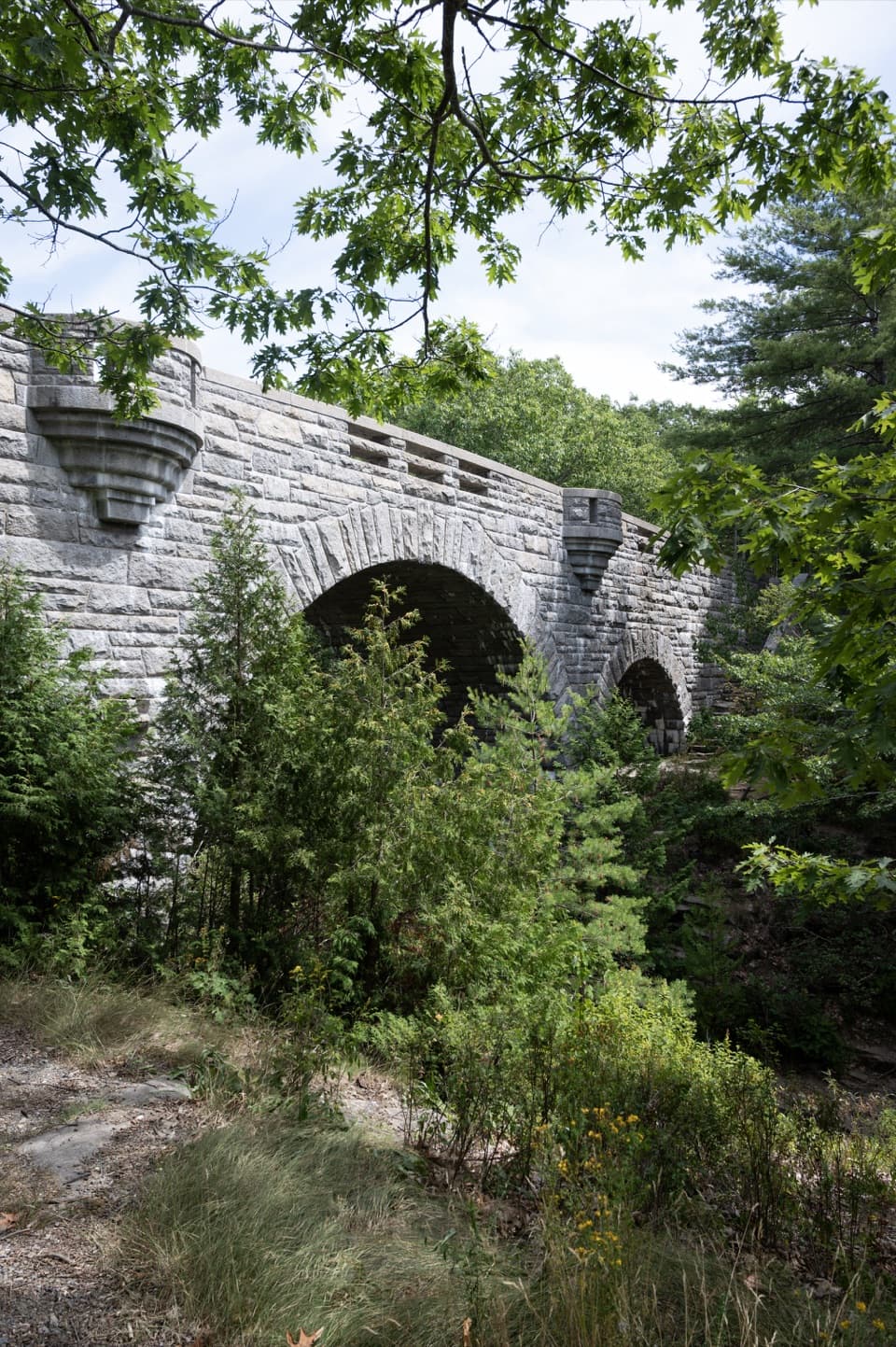
Grand stone bridge with turrets over a deep ravine
Duck Brook Bridge, Acadia National Park
InsideAcadia National Park

Overview

Duck Brook Bridge is the showpiece of the northern carriage roads—three graceful semi‑elliptical arches, four castle‑like turrets, and beautiful stone facing soaring over a deep, wooded ravine. It’s often called the most grandiose of the bridges here, and it delivers: big views into Duck Brook, handsome masonry details, and that satisfyingly dramatic span you can admire from above or below.

Why it’s special

Beyond the photogenic arches, this is the largest road‑related structure in the park and was completed in 1929 as part of John D. Rockefeller Jr.’s carriage road vision. The bridge’s reinforced concrete core is wrapped in locally sympathetic stonework, and the turreted viewpoints make it feel like a mini fortress tucked in the trees.

What you’ll see

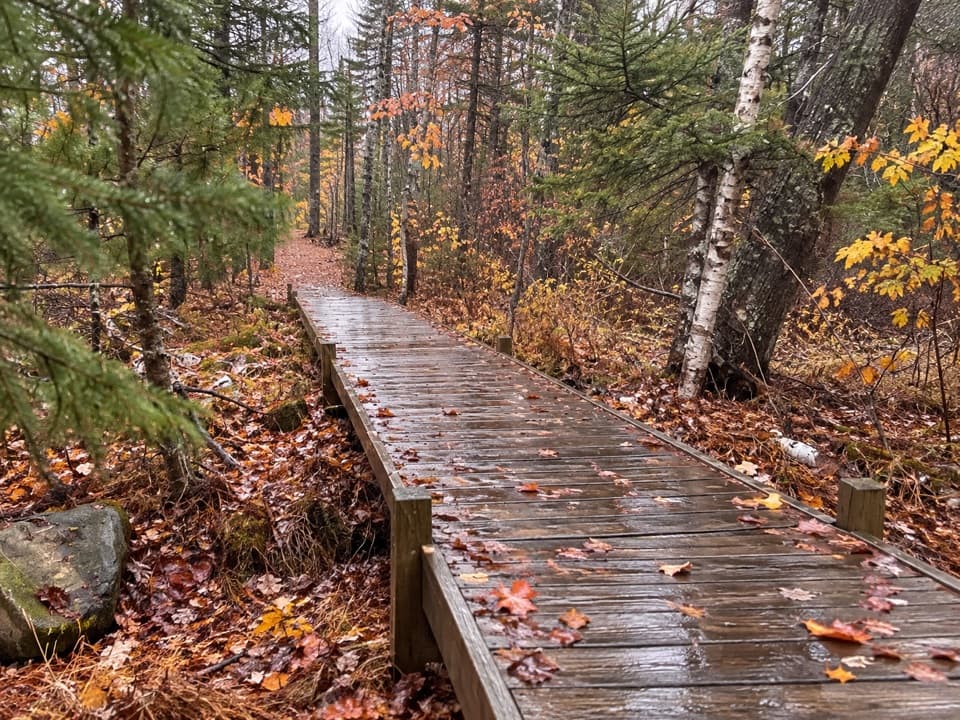
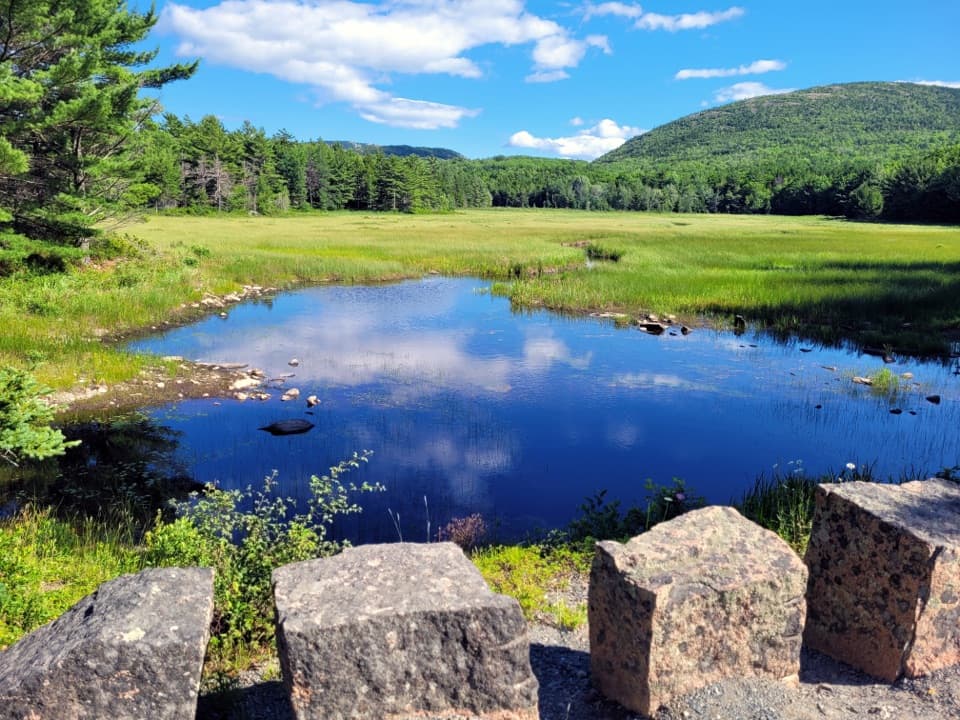
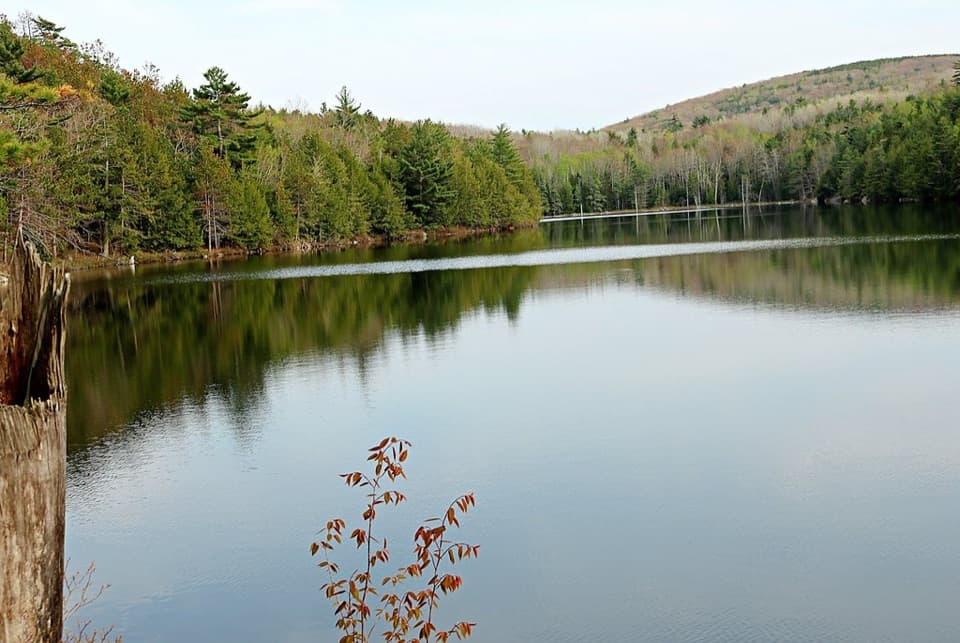
From the top, peer down into Duck Brook and across surrounding forest toward New Mills Meadow Pond. Stairs lead down to the brook for low‑angle shots of the arches. In autumn, the foliage lights up the ravine and frames the bridge beautifully.

Getting there

It sits just west of Bar Harbor off Duck Brook Road, tying into the Witch Hole Pond and Paradise Hill carriage road loops. Many people bike or walk in from Hulls Cove Visitor Center or Eagle Lake (about 2 miles either way). Parking near the bridge is very limited, and the road is closed to vehicles beyond the bridge, so plan on approaching via the carriage roads.

Wildlife

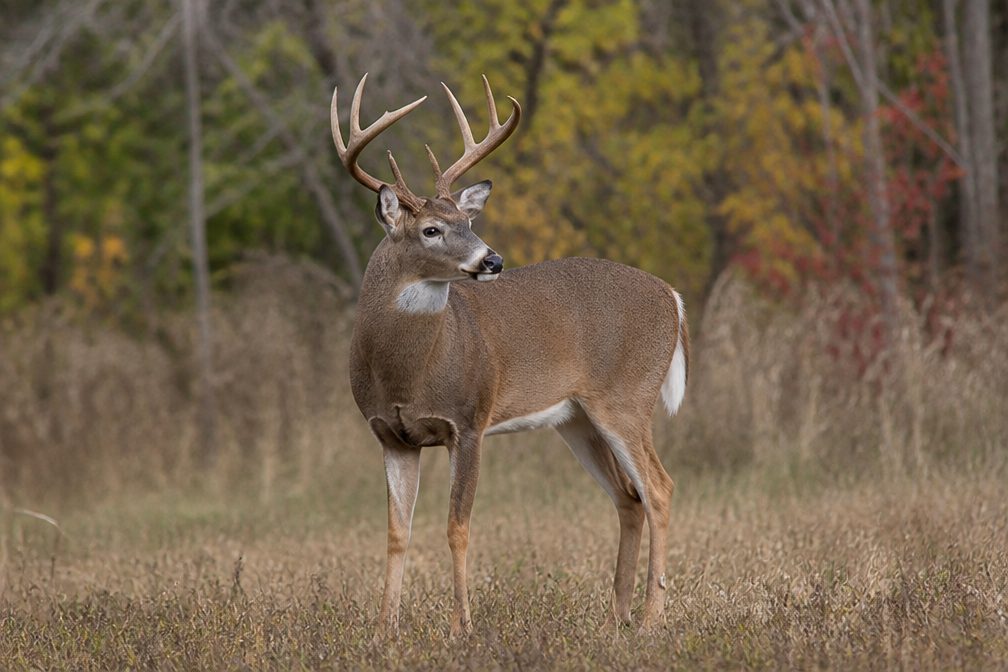
Expect typical forest company: songbirds and squirrels are common, with occasional deer in the quiet hours. The brook can draw ducks and other waterfowl, especially in shoulder seasons.

A bit of history

Finished in 1929 as the 11th of 17 Rockefeller-era bridges, it was intended as a grand northern terminus of the carriage roads. Landscape architect Beatrix Farrand shaped plantings to frame views, and architect Charles Stoughton handled the design. In the early 1950s, it also became the final link in Paradise Hill Road, serving as a gateway route around downtown Bar Harbor.

Photography tips

  • Best vantage tends to be from the southwest side for depth and light.
  • Descend to the brook to capture all three arches; bring sturdy shoes.
  • Fall color is prime; early and late light adds texture to the stone.

Best time to visit

Go early morning or late afternoon for soft light and fewer people. Weekends and midday see more carriage road traffic. Fall offers peak color; winter can be serene but cold, and surfaces may be slick.

Pros

  • Tallest and most ornate bridge on the carriage road system
  • Fantastic photo angles from turreted platforms and along the brook

Cons

  • Very limited parking and easy to miss without directions
  • Stone can be slick after rain

Tips

  • Use Duck Brook Road off Route 233—this spot is easy to miss without directions.
  • Link it with the Witch Hole or Paradise Hill carriage road loops by bike.
  • Take the stairs down to the brook for the best angles on all three arches.
  • After rain, the stone can be slick—watch your footing and wear good shoes.
The Parkwolf tour guide sitting on a phone mounted in a car

Parkwolf Tour Guide

Like a tour guide in your car.

Save the places you found around Acadia, then let Parkwolf guide the drive between them.Download Parkwolf on the App Store