Parking
Start from the Paint Pots Day-use Area parking lot on Highway 93 South, about 84 km east of Radium Hot Springs.

Kootenay National Park, BC
A hard climb to Tumbling Falls and a gateway to the Rockwall.
Overview
Map & elevation
Plan your hike

The highest, rockiest slopes around here are a summer buffet for grizzly bears.
Kootenay Tour Guide
Parkwolf is a GPS audio tour guide for Kootenay National Park. As you drive, it chimes in with what’s ahead: hidden gems, upcoming stops, history, geology, and wildlife, right through your car’s speakers.
See the Kootenay audio tourRecorded for this trailhead
Paint Pots: Colour in the Earth“Up ahead is the Paint Pots trailhead, for a gentle walk to three springs whose iron-rich water stains the earth orange.”
Plays as you drive up to this trailhead in the Parkwolf Kootenay Tour Guide.
More stories near here in the app
“Fantastic app with many points of information… It’s great to just turn on while you’re driving and it gives you an audio tour of the national Park. We love it!!!!”


Trail guide
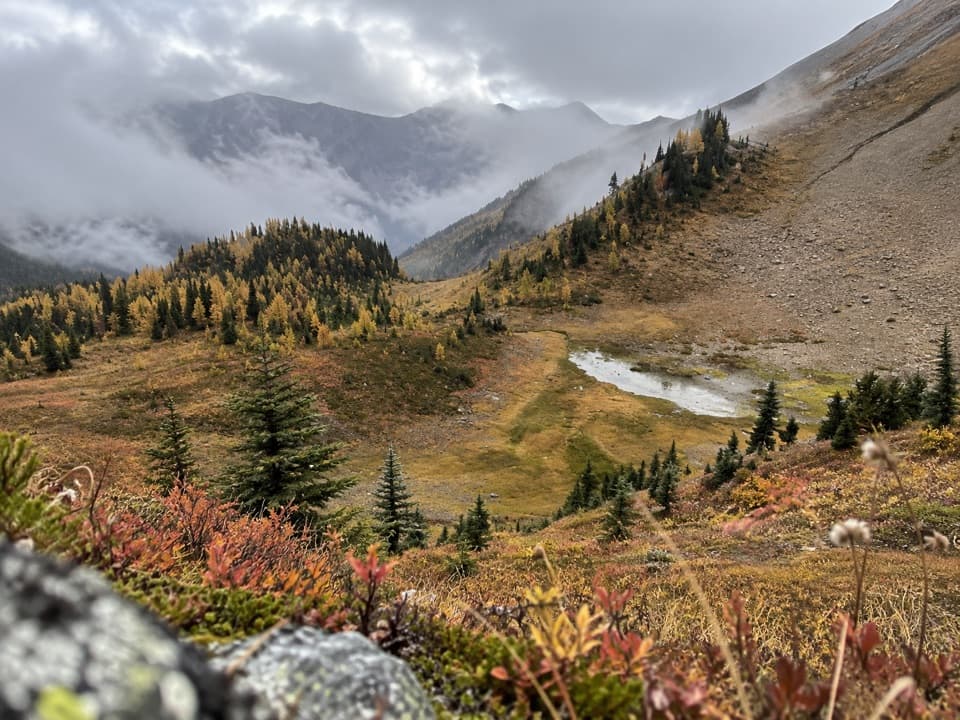
Tumbling Creek Trail is a 10.2 km one-way backcountry approach from Paint Pots Day-use Area to Tumbling Creek campground, one of the northernmost access points to the Rockwall. The opening stretch follows Ochre Creek beside fast water, and the route passes Tumbling Falls before reaching camp. The out-and-back day hike is 20.4 km (12.7 mi); allow about six hours. The approach gains about 700 m and loses 245 m on the way in, and the park marks it difficult. Plan for a full day with substantial climbing and descent.
The first part follows Ochre Creek, where the water runs fast. Tumbling Falls is the route's named photo stop and its clearest landmark on the way to camp. A separate view along the route looks toward Mount Gray beyond the evergreens. Keep to the maintained trail and designated viewpoints when you stop at the falls.
Tumbling Creek campground is a northern access point for the longer Rockwall route. The full Rockwall is a 54.1 km, three-to-five-day trip over alpine passes; this trail record ends at the campground. Overnight stays require a backcountry permit, and most campgrounds require advance reservations in July, August and September.
Wildlife
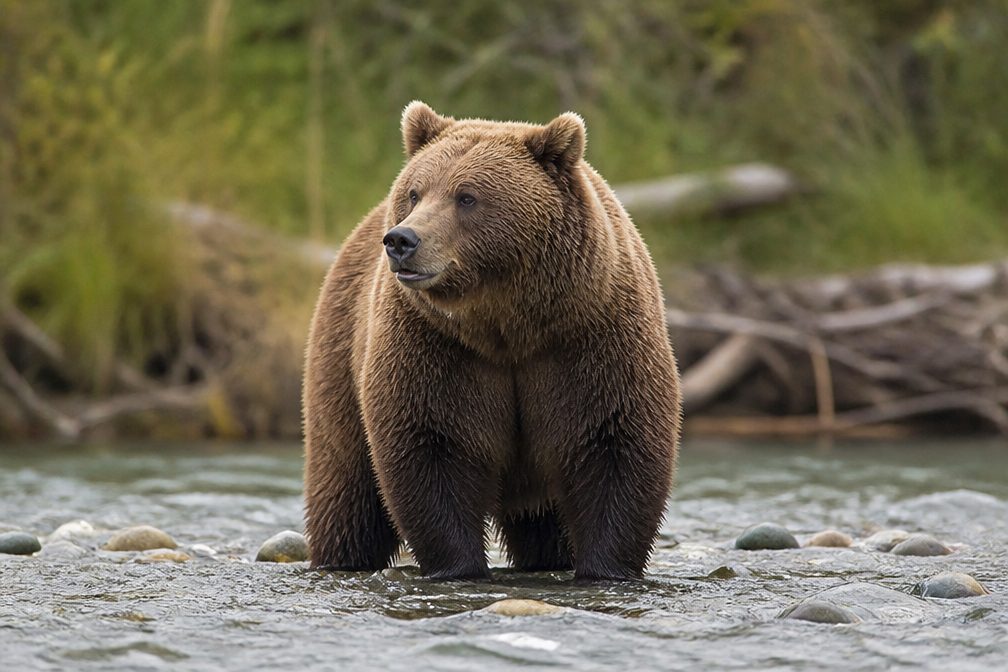 41 sightingsGrizzly BearMost seen around 8 PMSighting map
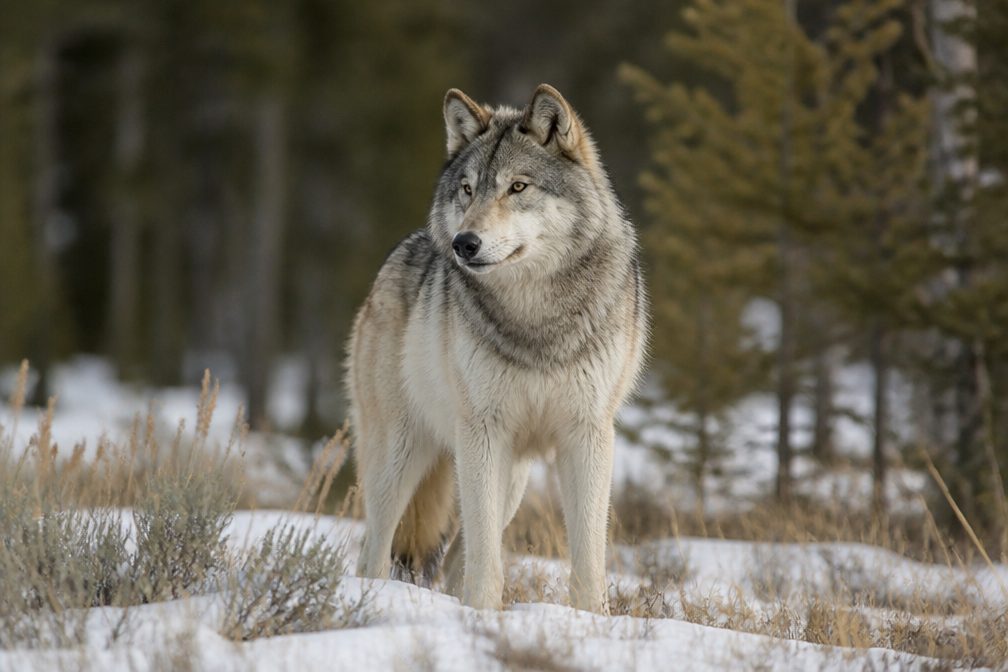 31 sightingsGray WolfMost seen around 8 PMSighting map
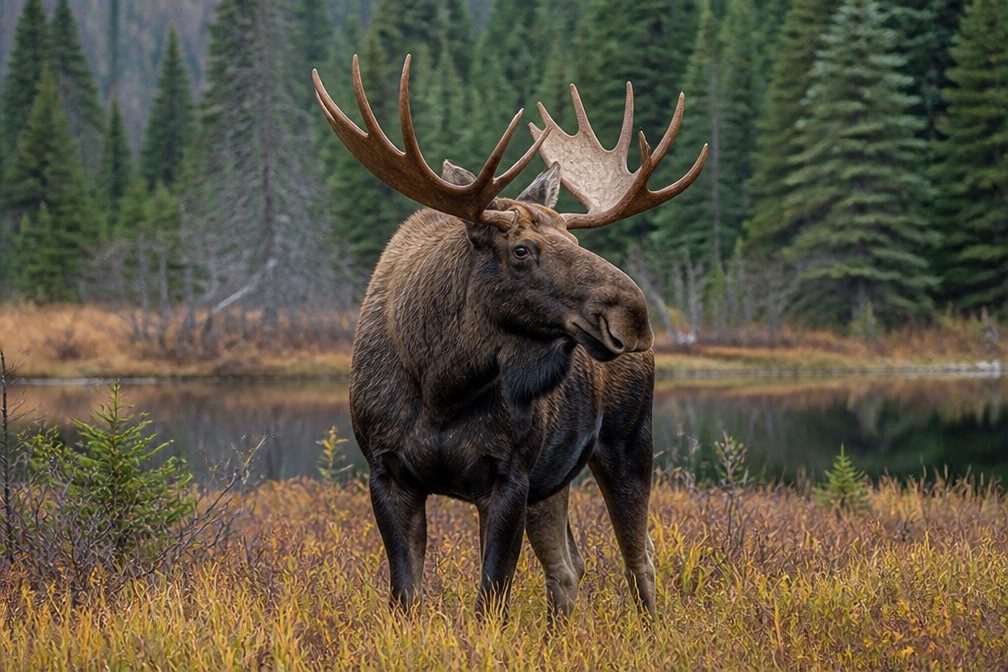 22 sightingsMooseMost seen around 6 AMSighting map
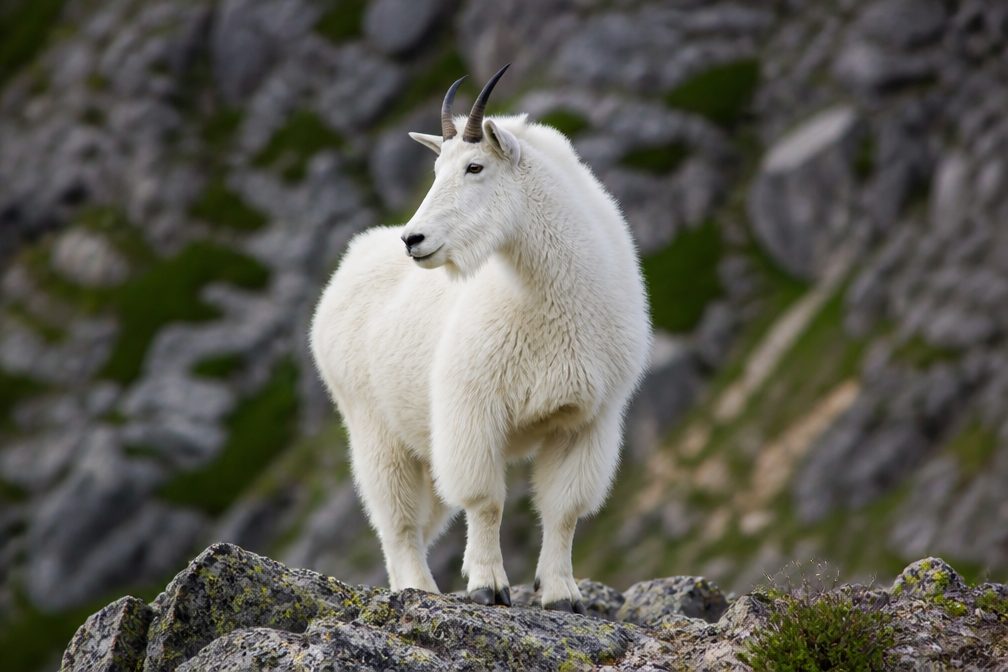 84 sightingsMountain GoatMost seen around 7 PMSighting map
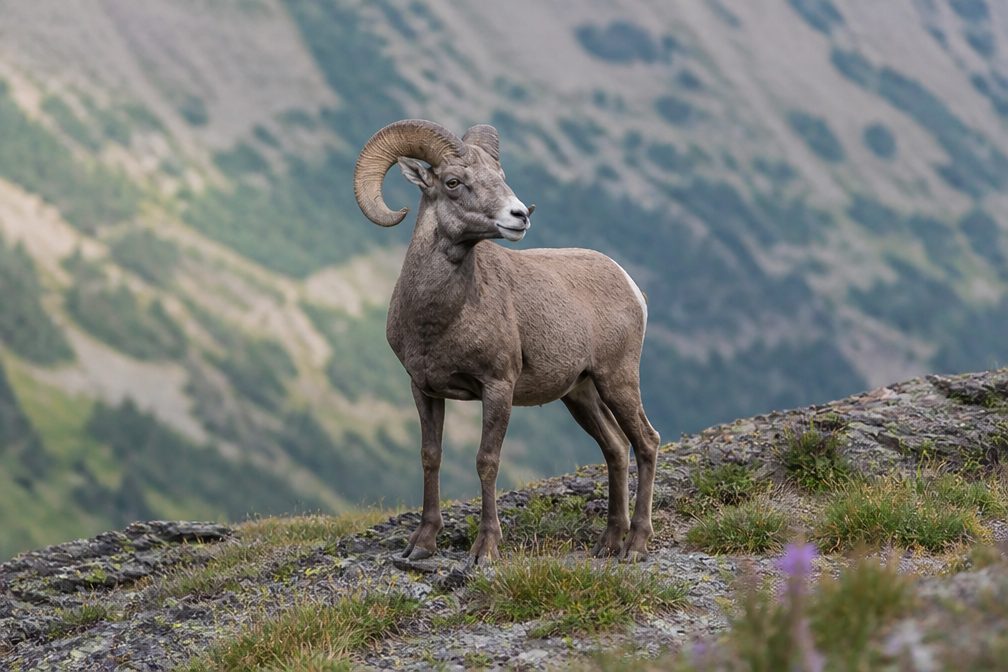 522 sightingsBighorn SheepMost seen around 7 AMSighting map
 65 sightingsElkMost seen around 6 AMSighting map
Sighting maps show where each species has been reported across Kootenay. Wildlife moves, so no sighting is guaranteed.
Keep exploring
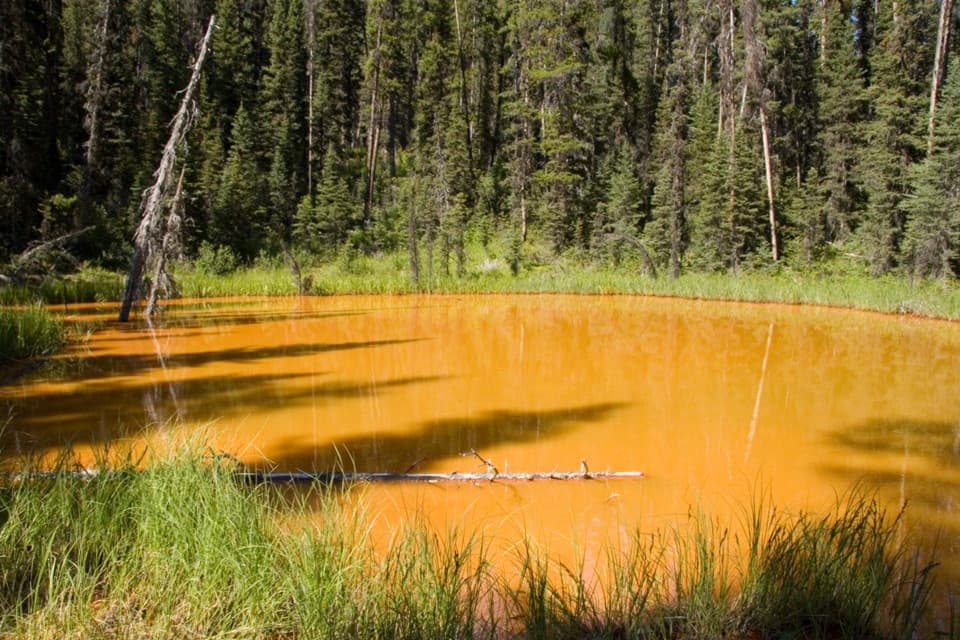 EasyPaint Pots Trail2 km · 45 min · At the trailheadCross the Vermilion River to three iron-rich springs.
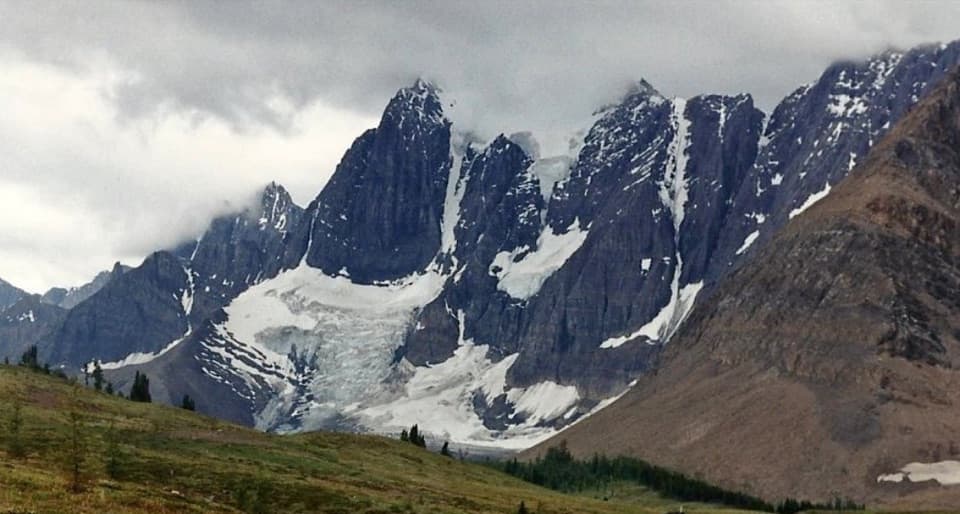 ChallengingTumbling-Floe Traverse37.7 km · 2.5 days · At the trailheadA two-to-three-day traverse from Paint Pots to Floe Lake.
 ChallengingHelmet Creek Trail28.4 km · 10 hr · At the trailheadA long hike from ochre springs to a 300 m waterfall.
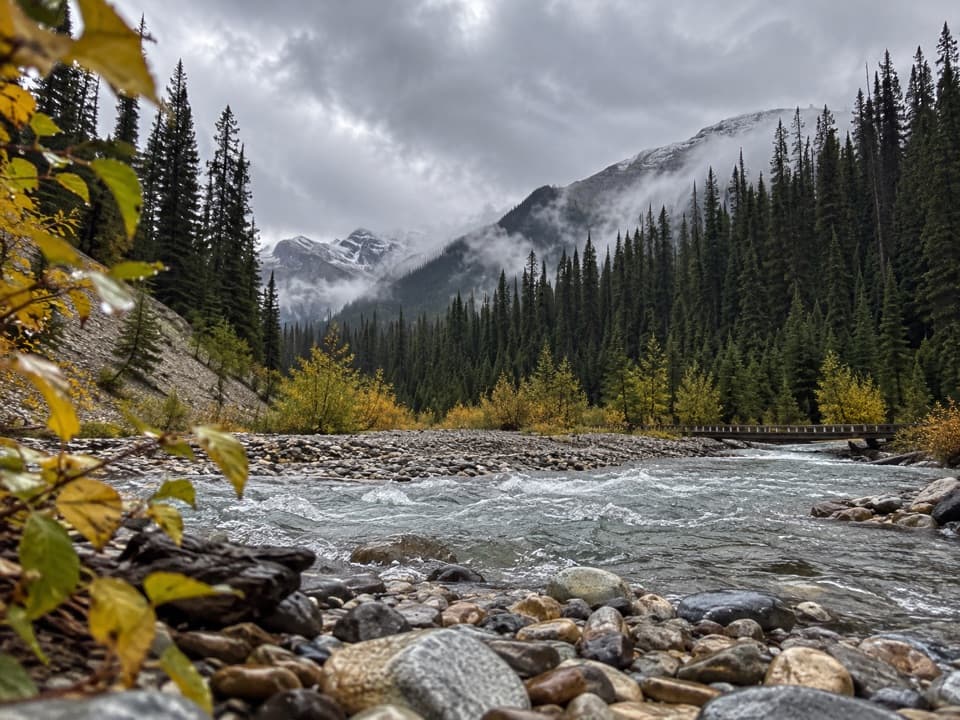 ModerateOchre Creek Trail12.4 km · 4 hr · At the trailheadA forested creek walk to the northern Rockwall campground.
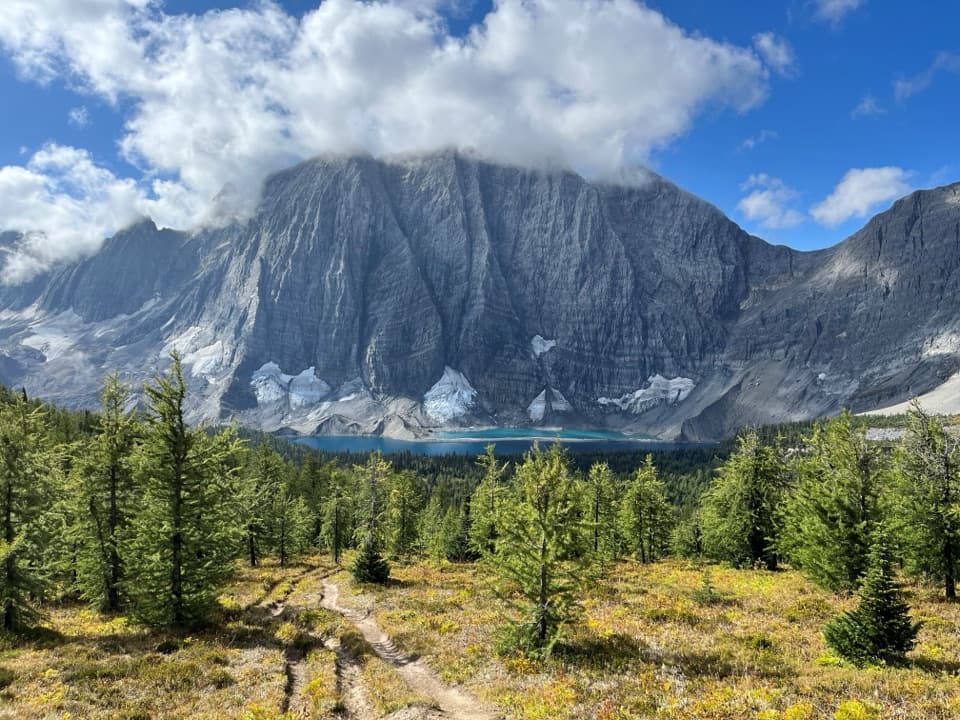 ChallengingRockwall Trail54.1 km · 4 days · At the trailheadThree passes, the Rockwall, and Floe Lake anchor an alpine traverse.ChallengingTumbling - Helmet - Ochre Loop36.9 km · 2.5 days · At the trailheadTwo or three days among alpine meadows, Helmet Falls and the Rockwall.
 ModerateTokumm Creek Trail8.6 km · 3.5 hr · 2.5 km awayA creekside wilderness route with no trail maintenance.
 EasyMarble Canyon1.8 km · 36 min · 2.5 km awayAn easy bridge walk over a startlingly deep, turquoise canyon.
 Sight · 0.8 km awayPaint PotsThree iron-rich springs stain the ground a vivid ochre.
 Sight · 2.4 km awayMarble CanyonSeven bridges, blue water, and a waterfall on a short gorge walk.
 Campground · 2.5 km awayMarble Canyon CampgroundA basic campground in a spruce forest with no cell signal.
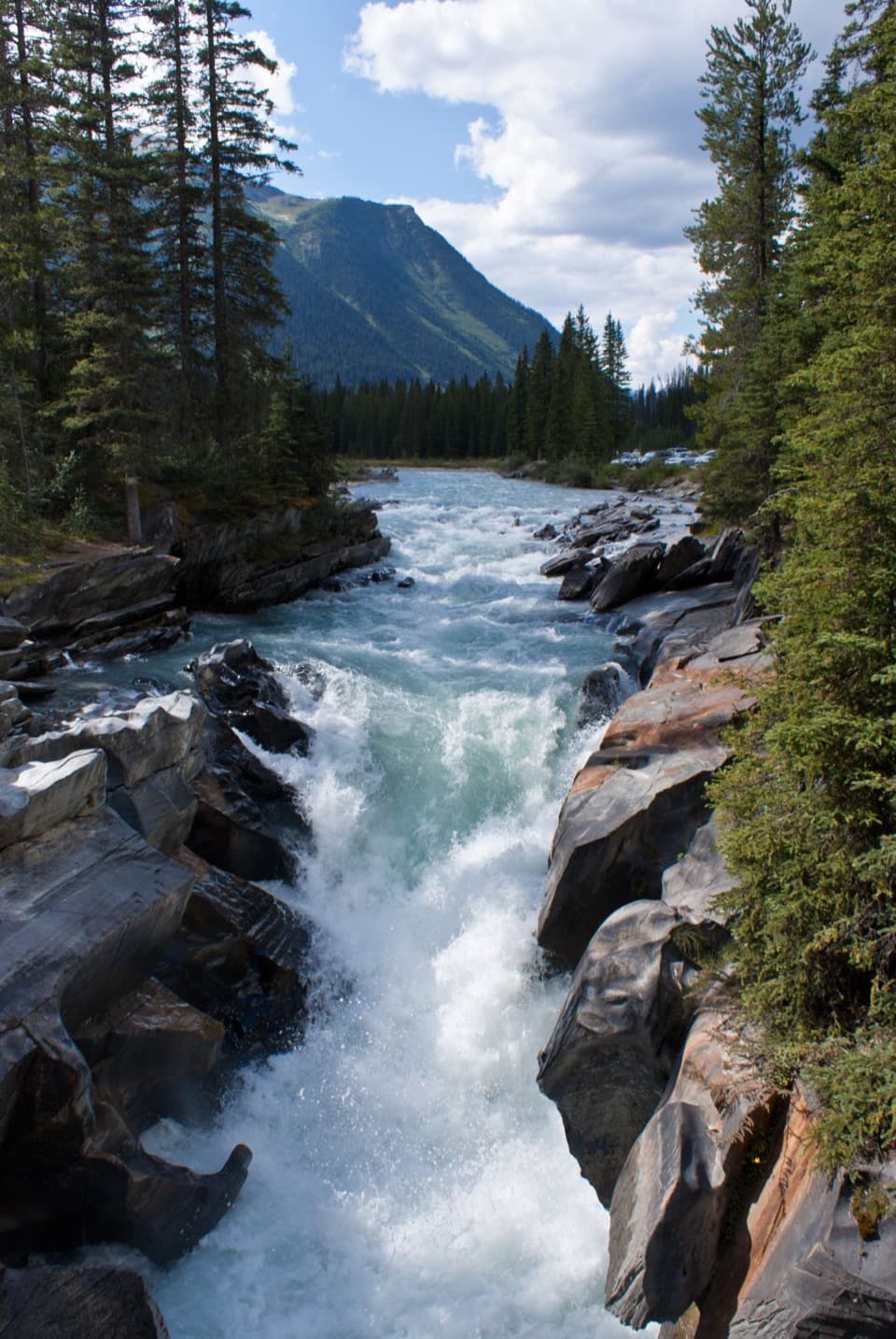 Sight · 4.3 km awayNuma FallsA short bridge walk reveals the Vermilion's sculpted canyon.
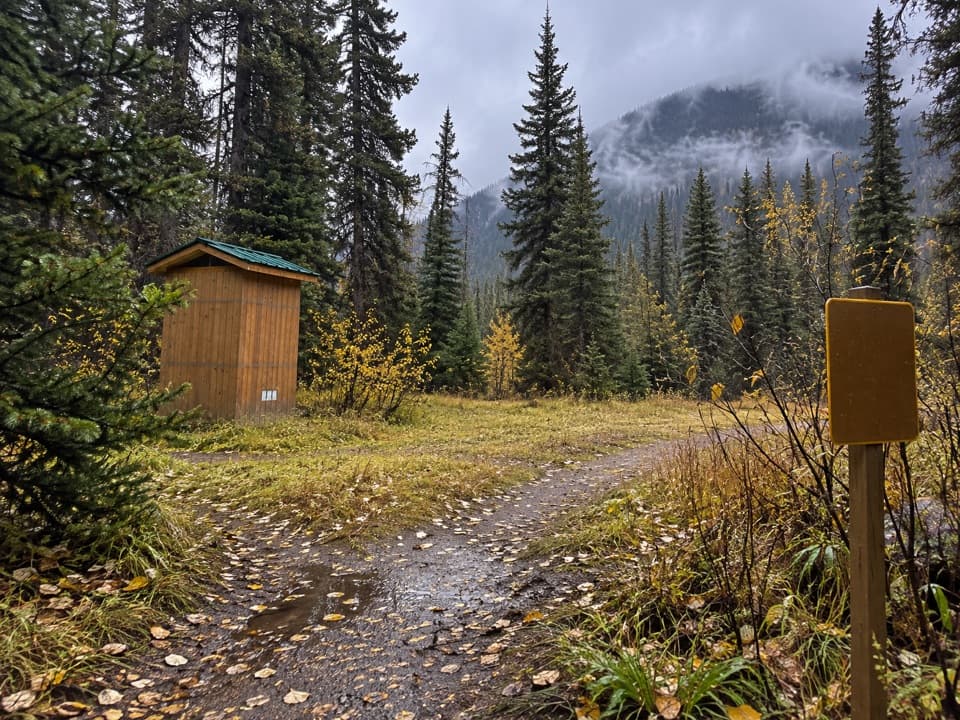 Campground · 5.2 km awayHelmet / Ochre Junction CampgroundA creekside backcountry camp at the Rockwall trail junction.
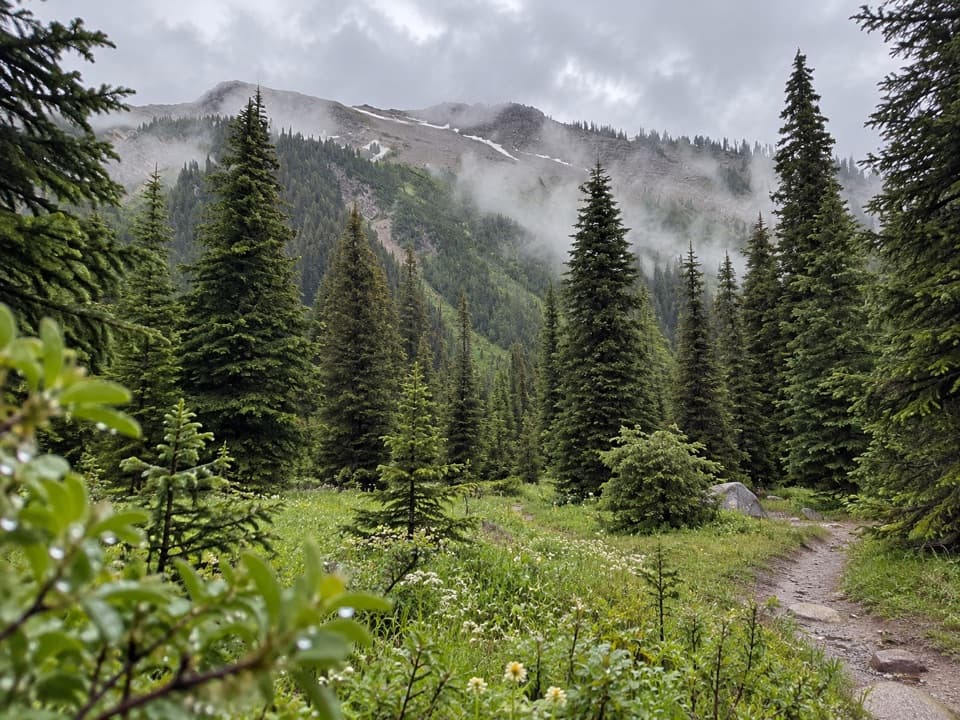 Campground · 7 km awayTumbling Creek CampgroundA useful northern camp for a full Rockwall backpacking traverse.
 Campground · 7.1 km awayNuma Creek CampgroundA backcountry campground on the 54.1-km Rockwall Trail.
 Sight · 7.6 km awayStanley GlacierWaterfalls and a turquoise crossing lead to a glacier basin.
Parkwolf’s Kootenay ranking

The audio tour guide for the drive, plus offline maps, trails, and wildlife heatmaps for when the signal drops.