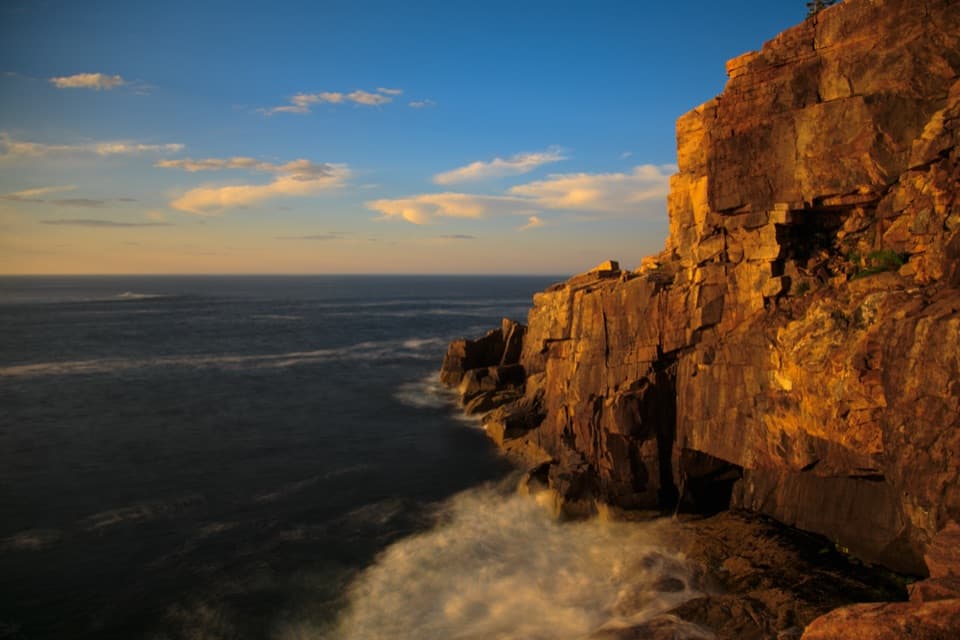
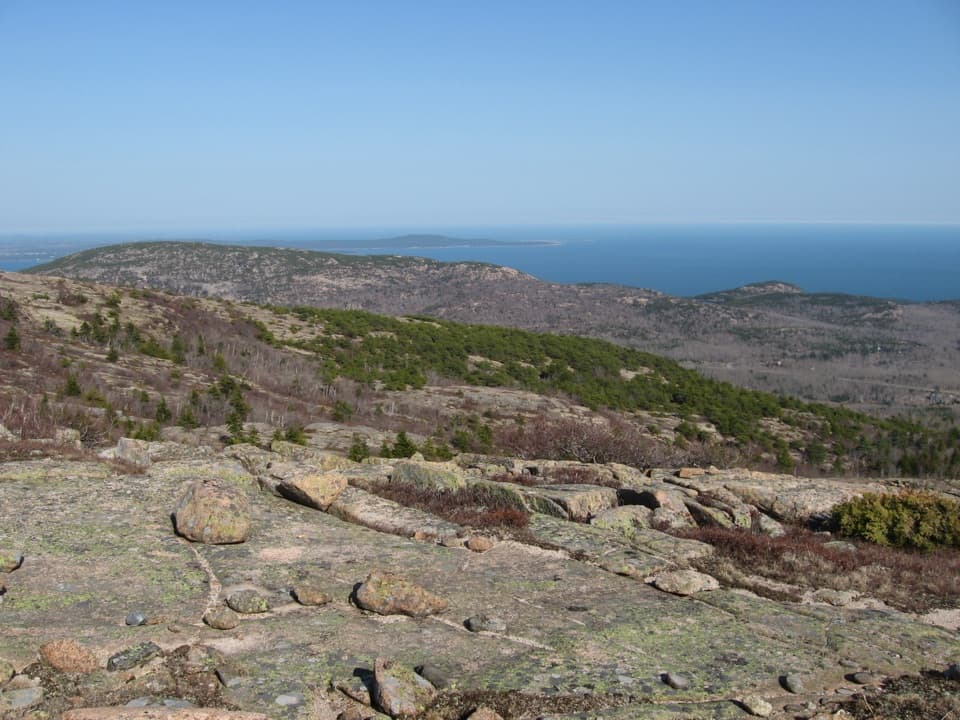
Parking
Start at the Shady Hill parking area on ME 198, north of Upper Hadlock Pond. Lot size and overflow details were not found.

Acadia National Park, ME
A steep, rooty climb beside a waterfall to Sargent’s south ridge.
Overview
Map & elevation
Plan your hike

The highest, rockiest slopes around here are a summer buffet for grizzly bears.
Acadia Tour Guide
Parkwolf is a GPS audio tour guide for Acadia National Park. As you drive, it chimes in with what’s ahead: hidden gems, upcoming stops, history, geology, and wildlife, right through your car’s speakers.
See the Acadia audio tourRecorded for this trailhead
Norumbega Access to Bald Peak“You're nearing the Norumbega roadside trail access, where I'd choose the Bald Peak and Parkman Mountain loop for two open summits.”
Plays as you drive up to this trailhead in the Parkwolf Acadia Tour Guide.
More stories near here in the app
“…As we drove through Acadia it gave us a tour, which was really cool. Lots of great info about the parks and how to avoid the crowds. It’s a great travel companion!”


Trail guide
Hadlock Brook Trail is a 1.5-mile, one-way climb from the Shady Hill access on ME 198 to the Sargent Mountain South Ridge Trail. It follows a wooded brook corridor uphill; it is not a loop, and the listed distance is only the climb. Allow about 1.5 hours one way. Retracing the route makes roughly a 3-mile round trip, while continuing along the ridge requires its own route plan.
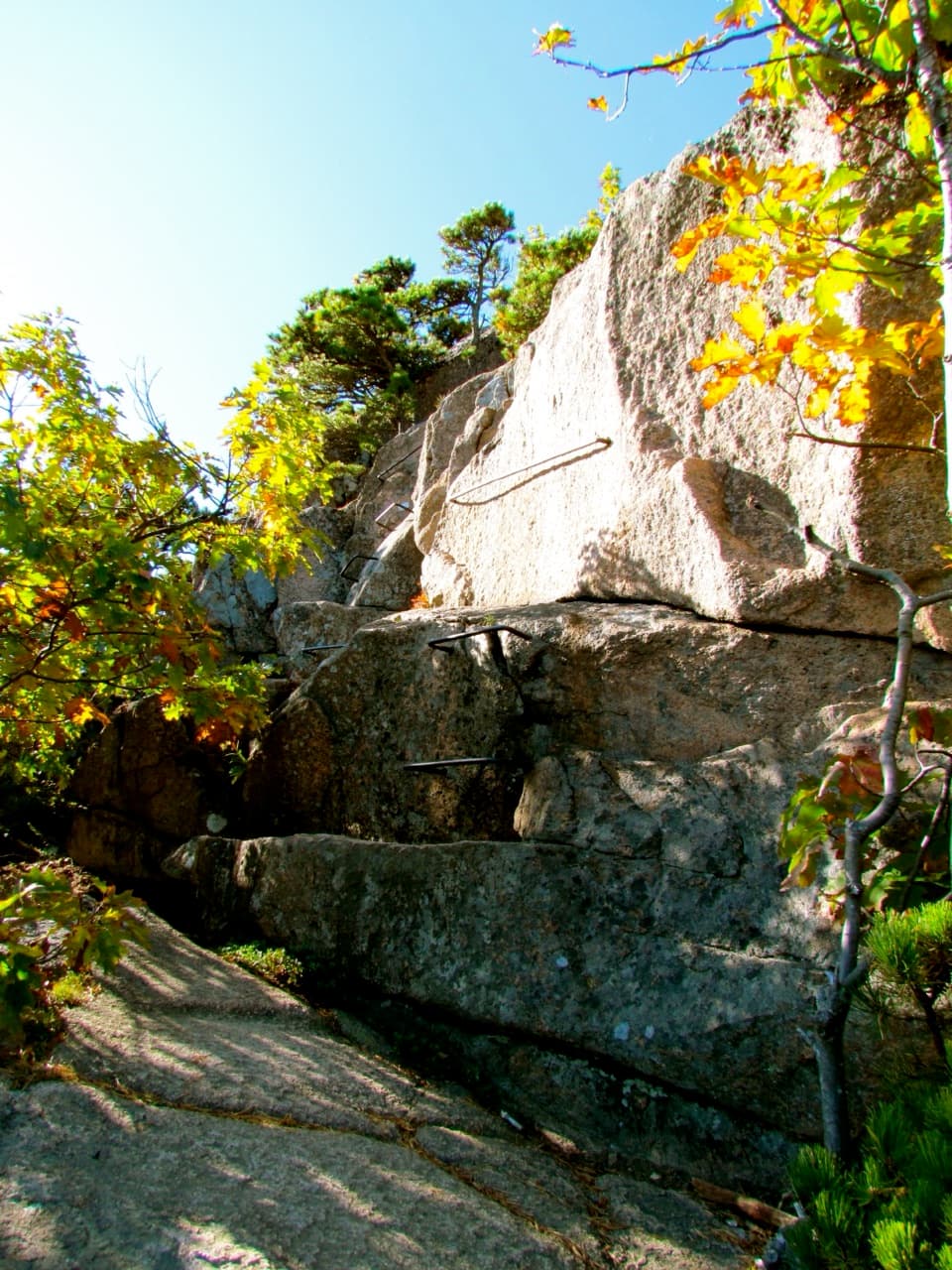
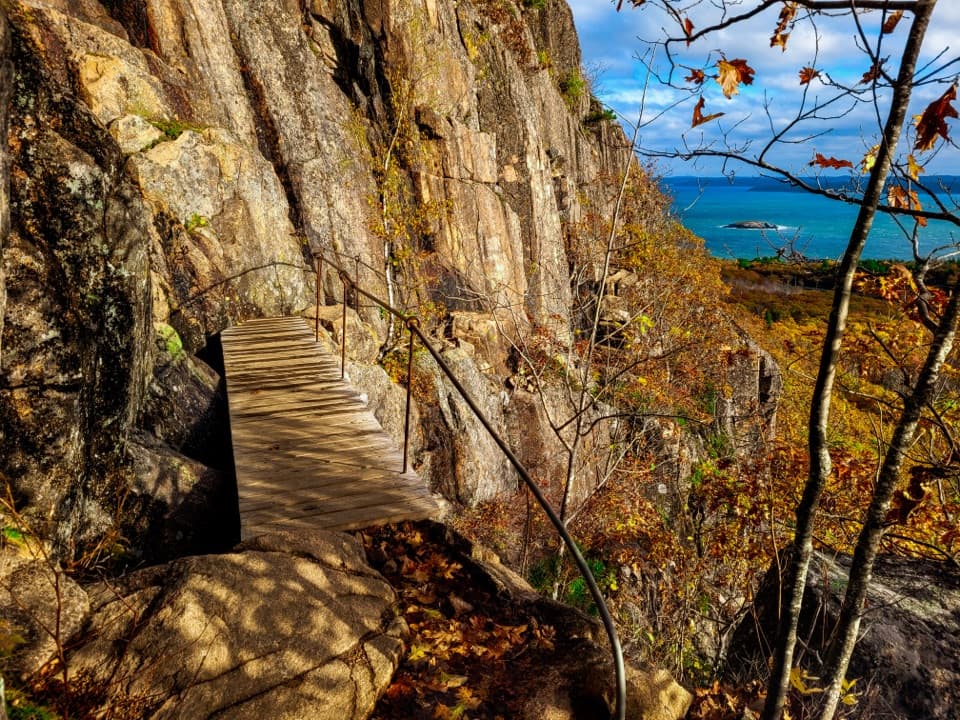
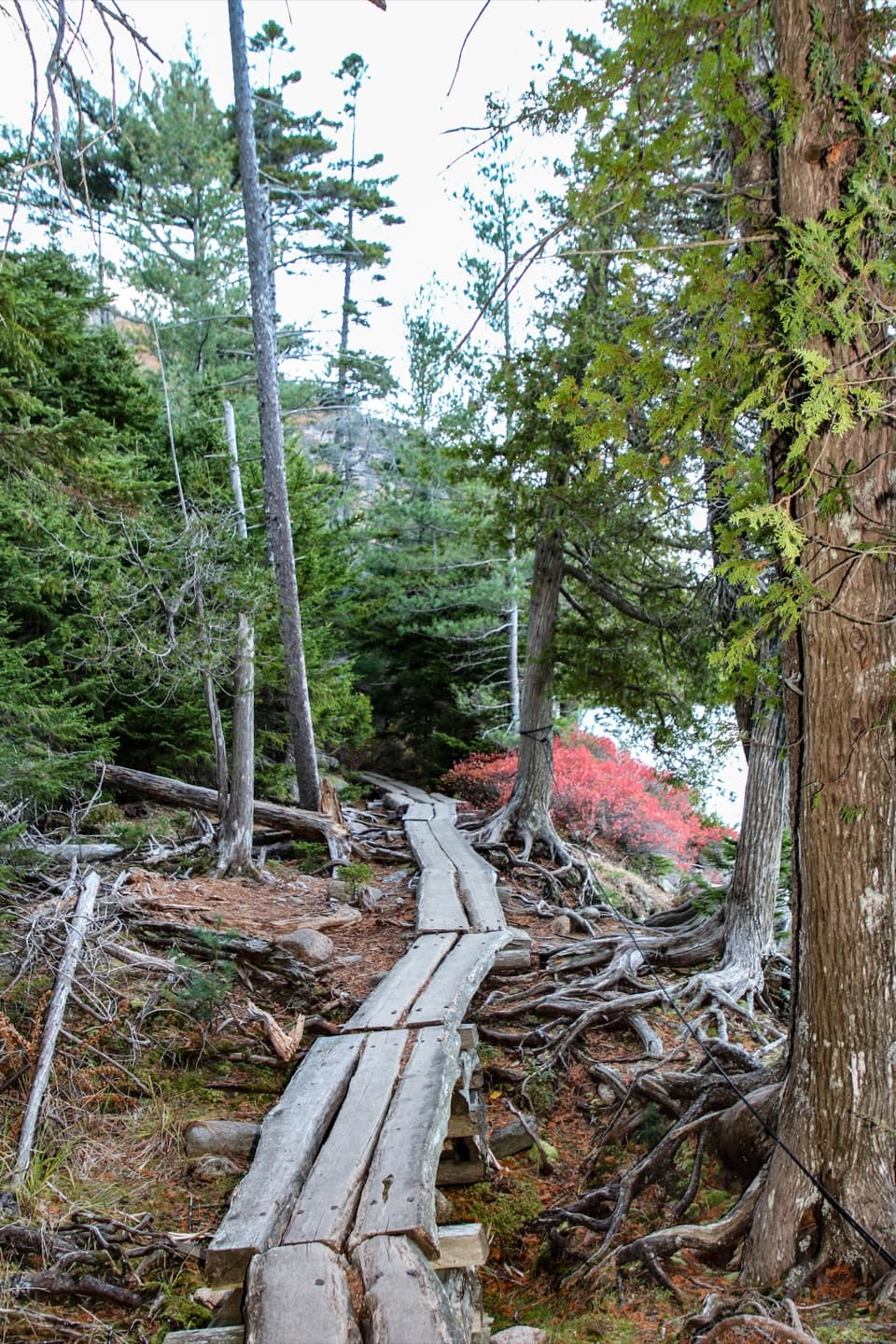
The lower tread is mostly unconstructed, with exposed roots beside the brook and stone drainage dips. The historic trail inventory counts about 17 steps and 40 stepping stones along the route. As you climb, Waterfall Bridge appears above the 40-foot waterfall on Upper Hadlock Brook. Pause where the falls sit below the bridge’s granite arch; that is the route’s defining view.
This is one of the oldest routes on Sargent’s west side. It was once called Waterfall Trail and appears in early twentieth-century hiking records. Carriage-road construction later rerouted it, removing older features that included a bridge and steep stone steps, but the brookside climb still leads to the mountain’s south ridge.
Begin at the Shady Hill roadside parking area on ME 198, north of Upper Hadlock Pond. Expect a steady, steep ascent over roots, steps, and uneven stones. Dogs are allowed on Acadia trails on a leash no longer than six feet. Parking capacity, toilets, drinking water, and food at the trailhead were not found; check current park trail notices before setting out.
Wildlife
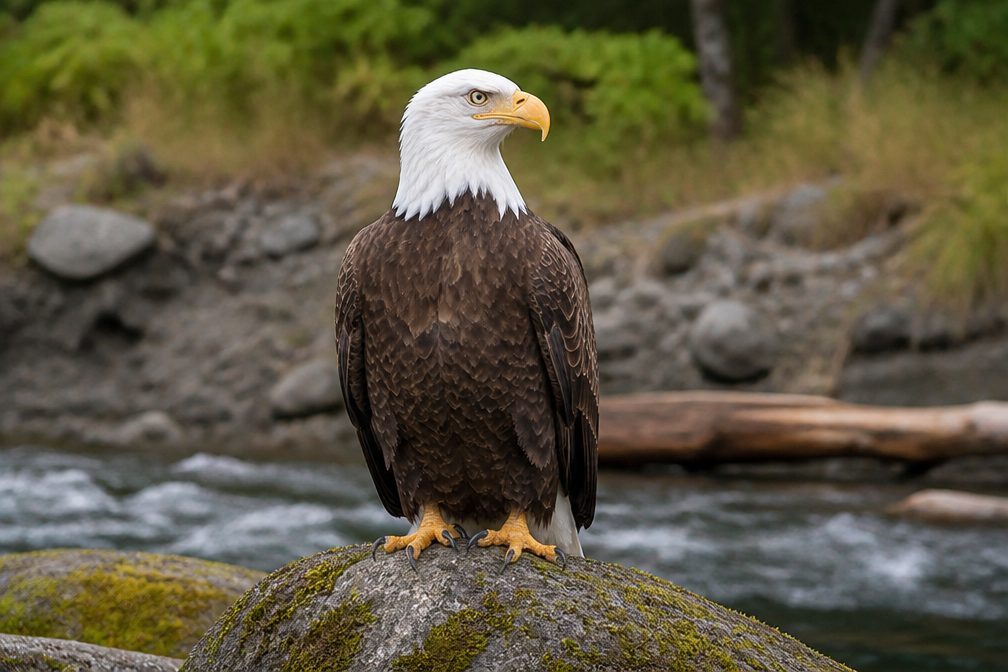 131 sightingsBald EagleMost seen around noonSighting map
 21 sightingsPeregrine FalconMost seen around 10 AMSighting map
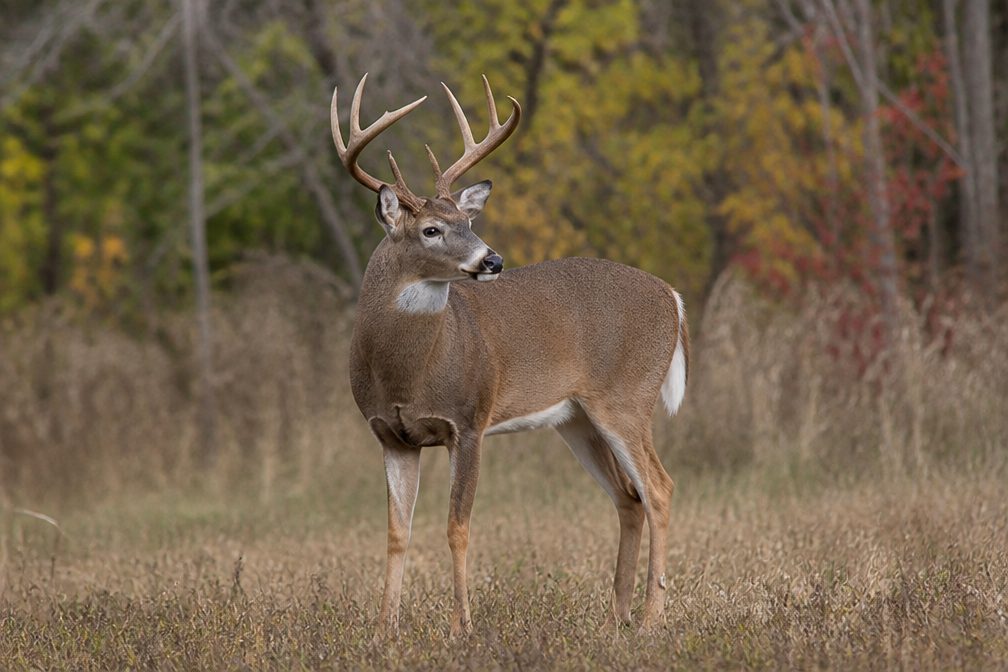 403 sightingsWhite-tailed DeerMost seen around 7 PMSighting map
 307 sightingsPorcupineMost seen around 7 PMSighting map
 205 sightingsBeaverMost seen around 7 PMSighting map
 34 sightingsMinkMost seen around 7 PMSighting map
Sighting maps show where each species has been reported across Acadia. Wildlife moves, so no sighting is guaranteed.
Keep exploring
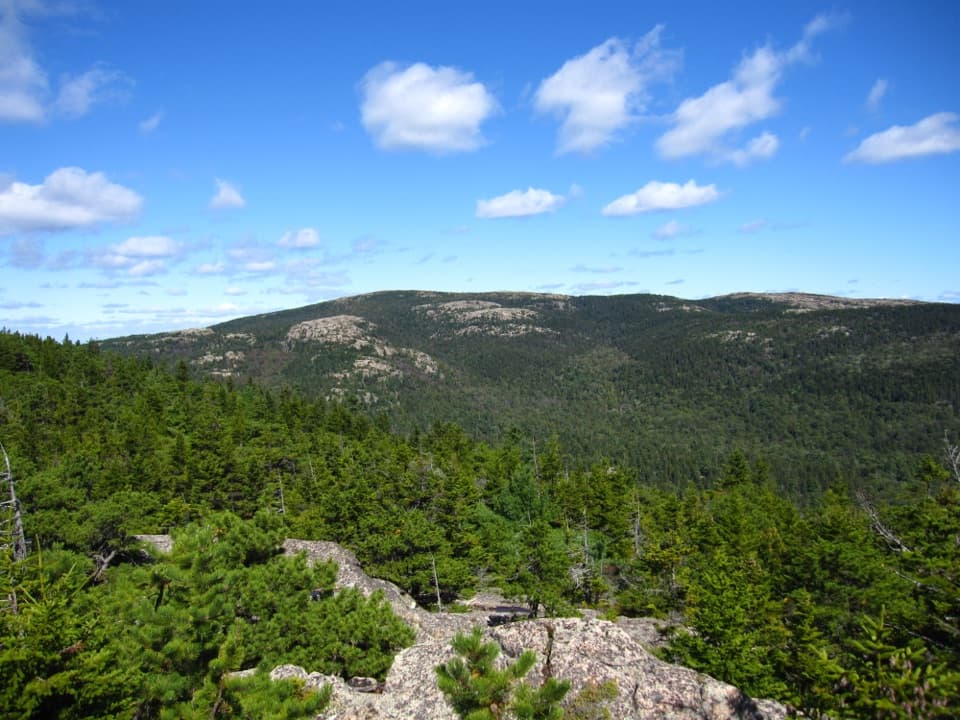 ChallengingBald Peak and Parkman Mountain Loop2.7 mi · 2 hr · At the trailheadA steep granite loop to two peaks with ocean views.
 ModerateGoat Trail to Norumbega Mountain1.1 mi · 1.3 hr · At the trailheadA short, steep climb to a mostly wooded summit.
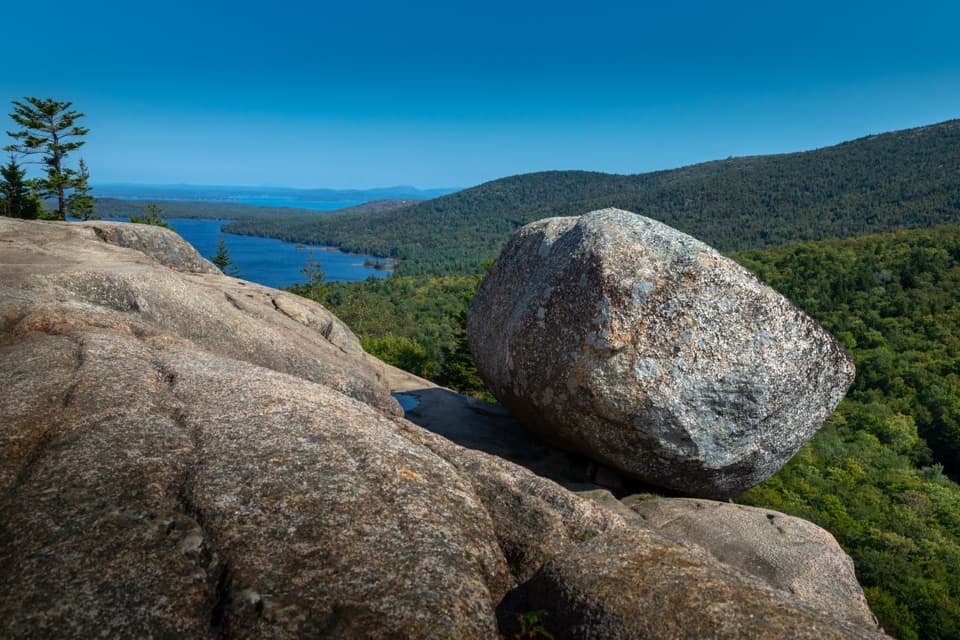
 ModerateBald Peak Trail1 mi · 45 min · 0.2 mi awayA short, steep granite climb to islands above Upper Hadlock Pond.
 EasyNorumbega Mountain Trail1.3 mi · 45 min · 0.3 mi awayA forested ridge trail eases down to Lower Hadlock Pond.
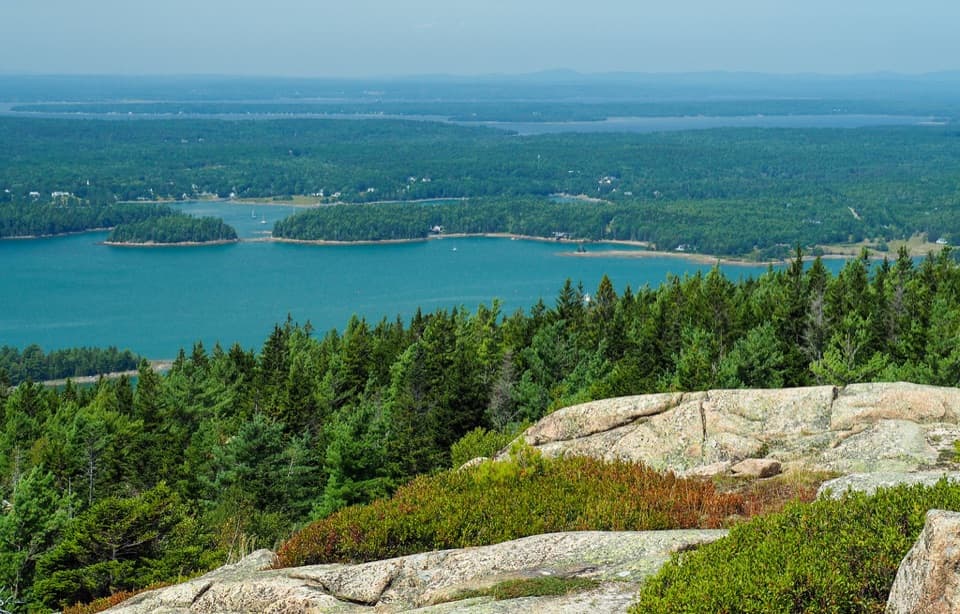 ModerateParkman Mountain Trail2.4 mi · 2 hr · 0.3 mi awayA short granite climb with a view over Somes Sound.
 ModerateAround Mountain Loop11.3 mi · 5 hr · 0.3 mi awaySeven historic bridges reward a long day on old carriage roads.
 ChallengingMaple Spring Trail1.4 mi · 1.8 hr · 0.3 mi awayA steep brookside gorge with historic stonework and rebuilt bridges
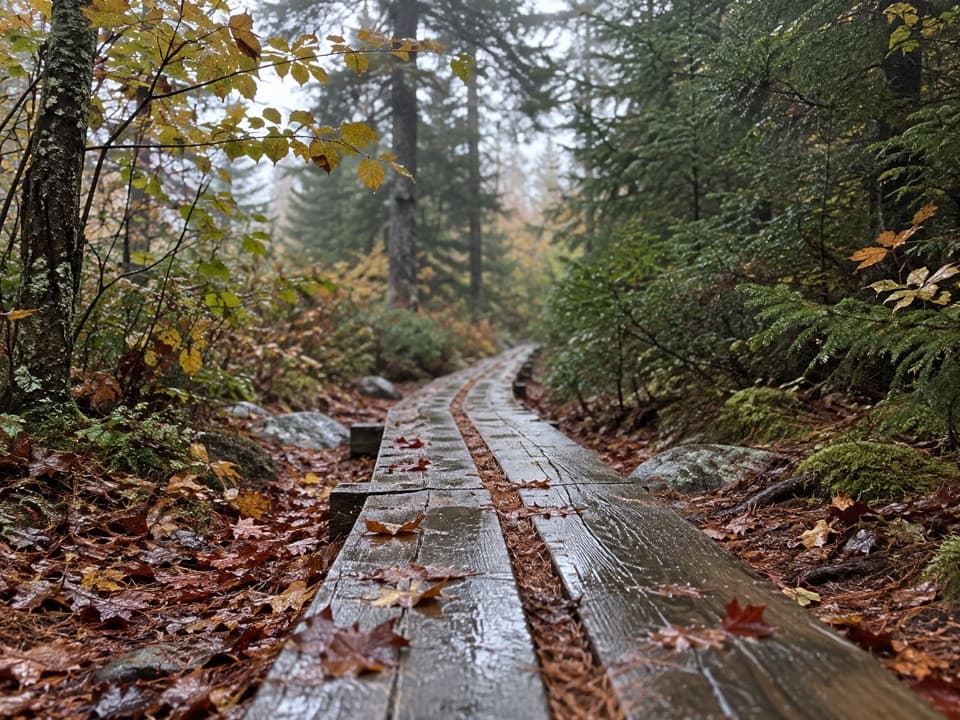 ModerateGolf Course Trail0.5 mi · 30 min · 0.8 mi awayA 1914 spur on Norumbega's wooded southwest flank.
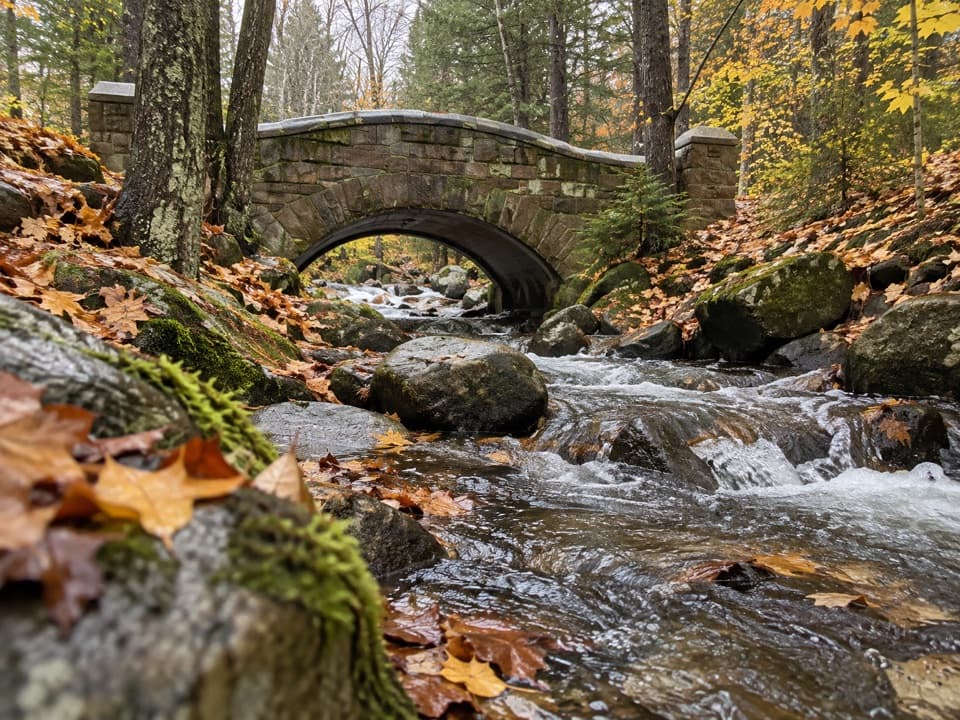 Sight · 0.4 mi awayHadlock Brook BridgeA small stone arch on the car-free Hadlock Loop.
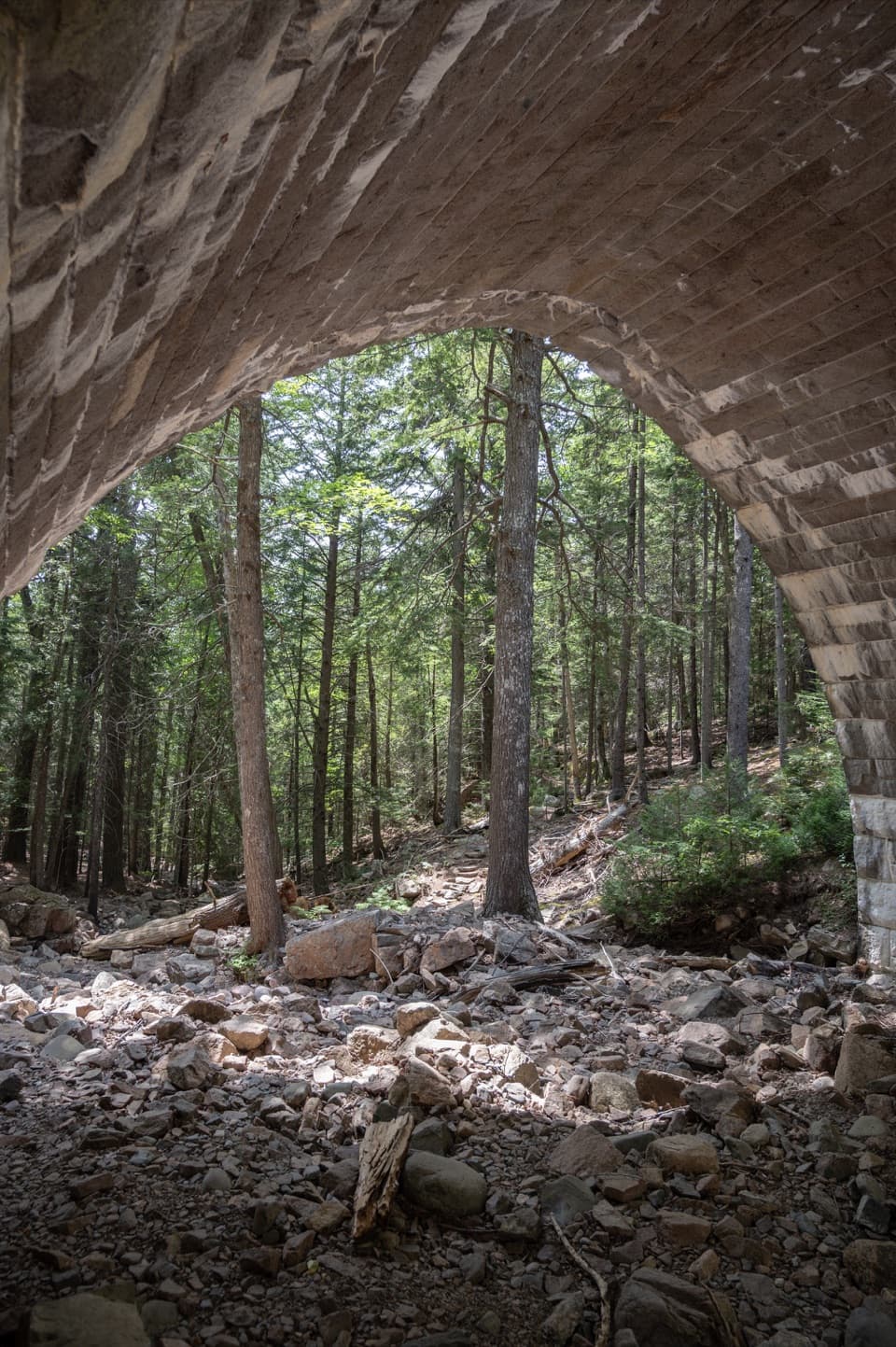 Sight · 0.6 mi awayHemlock BridgeA rare Gothic arch tucked into the car-free carriage roads.
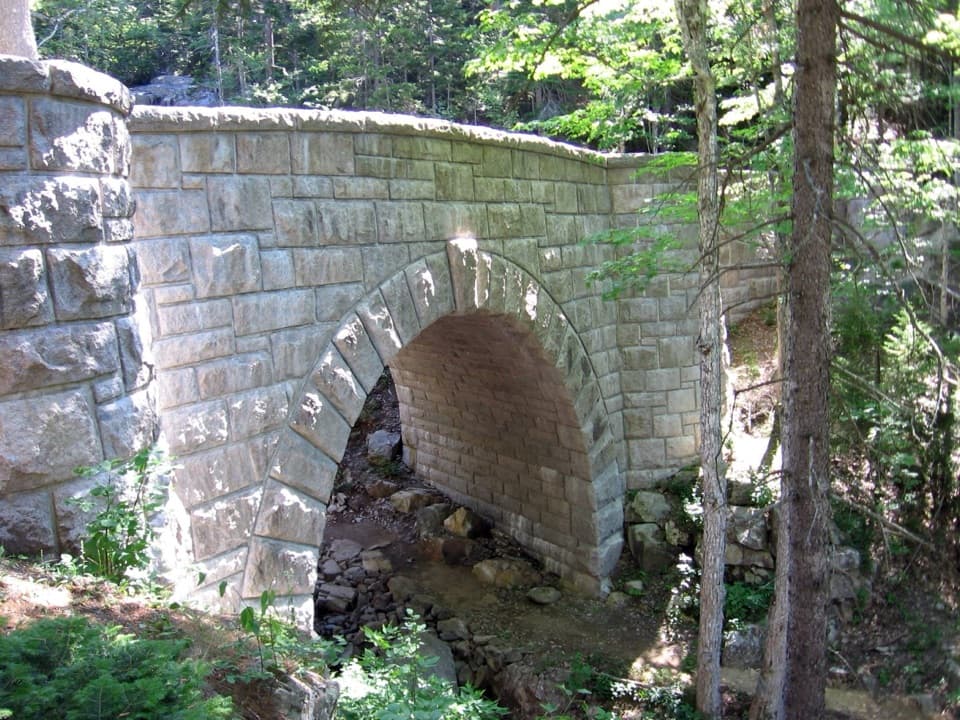 Sight · 0.7 mi awayWaterfall BridgeA 1925 arch frames Hadlock Brook's waterfall along car-free roads.
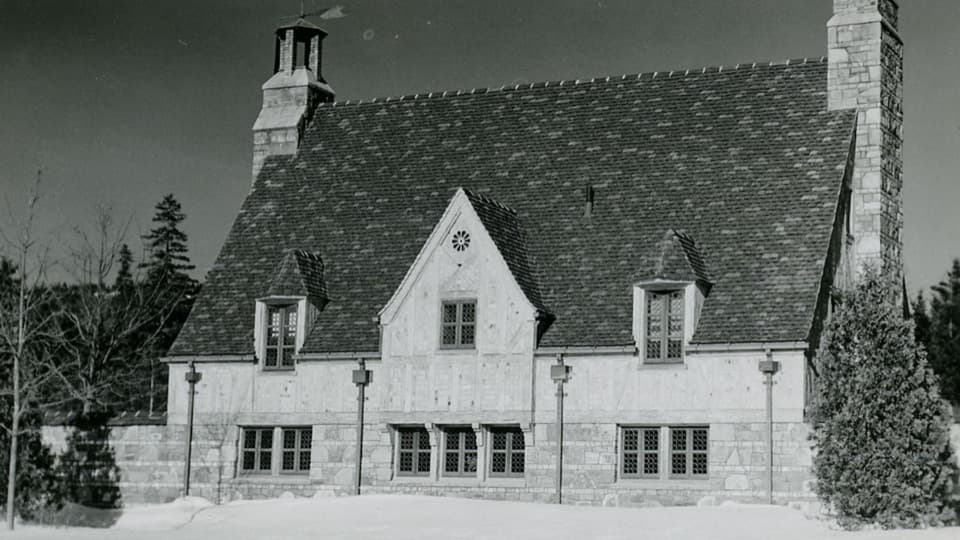 Sight · 1.1 mi awayBrown Mountain GatehouseA 1932 stone-and-brick gate marks the carriage-road entrance.
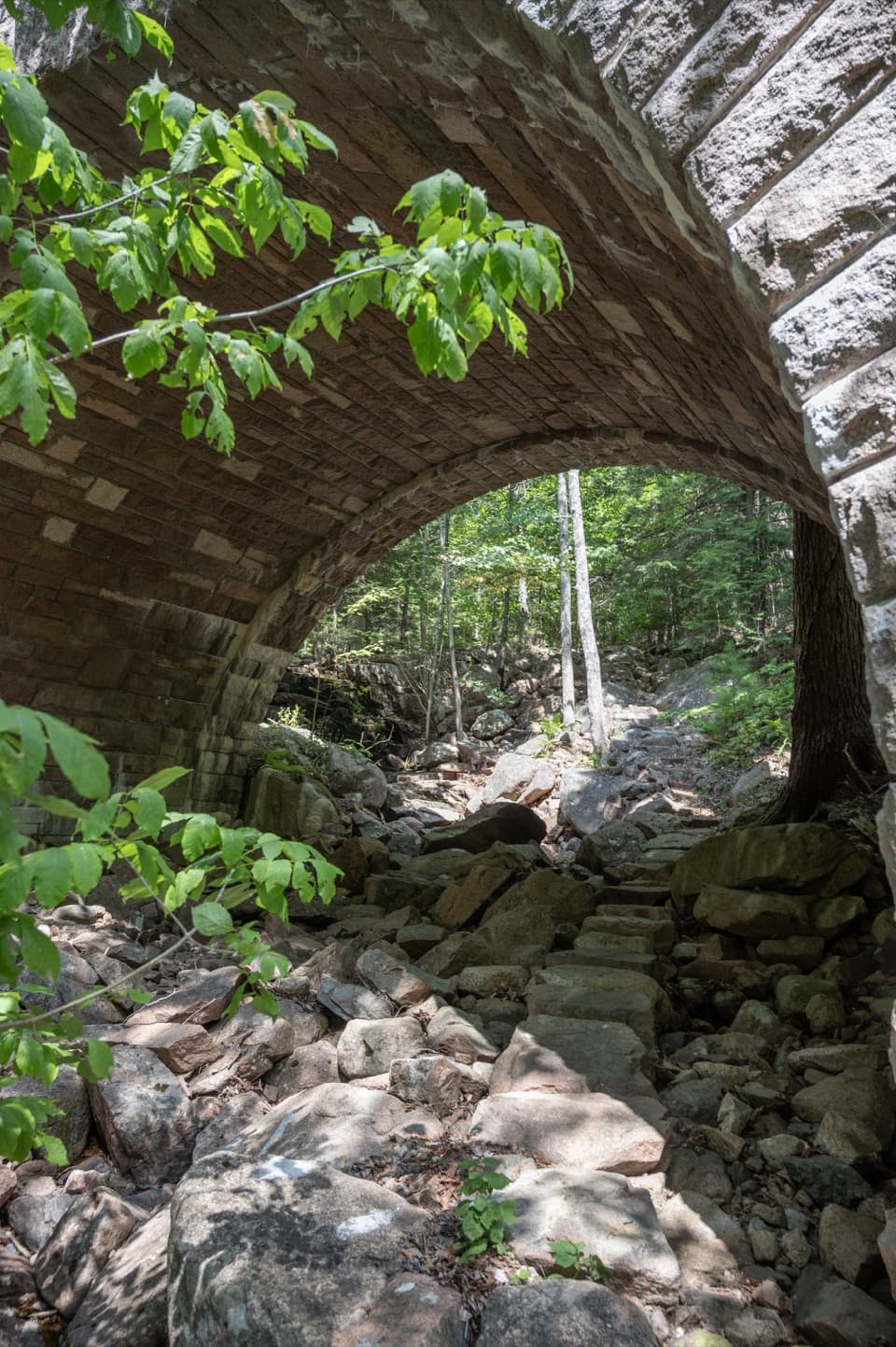 Sight · 1.1 mi awayAmphitheatre BridgeA granite arch curves around two trees toward a waterfall.
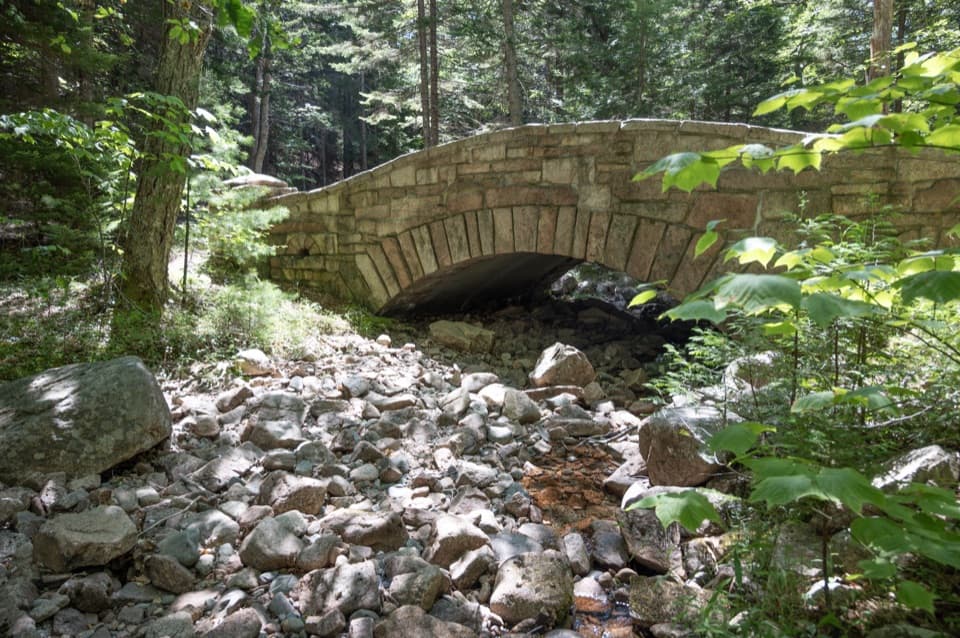 Sight · 1.4 mi awayLittle Harbor Brook BridgeA 1919 granite-faced arch over a shallow brook on car-free roads.
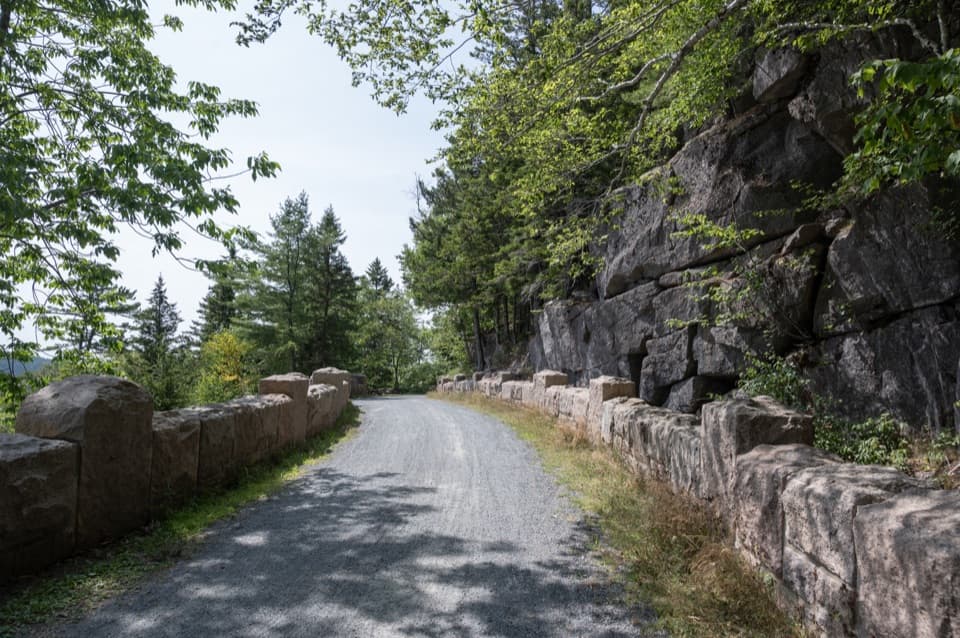 Sight · 1.5 mi awayCliffside BridgeA 1932 stone bridge with castle turrets above Jordan Stream.
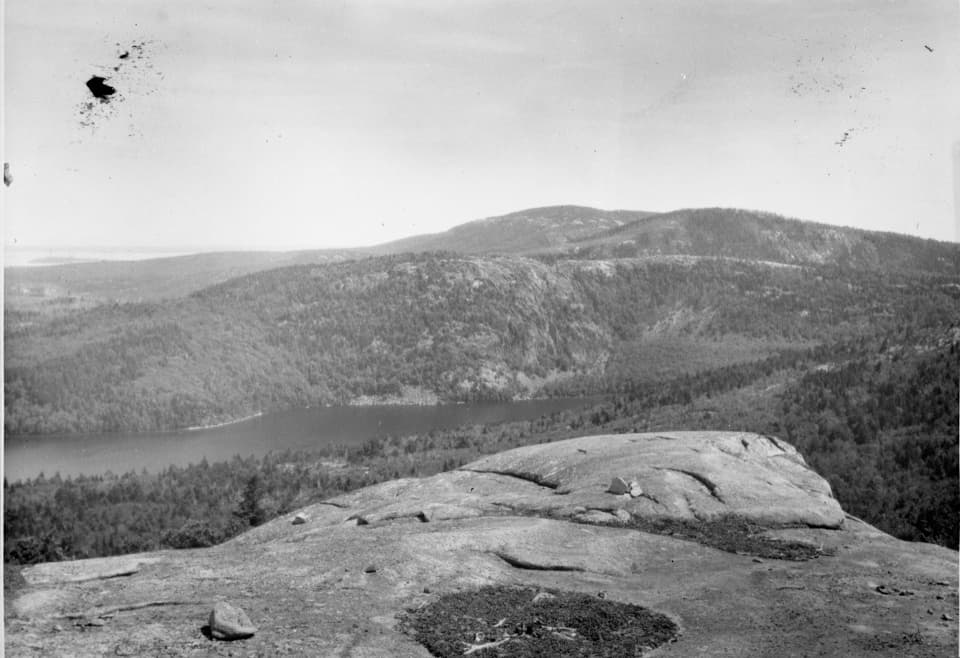 Sight · 1.6 mi awayAcadia MountainA rugged granite summit above Somes Sound
Parkwolf’s Acadia ranking

The audio tour guide for the drive, plus offline maps, trails, and wildlife heatmaps for when the signal drops.