Parking
From the Mowich Lake parking area at the end of Mowich Lake Road, follow Mowich Lake Trail to the patrol cabin; the route begins behind it.

Mount Rainier National Park, WA
A rough, unmaintained climb to a high notch above Mowich Lake.
Overview
Map & elevation
Plan your hike

The highest, rockiest slopes around here are a summer buffet for grizzly bears.
Mount Rainier Tour Guide
Parkwolf is a GPS audio tour guide for Mount Rainier National Park. As you drive, it chimes in with what’s ahead: hidden gems, upcoming stops, history, geology, and wildlife, right through your car’s speakers.
See the Mount Rainier audio tourRecorded for this area
When People Added the Fish“The fish in Rainier's lakes have a human history. These lakes were naturally fishless, even though native fish lived in the park's rivers.”
Plays on the road 0.6 mi from the trailhead in the Parkwolf Mount Rainier Tour Guide.
More stories near here in the app
“Fantastic app with many points of information… It’s great to just turn on while you’re driving and it gives you an audio tour of the national Park. We love it!!!!”


Trail guide
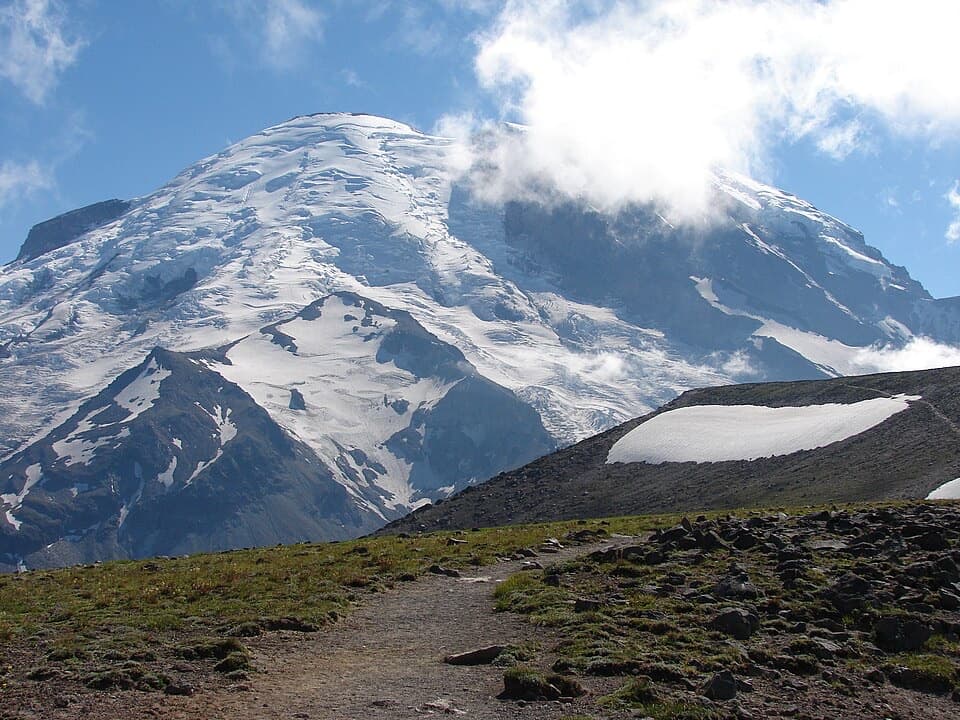
Knapsack Pass Trail is a 2.9-mile out-and-back from the Mowich Lake patrol cabin, climbing about 1,300 feet. It leaves the forest for streamside meadows, then climbs to an airy notch between Mother Mountain and a jagged ridge. At the pass, Mowich Lake sits below and Mount Rainier appears beyond. Plan on about three hours. The mileage is short, but the path is steep, unmaintained and faint, so this suits hikers who can navigate with a GPS or map and compass. Dogs aren't allowed.
The route starts behind the patrol cabin at the end of Mowich Lake Trail. It climbs steeply through forest over roots and rough tread. Watch for a subtle fork a little over half a mile from the lake; stay left for Knapsack Pass. This is the most consequential route-finding decision on the way up.
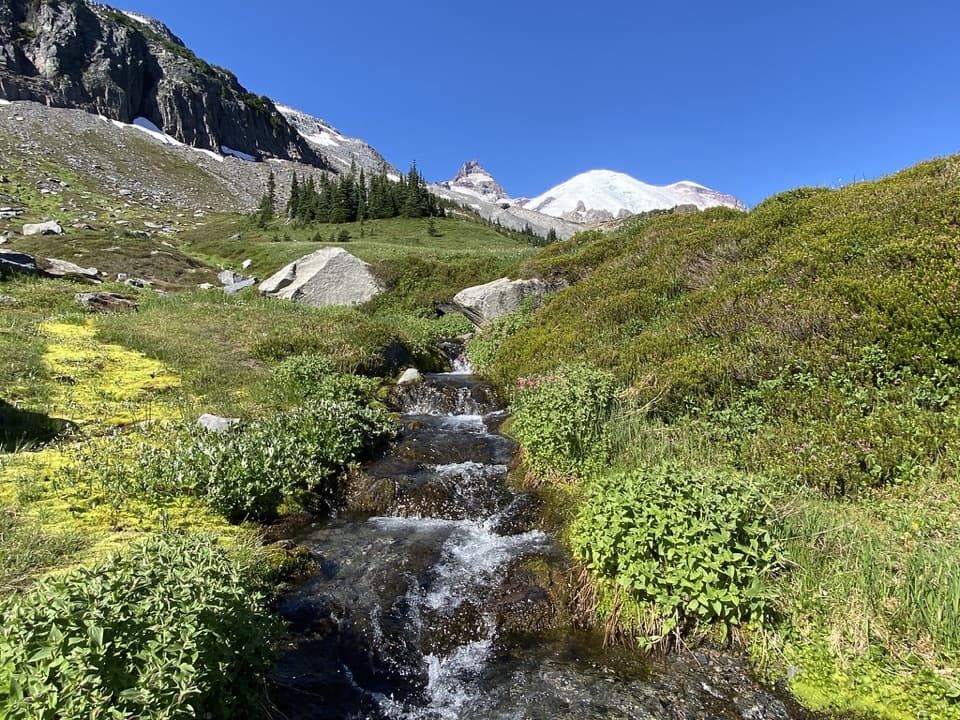
After the trees, the path crosses small meadows and a stream, then follows the water toward the pass. Two small waterfalls and mossy banks make a good reason to slow down. Summer accounts describe gentians, pink and yellow monkeyflowers, paintbrush, shooting stars, asters and mountain daisies. The climb gets rougher again through rock gardens and blueberry shrubs, with a steep, dusty pitch near the top.
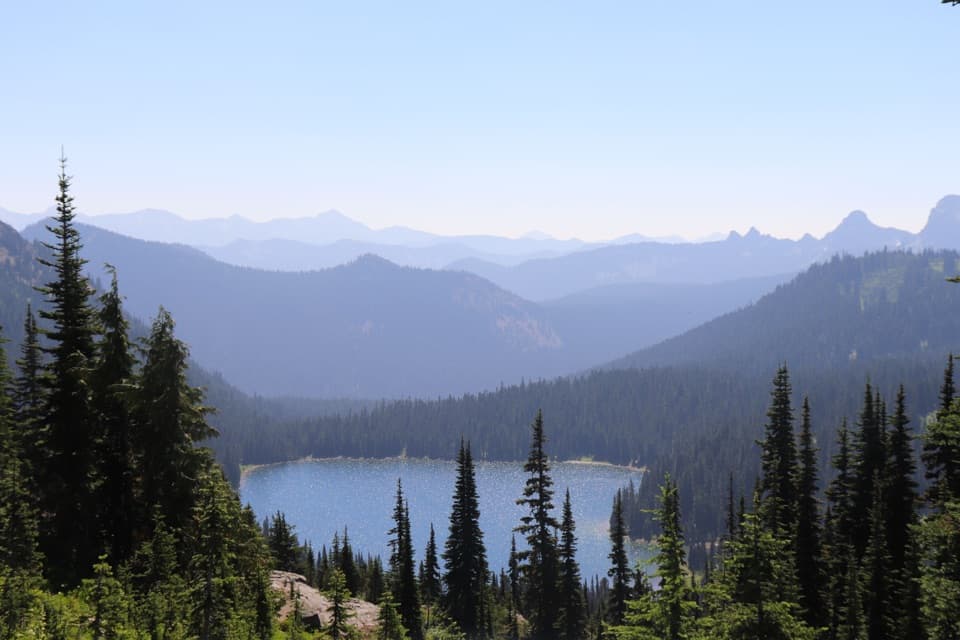
The notch is the payoff: look back for Mowich Lake below and out toward Rainier. A boot path climbing left leads toward Mother Mountain; it is not part of this out-and-back. The descent beyond the pass continues over loose scree and can involve snow and cross-country route-finding toward Spray Park, so stop at the pass for this hike. Frame the notch with Mowich Lake below to show how the route rises above the lake.
Wildlife
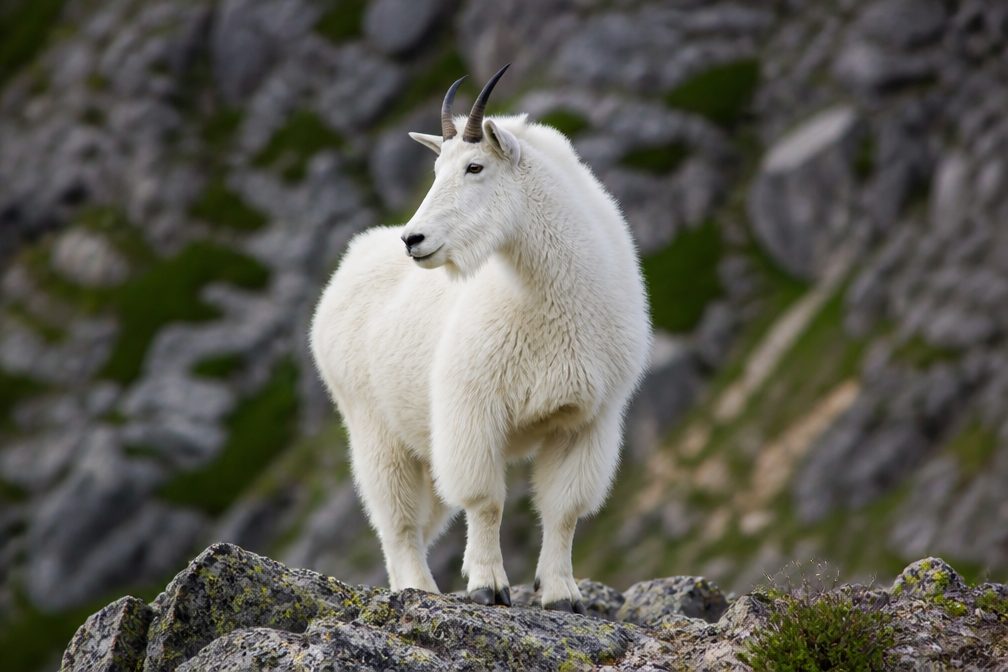 466 sightingsMountain GoatMost seen around 6 AMSighting map
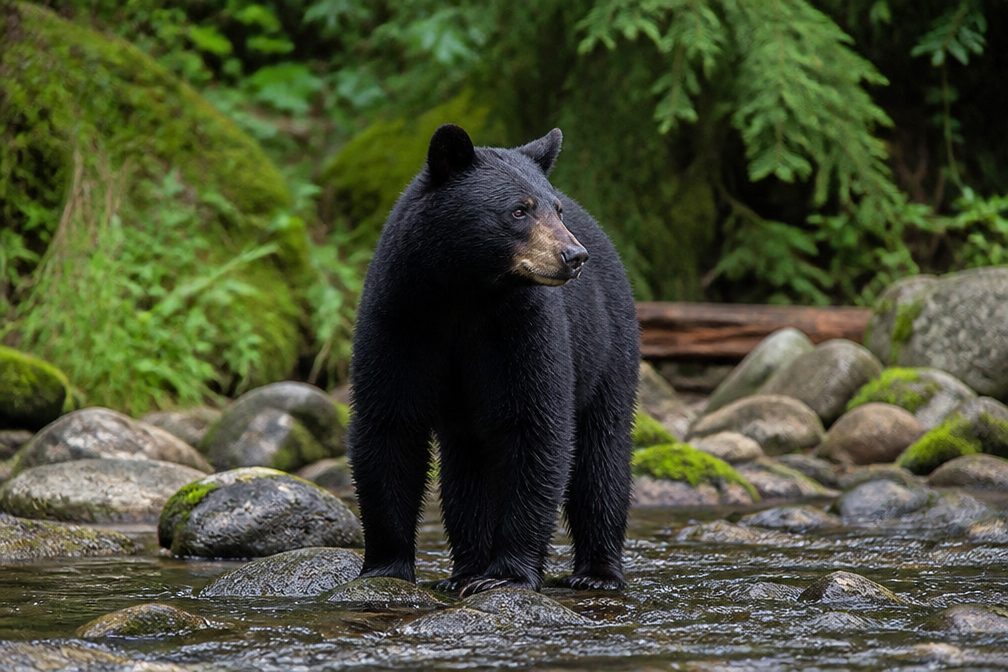 383 sightingsBlack BearMost seen around 7 PMSighting map
 10 sightingsWolverineMost seen around 6 AMSighting map
 58 sightingsElkMost seen around 6 AMSighting map
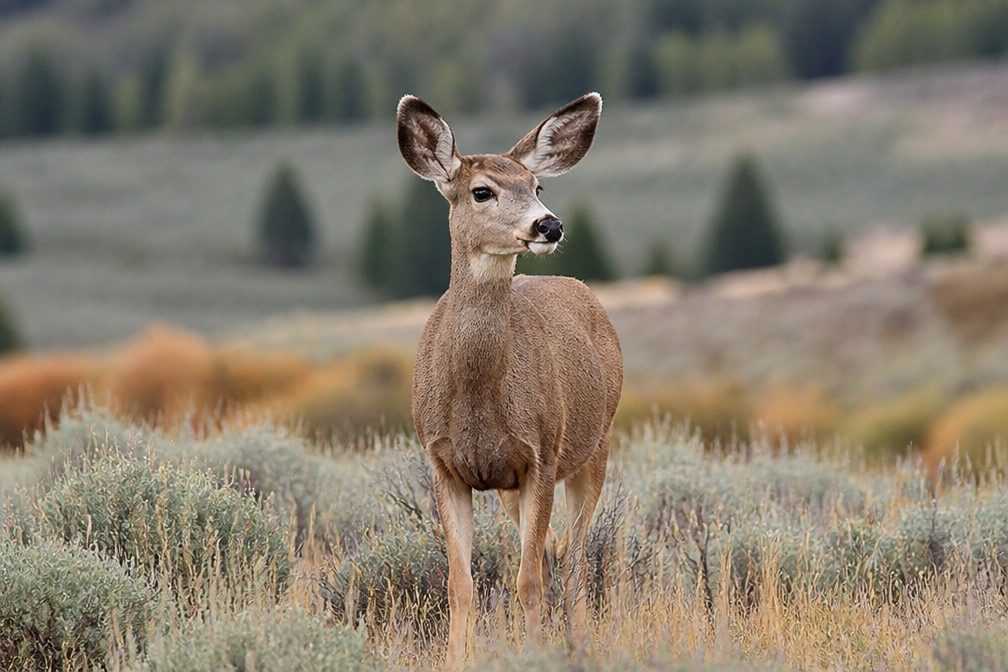 574 sightingsMule DeerMost seen around 6 AMSighting map
 1,853 sightingsHoary MarmotMost seen around 6 AMSighting map
Sighting maps show where each species has been reported across Mount Rainier. Wildlife moves, so no sighting is guaranteed.
Keep exploring
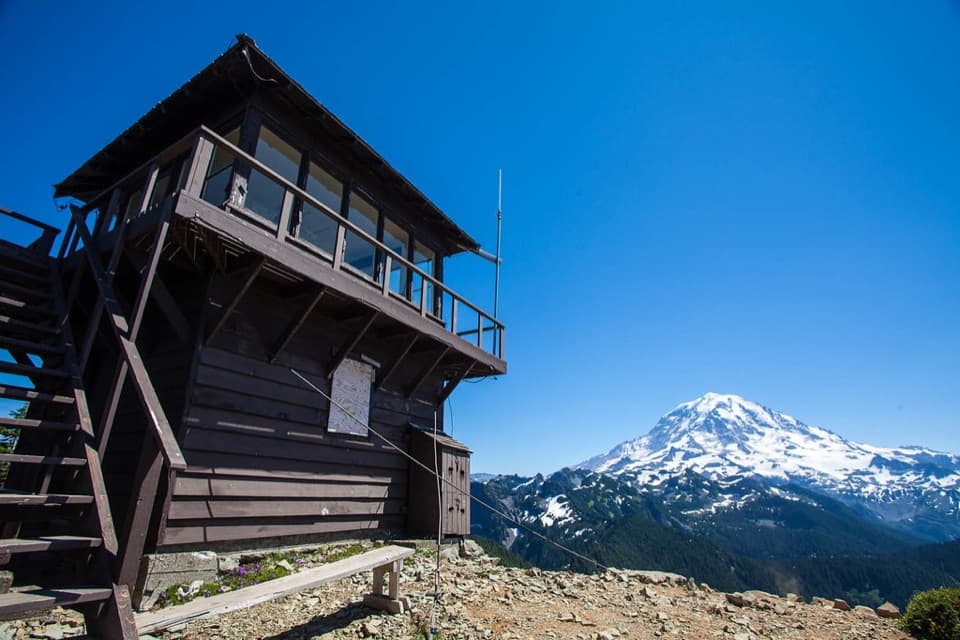 ModerateTolmie Peak Trail6.5 mi · 3.5 hr · At the trailheadA 1933 fire lookout frames Eunice Lake and Mount Rainier.
 ChallengingSpray Park–Ipsut Pass Loop16 mi · 12 hr · At the trailheadAlpine meadows, Spray Falls, and a tough climb over Ipsut Pass
 ModerateIpsut Pass from Mowich Lake2.8 mi · 1.3 hr · At the trailheadA short Wonderland Trail climb to a ridge notch above Mowich Lake.
 ModerateSpray Park Trail6 mi · 4.5 hr · 0.1 mi awayClimb through open meadows for Rainier views and a waterfall detour.
 ModerateSpray Falls Trail4 mi · 3 hr · 0.1 mi awayA forest roller ends at a 354-foot waterfall over a lava cliff.
 ChallengingGolden Lakes and Sunset Park Trail18.8 mi · 10 hr · 0.2 mi awayA strenuous out-and-back to a lake cluster and a 1922 patrol cabin.
 ModeratePaul Peak Trail6.2 mi · 4.5 hr · 2 mi awayA forested descent to Rainier views, then a long climb back.
 ChallengingLake James Trail25.9 mi · 14 hr · 4.8 mi awayA long backcountry climb through Windy Gap to a tucked-away lake.
 Sight · At the trailheadMowich LakeA wooded island, clear water, and trails into the quiet corner.
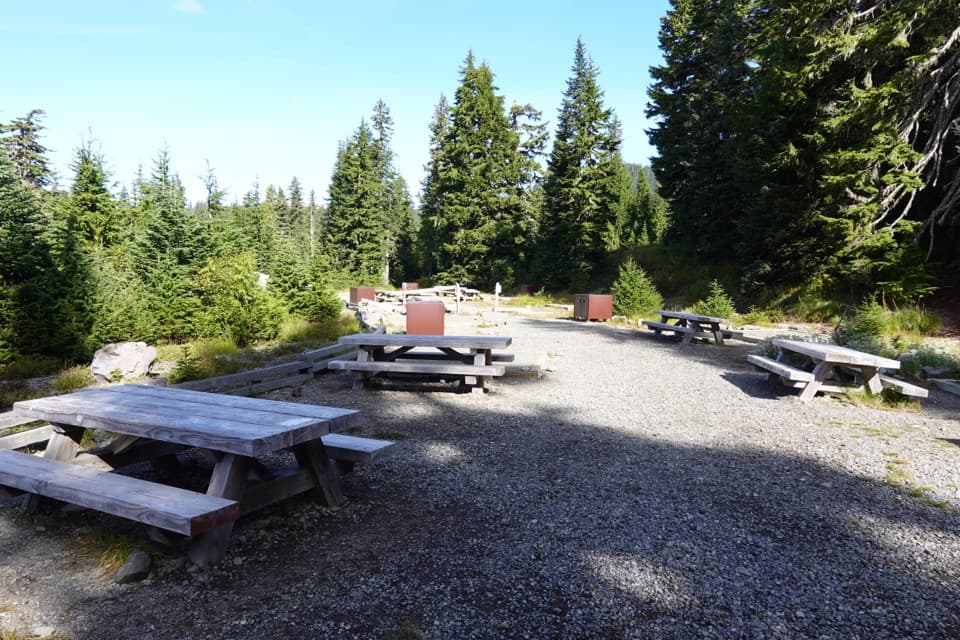 Campground · 0.1 mi awayMowich Lake CampgroundPrimitive lake camp, with Spray Park and Tolmie Peak nearby.
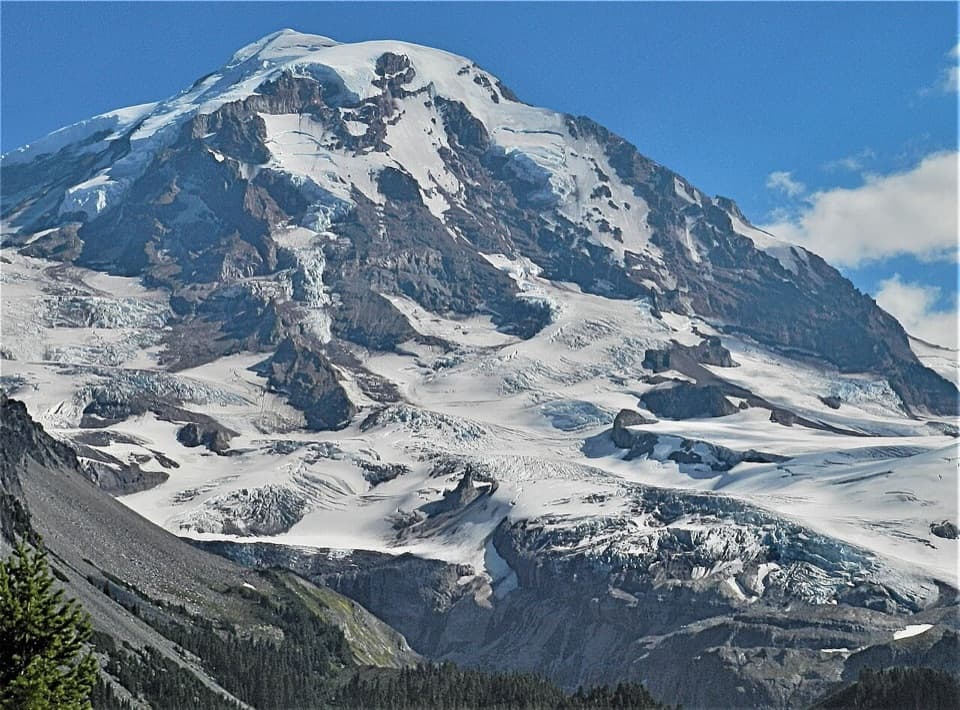 Sight · 1.3 mi awayEagle Cliff ViewpointFirst big Rainier-and-glacier view on the Spray Park trail.
 Sight · 1.6 mi awaySpray FallsA 354-foot veil spills over lava into a boulder-filled gorge.
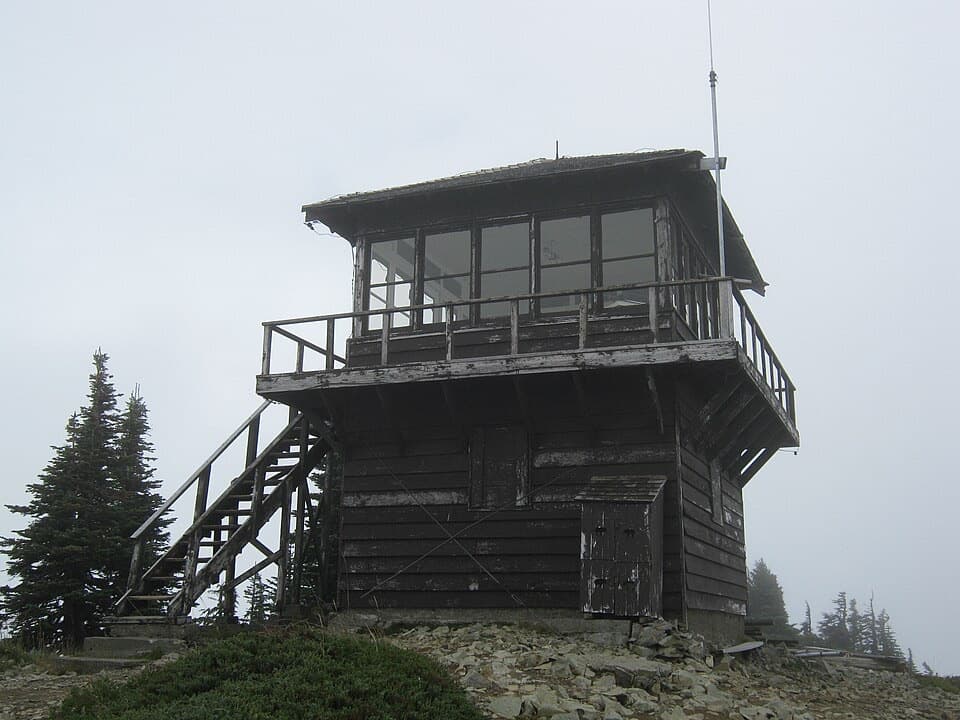 Sight · 1.9 mi awayTolmie Peak Fire LookoutRainier rises above Eunice Lake from this historic lookout's rocky perch.
 Sight · 3 mi awayIpsut FallsA two-tier waterfall at the end of a long forest approach.
 Campground · 3.4 mi awayIpsut Creek CampgroundA backcountry camp that takes a 19-mile hike from Sunrise.
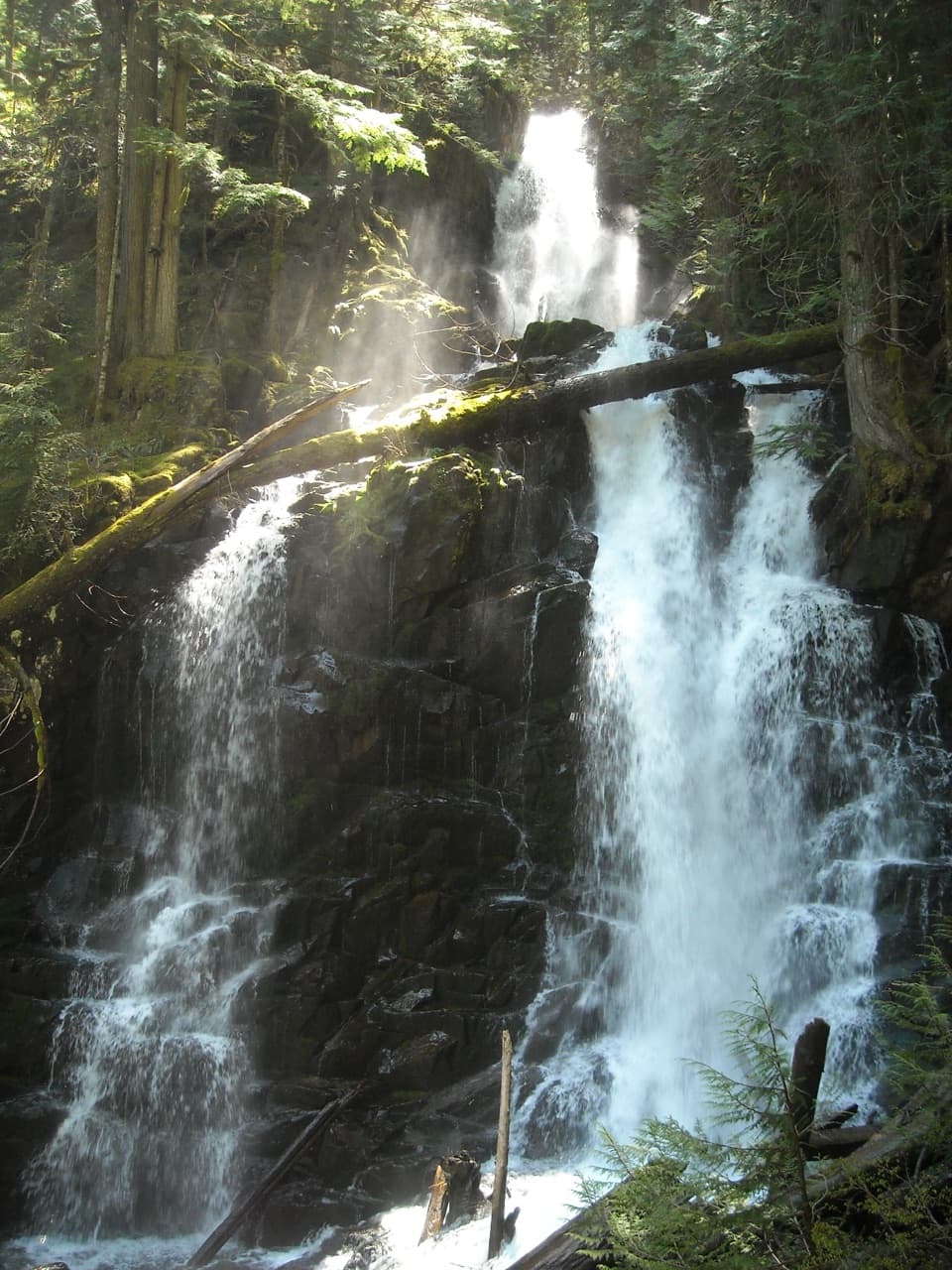 Sight · 3.5 mi awayRanger FallsThree tiers of falling water reward a long Green Lake walk.
Parkwolf’s Mount Rainier ranking

The audio tour guide for the drive, plus offline maps, trails, and wildlife heatmaps for when the signal drops.