Parking
Start at the Talkington Trail roadside pullout on Scenic Loop Drive. A short walk along the road connects the pullout to the circuit. Parking is identified, but its capacity and restroom details were not confirmed.
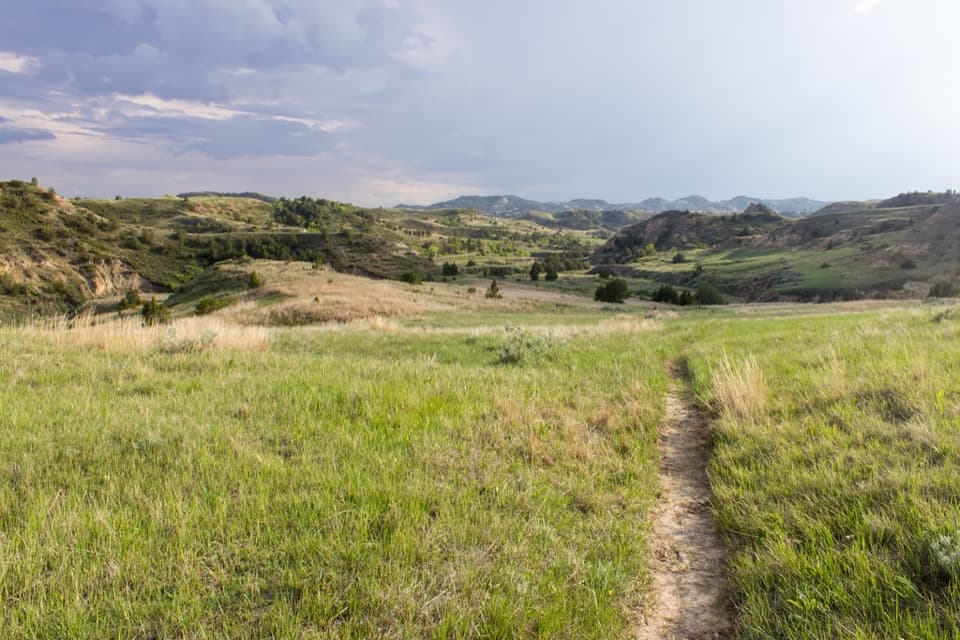
Theodore Roosevelt National Park, ND
A 15.4-mile circuit over prairie, rim, and creek country.
Overview
Map & elevation
Plan your hike
The highest, rockiest slopes around here are a summer buffet for grizzly bears.
Theodore Roosevelt Tour Guide
Parkwolf is a GPS audio tour guide for Theodore Roosevelt National Park. As you drive, it chimes in with what’s ahead: hidden gems, upcoming stops, history, geology, and wildlife, right through your car’s speakers.
See the Theodore Roosevelt audio tourRecorded for this area
An Owl at the Burrow“At a prairie dog town in summer, look for a small owl standing on long legs beside a burrow. Burrowing owls nest underground, using holes left by animals such as prairie dogs.”
Plays near this trailhead in the Parkwolf Theodore Roosevelt Tour Guide.
More stories near here in the app
“Fantastic app with many points of information… It’s great to just turn on while you’re driving and it gives you an audio tour of the national Park. We love it!!!!”


Trail guide
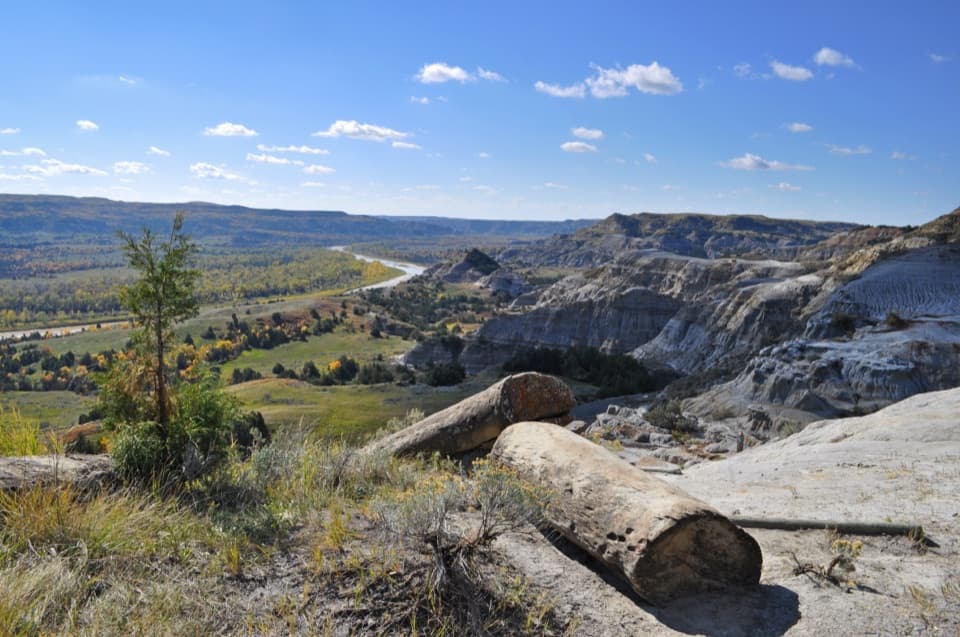
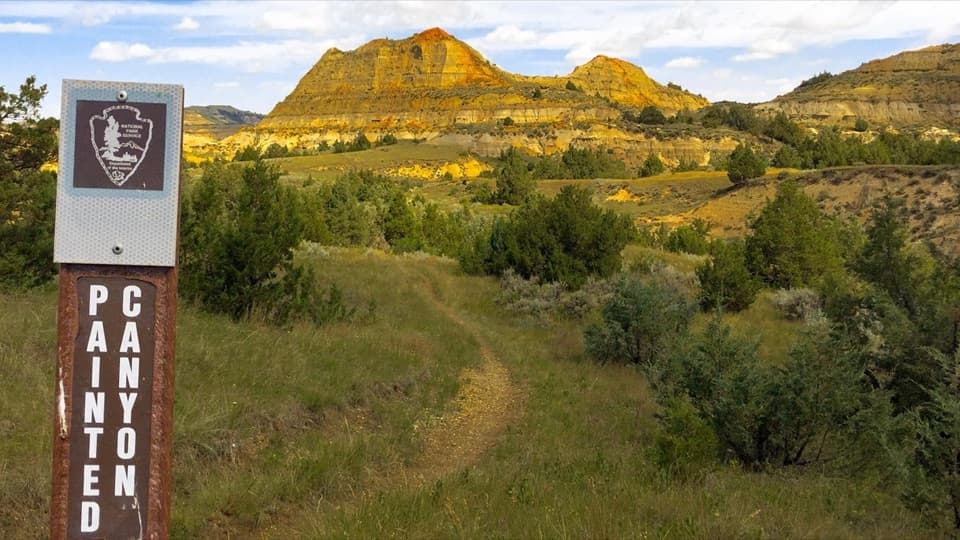
This is a 15.4-mile backcountry loop from the Talkington Trail roadside pullout, linking part of Lower Talkington with Upper Talkington and Upper Paddock Creek. The park’s estimate is 8–10 hours, so plan this as your main outing, not a quick break on the scenic drive. The Painted Canyon approach adds four miles round trip, making that version 19.4 miles.
From the pullout, follow Talkington Trail north to the Lower Talkington junction, then take the loop through Upper Talkington and Upper Paddock Creek. A short mapped road connection along Scenic Loop Drive closes the circuit at the pullout. The route is mostly dirt path through open prairie and badlands terrain.
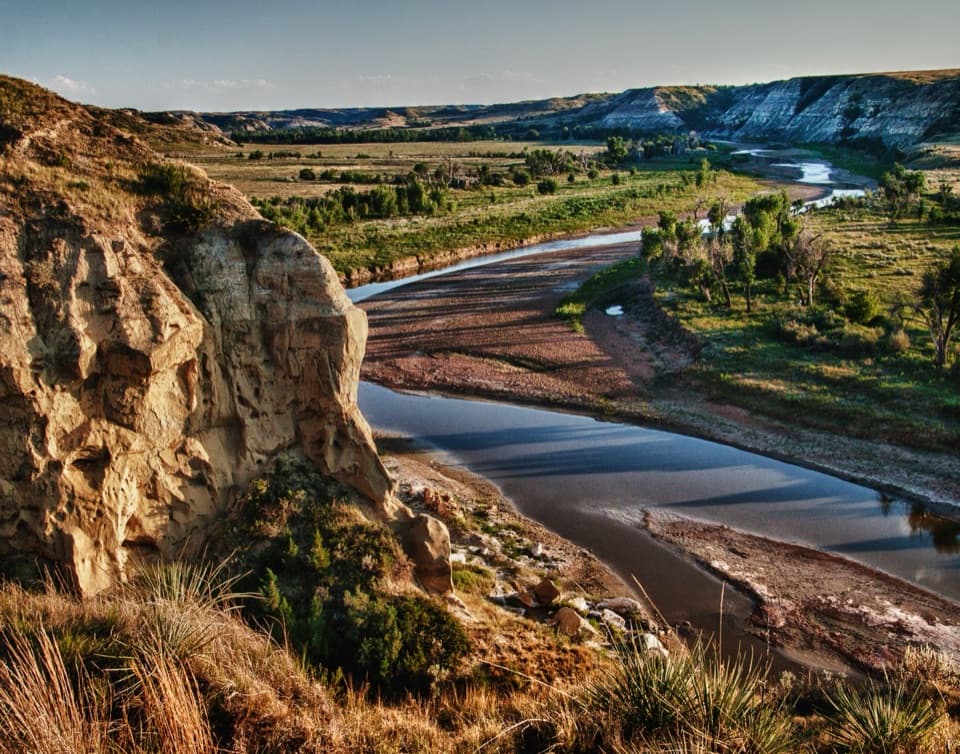
Upper Talkington climbs east over sandstone and clay formations before reaching the rim. About 1.5 miles follow the rim; the route then drops among the formations on Upper Paddock Creek. Creek sections can be wet or muddy, and the route has a few steep drop-offs. The walk changes from open, exposed slopes to creek-bottom terrain, so footing and effort vary over the circuit.
This is backcountry travel. Marked routes can be easy to confuse with wildlife trails, so carry a topographic map and compass and don’t rely on GPS alone. There is no approved drinking water in the backcountry; carry what you need for the full day. Storms can build quickly, and heavy rain can cause flash flooding.
Use the Talkington Trail roadside pullout. The route link from the pullout to the circuit follows a short stretch of Scenic Loop Drive. Pets are prohibited on park trails. If you plan to camp overnight instead of finishing in a day, the park requires a free backcountry permit; there are no established campsites.
Wildlife
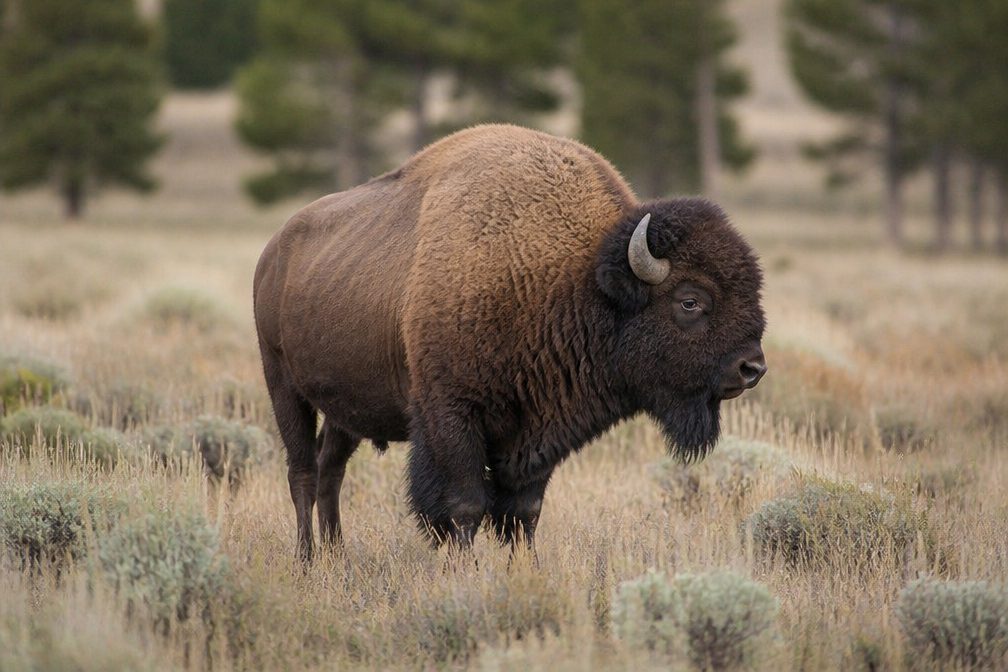 1,082 sightingsBisonMost seen around 6 PMSighting map
 346 sightingsWild HorseMost seen around 7 PMSighting map
 27 sightingsWapitiMost seen around 7 AMSighting map
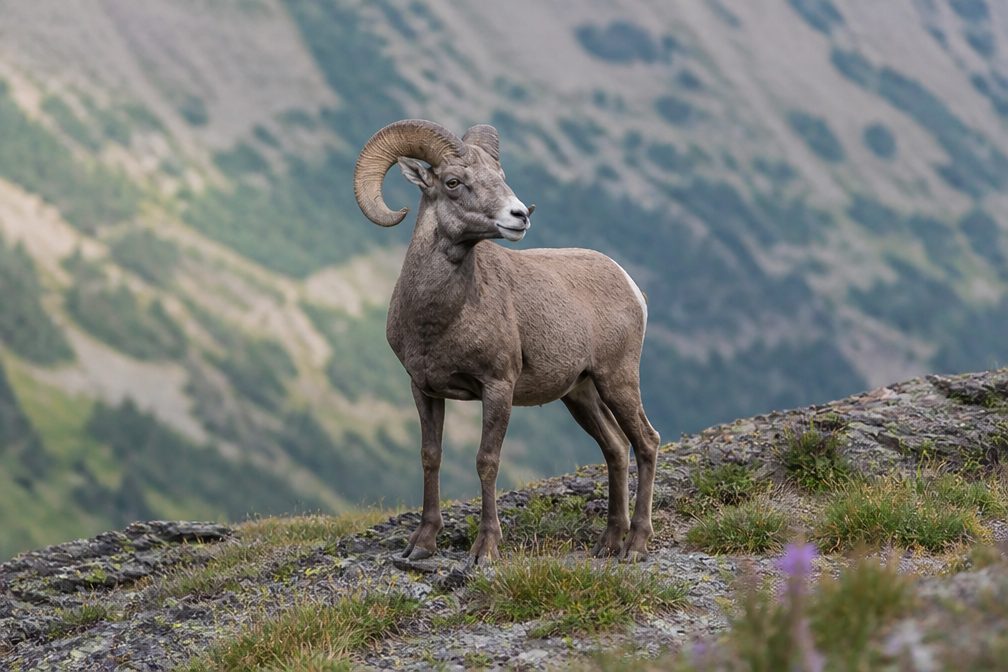 46 sightingsBighorn SheepMost seen around 7 AMSighting map
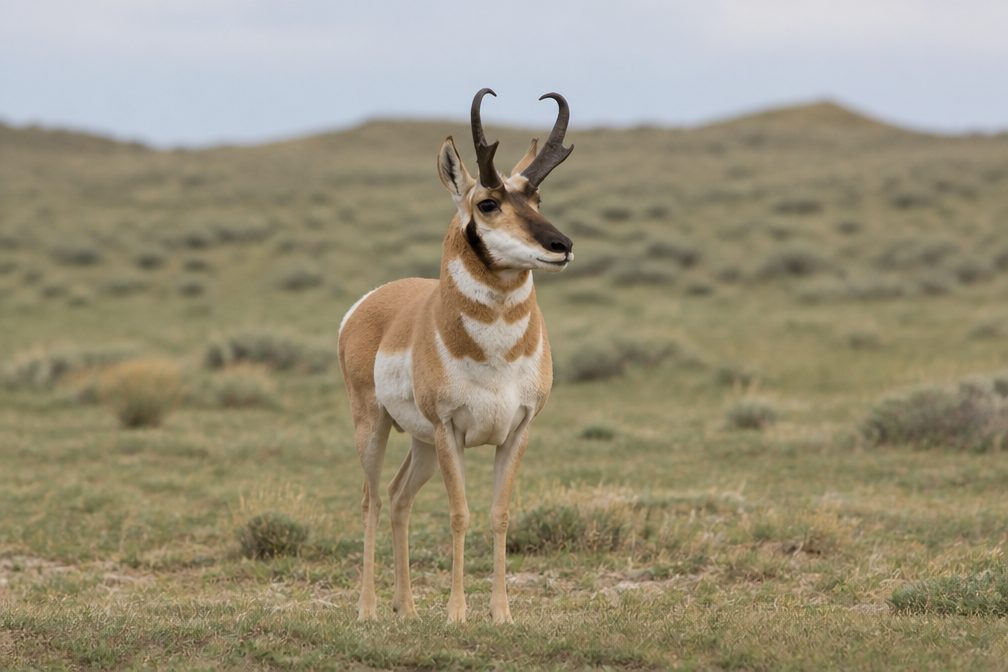 87 sightingsPronghornMost seen around 6 PMSighting map
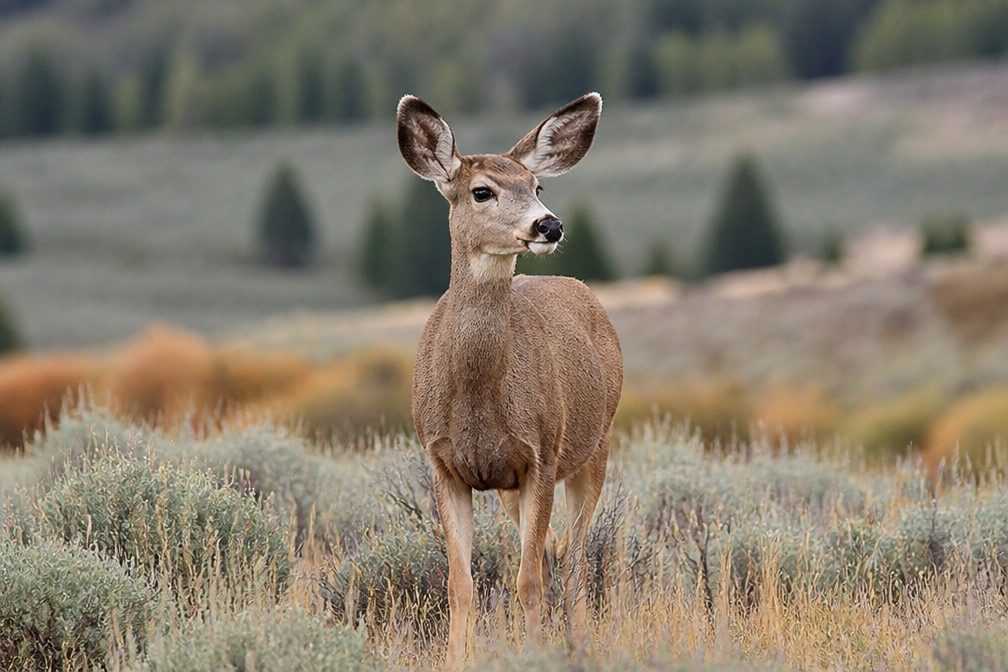 162 sightingsMule DeerMost seen around 8 PMSighting map
Sighting maps show where each species has been reported across Theodore Roosevelt. Wildlife moves, so no sighting is guaranteed.
Keep exploring
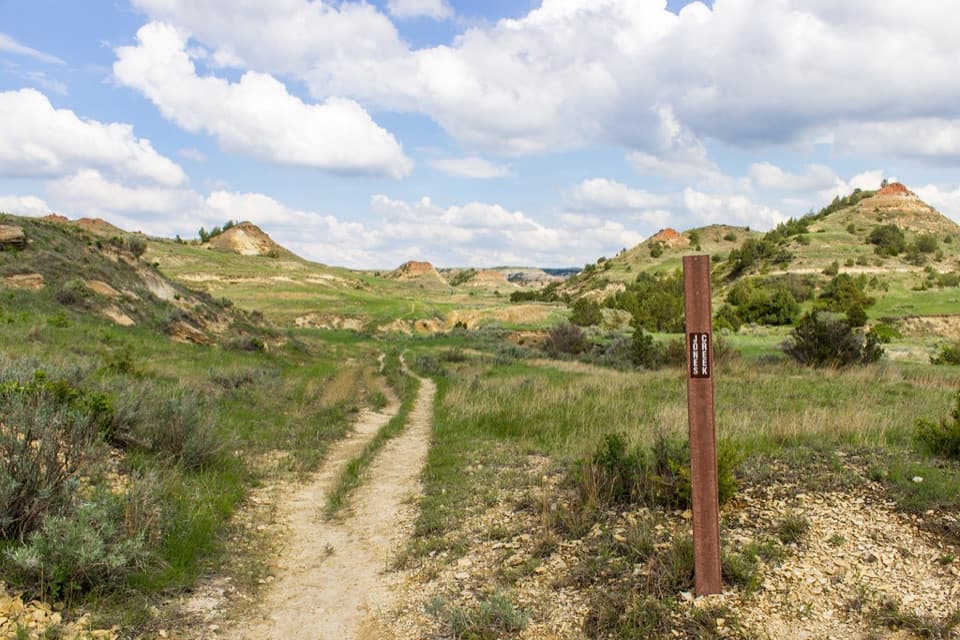 ModerateJones/Lower Talkington/Lower Paddock Loop11.4 mi · 7 hr · At the trailheadThree creek-country trails make an 11.4-mile Badlands loop.
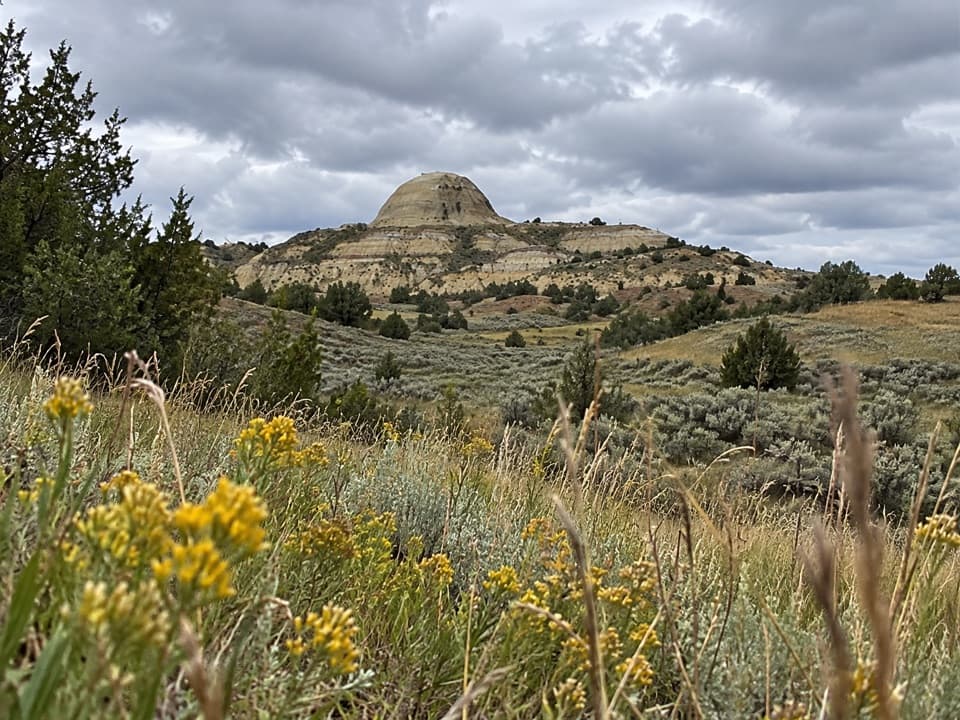 ModerateUpper Paddock Creek Trail7.7 mi · 4.5 hr · 0.2 mi awayCreek-side badlands give way to open prairie at the rim.
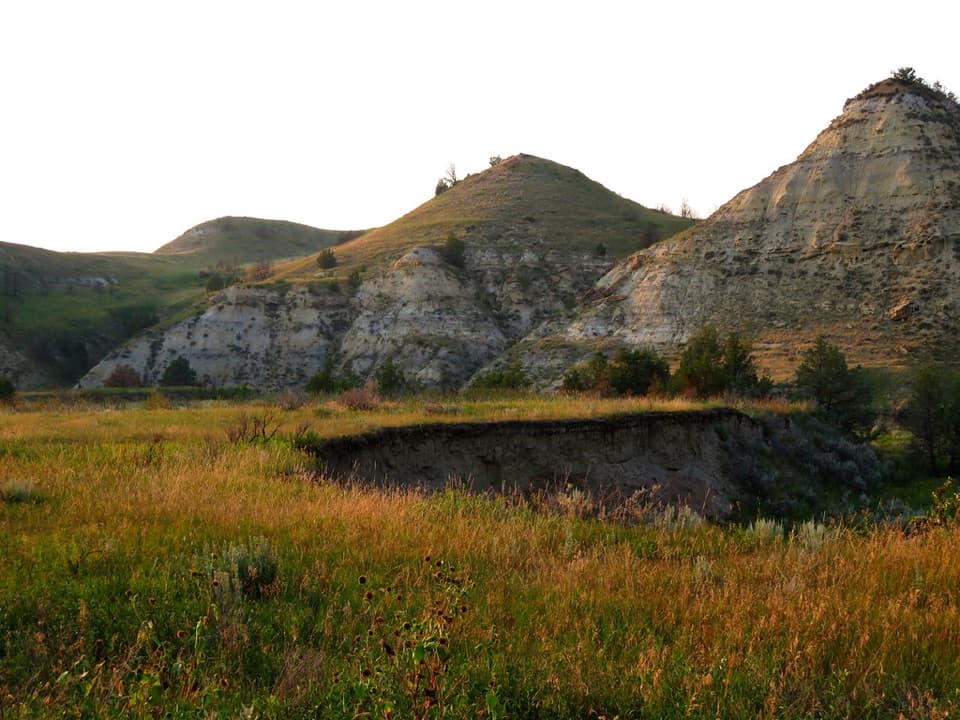 EasyBadlands Spur Trail1.7 mi · 54 min · 0.6 mi awayA short walk to the Lower Talkington junction and badlands views.
 EasyCoal Vein Trail0.8 mi · 39 min · 1.5 mi awayA short badlands loop through the remains of an underground coal fire.
 EasyOld East Entrance Station Trail1 mi · 24 min · 1.5 mi awayA short prairie walk to the South Unit’s old stone gateway.
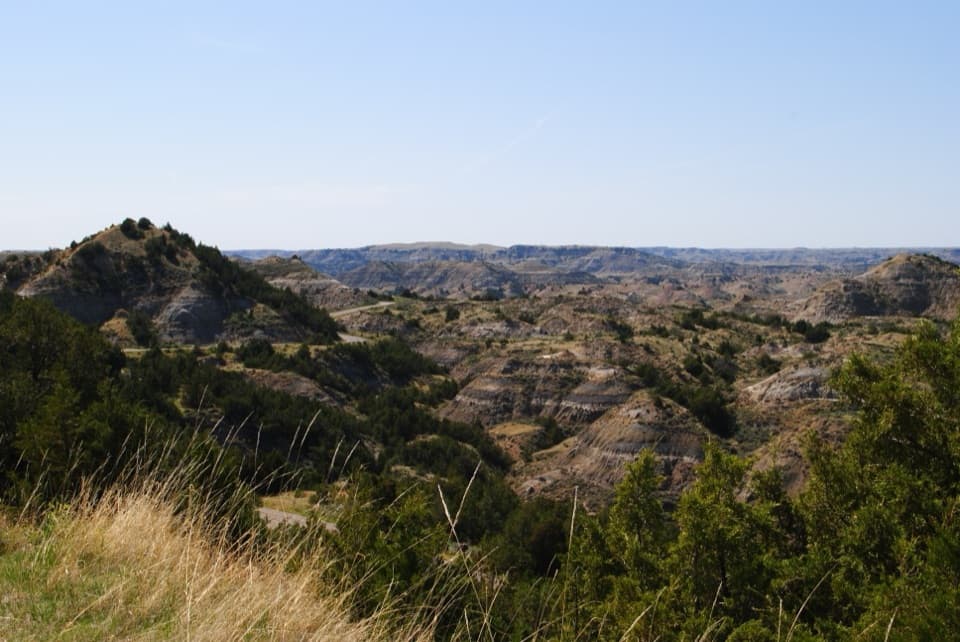 ModerateRidgeline Nature Trail0.6 mi · 30 min · 1.8 mi awayA quick climb into a maze of ridges, grasses, and juniper.
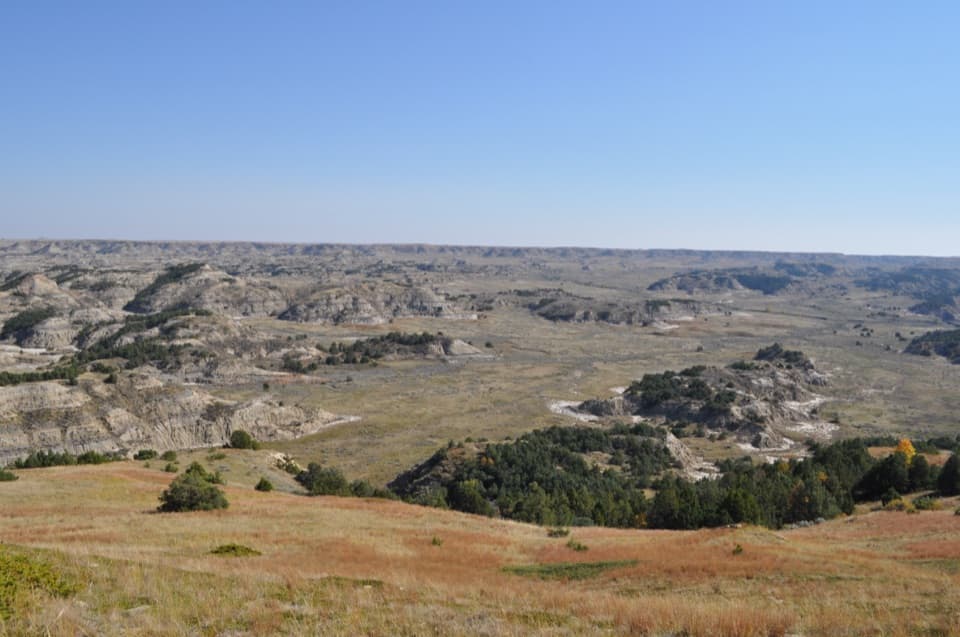 ModerateBuck Hill Trail0.4 mi · 20 min · 2 mi awayA short, steep climb opens the South Unit’s broad Badlands view.
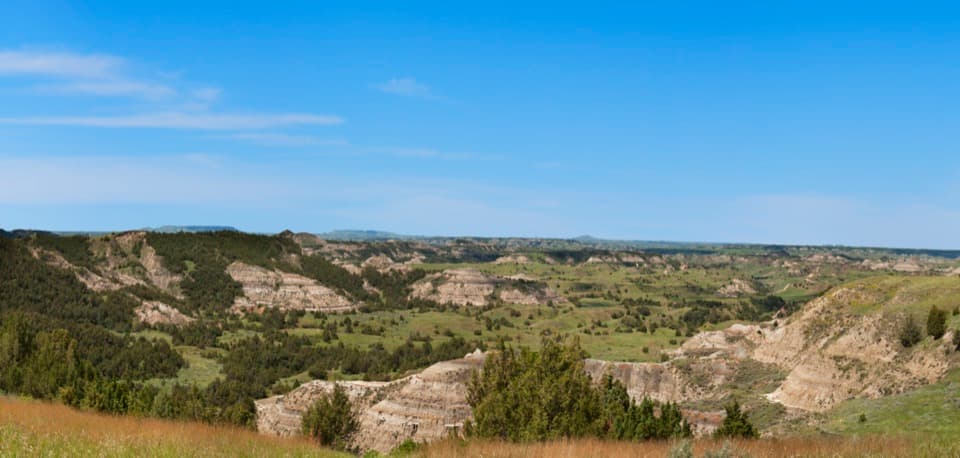 EasyBoicourt Overlook Trail0.8 mi · 30 min · 2.2 mi awayA paved start, then a narrow ridge with a panoramic payoff.
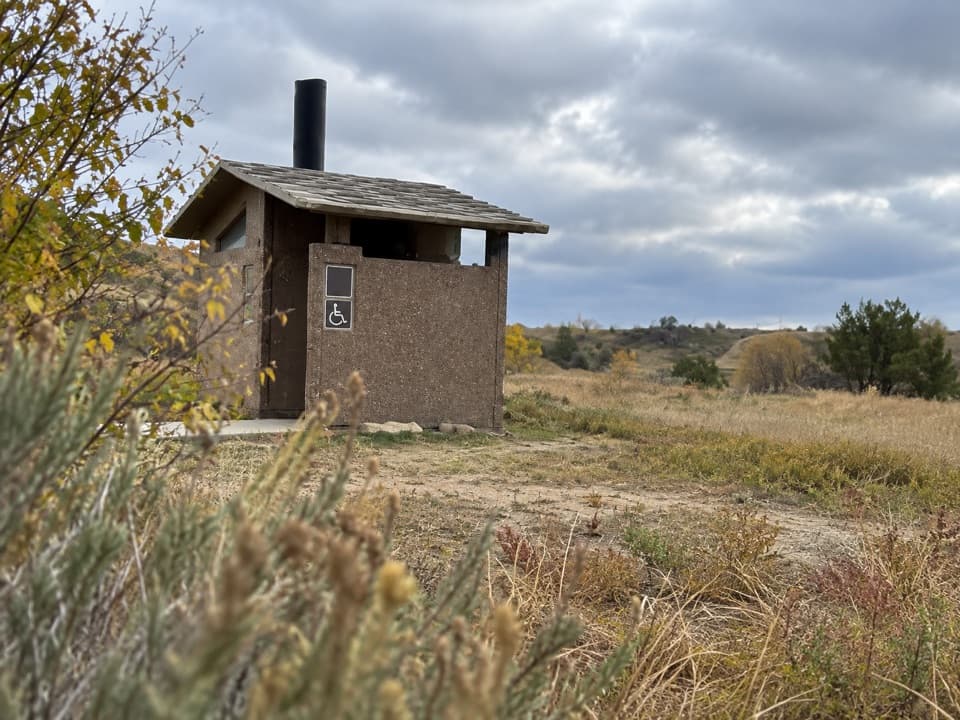 Restroom · 1.2 mi awaySouth Unit Scenic Drive RestroomAn accessible restroom midway around the South Unit loop.
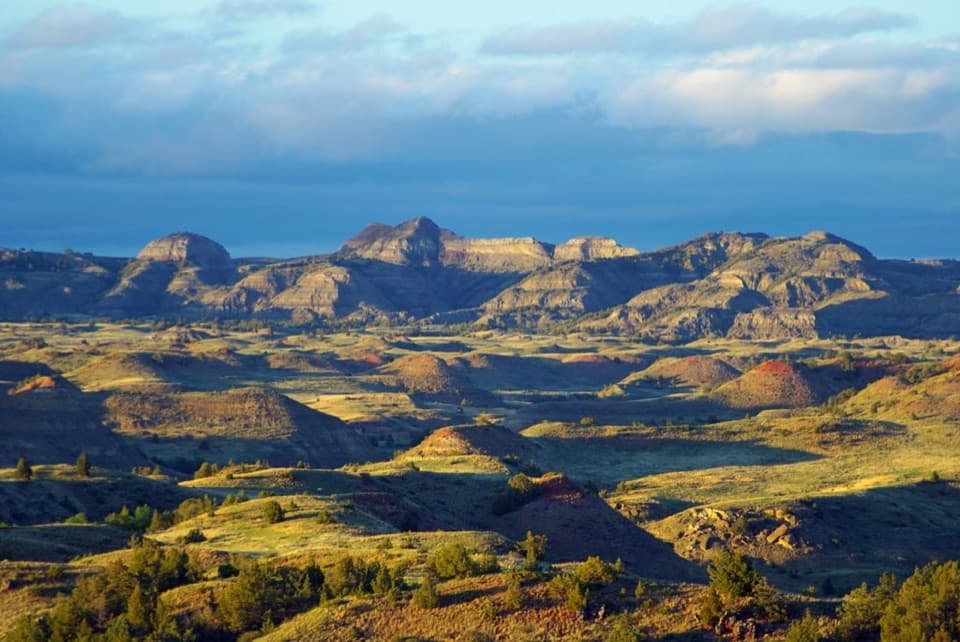 Sight · 1.4 mi awayBadlands OverlookLayered buttes make this the South Unit's panoramic finale.
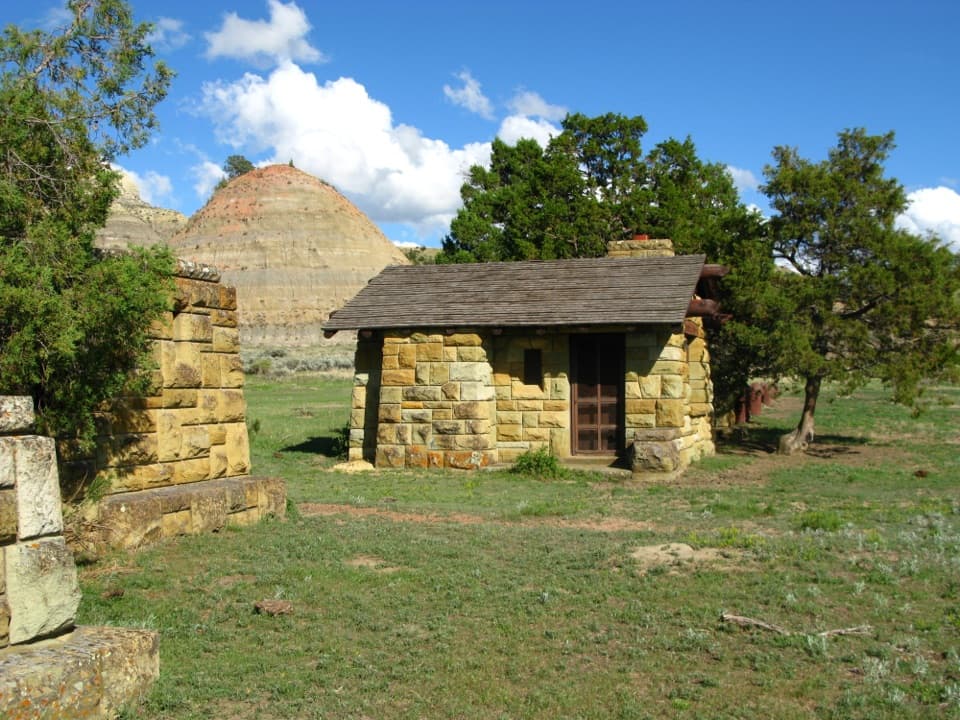 Sight · 1.8 mi awayOld East Entrance StationThe park's original stone gateway sits in an active prairie dog town.Sight · 2 mi awayBuck HillA steep 15-minute climb opens to a full Badlands panorama.
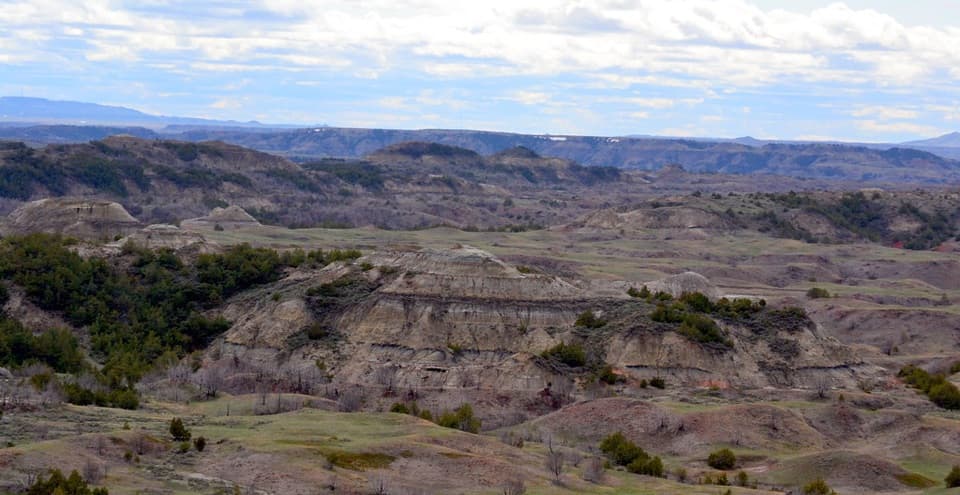 Sight · 2.3 mi awayBoicourt OverlookA short paved walk opens onto rolling badlands and distant buttes.
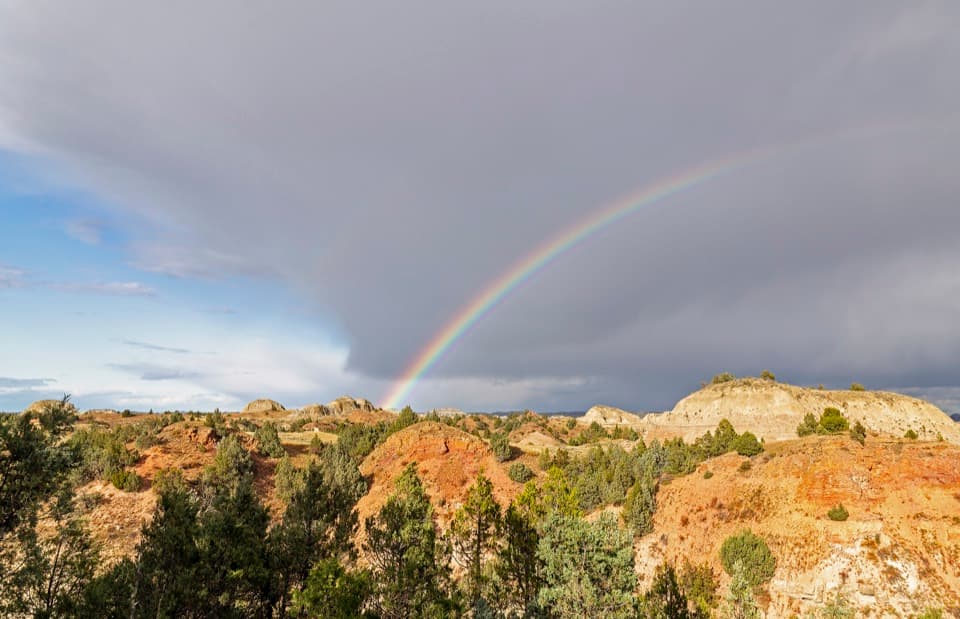 Sight · 2.6 mi awayScoria Point OverlookAn easy first look at the South Unit's red badlands.
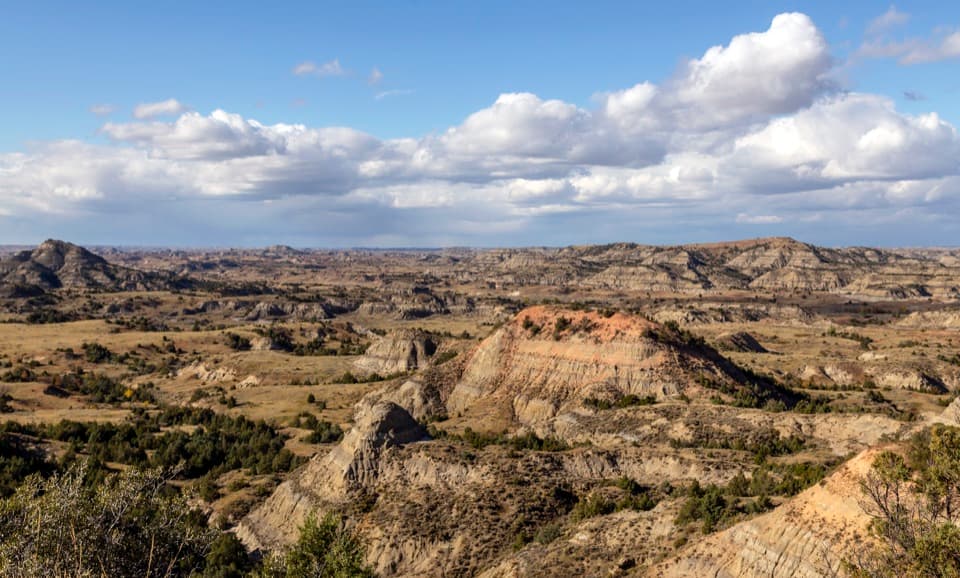 Sight · 3.5 mi awayPainted Canyon Overlook and Visitor CenterA rim-top badlands panorama, with bison sometimes grazing nearby.
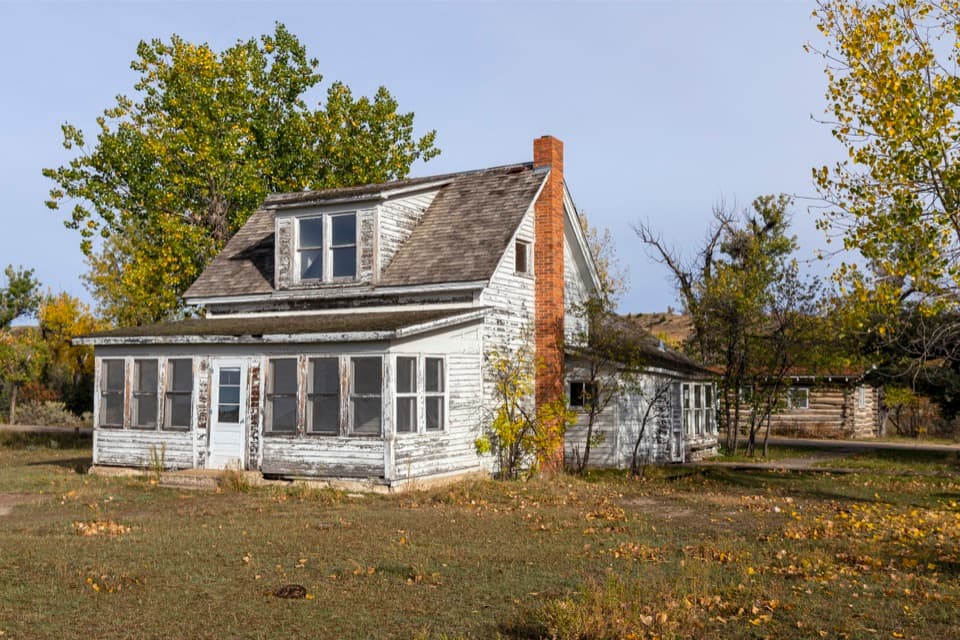 Sight · 3.9 mi awayPeaceful Valley RanchA ranch turned dude ranch, then the South Unit's first headquarters.
Parkwolf’s Theodore Roosevelt ranking

The audio tour guide for the drive, plus offline maps, trails, and wildlife heatmaps for when the signal drops.