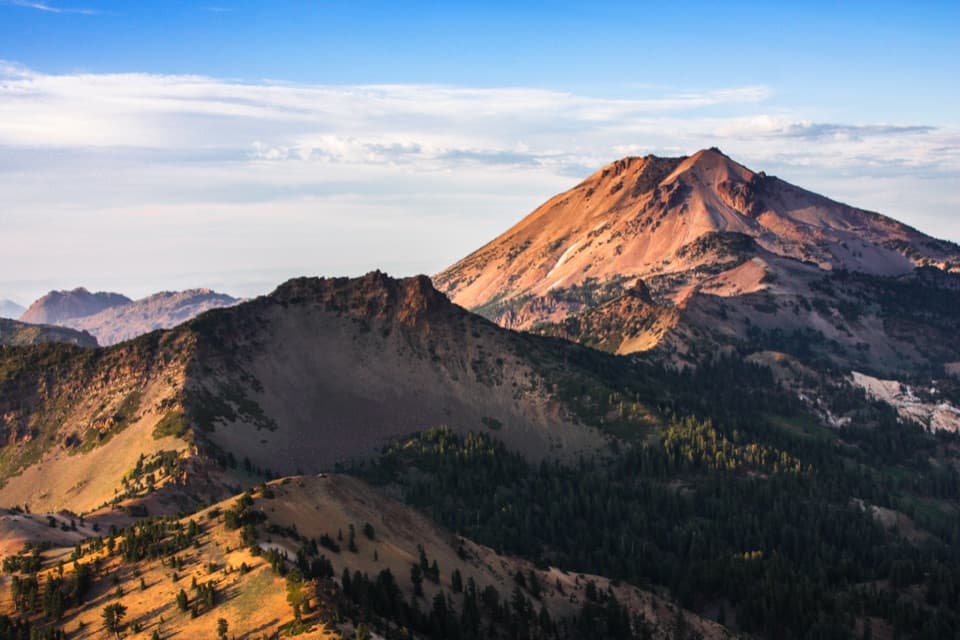
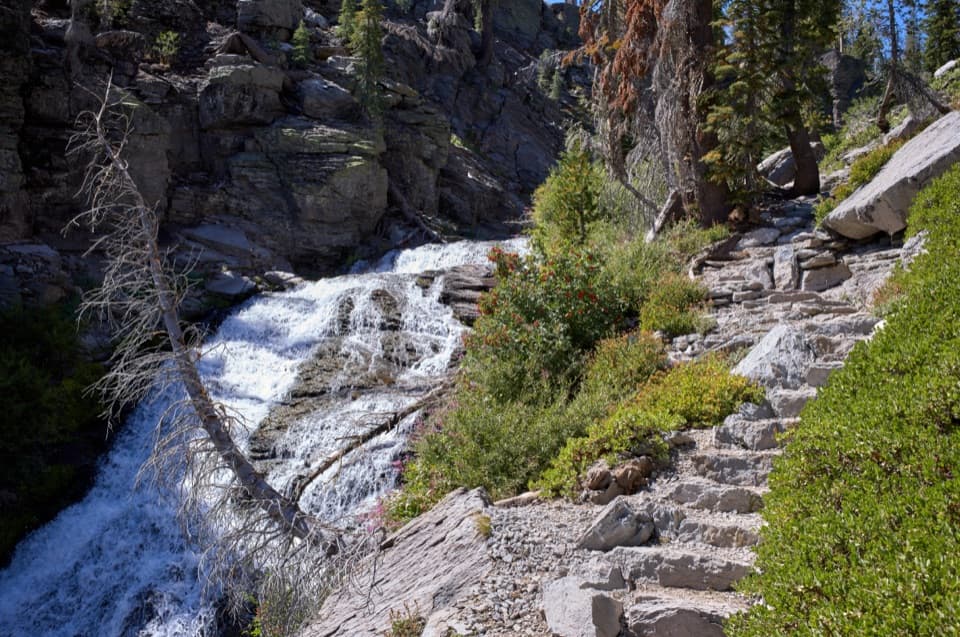
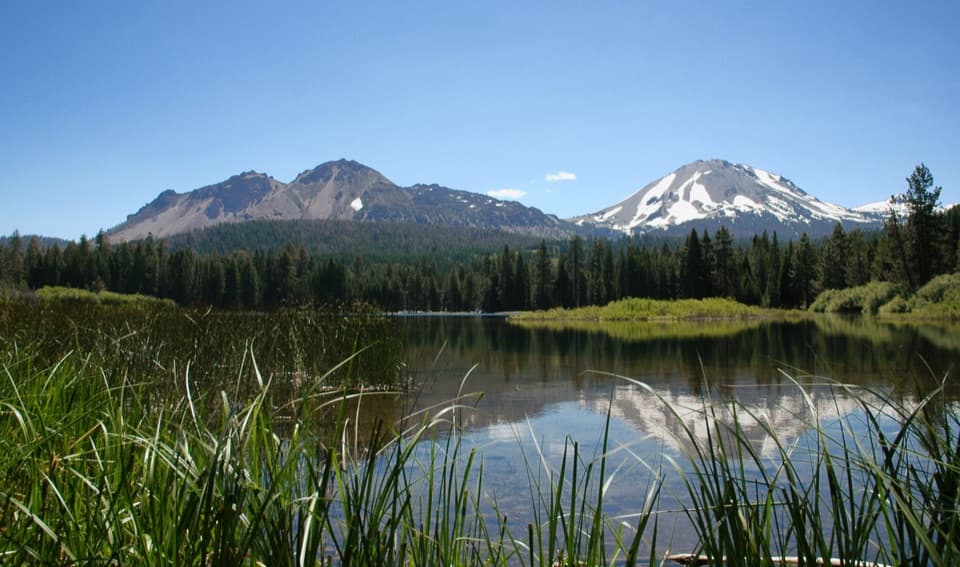
Parking
Park at Warner Valley Trailhead, reached beyond Warner Valley Campground on the dirt Warner Valley Road. Road access is seasonal, so check current conditions before driving.
Lassen Volcanic National Park, CA
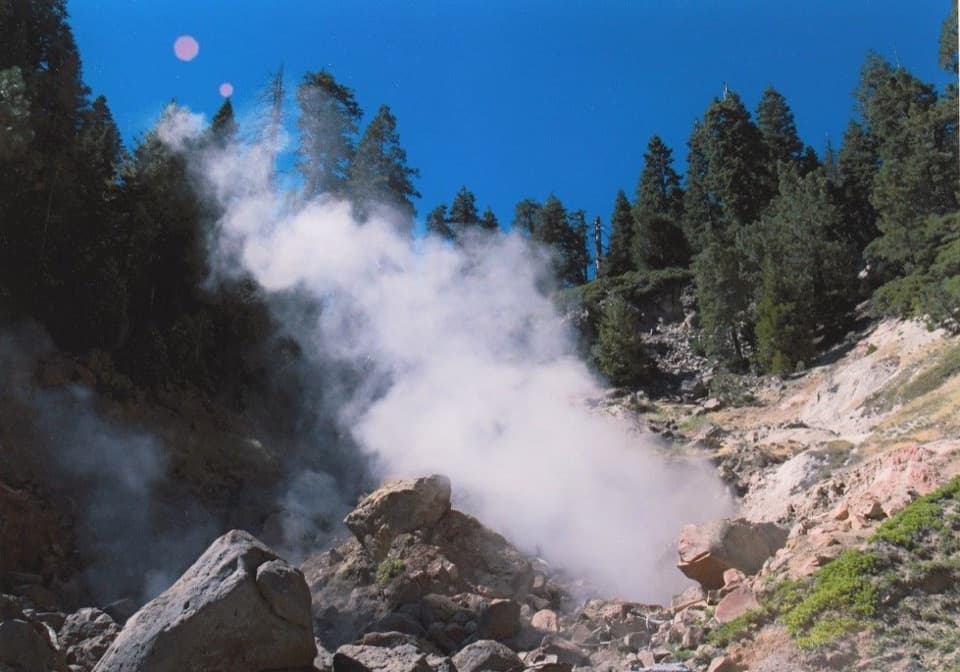
A forest climb ends at a steam plume in Willow Creek’s canyon.
Overview
Terminal Geyser Trail is a 5.8-mile out-and-back from Warner Valley Trailhead. It climbs through open forest, passes a view of Boiling Springs Lake, and drops into Willow Creek’s upper canyon. A plume of steam from the vent is the payoff. Allow 2.5 to 3 hours. Choose it for the geothermal feature; most of the mileage is the forest approach, not a succession of overlooks.
 Parkwolf’s verdictIs it worth the walk?
Map & elevation
Plan your hike

The highest, rockiest slopes around here are a summer buffet for grizzly bears.
Lassen Volcanic Tour Guide
Parkwolf is a GPS audio tour guide for Lassen Volcanic National Park. As you drive, it chimes in with what’s ahead: hidden gems, upcoming stops, history, geology, and wildlife, right through your car’s speakers.
See the Lassen Volcanic audio tourRecorded for this trailhead
Warner Valley and Drakesbad“You're coming up on the Warner Valley trailhead, a starting point for meadow walks and hydrothermal hikes.”
Plays as you drive up to this trailhead in the Parkwolf Lassen Volcanic Tour Guide.
More stories near here in the app
“Fantastic app with many points of information… It’s great to just turn on while you’re driving and it gives you an audio tour of the national Park. We love it!!!!”


Trail guide
From Warner Valley Trailhead, follow the Pacific Crest Trail to the signed Boiling Springs Lake junction, then continue toward Terminal Geyser. The route crosses a seasonal stream and climbs over a broad ridge before rejoining the Pacific Crest Trail about 2.5 miles from the start. Turn south briefly, then take the signed spur to the vent. Turn around there and retrace the same corridor. The complete Boiling Springs Lake loop is an optional extra; it is not part of this distance. The 5.8-mile figure counts the return along the same route.
The first stretch follows open forest along the edge of Drakesbad meadows and Hot Springs Creek. After the lake junction, the trail climbs through fir, incense cedar, ponderosa pine, and lodgepole pine, then rolls across a broad ridge. The last approach descends moderately, then steeply, into the canyon. Near the end, an old roadbed follows Willow Creek upstream past two small spring-fed rivulets. That final descent becomes the climb back out. The park rates this hike moderate.
Despite the name, Terminal Geyser is a steam vent, or fumarole, rather than a water-spouting geyser. Rain and snowmelt seep underground and warm beneath Lassen Peak; steam escapes through fractures in the rock. At the route’s end, the white plume rises above the rocky upper canyon of Willow Creek. Keep the canyon and trees in frame if you take a photo; they give the plume a sense of scale.
Parts of the route were affected by the 2021 Dixie Fire. Standing dead trees can fall without warning, so take extra care through burned sections. Do not enter hydrothermal water; it can be acidic. Reach Warner Valley Trailhead by the dirt road beyond Warner Valley Campground. Road access is seasonal, so check current access before driving. Pets are prohibited on park trails; service animals are allowed.
Wildlife
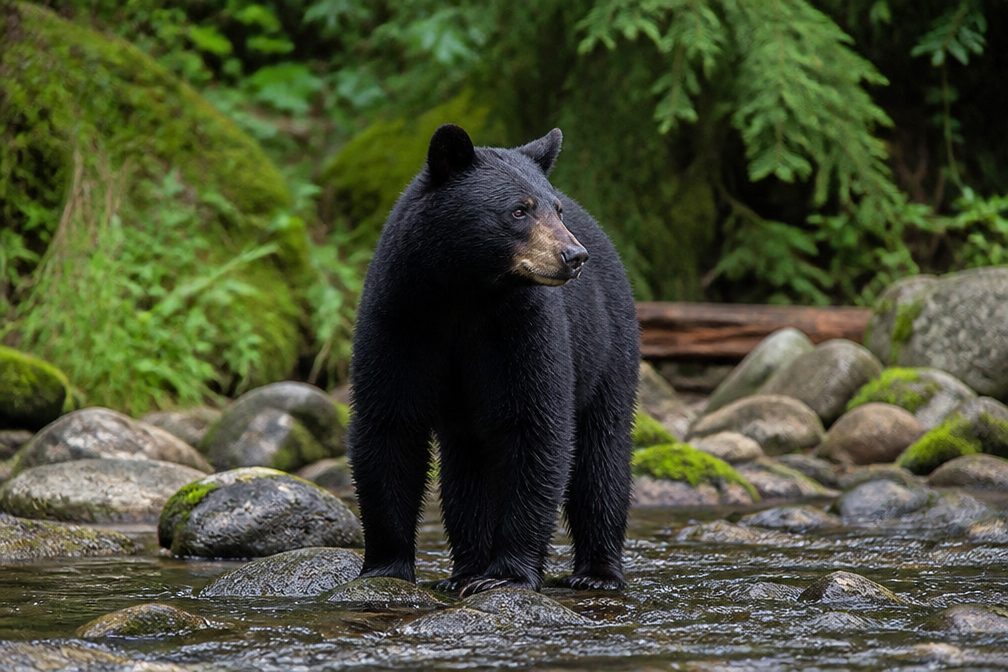 103 sightingsBlack BearMost seen around 7 PMSighting map
 44 sightingsBald EagleMost seen around 7 AMSighting map
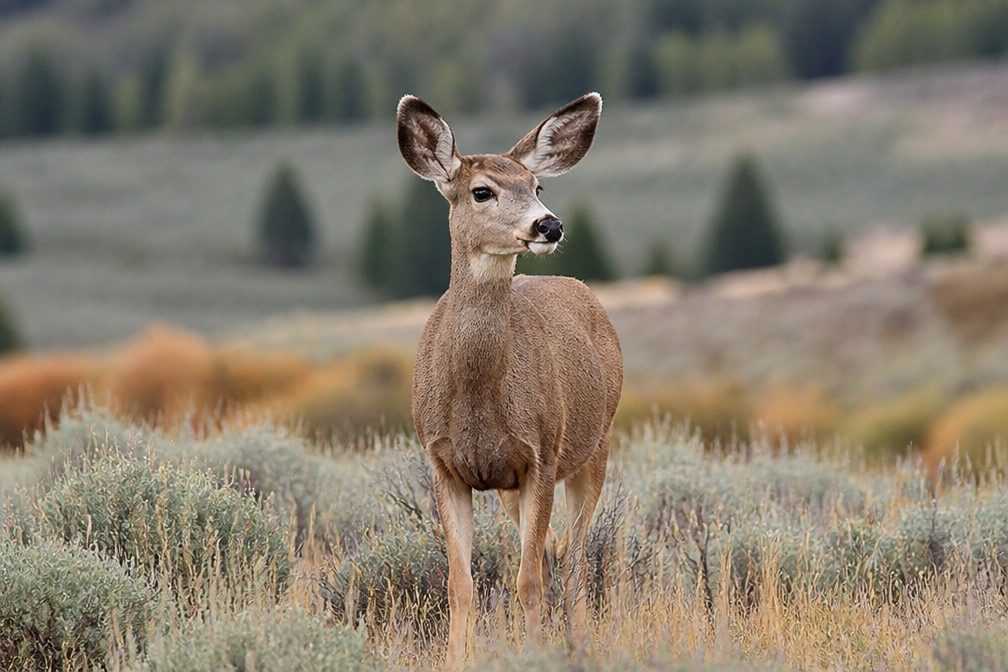 348 sightingsMule DeerMost seen around 7 PMSighting map
 17 sightingsSandhill CraneMost seen around 6 AMSighting map
 47 sightingsGreat Blue HeronMost seen around 7 AMSighting map
 12 sightingsGreat EgretMost seen around 7 AMSighting map
Sighting maps show where each species has been reported across Lassen Volcanic. Wildlife moves, so no sighting is guaranteed.
Keep exploring
 EasyBoiling Springs Lake Trail3 mi · 2 hr · At the trailheadAn easy three-mile walk to steaming water and lakeside mudpots.
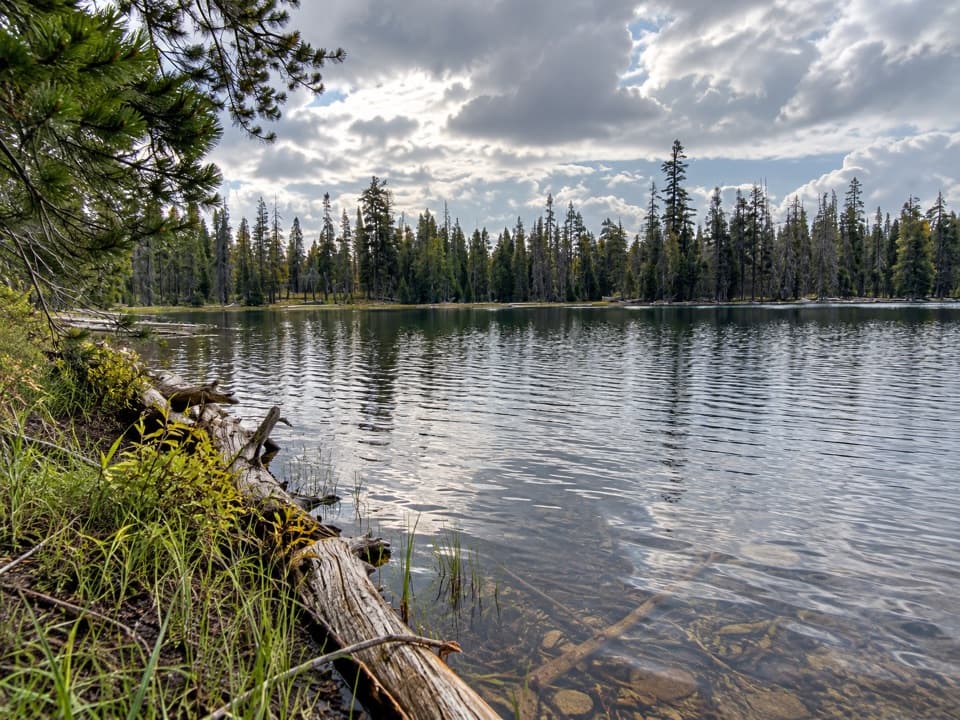 ModerateDrake Lake Trail5 mi · 3.5 hr · At the trailheadSteep switchbacks climb from a meadow to a quiet forest lake.
 ChallengingKings Creek Loop from Warner Valley10.5 mi · 8 hr · At the trailheadA hard loop over Flatiron Ridge, Kings Creek Falls and Bench Lake.
 EasyDream Lake Basin Trail1.5 mi · 45 min · At the trailheadA former lake basin threaded by springs and meadow plants.
 ModerateDevils Kitchen Trail4.2 mi · 2.5 hr · 0.2 mi awayA meadow walk to a bubbling, steam-filled volcanic basin.
 ModerateLittle Willow Lake to Terminal Geyser Trail3.2 mi · 2.3 hr · 2.4 mi awayA lakeside fen leads to a steam vent in the woods.
 ChallengingPacific Crest Trail through Lassen Volcanic19.1 mi · 10 hr · 2.5 mi awayA true PCT crossing strings together remote lakes and forest.
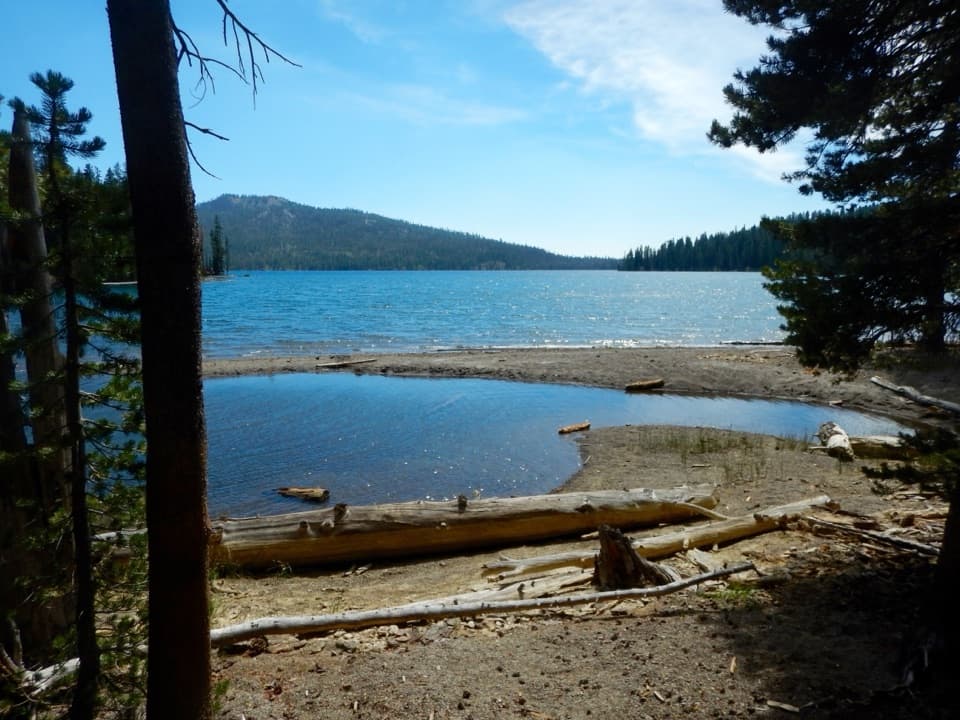 ChallengingKings Gorge Loop16.8 mi · 13 hr · 3.4 mi awayA long loop links Juniper Lake, wet meadows and a deep gorge.
 Campground · 0.2 mi awayWarner Valley CampgroundA remote, wooded base for Warner Valley's trail network.
 Picnic area · 0.2 mi awayWarner Valley Day Use AreaA trailhead picnic stop for Lassen's hydrothermal corner.
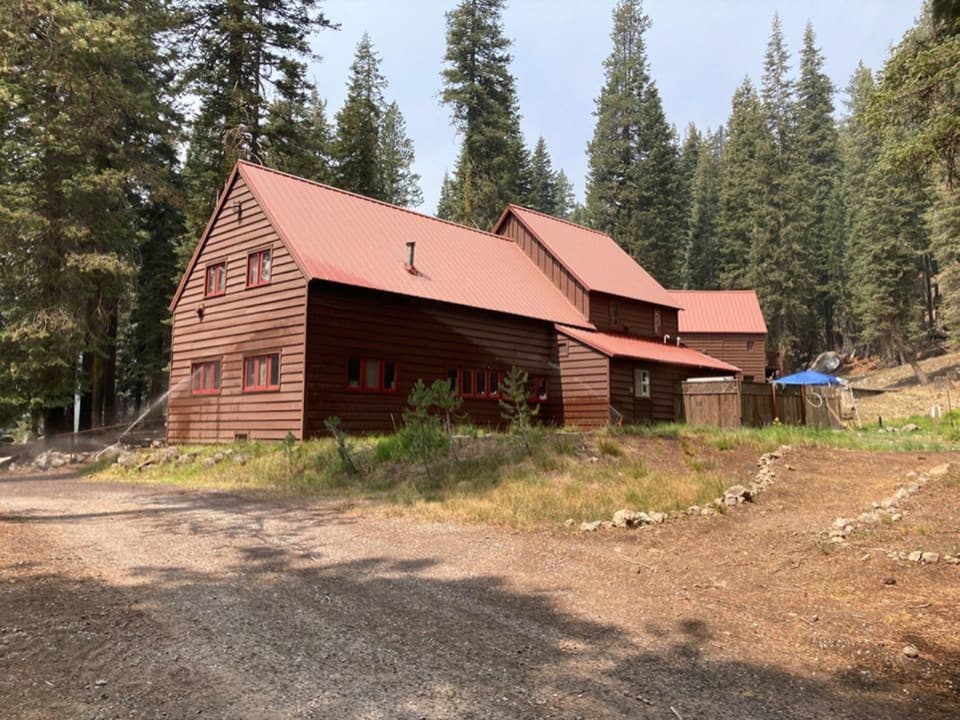 Lodging · 0.4 mi awayDrakesbad Guest RanchA remote Warner Valley base for meals, lodging, and nearby hikes
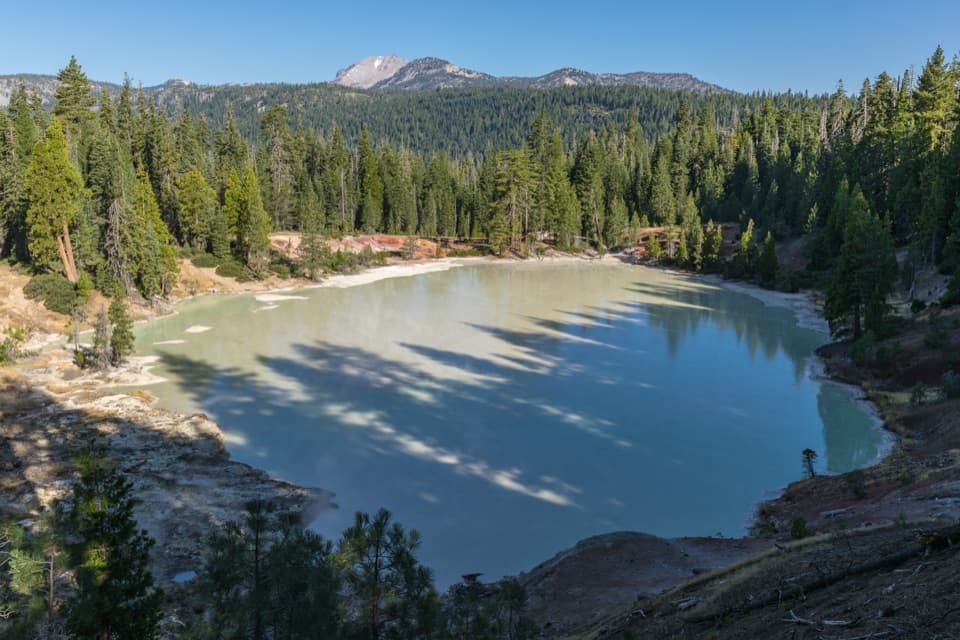 Sight · 0.5 mi awayBoiling Springs LakeA warm, milky lake ringed by steam and bubbling mudpots.Sight · 1.8 mi awayTerminal GeyserA creekside steam vent at the end of a long hike.Sight · 2 mi awayDevils KitchenBubbling pools and steam after a longer Warner Valley hike.
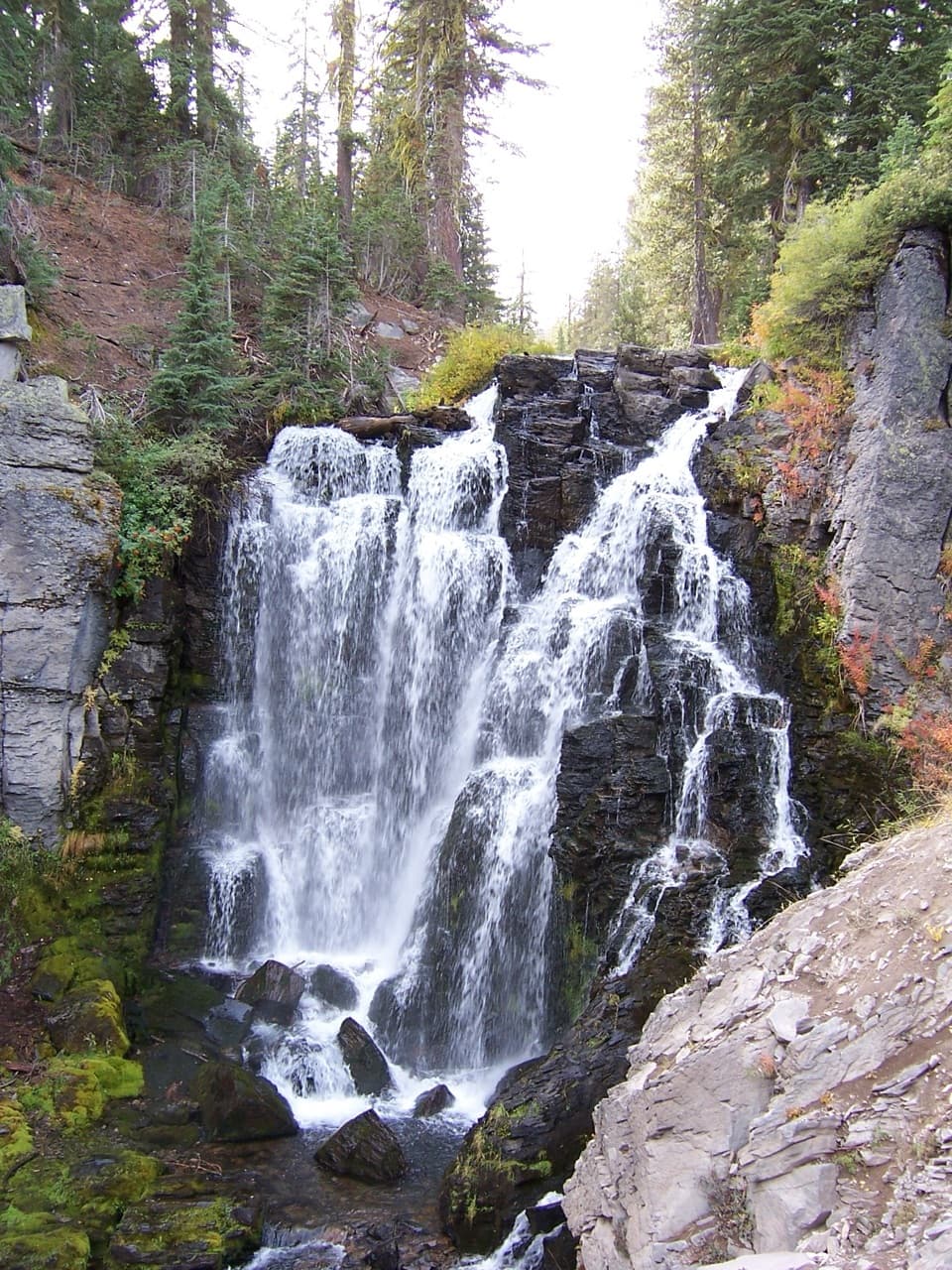 Sight · 2.6 mi awayKings Creek FallsThe creekside stone steps are half the payoff.
 Campground · 3.6 mi awaySummit Lake South CampgroundA short lake walk and dark skies define this tent campground.
Parkwolf’s Lassen Volcanic ranking
The audio tour guide for the drive, plus offline maps, trails, and wildlife heatmaps for when the signal drops.