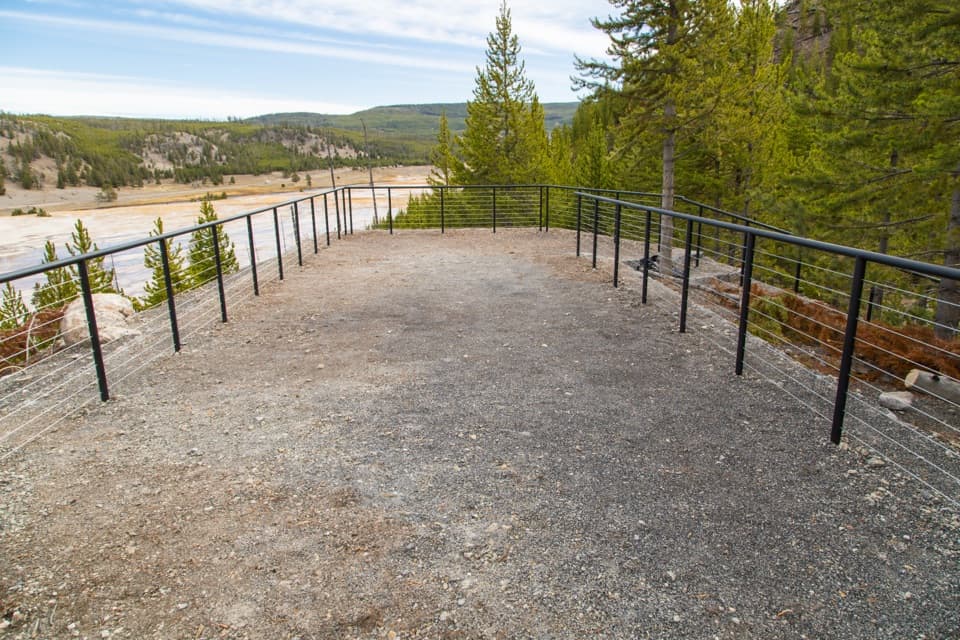
Parking
Grassy Lake Trailhead is at the west end of Grassy Lake Reservoir, north side of Grassy Lake Road. The road is rough and seasonal; high clearance is strongly recommended.
Yellowstone National Park, WY · MT · ID
A long backcountry walk to Yellowstone’s second-tallest waterfall.
Overview
Map & elevation
Plan your hike

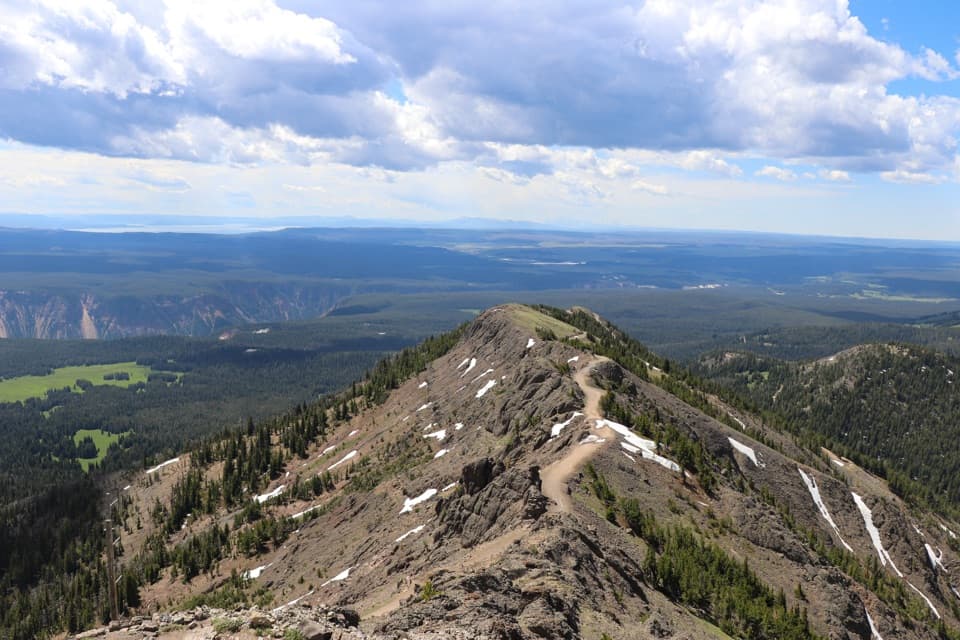
The highest, rockiest slopes around here are a summer buffet for grizzly bears.
Yellowstone Tour Guide
Parkwolf is a GPS audio tour guide for Yellowstone National Park. As you drive, it chimes in with what’s ahead: hidden gems, upcoming stops, history, geology, and wildlife, right through your car’s speakers.
See the Yellowstone audio tour“First time driving through a national park. We used the Yellowstone tour on grand loop Road and it’s just like having a tour guide in your car with you.”


Trail guide
Union Falls Trail from Grassy Lake is a remote, 15.4-mile out-and-back to an overlook of the waterfall. The mapped corridor is about 7.7 miles each way; walk it once to the falls and return the same way. Most of the approach is forest, with a major river ford, rolling climbs and creek crossings breaking up the long walk. Allow about nine hours and most of a day. This record uses the Grassy Lake start and ends at the falls overlook; it does not include the optional Ouzel/Scout Pool spur. Other starts, including Cascade Creek and Fish Lake, make different hikes with different distances.
The trailhead is at the west edge of Grassy Lake Reservoir, on the north side of Grassy Lake Road. The road is rough, difficult and seasonal; high clearance is strongly recommended, and the road is not open year-round. Check current road and stream conditions before setting out. The route crosses into Yellowstone within the first half mile, then continues through backcountry forest. Bring food and enough water for a full day; no food or potable-water stop was confirmed along the route.
The first major obstacle is a large, swift Falls River ford about a mile and a half from the start. Water can be dangerous at high flow, so assess it from shore and turn back if it is not safe to cross. Secure footwear for the rocky bed is useful. Beyond the river, the trail winds through forest and huckleberries, climbs over Birch Hills, then descends toward Proposition Creek. Some accounts describe log crossings there, followed by a shorter rise and descent into the Mountain Ash Creek corridor. The park estimates roughly 600 feet of total climbing, but that number does not convey the repeated ups and downs: the long downhill on the way out becomes sustained climbing on the return.
The creek-side section is comparatively level. Near the horse hitching post, an unmarked left-hand spur leads about half a mile to Ouzel Pool, also called Scout Pool, a thermally warmed pool with a small waterfall. The water temperature varies. Return to the junction and continue roughly another half mile to the Union Falls overlook. The pool is a worthwhile side trip for hikers with time, but its out-and-back distance is not included in the 15.4-mile figure.
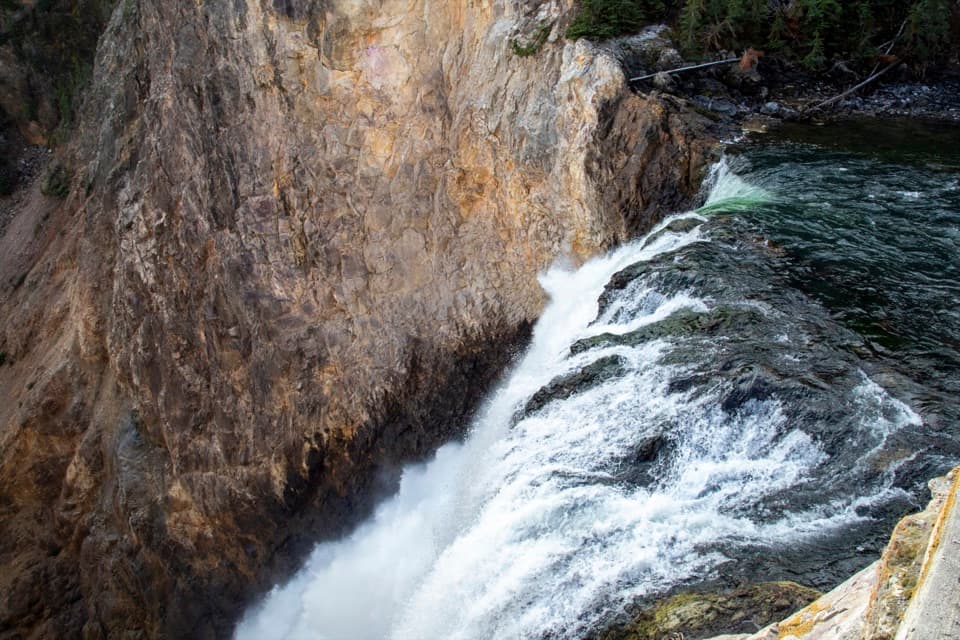
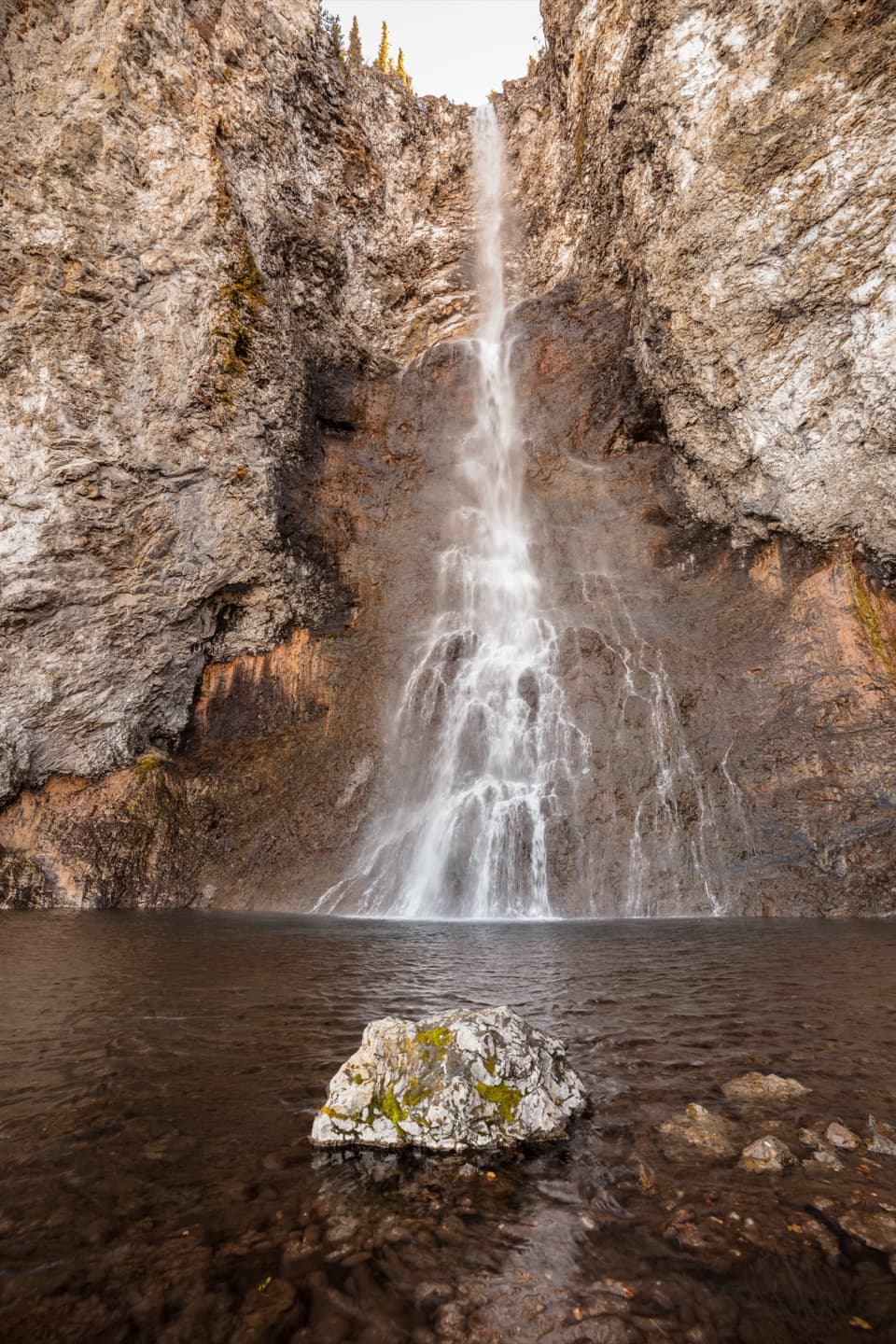
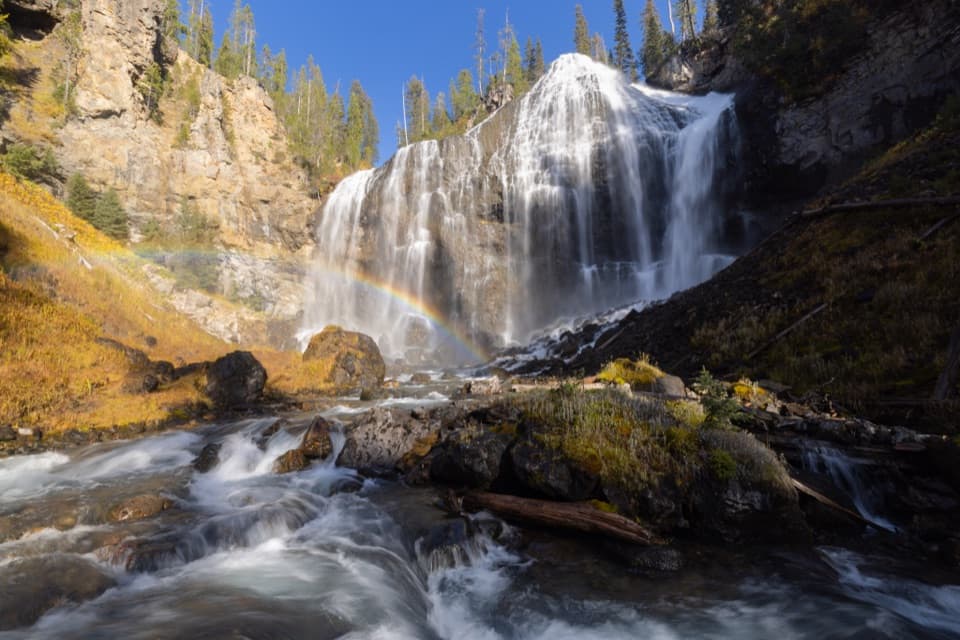
Union Falls drops about 250 feet, making it Yellowstone’s second-tallest waterfall. Two streams join at the brink, giving the falls its name, and the overlook shows the full cascade with spray in the air. This is the standard destination and the strongest place to photograph the falls; protect a camera from the mist. A steep descent from the overlook toward the base is very wet and slippery, so do not treat it as a routine extension of the hike.
There are two backcountry campsite locations described roughly 6 to 6.5 miles from the Grassy Lake start. Overnight camping requires a current Yellowstone backcountry permit and campsite reservation; verify the current rules and site details before planning to stay. Pets are not allowed on Yellowstone hiking trails or in the backcountry. For a day hike, treat the river level and the seasonal access road as the key go-or-no-go checks, and use the overlook as the turnaround point.
Wildlife
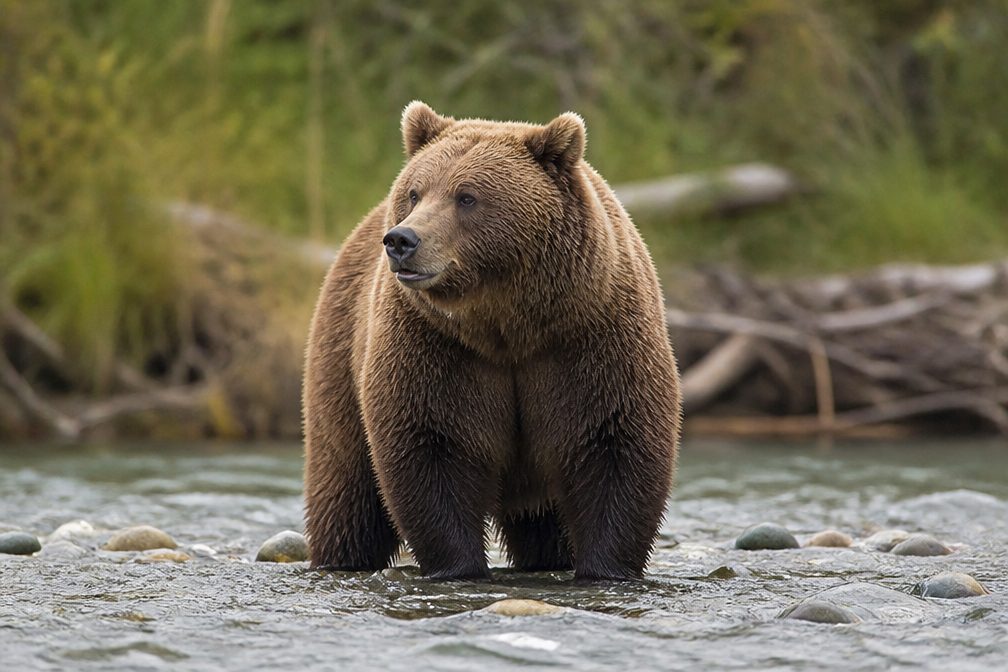 713 sightingsGrizzly BearMost seen around 6 AMSighting map
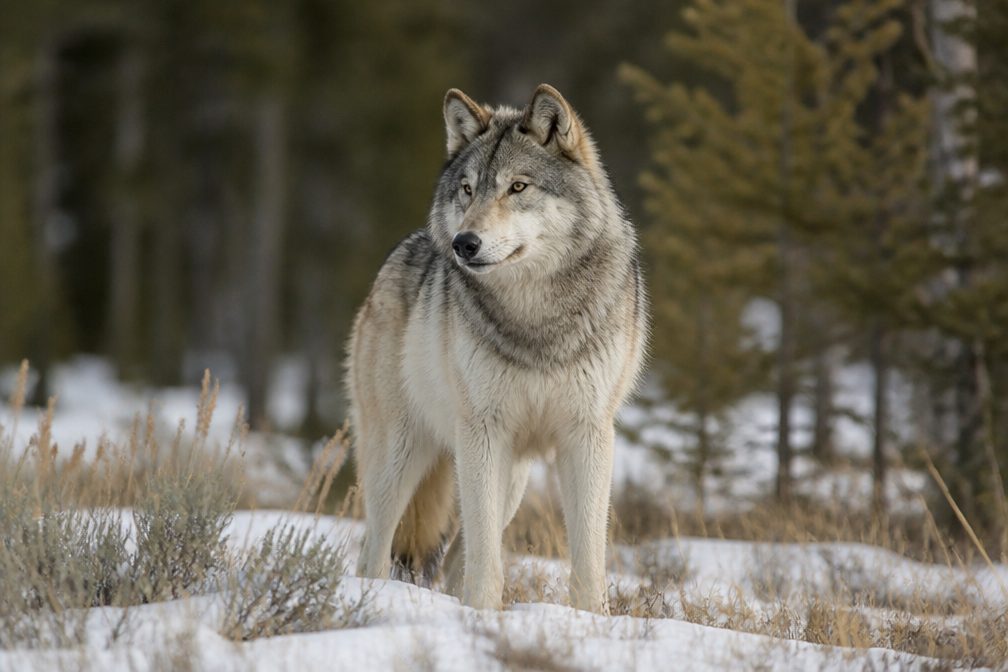 743 sightingsWolfMost seen around 6 AMSighting map
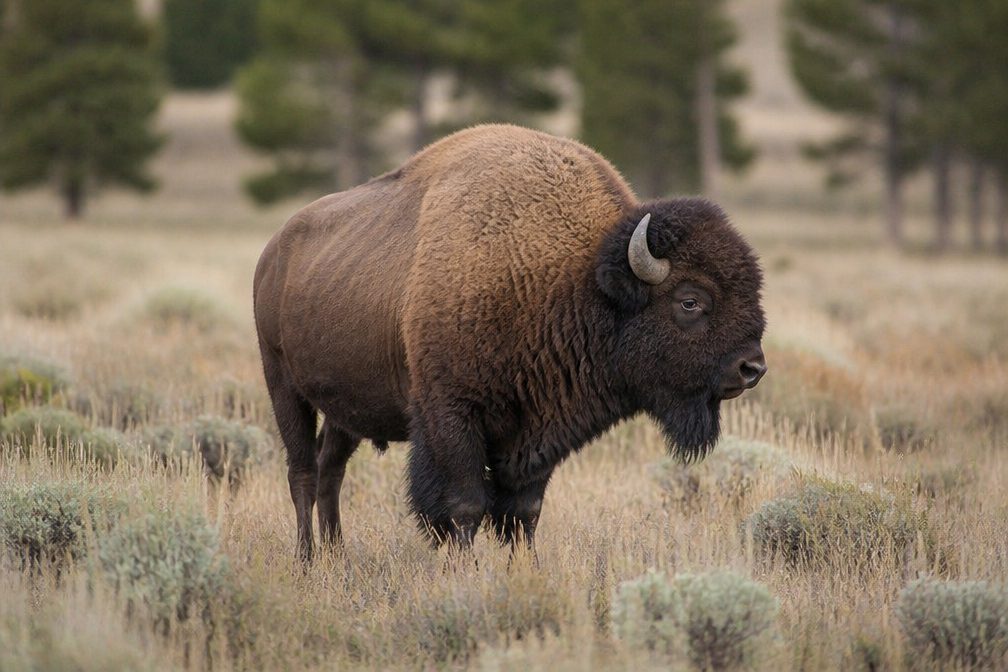 5,273 sightingsBisonMost seen around 7 AMSighting map
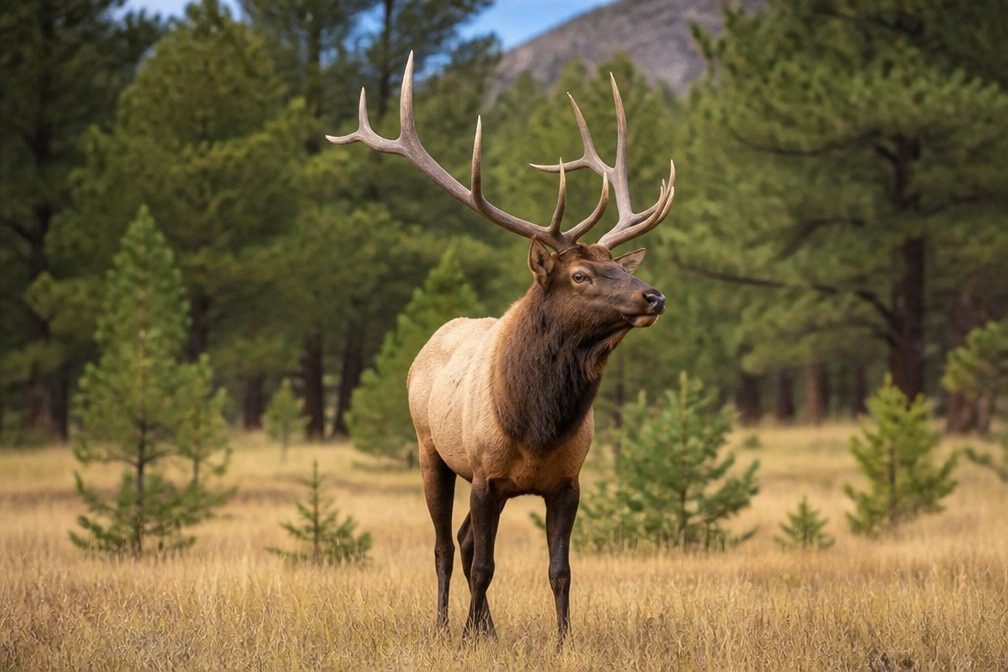 3,258 sightingsElkMost seen around 7 PMSighting map
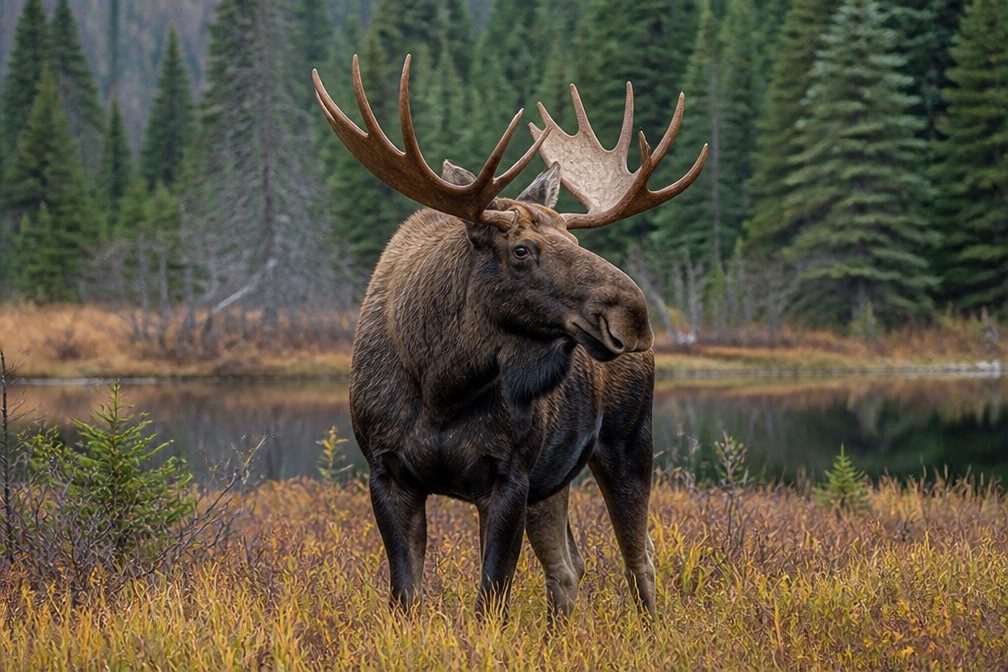 397 sightingsMooseMost seen around 7 PMSighting map
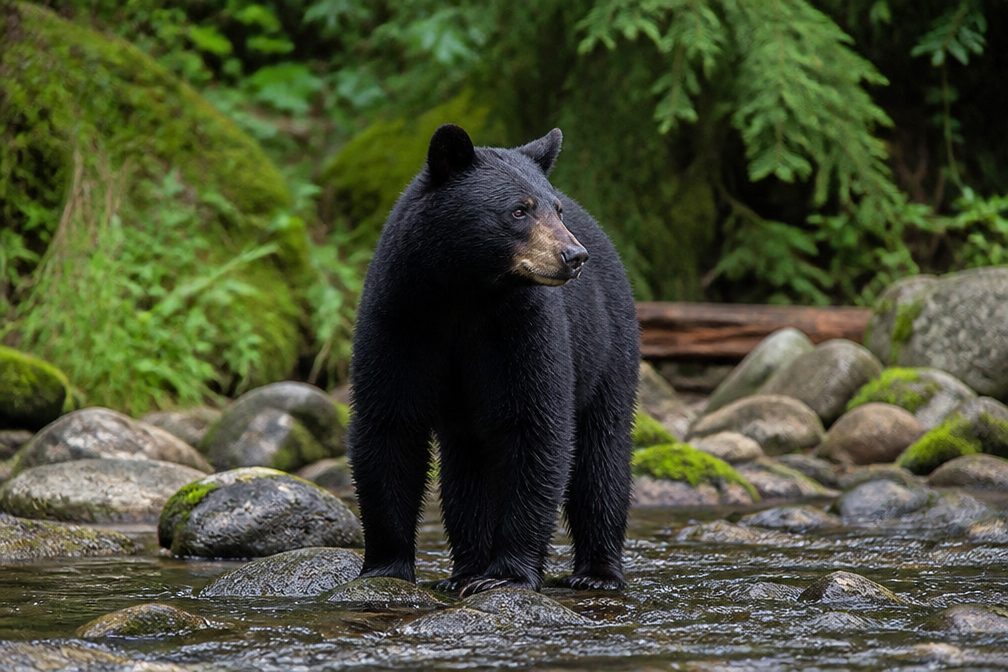 1,494 sightingsBlack BearMost seen around 7 PMSighting map
Sighting maps show where each species has been reported across Yellowstone. Wildlife moves, so no sighting is guaranteed.
Keep exploring
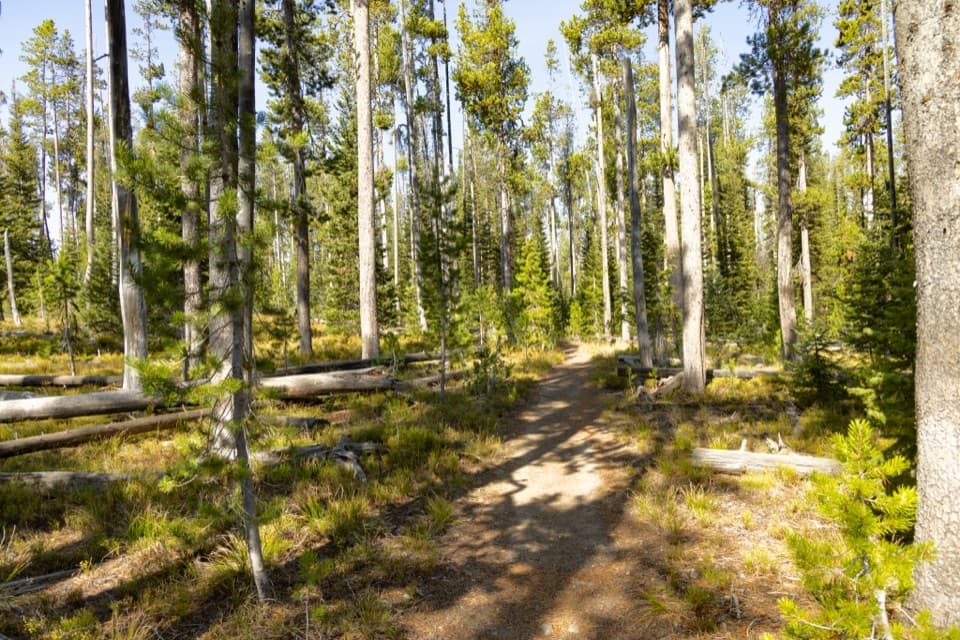 ChallengingMountain Ash Creek Trail11.6 mi · 8 hr · At the trailheadA historic wagon road and an unbridged Falls River ford
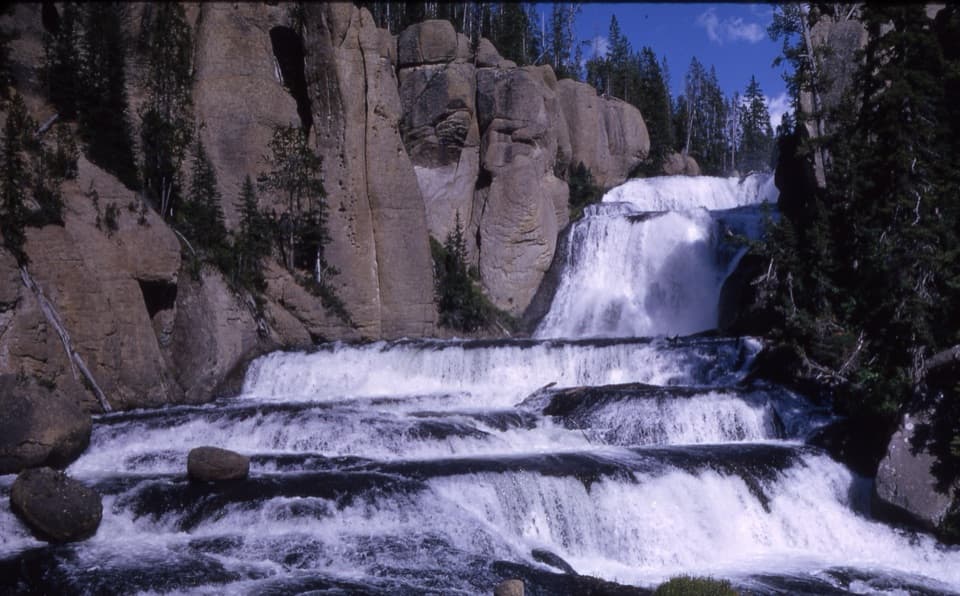 ModerateTerraced Falls Trail4 mi · 2.5 hr · 1.3 mi awaySix waterfall tiers make this quiet backcountry walk worthwhile.
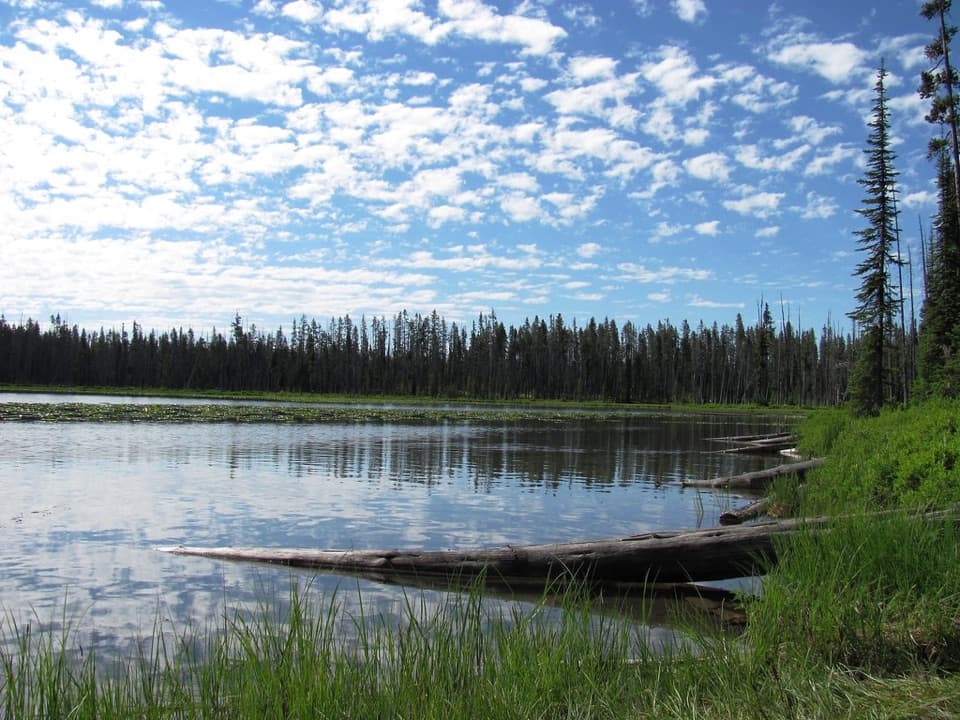 ModerateBeula Lake Trail5.2 mi · 2.7 hr · 1.8 mi awayA ridge-top reservoir view before the trail drops to Beula Lake.
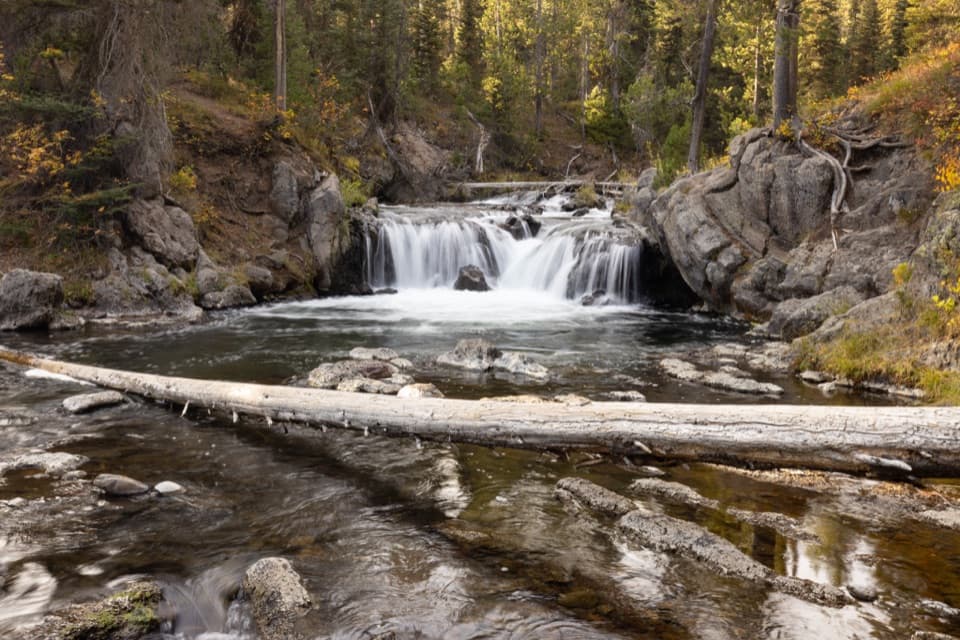 EasyNorth Fork Trail to Scout Pool0.6 mi · 30 min · 5 mi awayA brief Scout Pool detour on the long Union Falls hike.
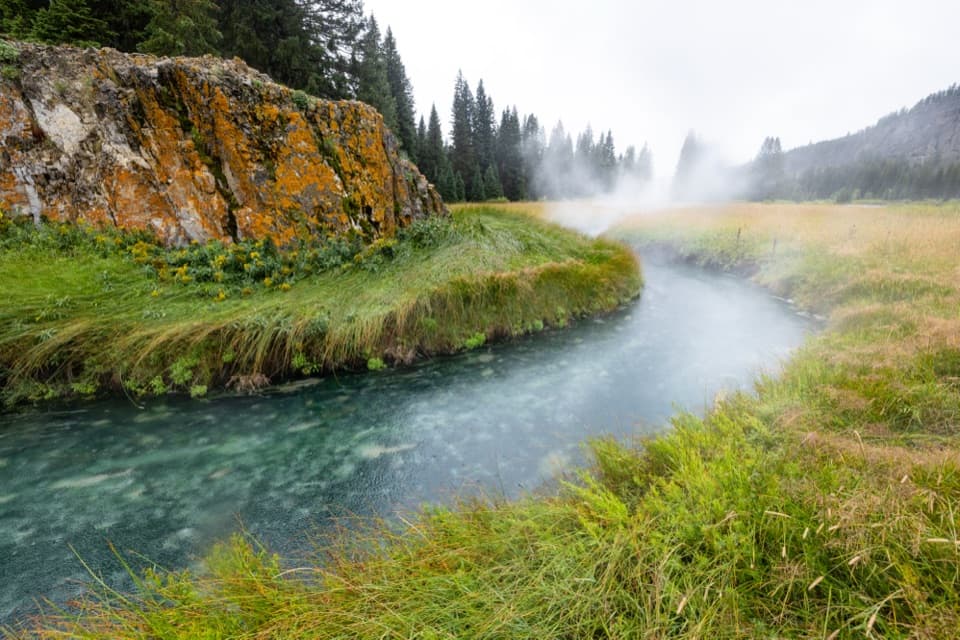 ModerateSouth Boundary Trail: South Entrance–Harebell11.6 mi · 6 hr · 7.7 mi awayFollow the Snake River to a remote, 1915 patrol cabin.
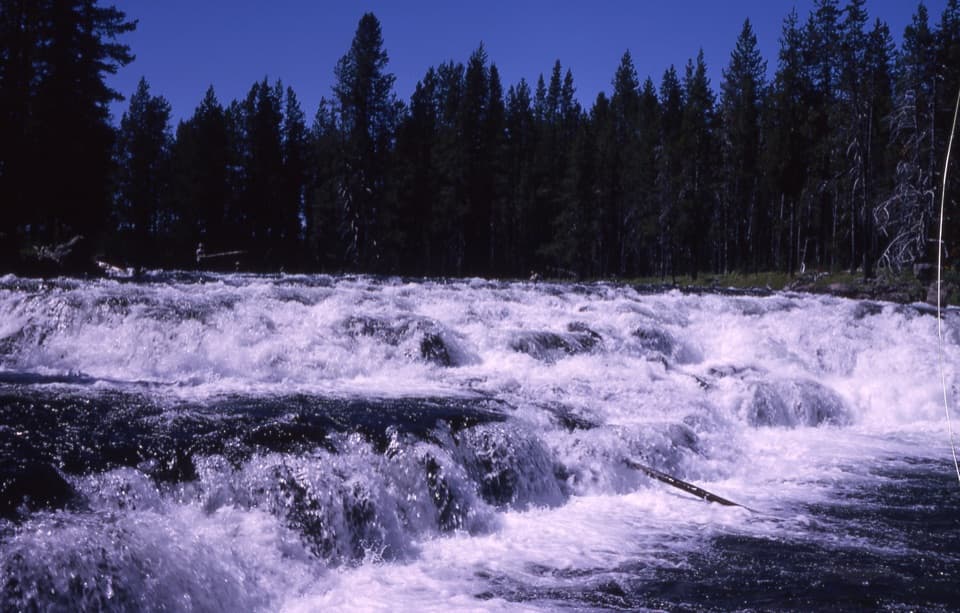 EasyBechler Falls Trail2.6 mi · 1.3 hr · 8.9 mi awayA forested river walk threads cascades to a low waterfall.
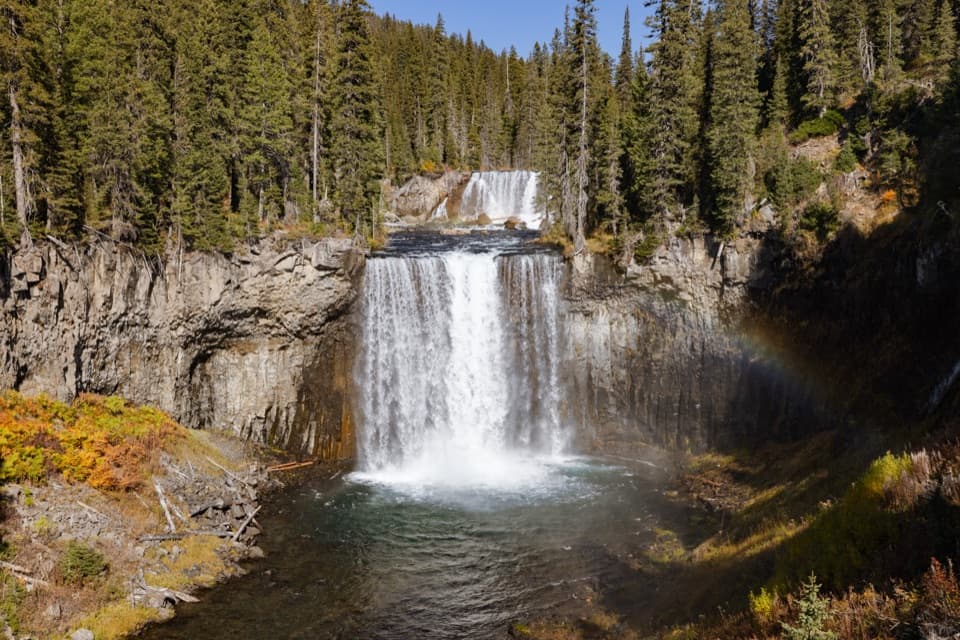 ChallengingColonnade Falls Trail18 mi · 9 hr · 11.2 mi awayA long, nearly level route to a two-tier backcountry waterfall.ChallengingBechler River Trail30 mi · 20 hr · 11.2 mi awayA remote river traverse threads meadows, waterfalls, and thermal ground.
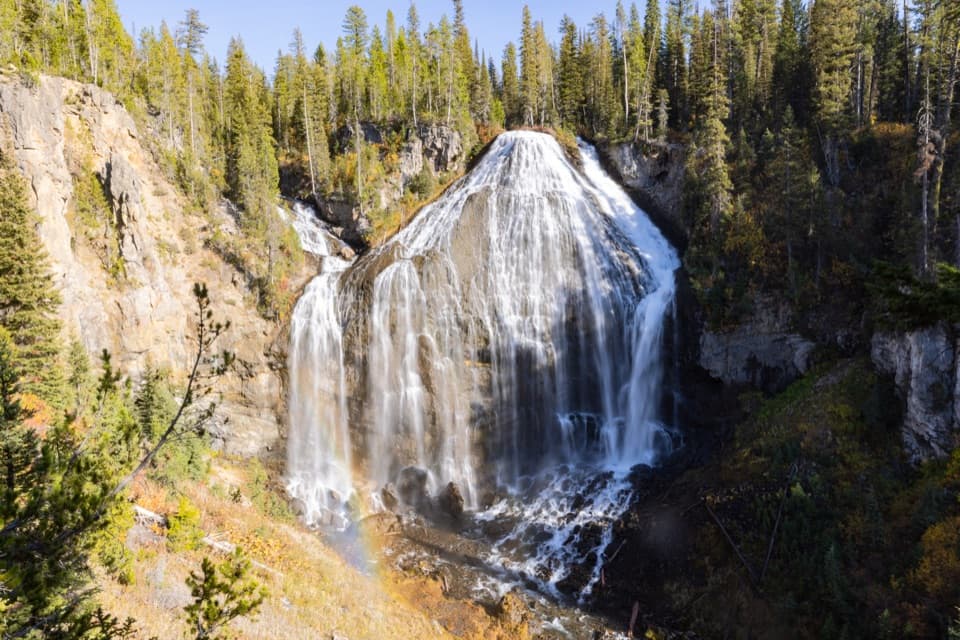 Sight · 4.9 mi awayUnion FallsTwo streams meet at the brink, then plunge about 250 feet.
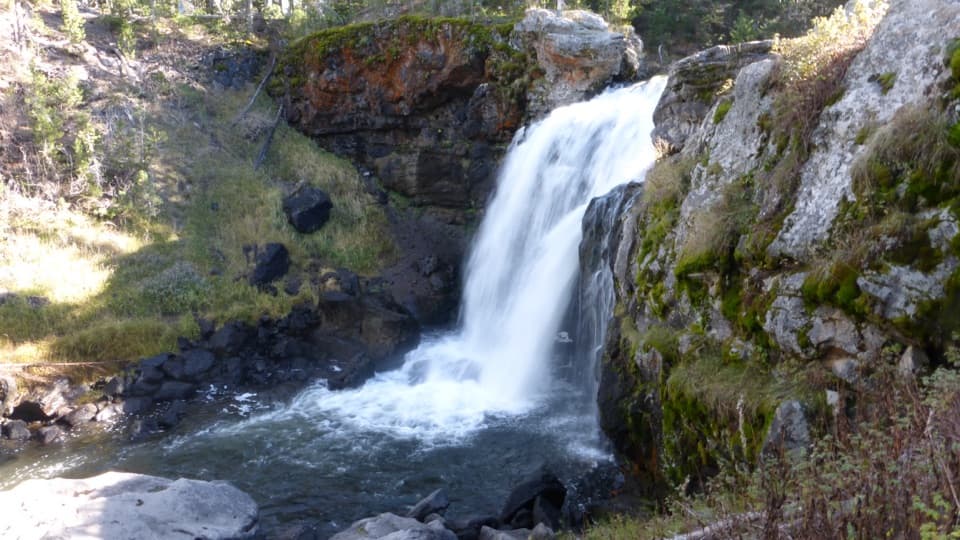 Sight · 7.5 mi awayMoose FallsA short stop for Yellowstone’s 30-foot Moose Falls.
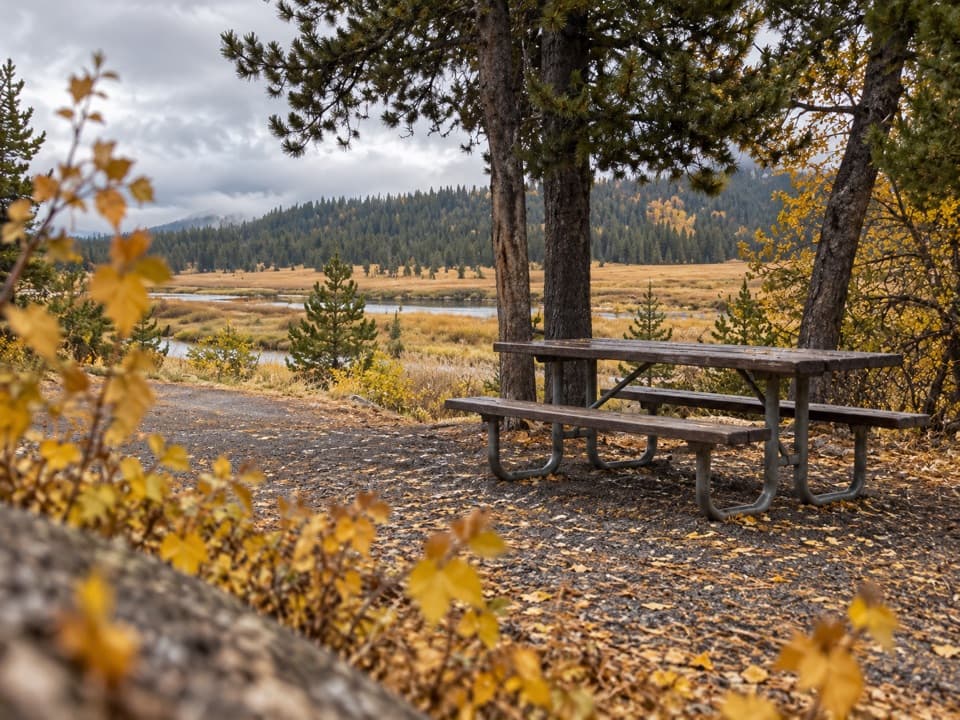 Picnic area · 7.7 mi awaySnake River Picnic AreaA real lunch stop with river views, tables and fire grates.
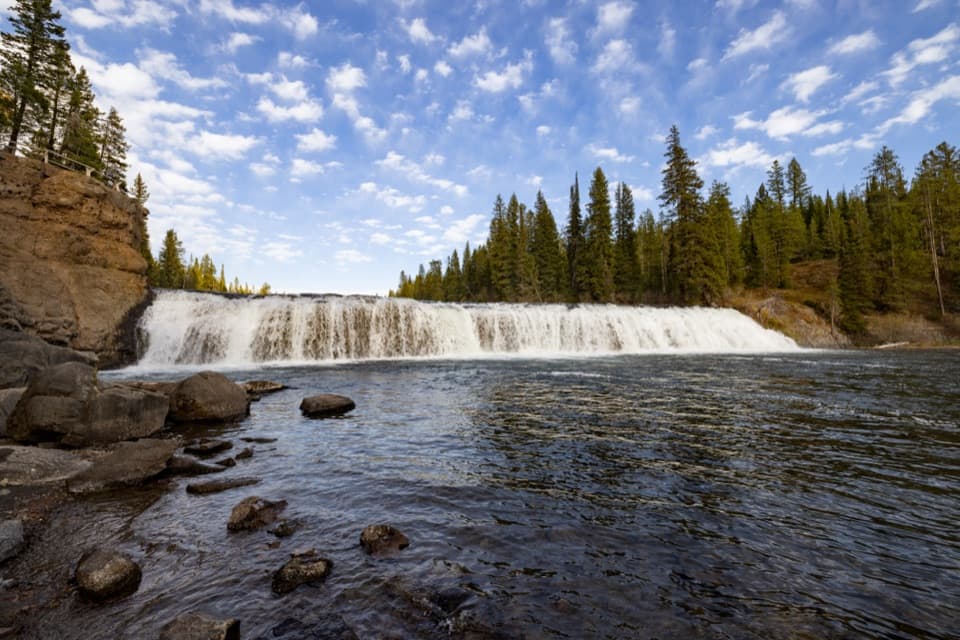 Sight · 8.8 mi awayCave FallsA broad cascade at the end of a long, rough gravel road.
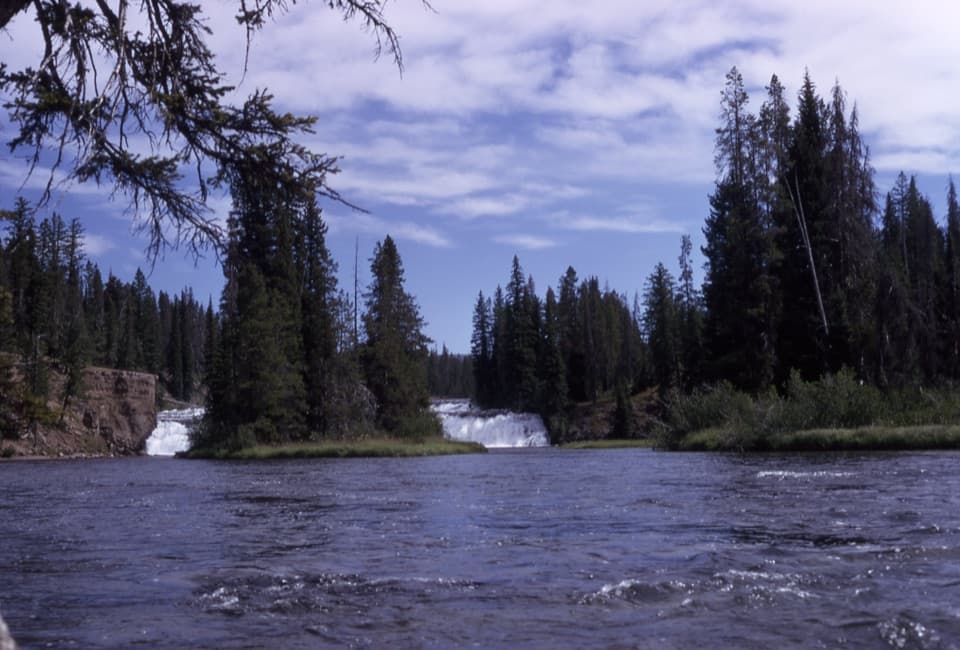 Sight · 9.6 mi awayBechler FallsA low cascade rewards the long, remote approach through river country.
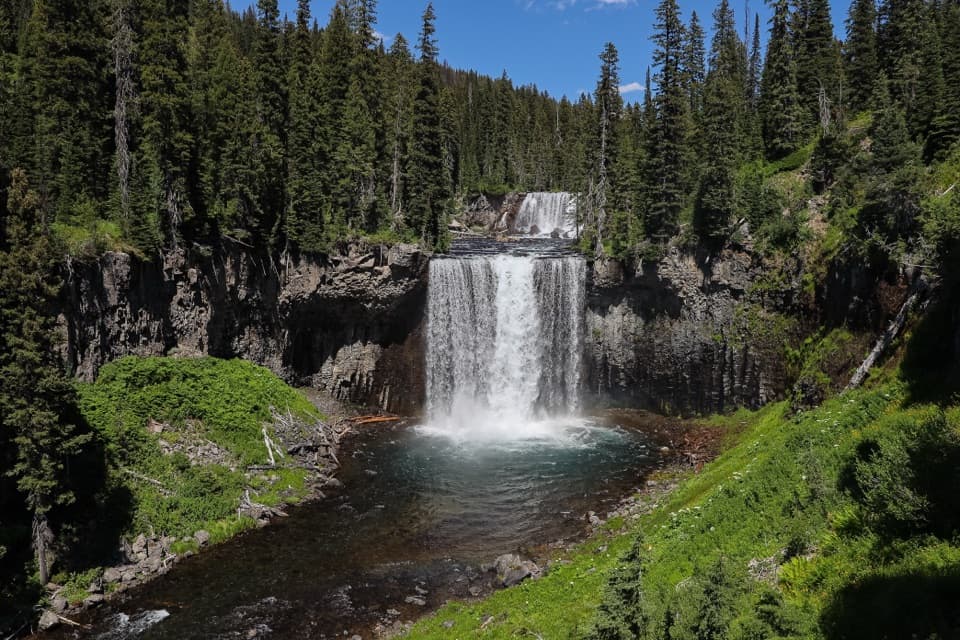 Sight · 9.7 mi awayColonnade FallsPaired falls reached by a long hike and a cold river ford.
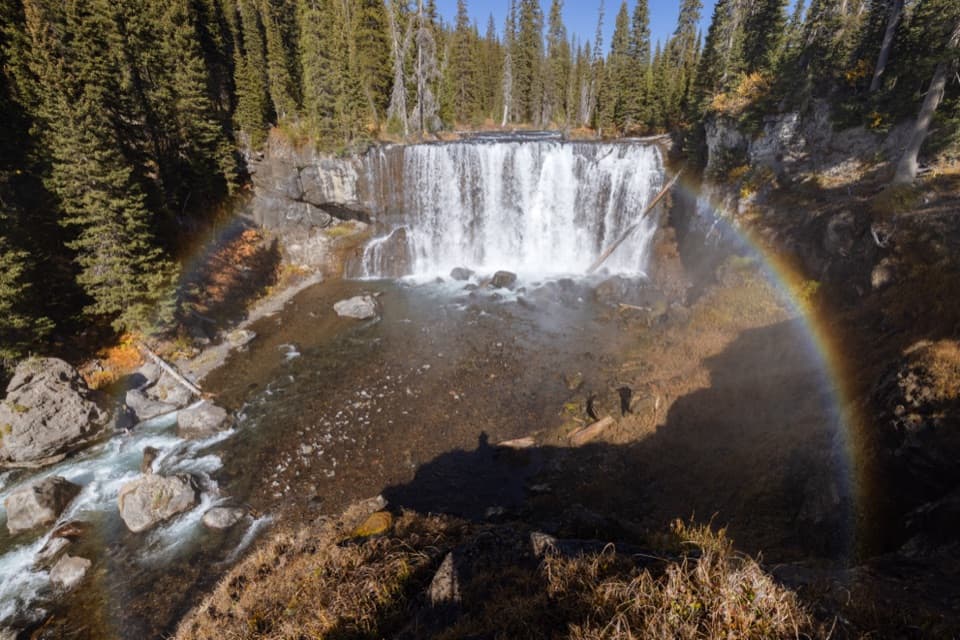 Sight · 9.7 mi awayIris FallsA 45-foot waterfall with rainbow-prone spray in the Bechler backcountry.
Parkwolf’s Yellowstone ranking

The audio tour guide for the drive, plus offline maps, trails, and wildlife heatmaps for when the signal drops.