Parking
Reach Stave Spring Trailhead from North Fork Road by rough dirt roads; high-clearance four-wheel drive is advised. The small parking corral has very limited space.

Zion National Park, UT
A long mesa walk to Zion's old cableworks above the canyon.
Overview
Map & elevation
Plan your hike

The highest, rockiest slopes around here are a summer buffet for grizzly bears.
Zion Tour Guide
Parkwolf is a GPS audio tour guide for Zion National Park. As you drive, it chimes in with what’s ahead: hidden gems, upcoming stops, history, geology, and wildlife, right through your car’s speakers.
See the Zion audio tourMore stories near here in the app
“Fantastic app with many points of information… It’s great to just turn on while you’re driving and it gives you an audio tour of the national Park. We love it!!!!”


Trail guide
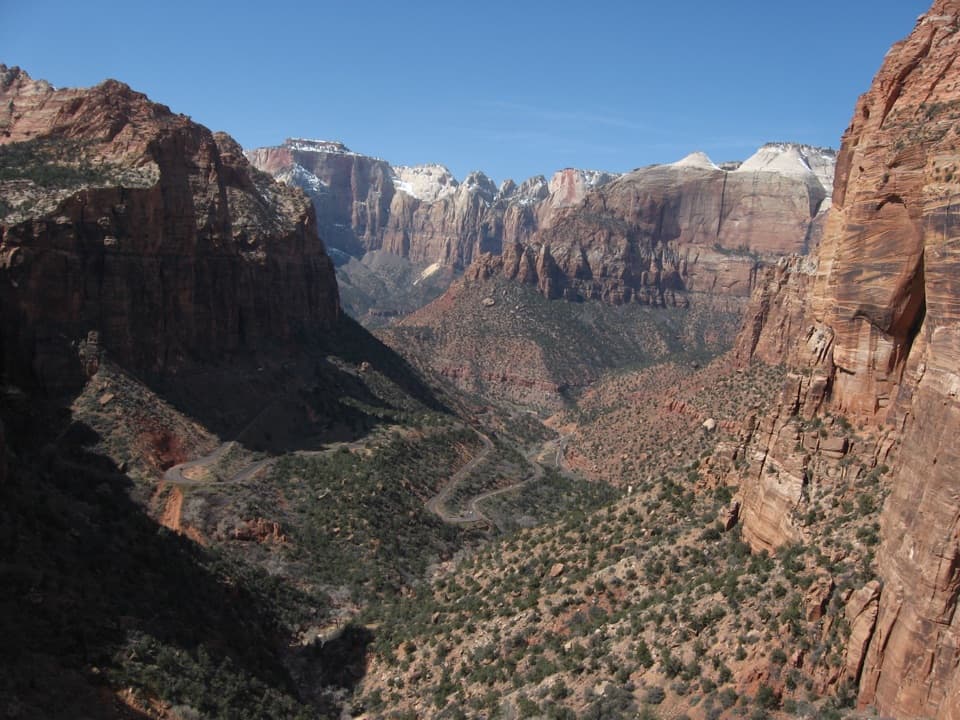
Cable Mountain Trail is an out-and-back from Stave Spring Trailhead to the old timber cableworks on a rim above Zion Canyon. Plan on about 8 miles round trip and roughly four hours. Published figures range from 7 to 8 miles; the connected trail line measures almost 4 miles each way, so the longer figure is the safer plan. The reward is a high-country walk, a dramatic canyon rim, and a rare piece of Zion's early logging history rather than a developed viewpoint close to a road.
From Stave Spring, follow its access trail through ponderosa woodland to the East Rim Trail. Turn south at the junction toward Deertrap Mountain and Cable Mountain, then stay on the Cable Mountain spur to the rim. The Deertrap route was rerouted, and traces of older junctions can be easy to miss. The route described here does not continue to East Mesa or to Deertrap Mountain's summit.
The first part moves through ponderosa pine, then a mix of pinyon, juniper, and more open scrub. The trail has short dips rather than one long climb, and much of the middle is exposed to sun. It feels remote compared with the busy canyon-floor walks, but the broad scenery arrives gradually rather than at every turn. Keep track of the junctions as you cross the plateau; that is where an old tread can be misleading.
The Cable Mountain spur crosses a mesa, reaches a preliminary viewpoint, then drops roughly 300 feet to the rim. From there the canyon opens below you, with the old timber framework at the edge and Zion's major formations across the way. This is the hike's signature view. Photograph the cableworks and canyon from stable ground; there is no reason to approach the cliff edge for a closer frame.
David Flanigan built the timber cable system in 1901 to move lumber from the plateau down to Zion's main canyon. The operation ended by 1930, but the framework remains on the rim. The beams have become unstable, and some have fallen. Do not touch, stand on, climb, or otherwise disturb the structure; it is both fragile history and a serious edge hazard.
Allow around four hours, and treat the full route as a moderate-to-strenuous outing because of its distance, repeated ups and downs, and remote access. The small elevation-change figure given for the Cable Mountain spur excludes the Stave Spring and East Rim connectors, so it does not describe the whole hike. Stave Spring is seasonal and often dry by early summer; carry all the water you need. Pets are prohibited on Zion's trails.
Stave Spring Trailhead is reached from North Fork Road by rough dirt roads that call for high-clearance four-wheel drive. Parking is a small corral with very limited space. The dirt-road approach and uncertain parking are part of the commitment; check the access route before setting out.
Wildlife
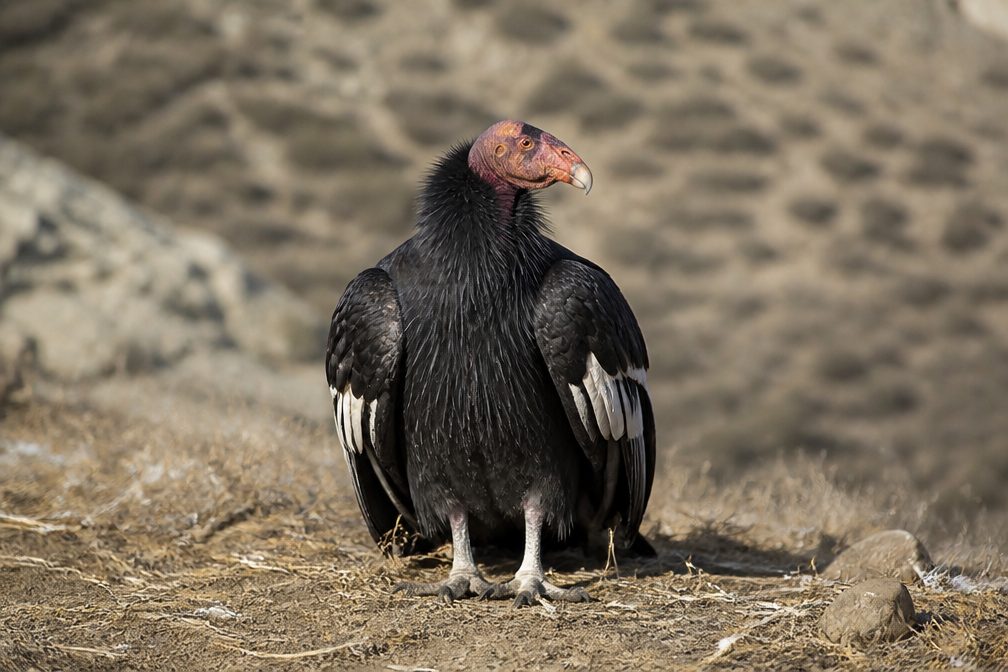 291 sightingsCalifornia CondorMost seen around 11 AMSighting map
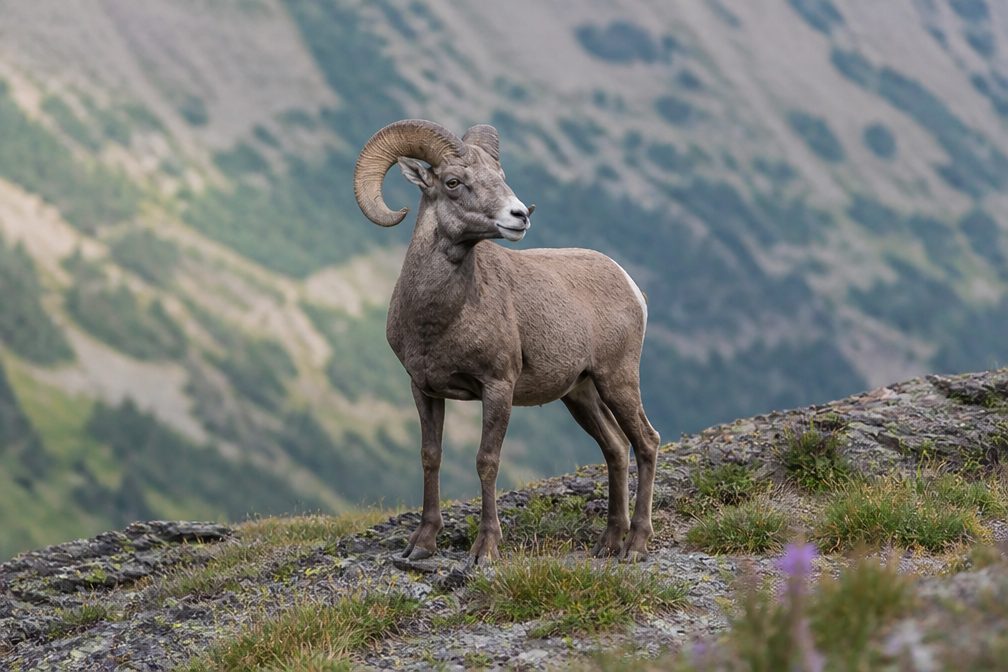 350 sightingsBighorn SheepMost seen around 7 AMSighting map
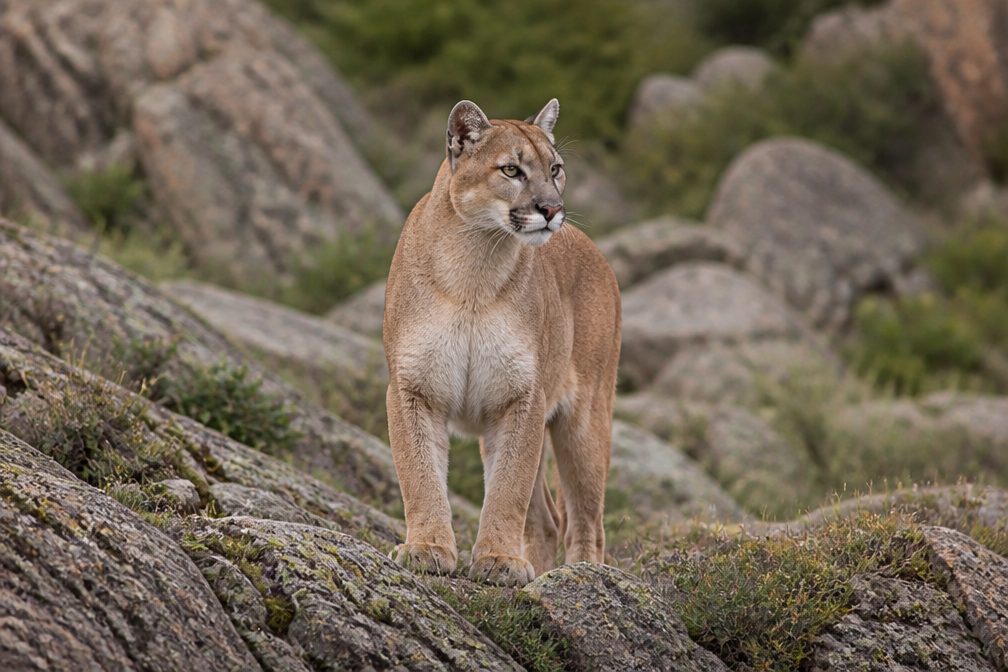 22 sightingsMountain LionMost seen around 7 PMSighting map
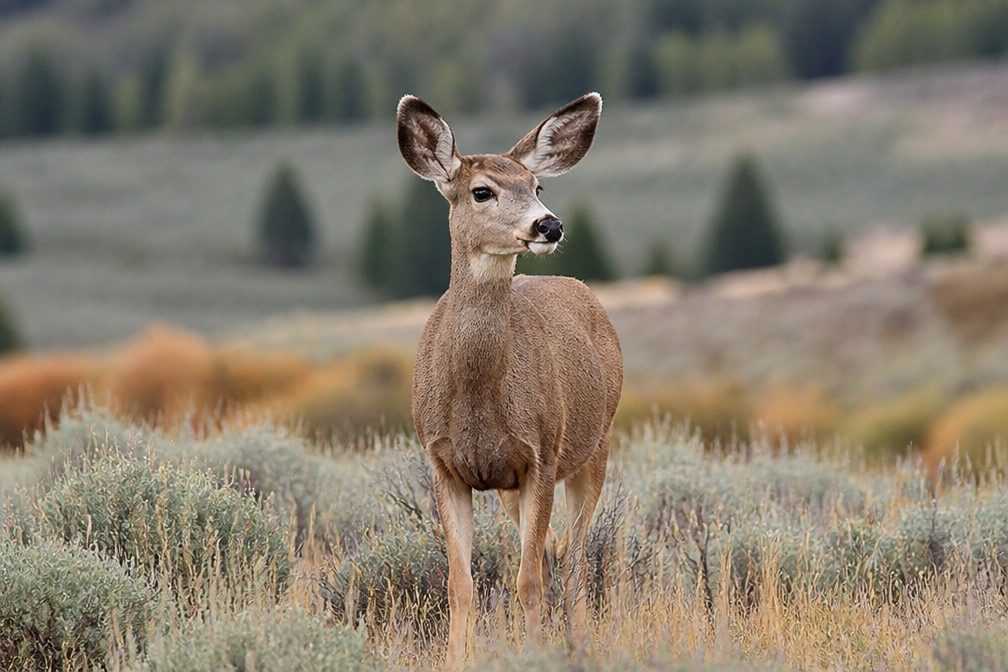 1,326 sightingsMule DeerMost seen around 6 AMSighting map
 23 sightingsGolden EagleMost seen around 10 AMSighting map
 15 sightingsPeregrine FalconMost seen around 7 AMSighting map
Sighting maps show where each species has been reported across Zion. Wildlife moves, so no sighting is guaranteed.
Keep exploring
 ChallengingObservation Point via Stave Spring9.2 mi · 6.5 hr · At the trailheadEcho Canyon makes the famous overlook a full-day hike.
 ChallengingDeertrap Mountain Trail10.8 mi · 5 hr · At the trailheadA 10.8-mile out-and-back to Zion's exposed canyon rim.
 ModerateEast Mesa Trail to Observation Point6.8 mi · 3.5 hr · 2 mi awayA long forest walk ends with Angels Landing far below.
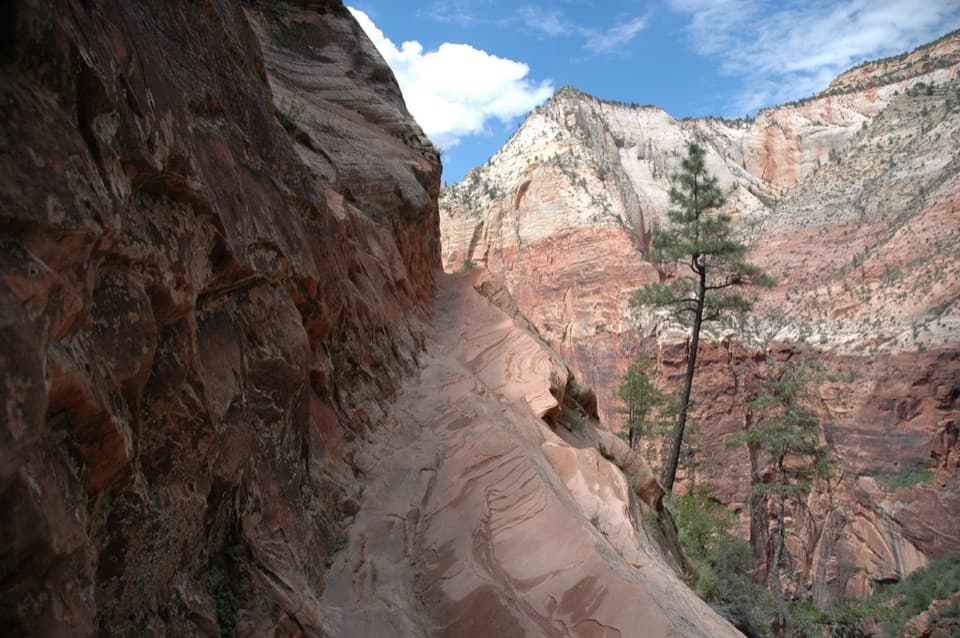 ChallengingHidden Canyon Trail3.2 mi · 4 hr · 2.2 mi awayExposed chain ledges lead to a shaded hanging canyon.
 EasyWeeping Rock Trail0.4 mi · 30 min · 2.2 mi awayA steep paved climb ends in a dripping sandstone alcove.
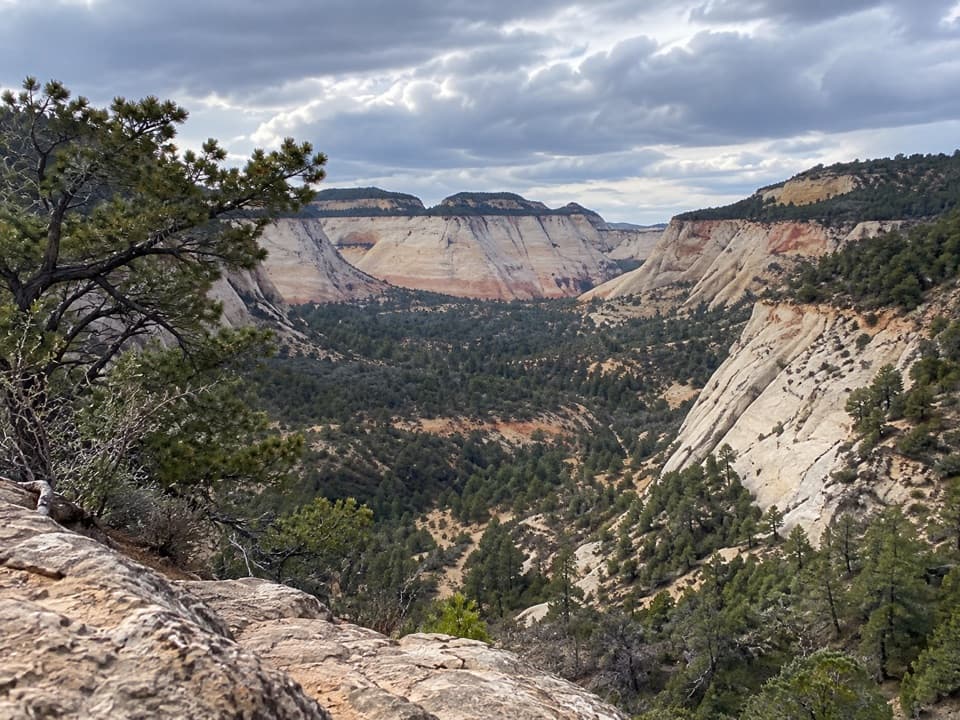 ModerateEast Rim Trail11.8 mi · 6 hr · 2.6 mi awaySandy climb to a sheer gulch and a quiet pine plateau.
 ModerateEast Rim Trail to Jolley Gulch Viewpoint5.8 mi · 3.5 hr · 2.6 mi awayA sandy climb to a canyon that seems to drop away
 ChallengingAngels Landing Trail4.2 mi · 4 hr · 2.9 mi awayA steep canyon climb ends on a narrow, chain-lined sandstone ridge.
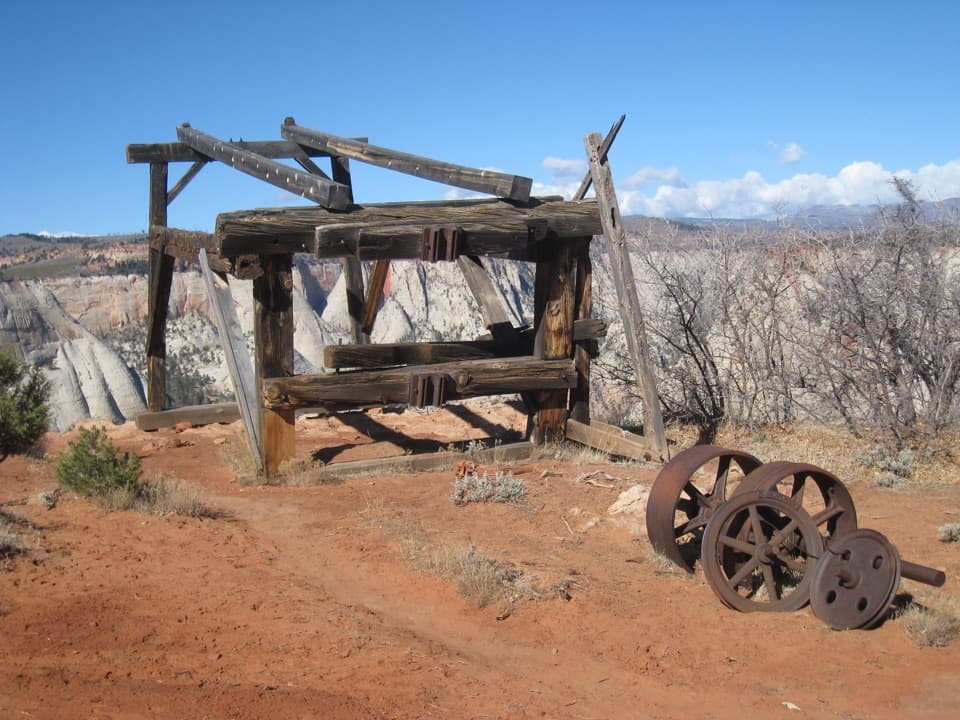 Sight · 1.9 mi awayCable Mountain Draw WorksA cliff-edge timber tram terminal with a remarkable backstory.Sight · 2.1 mi awayWeeping RockA short climb to a dripping alcove and hanging garden.
 Sight · 2.4 mi awayObservation PointAngels Landing shrinks below a sweeping view down the canyon.
 Sight · 2.6 mi awayBig BendBig Bend frames the Great White Throne above the Virgin River.
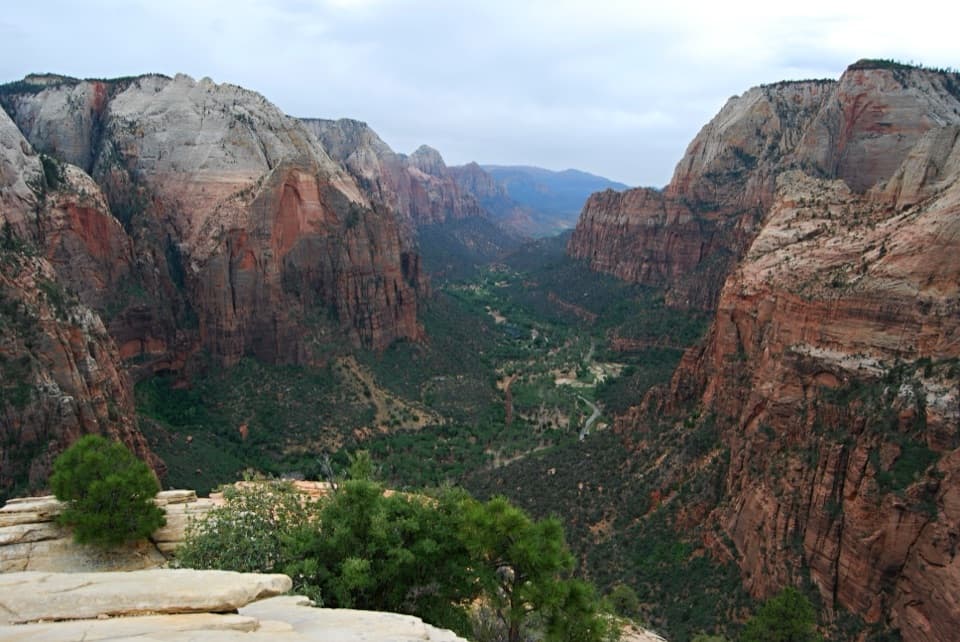 Sight · 2.7 mi awayAngels LandingA half-day summit hike, ending on a narrow ridge with chains.
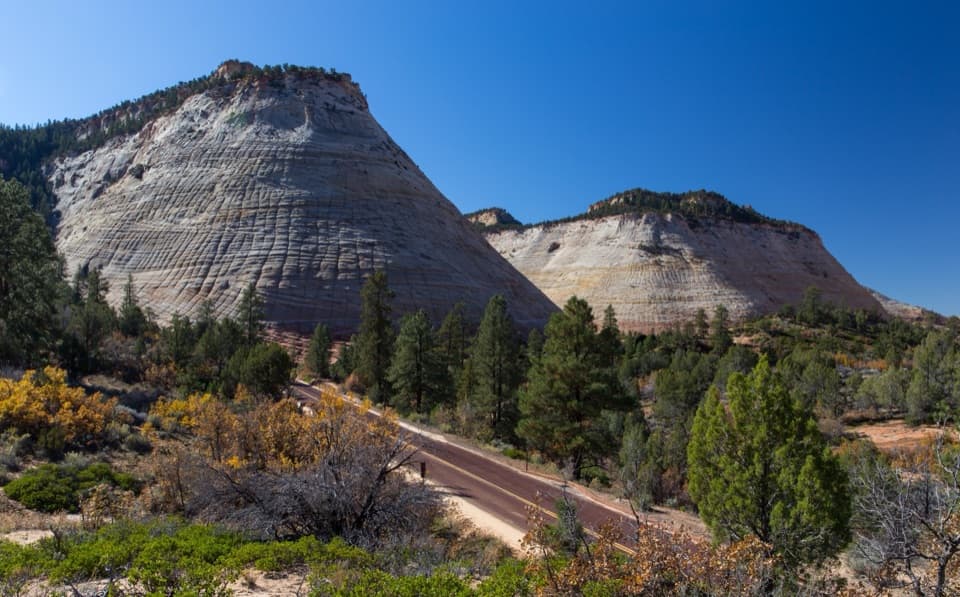 Sight · 2.8 mi awayCheckerboard MesaA quick roadside stop for Checkerboard Mesa’s crosshatched sandstone.
 Picnic area · 2.8 mi awayThe GrottoA shaded picnic break with a Virgin River view and trail access.
 Sight · 2.9 mi awayScout LookoutA natural turnaround for Zion Canyon views before Angels Landing.
Parkwolf’s Zion ranking

The audio tour guide for the drive, plus offline maps, trails, and wildlife heatmaps for when the signal drops.