Parking
Start at the Kaʻū Desert Trailhead on Highway 11. Parking capacity and on-site services have not been confirmed.

Hawaiʻi Volcanoes National Park, HI
An easy, exposed walk to a shelter interpreting Kaʻū Desert footprints.
Overview
Map & elevation
Plan your hike

The highest, rockiest slopes around here are a summer buffet for grizzly bears.
Hawaiʻi Volcanoes Tour Guide
Parkwolf is a GPS audio tour guide for Hawaiʻi Volcanoes National Park. As you drive, it chimes in with what’s ahead: hidden gems, upcoming stops, history, geology, and wildlife, right through your car’s speakers.
See the Hawaiʻi Volcanoes audio tourRecorded for this trailhead
Footprints Shelter: Tracks in the Ash“The Kaʻū Desert Trailhead is coming up, with a walk to Footprints Shelter for anyone curious about the people who crossed this volcanic landscape.”
Plays as you drive up to this trailhead in the Parkwolf Hawaiʻi Volcanoes Tour Guide.
More stories near here in the app
“Fantastic app with many points of information… It’s great to just turn on while you’re driving and it gives you an audio tour of the national Park. We love it!!!!”


Trail guide
Footprints Trail is an easy 1.6-mile out-and-back from the Kaʻū Desert Trailhead on Highway 11 to the Footprints shelter, about 0.8 mile each way. Allow roughly an hour for the return walk and a stop at the exhibit. The path descends about 90 feet toward the shelter, then climbs back to the road. The Footprints Trail continues on toward Maunaiki; stop at the shelter for this shorter outing.
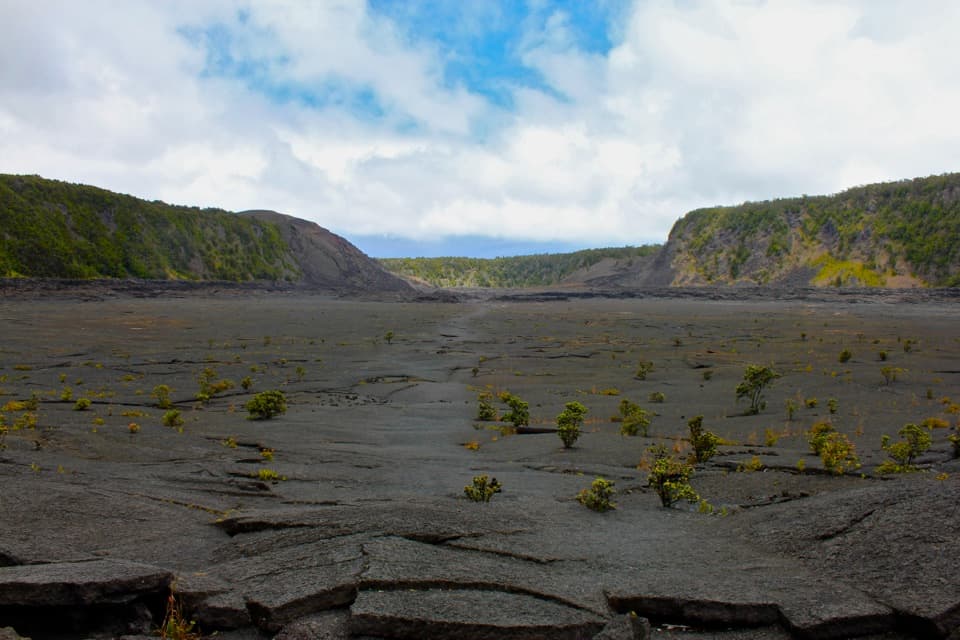
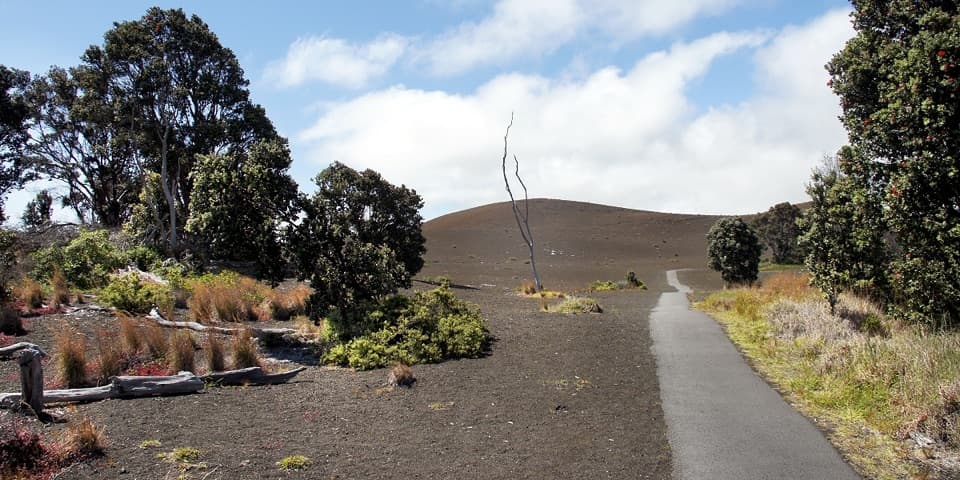
The walk crosses an open lava landscape with little shade. Near the shelter, a narrow paved path winds between dark lava, low shrubs and dry grasses. Carry water and sun protection; wind can lift volcanic ash and dust, so eye protection and a dust mask are useful. Pets are not allowed on park trails. Use the Kaʻū Desert Trailhead on Highway 11; parking capacity and on-site services have not been confirmed.
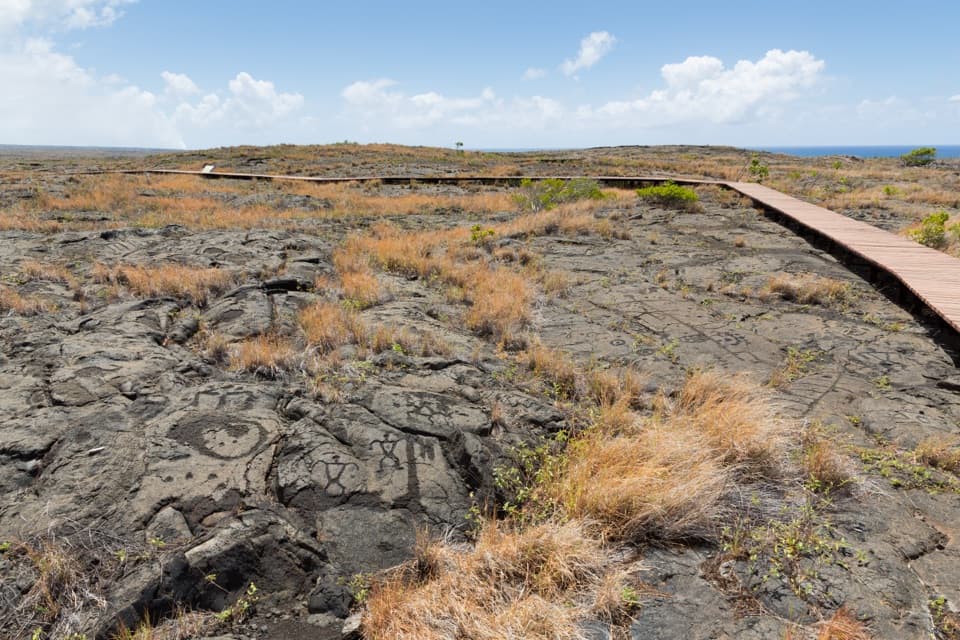
A shelter at the end holds an exhibit about impressions preserved in volcanic ash. Keonehelelei, “the falling sands,” is the name recorded for an event associated with 1790. The familiar story that the prints belong to Keōua’s warriors caught in that eruption was speculation. Later archaeological and geological work found impressions in two ash layers and suggests the area may record everyday travel through the desert.
The 1941 shelter is one piece of a wider archaeological landscape shaped by travel and resource gathering. Researchers identified old trails, temporary shelters and places where Hawaiians gathered volcanic glass for tools. The walk is a chance to see more than a single footprint story: the exhibit opens onto a much longer history of people crossing the Kaʻū Desert.
Wildlife
 600 sightingsHawaiian Goose (Nēnē)Most seen around 5 PMSighting map
 35 sightingsGreen Sea TurtleMost seen around 11 AMSighting map
 36 sightingsHawaiian Hawk ('Io)Most seen around 11 AMSighting map
 41 sightingsBlack NoddyMost seen around 5 PMSighting map
 96 sightingsWhite-tailed TropicbirdMost seen around noonSighting map
 24 sightingsHawai'i 'ElepaioMost seen around 8 AMSighting map
Sighting maps show where each species has been reported across Hawaiʻi Volcanoes. Wildlife moves, so no sighting is guaranteed.
Keep exploring
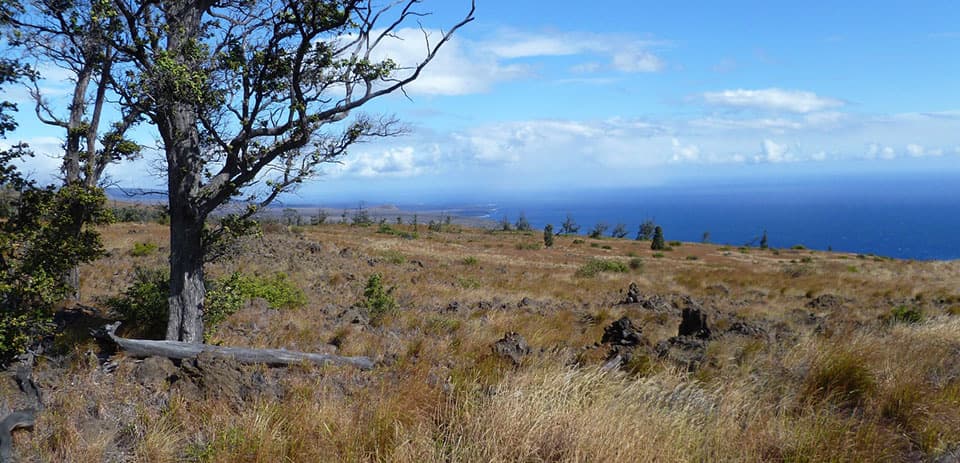 ChallengingKaʻū Desert Trail to Pepeiao9.1 mi · 7 hr · 1.8 mi awayA cairn-marked crossing to a remote backcountry camp.
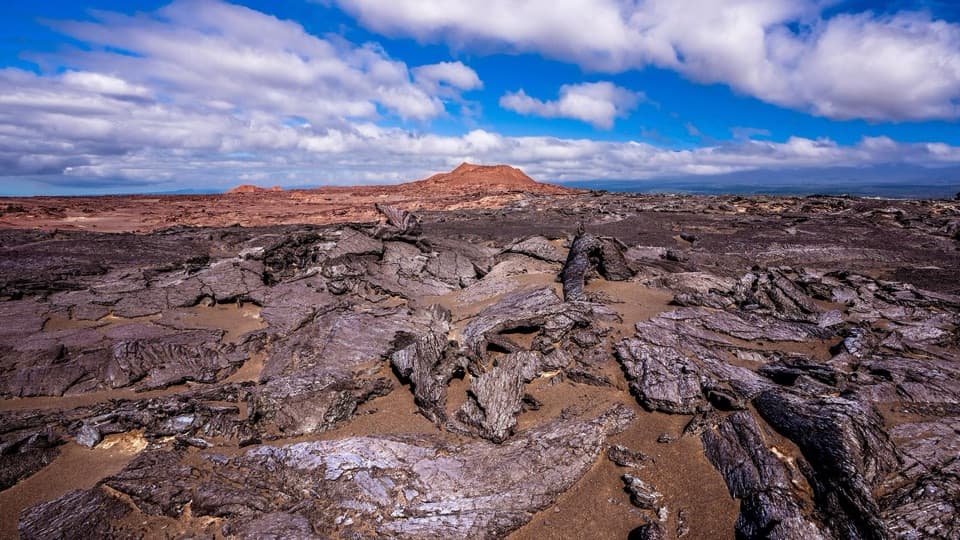 ModerateMaunaiki Trail7 mi · 4.5 hr · 6.3 mi awayA rough lava route through the Kaʻū Desert to Hilina Pali Road.
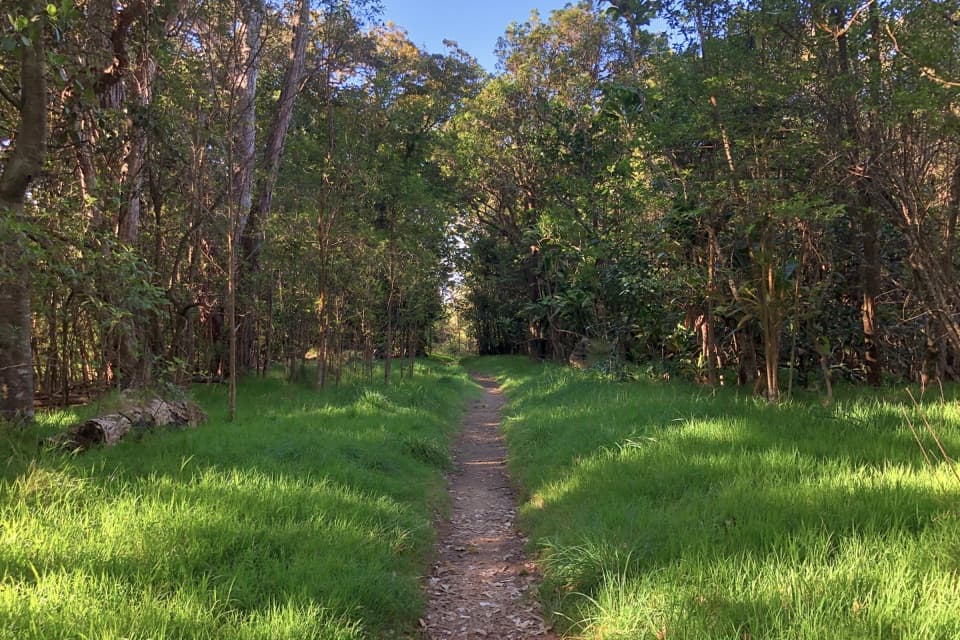 EasyKīpukapuaulu Trail1.2 mi · 1.3 hr · 6.3 mi awayA shaded loop through an ancient forest island in younger lava.
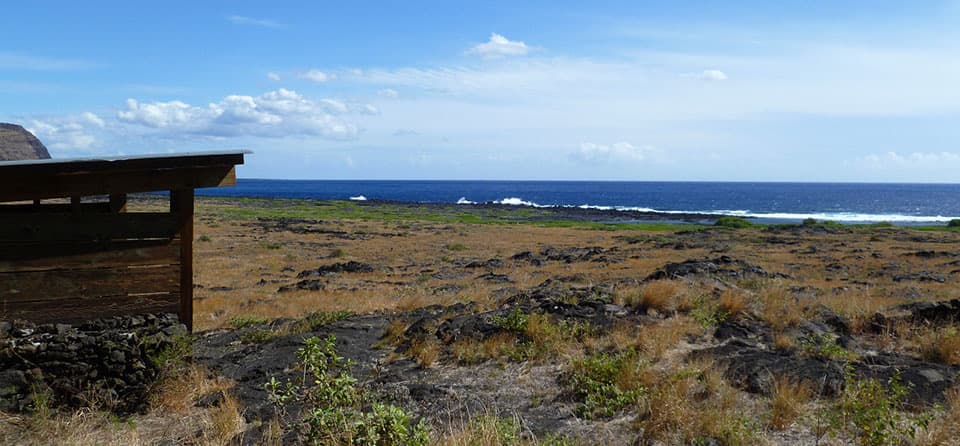 ChallengingKaʻaha Trail7.2 mi · 6 hr · 6.4 mi awayA rocky cove rewards a steep, sun-baked climb back up the pali.
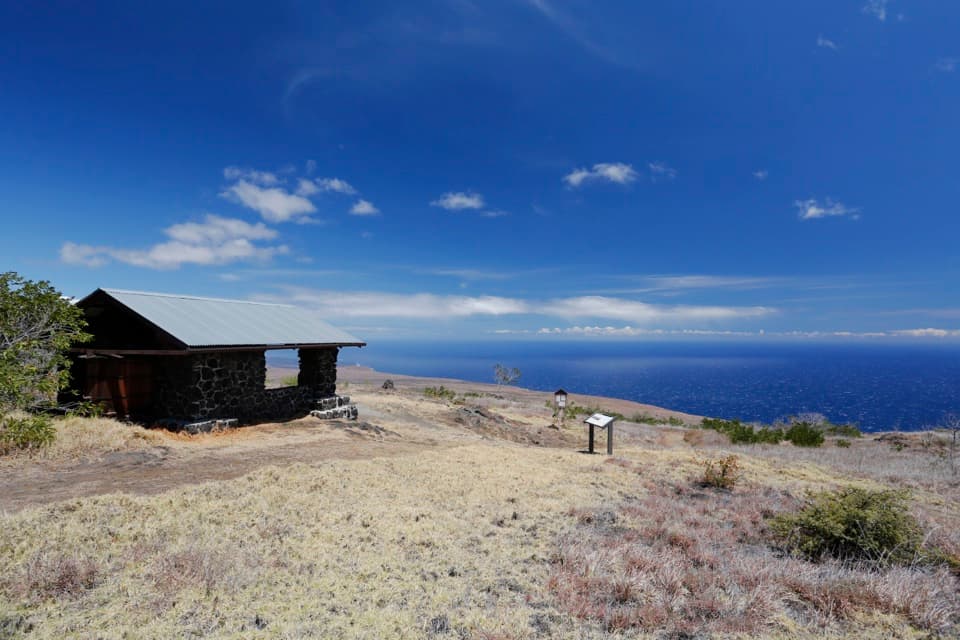 ChallengingHilina Pali Overlook Loop8.1 mi · 7.5 hr · 6.4 mi awayA steep pali descent opens onto a hot, rocky coastal loop.
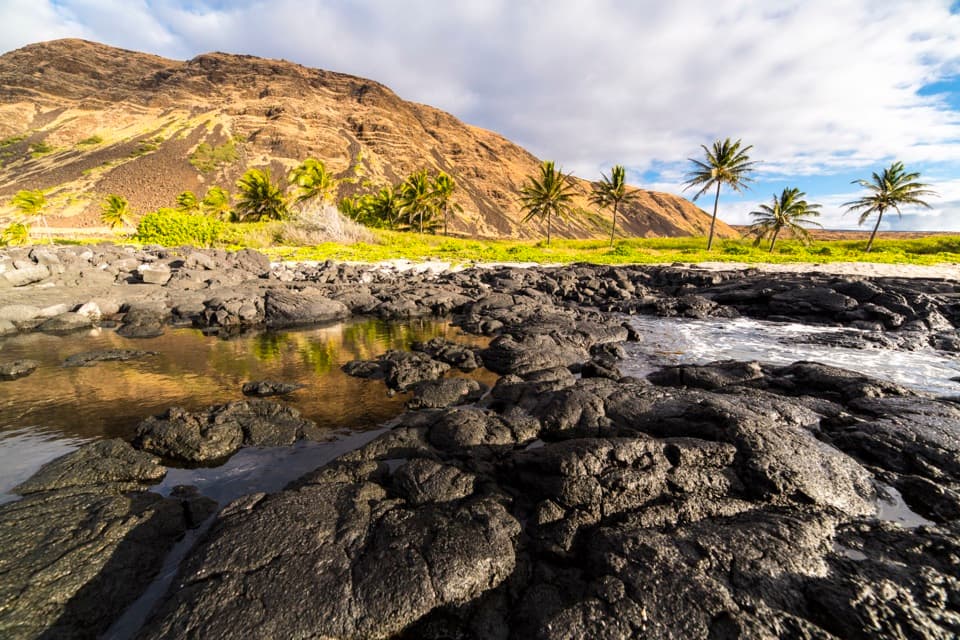 ChallengingHilina Pali Trail to Halapē16 mi · 10 hr · 6.4 mi awayA long, hot lava descent to a remote coconut-lined shore.
 EasyCrater Rim Trail3.8 mi · 2 hr · 6.6 mi awayA 3.8-mile out-and-back from Kīlauea Overlook to Volcano House.
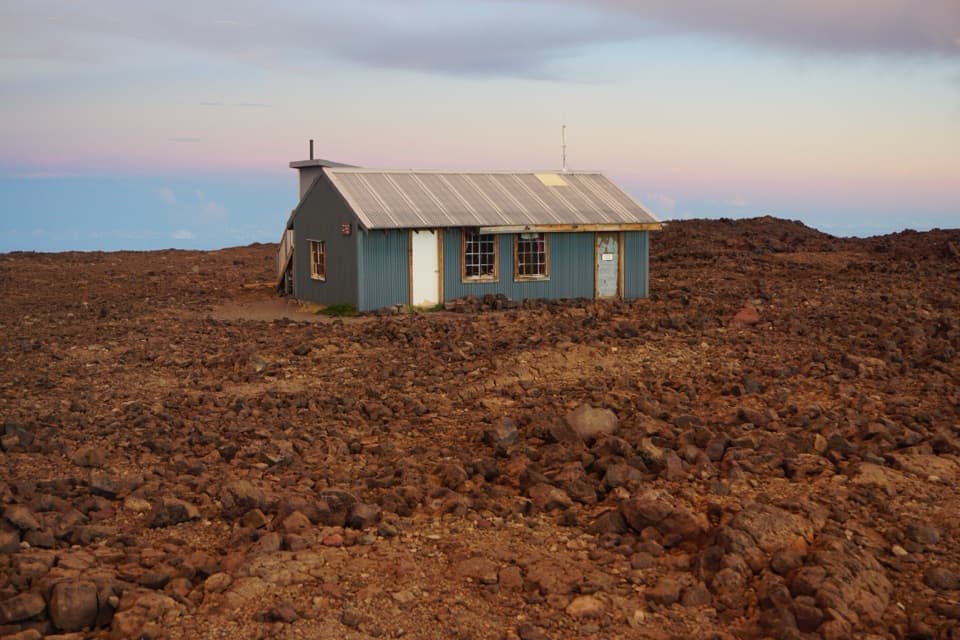 ChallengingʻĀinapō Trail20.4 mi · 18 hr · 7.3 mi awayA demanding, high-altitude climb to Mauna Loa’s remote cabin.
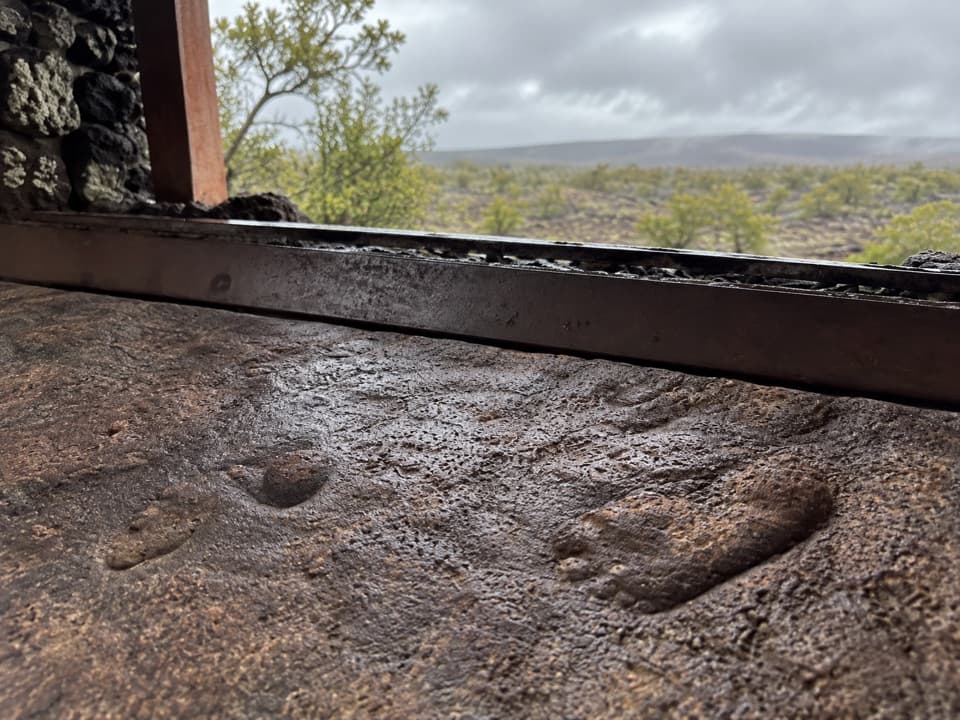 Sight · 0.7 mi awayFootprints ShelterA short walk to ancient footprints with a story still in dispute.
 Sight · 1.7 mi awayHawaiʻi Volcanoes National Park Sign — Highway 11 SouthA quick keepsake photo with the park’s lava-stone sign.
 Campground · 6.2 mi awayNāmakanipaio CampgroundA simple in-park campground with tent sites and rustic cabins.
 Sight · 6.2 mi awayUēkahunaA caldera overlook and place of Native Hawaiian cultural practice.Sight · 6.3 mi awayKīpukapuauluA shaded forest island with native birds, trees, and lava history.
 Campground · 6.4 mi awayKulanaokuaiki CampgroundA quiet, nine-site camp off the remote southern road.Sight · 6.4 mi awayHilina Pali OverlookA nine-mile detour for Kīlauea’s wide-open Pacific view.
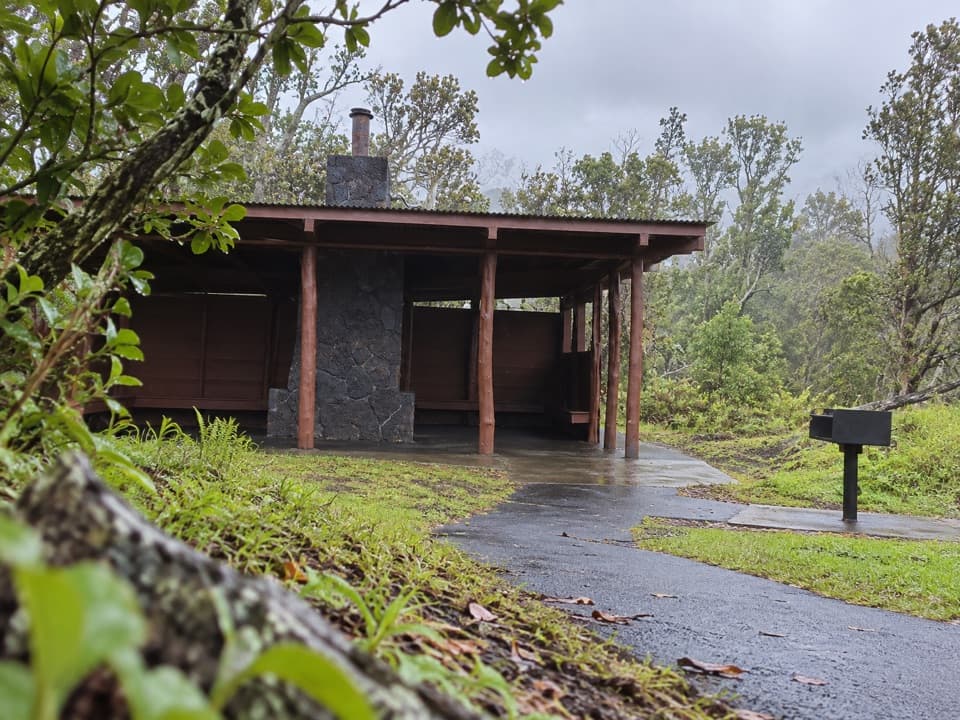 Picnic area · 6.5 mi awayKīpukapuaulu Picnic AreaA rain shelter and grill beside an older forest island.
Parkwolf’s Hawaiʻi Volcanoes ranking

The audio tour guide for the drive, plus offline maps, trails, and wildlife heatmaps for when the signal drops.