Parking
Follow Hilina Pali Road to its end at the Hilina Pali Overlook. Start from the overlook trailhead and parking area; the route to Kaʻaha follows Hilina Pali Trail before joining Kaʻaha Trail.
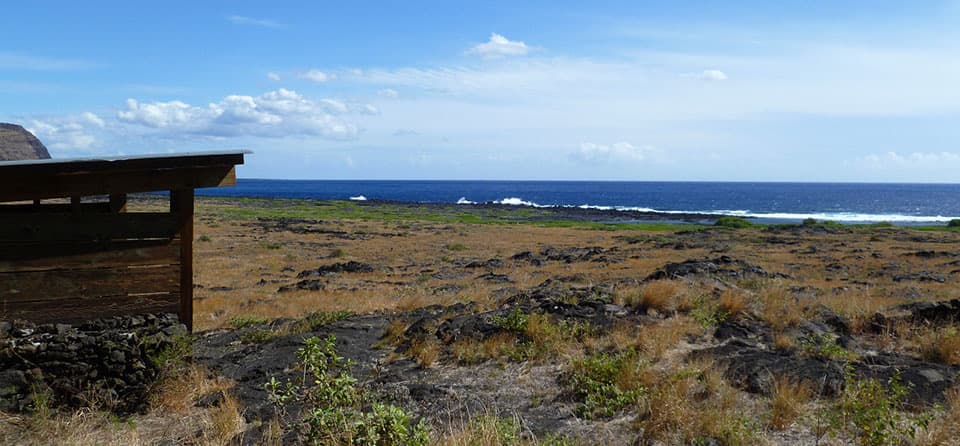
Hawaiʻi Volcanoes National Park, HI
A rocky cove rewards a steep, sun-baked climb back up the pali.
Overview
Kaʻaha is a hard out-and-back from Hilina Pali Overlook: 3.6 miles each way, 7.2 miles total, following Hilina Pali Trail down the cliff and Kaʻaha Trail to a rocky cove and primitive hillside shelter. Budget about six hours with a stop at the coast. The work is front-loaded downhill and paid back as one long climb; this is an exposed backcountry hike, not a casual beach walk.
 Parkwolf’s verdictIs this the hike for you?
Map & elevation
Plan your hike

The highest, rockiest slopes around here are a summer buffet for grizzly bears.
Hawaiʻi Volcanoes Tour Guide
Parkwolf is a GPS audio tour guide for Hawaiʻi Volcanoes National Park. As you drive, it chimes in with what’s ahead: hidden gems, upcoming stops, history, geology, and wildlife, right through your car’s speakers.
See the Hawaiʻi Volcanoes audio tourRecorded for this trailhead
Hilina Pali: The View Beyond the Shelter“Hilina Pali Overlook is ahead, high above the Pacific coast. For the fullest view, follow the short grass path beyond the stone shelter to the rocky outcrop and orientation plate.”
Plays as you drive up to this trailhead in the Parkwolf Hawaiʻi Volcanoes Tour Guide.
More stories near here in the app
“Fantastic app with many points of information… It’s great to just turn on while you’re driving and it gives you an audio tour of the national Park. We love it!!!!”


Trail guide
From the overlook at the end of Hilina Pali Road, the trail drops through 24 steep switchbacks to the base of the pali. Mostly non-native grass and scattered ʻōhiʻa leave little shade; a large ʻōhiʻa about two-thirds down is the only shaded spot on the descent. The route then eases into a gradual downhill walk to the shore. Expect rocky, uneven tread. Cairns can be hard to follow in mist or darkness, and the coastal ground has thin crusts, cracks and lava tubes, so stay on the marked line. From the switchback slope, include a few bends of trail with the coast below for a photo that shows how the route descends.
The destination is a rocky shoreline and protected cove. A three-walled shelter on the hillside gives relief from sun and wind, and a composting toilet is available. Green turtles may rest on the beach or swim in the cove; they are protected, so watch without approaching. Ants are abundant around camp. They do not bite, but they will crawl onto gear left on the ground.
The climb back is continuous and exposed. Start early and avoid the usual 10 a.m.–2 p.m. heat window. There are no streams; carry at least four quarts of water per person per day. Shelter catchment water may be absent, and any water from the tank must be treated. The coast has no tree shade, so do not count on the shelter to make the return easier once you leave it.
The cove is protected compared with the open shoreline, but surf and currents on this coast can still be unpredictable; do not assume conditions are safe for swimming. If a strong earthquake occurs at the shore, move to high ground. Keep this route to the Kaʻaha campsite and turn back the way you came; going on to Pepeiao adds six miles one way over exposed backcountry lava.
This route ends at Kaʻaha. An overnight stay at the campsite requires a backcountry permit, and pets are not allowed on park trails except service animals. The Kaʻaha–Pepeiao continuation adds about six miles one way and is a separate backcountry route.
Wildlife
 600 sightingsHawaiian Goose (Nēnē)Most seen around 5 PMSighting map
 35 sightingsGreen Sea TurtleMost seen around 11 AMSighting map
 36 sightingsHawaiian Hawk ('Io)Most seen around 11 AMSighting map
 41 sightingsBlack NoddyMost seen around 5 PMSighting map
 96 sightingsWhite-tailed TropicbirdMost seen around noonSighting map
 24 sightingsHawai'i 'ElepaioMost seen around 8 AMSighting map
Sighting maps show where each species has been reported across Hawaiʻi Volcanoes. Wildlife moves, so no sighting is guaranteed.
Keep exploring
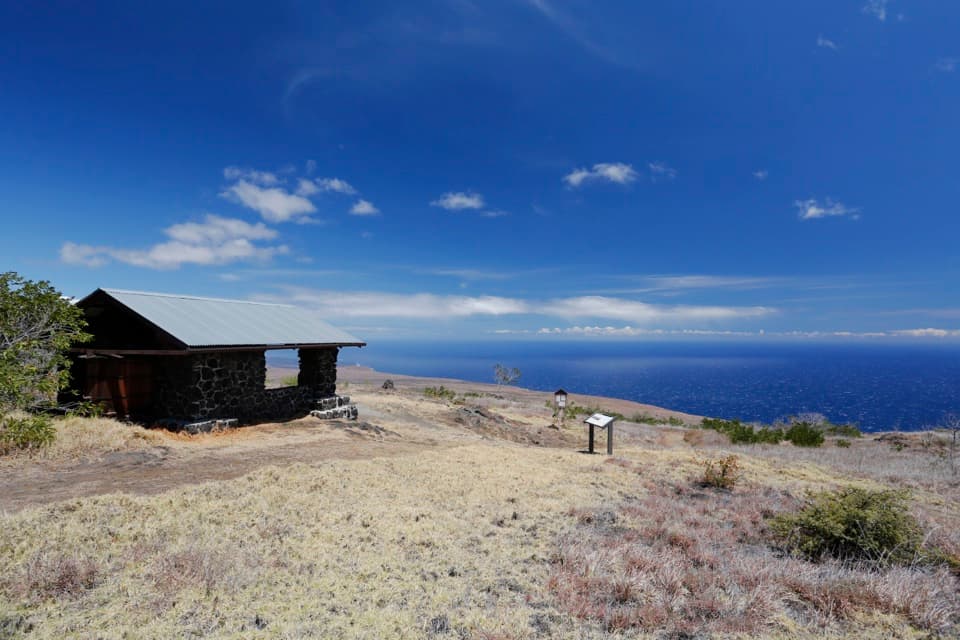 ChallengingHilina Pali Overlook Loop8.1 mi · 7.5 hr · At the trailheadA steep pali descent opens onto a hot, rocky coastal loop.
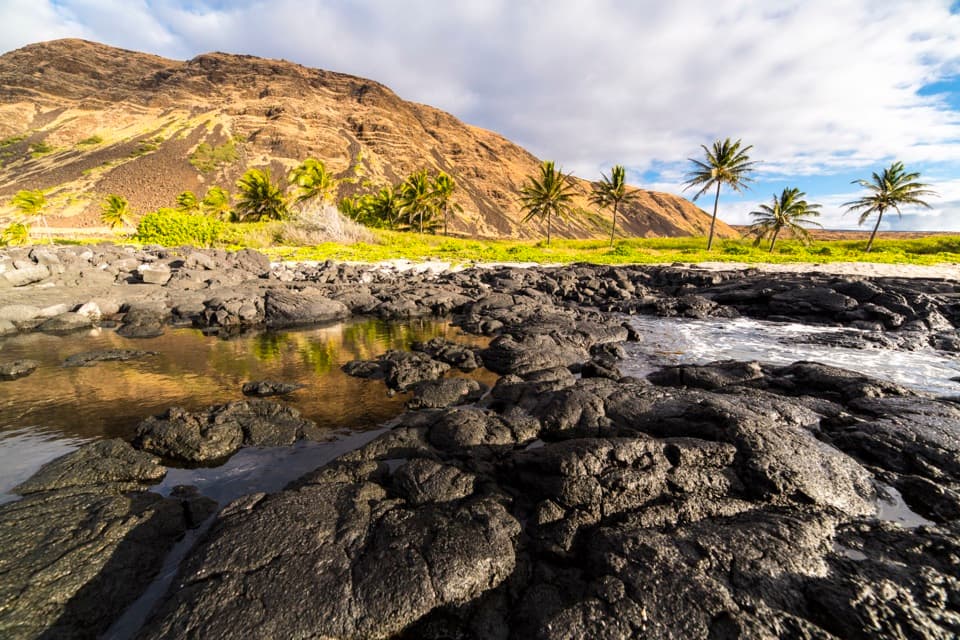 ChallengingHilina Pali Trail to Halapē16 mi · 10 hr · At the trailheadA long, hot lava descent to a remote coconut-lined shore.
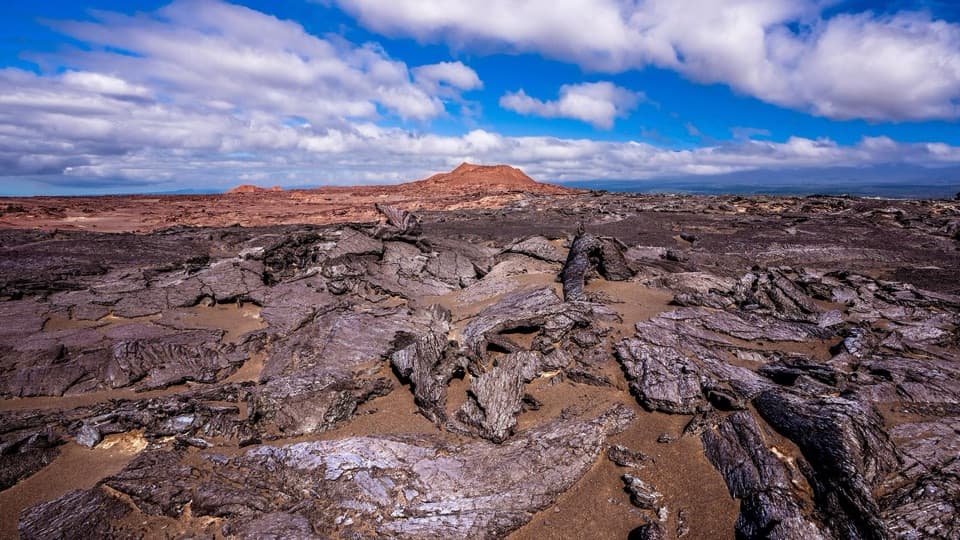 ModerateMaunaiki Trail7 mi · 4.5 hr · 3.8 mi awayA rough lava route through the Kaʻū Desert to Hilina Pali Road.
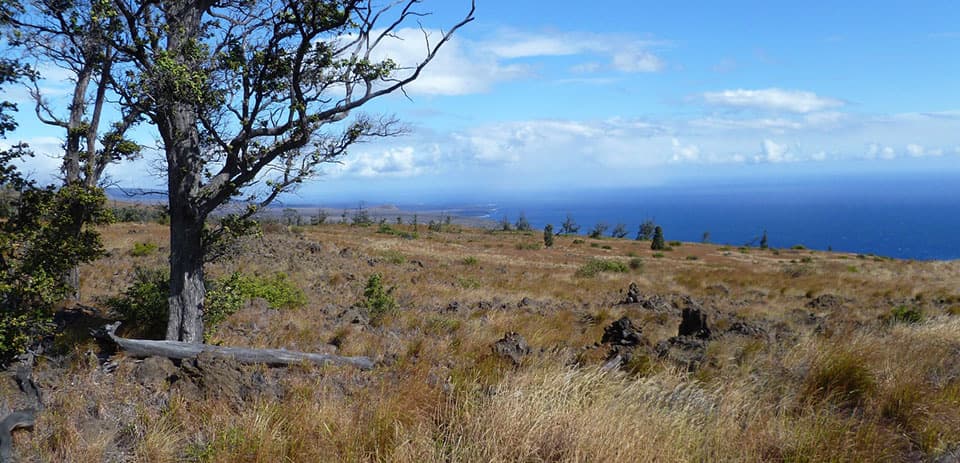 ChallengingKaʻū Desert Trail to Pepeiao9.1 mi · 7 hr · 4.7 mi awayA cairn-marked crossing to a remote backcountry camp.
 EasyFootprints Trail1.6 mi · 1 hr · 6.4 mi awayAn easy, exposed walk to a shelter interpreting Kaʻū Desert footprints.
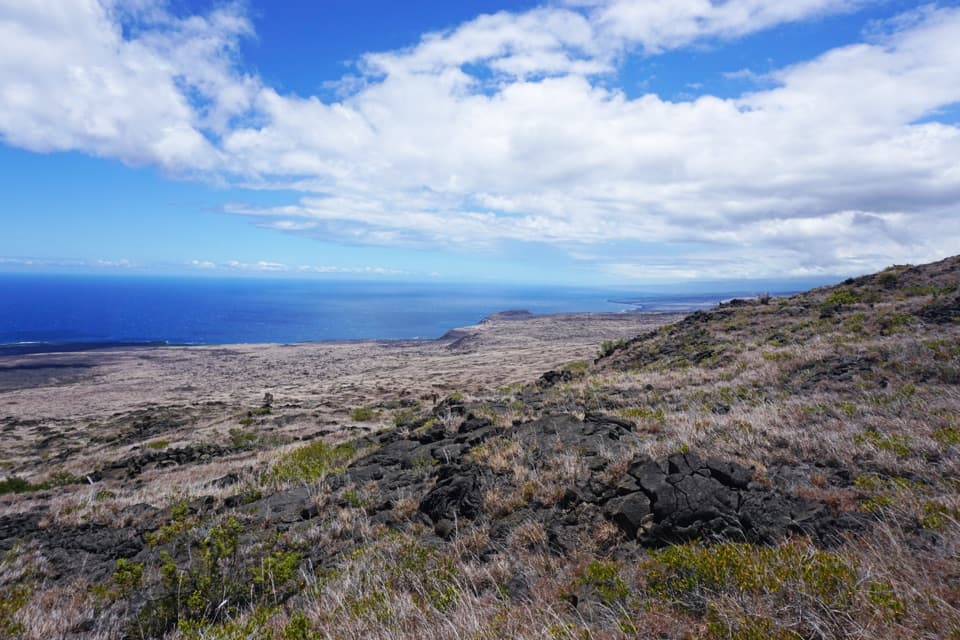 ChallengingKeauhou Trail15.2 mi · 8.5 hr · 7.3 mi awayLava ridges lead to a freshwater seep on the remote coast.
 ModerateMaunaulu / Puʻuhuluhulu Trail2.5 mi · 2.5 hr · 7.6 mi awayCross 1969 lava flows to a forested cone and its viewing platform.
 ChallengingNāpau Trail12.4 mi · 7.2 hr · 7.6 mi awayCross old lava rivers into a fern forest and a crater overlook.Sight · At the trailheadHilina Pali OverlookA nine-mile detour for Kīlauea’s wide-open Pacific view.Campground · 2.3 mi awayKaʻahaA remote coastal camp reached by a steep switchback descent.
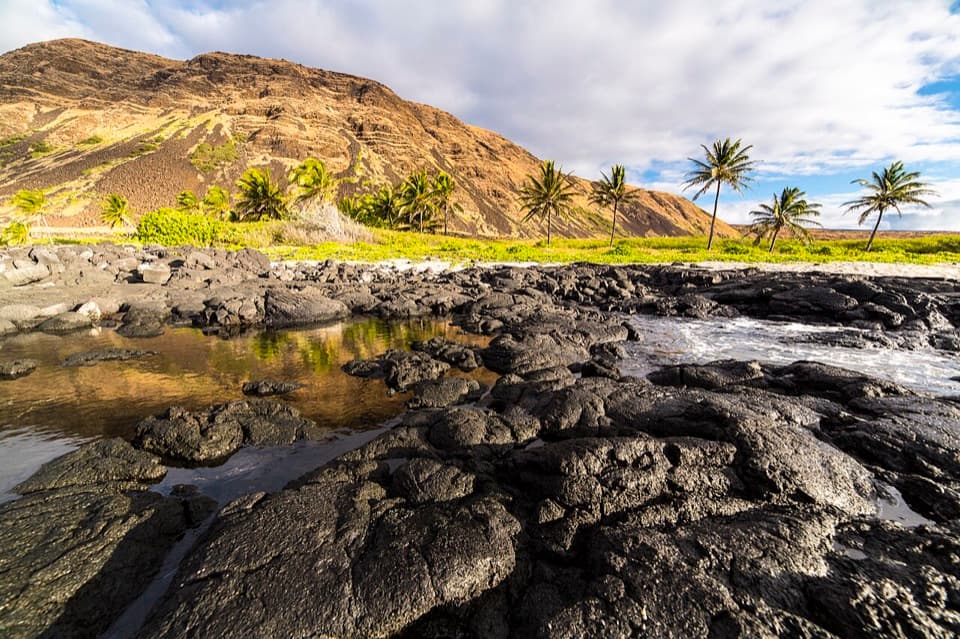 Campground · 3.8 mi awayHalapēA remote beach camp for prepared backcountry hikers.
 Campground · 3.9 mi awayKulanaokuaiki CampgroundA quiet, nine-site camp off the remote southern road.
 Campground · 4 mi awayPepeiao CampsiteA remote camp in grass and lava, reached only by long hikes.
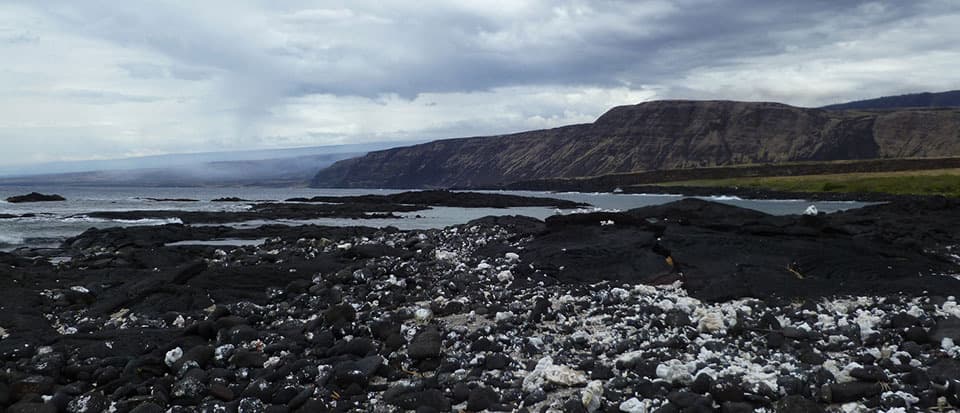 Campground · 5.3 mi awayKeauhou Backcountry CampsiteA primitive shelter and rocky bay reward a hard coastal hike.
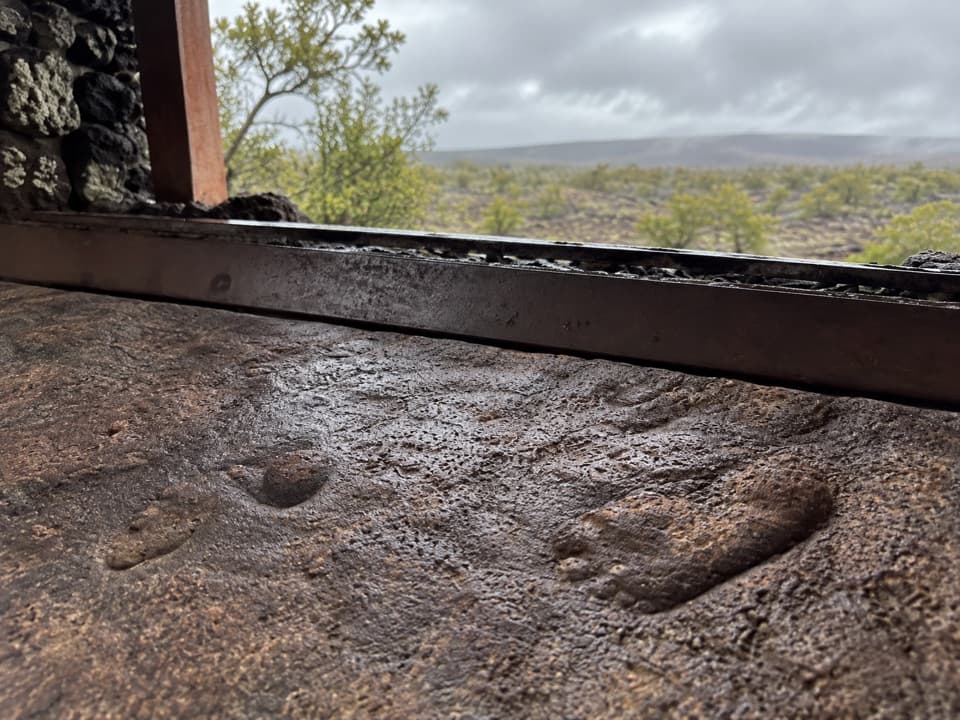 Sight · 5.8 mi awayFootprints ShelterA short walk to ancient footprints with a story still in dispute.
 Sight · 6.3 mi awayHawaiʻi Volcanoes National Park Sign — Highway 11 SouthA quick keepsake photo with the park’s lava-stone sign.
Parkwolf’s Hawaiʻi Volcanoes ranking
The audio tour guide for the drive, plus offline maps, trails, and wildlife heatmaps for when the signal drops.